
Les Sables-d'Olonne
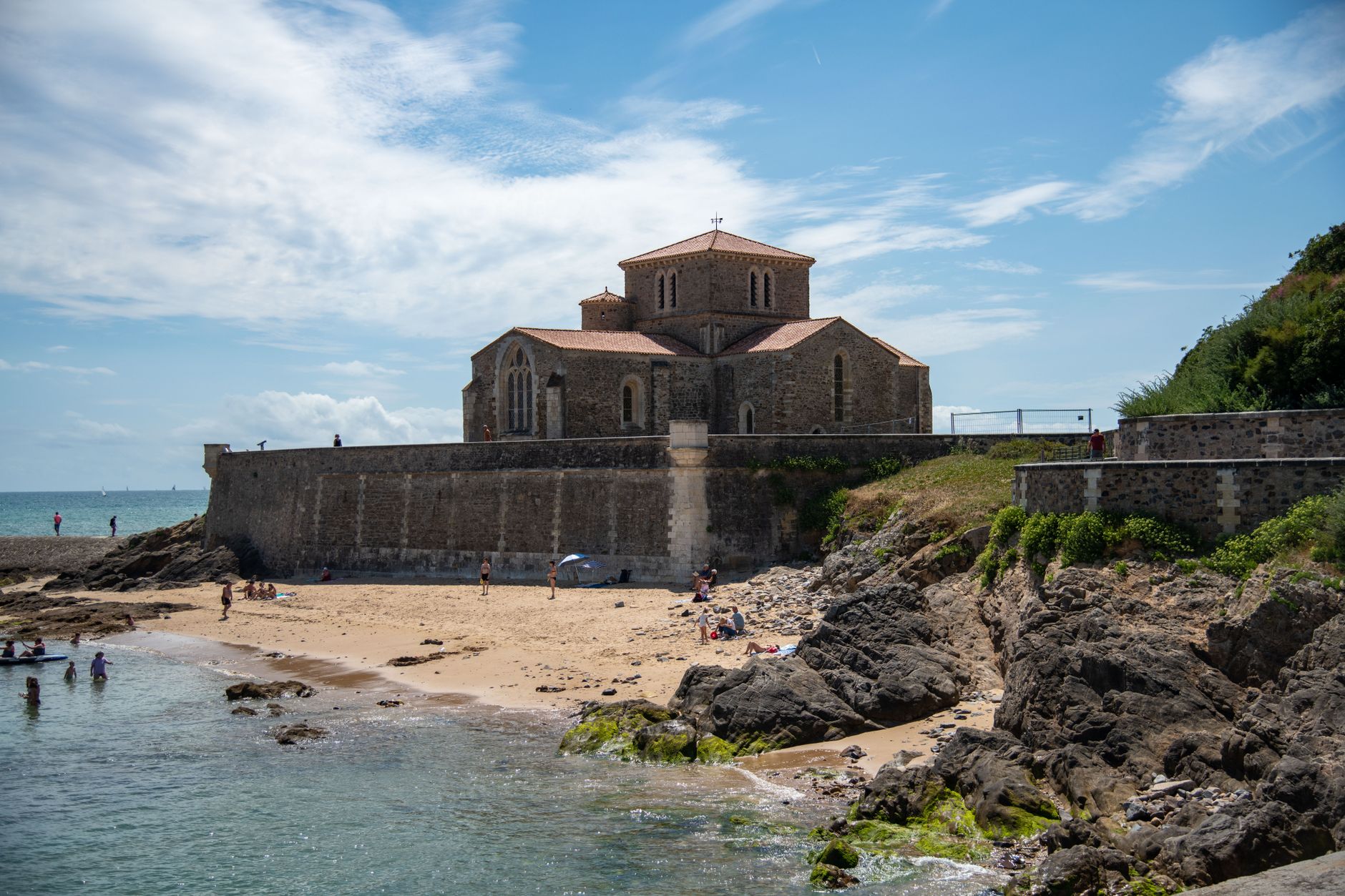
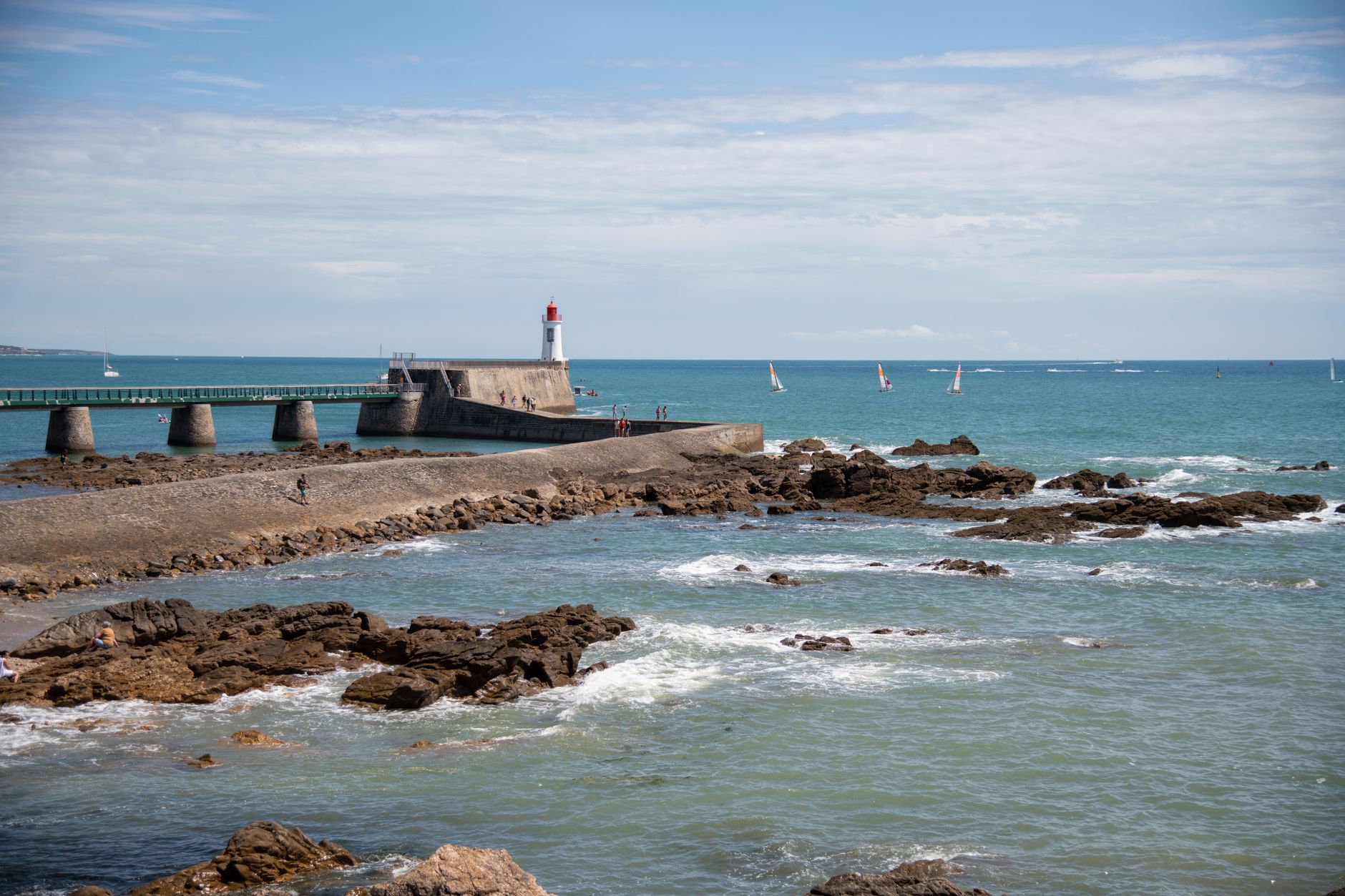
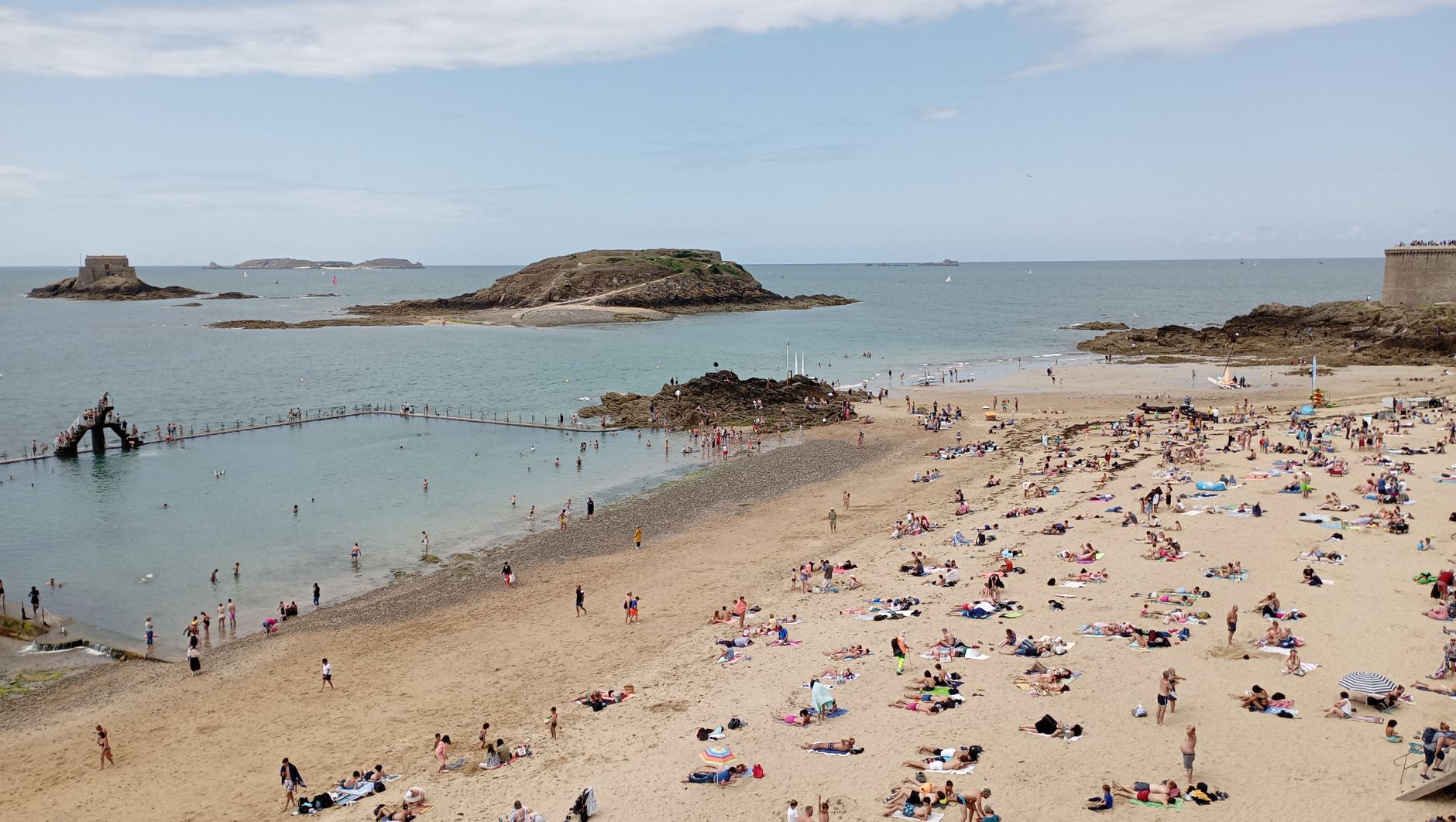
Stand on Le Remblai at low tide and the Atlantic lays out three kilometres of pale sand in front of you, uninterrupted. Les Sables-d'Olonne is a working coast town that became a seaside resort — the bathing establishments opened in 1825, the Paris express arrived in 1971 — and both lives are still visible: the clock tower where locals agree to meet, the hand and foot prints of Vendée Globe skippers pressed into plaques along the promenade, the ferry that cuts across the harbour mouth to La Chaume, the old fishing quarter that was once its own island.
Port Olona, built in 1979 as the first marina in the Vendée, is where every solo round-the-world Vendée Globe race begins and ends. On the Île Penotte, a pedestrian quarter whose walls have been tiled entirely in shell mosaics, the city turns unexpectedly quiet and strange. These two places alone tell you something about the range this town has.
💛 What travellers fall for
People who come back tend to take the harbour ferry to La Chaume early, before the beach fills. They walk the Priory of Saint-Nicolas piers — the 18th-century cannons are still there, seven of them — and eat at the port side rather than the promenade. The Musée de l'Abbaye Sainte-Croix, in its 17th-century building, rewards a slow afternoon when the sun is high and the beach too crowded.
Experiences you don't want to miss


Deals in Les Sables-d'Olonne
Book directly at the providerHow Les Sables-d'Olonne came to be
The town begins in 1218, when Savary I de Mauléon — lord, seneschal of Poitou, prince of Talmont — granted lands and rights to a religious community at La Chaume, establishing a fishing settlement on what was then a separate island. Two and a half centuries later, Louis XI detached Les Sables from the commune of Olonne, deepened the harbour and fortified its entrance. By the 17th century, the port had grown into the largest cod-fishing operation in France, with 14,000 inhabitants — and in 1696 the combined English and Dutch fleets bombarded it.
One of the town's own, François l'Olonnais, went the other direction entirely: born here, he became one of the most feared pirates of the Caribbean. The cod trade eventually faded, the bathing resort rose in its place, and on 1 January 2019 the surrounding communes of Olonne-sur-Mer and Château-d'Olonne merged into the city under a single name.
Who and what shaped it
People who shaped it
Landmark buildings
See Les Sables-d'Olonne in motion
Plan your visit
On the map
When to go
The climate is oceanic with enough sunshine to push it toward Mediterranean in summer: July averages around 20°C with only 39 mm of rain, and sea temperatures reach 19°C in August. Winters are mild but wet, with November delivering over 110 mm across roughly 16 days.
Right now
Background & history adapted from Wikipedia (CC BY-SA) · specs from Wikidata (CC0) · weather from Open-Meteo · map data © OpenStreetMap contributors · photos from Wikimedia Commons / Unsplash with per-image credit. No third-party reviews or social posts reproduced.