
Fortezza di Montepulciano
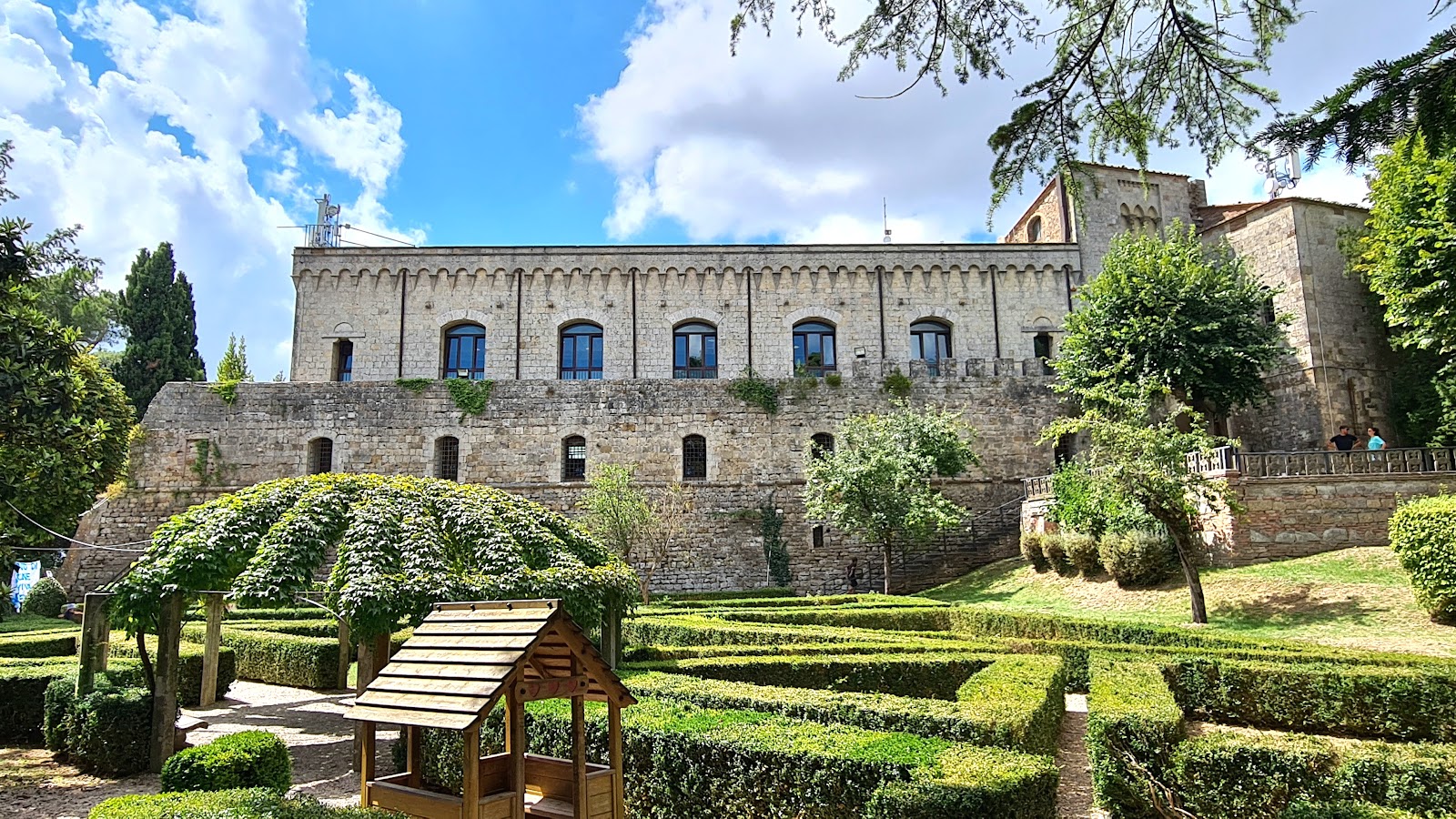
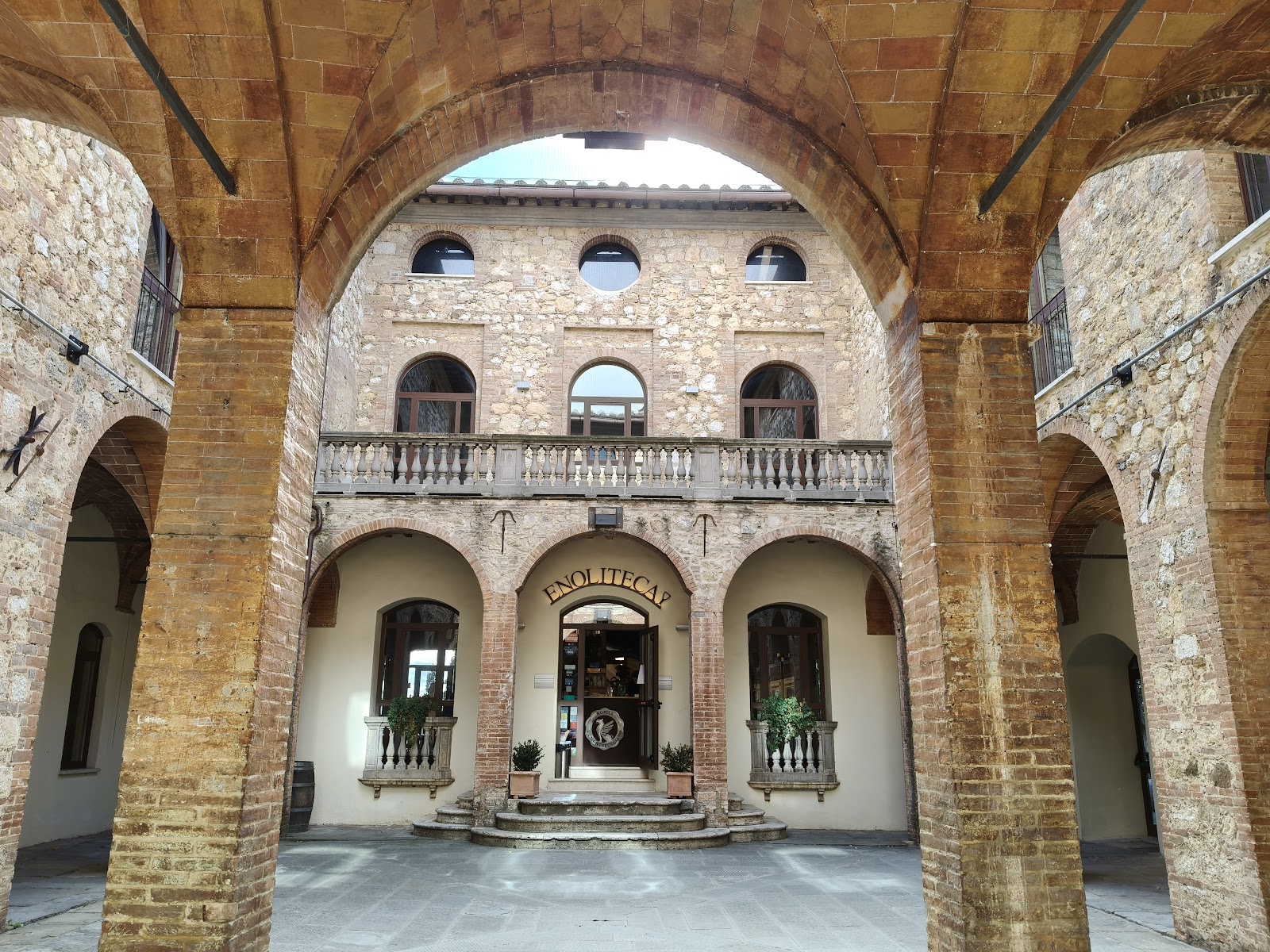
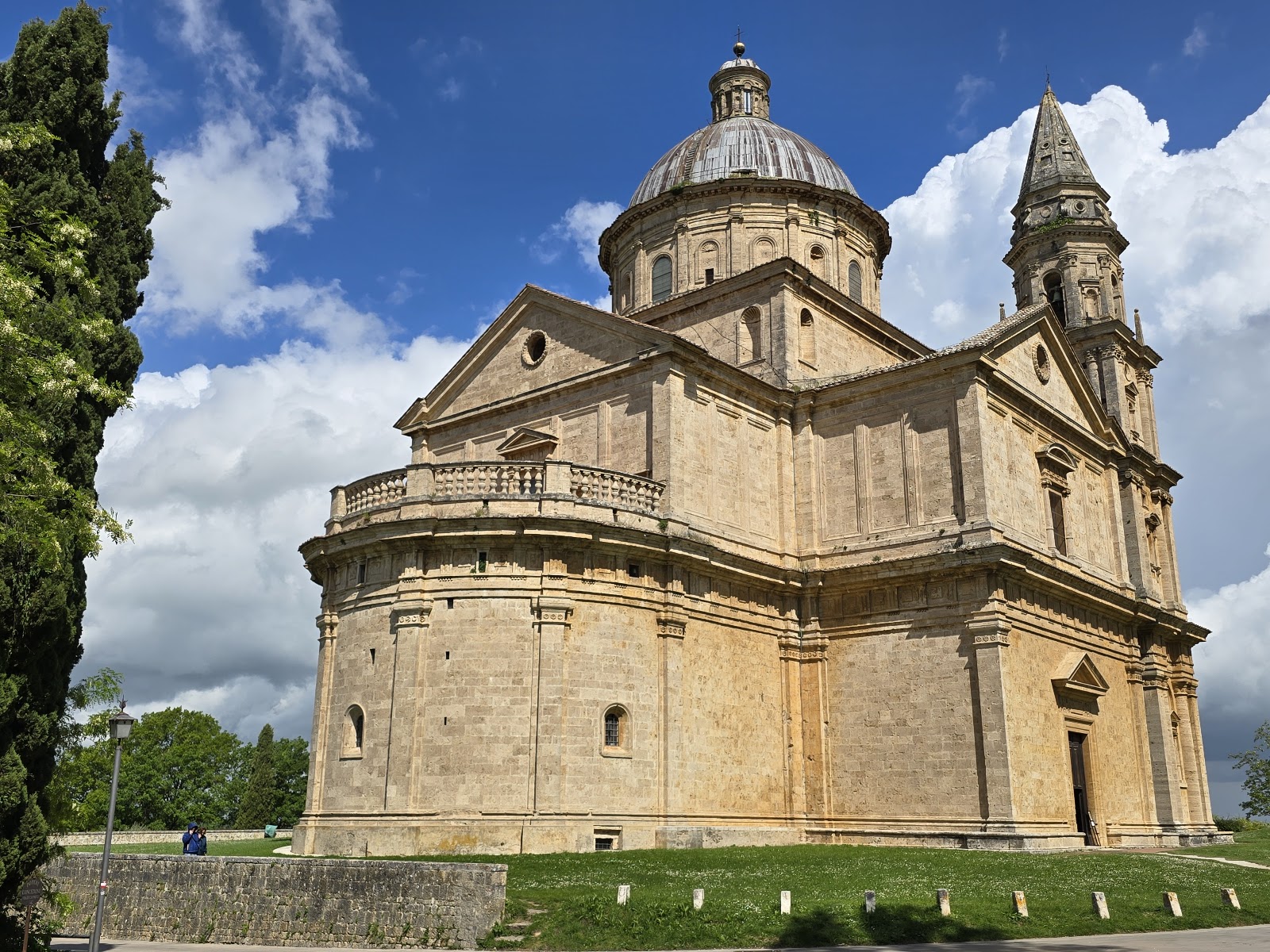
At the highest point in Montepulciano, the old Medici fortress does something unusual for a building of its age and purpose: it pours wine. The Enoliteca inside stocks more than a hundred labels of Vino Nobile, and its terrace looks straight down to the Tempio di San Biagio and out across the Val d'Orcia and Val di Chiana — two valleys unrolling in opposite directions while you hold a glass.
The building has a glass floor in one section, cut open during restoration to show the archaeological layers underneath. Ancient ruins, a medieval castrum, Medici ambition, a 19th-century renovation, a school, and now a wine academy and art university — this place has been remade so many times that its current life as a cultural and viticultural hub feels less like a surprise than a pattern.
💛 What travellers fall for
People who come back tend to time the Enoliteca terrace for late afternoon, when the light flattens across the Val d'Orcia and the crowds on Via di Gracciano nel Corso have thinned. The glass-floor ruins are easy to walk past — worth pausing over. Ask at the counter which Vino Nobile producers are pouring that day rather than scanning the full list.
The story behind Fortezza di Montepulciano
The site was in use during Roman times, and by the 8th century a Lombard fortification called Castrum Politianum stood here. The structure you see today has its foundations in 1261, when the Republic of Siena built the fortress during the long territorial conflict with Florence. Montepulciano eventually came under Medici control, and Cosimo I commissioned a significant reconstruction — with Antonio da Sangallo the Elder as architect — in the mid-16th century.
A 1614 earthquake damaged the fortress badly enough that it fell into disrepair for centuries. The 1885 renovation, designed by architect Augusto Corci, brought it back into functional use. For much of the 20th century it served as a school; in the 1990s it shifted toward its current role, and in April 2018 the Consorzio Del Vino Nobile di Montepulciano moved in, bringing the Enoliteca with it.
Good to know
Via di S. Donato, 21 — about five minutes uphill from Piazza Grande. The Enoliteca generally opens around 10am; confirm current hours with the Montepulciano tourism office before going. Late September through October is the ideal window: harvest is underway and the heat has dropped. The train station sits ten miles out of town, so a car or bus is your practical option.
Late September into October gives you warm days without the August heat, and the harvest season adds a particular energy to the surrounding countryside. Spring — March through May — is quieter and mild. Summer is dry with long evenings, but midday on the exposed terrace in July or August can be intense.
Where is Fortezza di Montepulciano?
More tickets & tours for Fortezza di Montepulciano
Book directly at the provider
What travellers say about Fortezza di Montepulciano
Is a historical landmark in Montpulciano, a place to visit for its nice views and peaceful gardens, also because there are a Enoliteca inside. They offer wine tasting , and olive oil tasting produced in the zone , and Also for selling. You can enjoy the different art exhibitions for free.
Cool historic fortress that has been modernized in the interior to a school and wine bar. You can’t get on top of it or explore the rooms as they are private offices. Can probably be skipped.
Great spot inside to have a refreshment and take in great views
Some guides talk about great views from here but, not really
Amazing modern wine tasting experience on top of Roman ruins in a former high school, in a fortress…
More of Montepulciano
Discover where to stay, what to do and the best deals for your trip.
Explore Montepulciano →More attractions in Montepulciano
All of Montepulciano →
Background adapted from Wikipedia (CC BY-SA) · map data © OpenStreetMap contributors · ratings & place photos via Google · other photos with per-image credit. Ticket links may earn us a commission at no extra cost to you.