
Cattedrale di Santa Maria Assunta
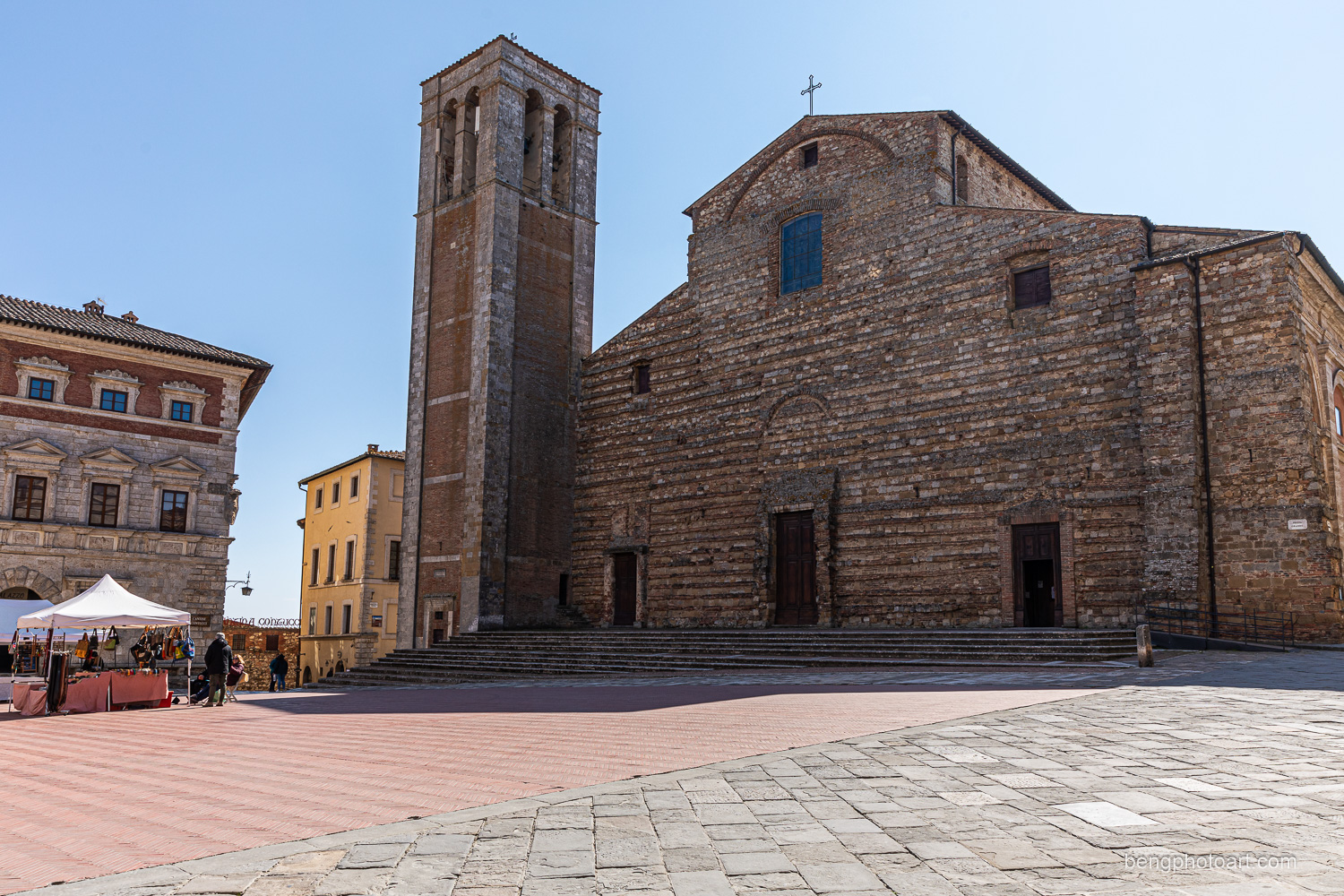
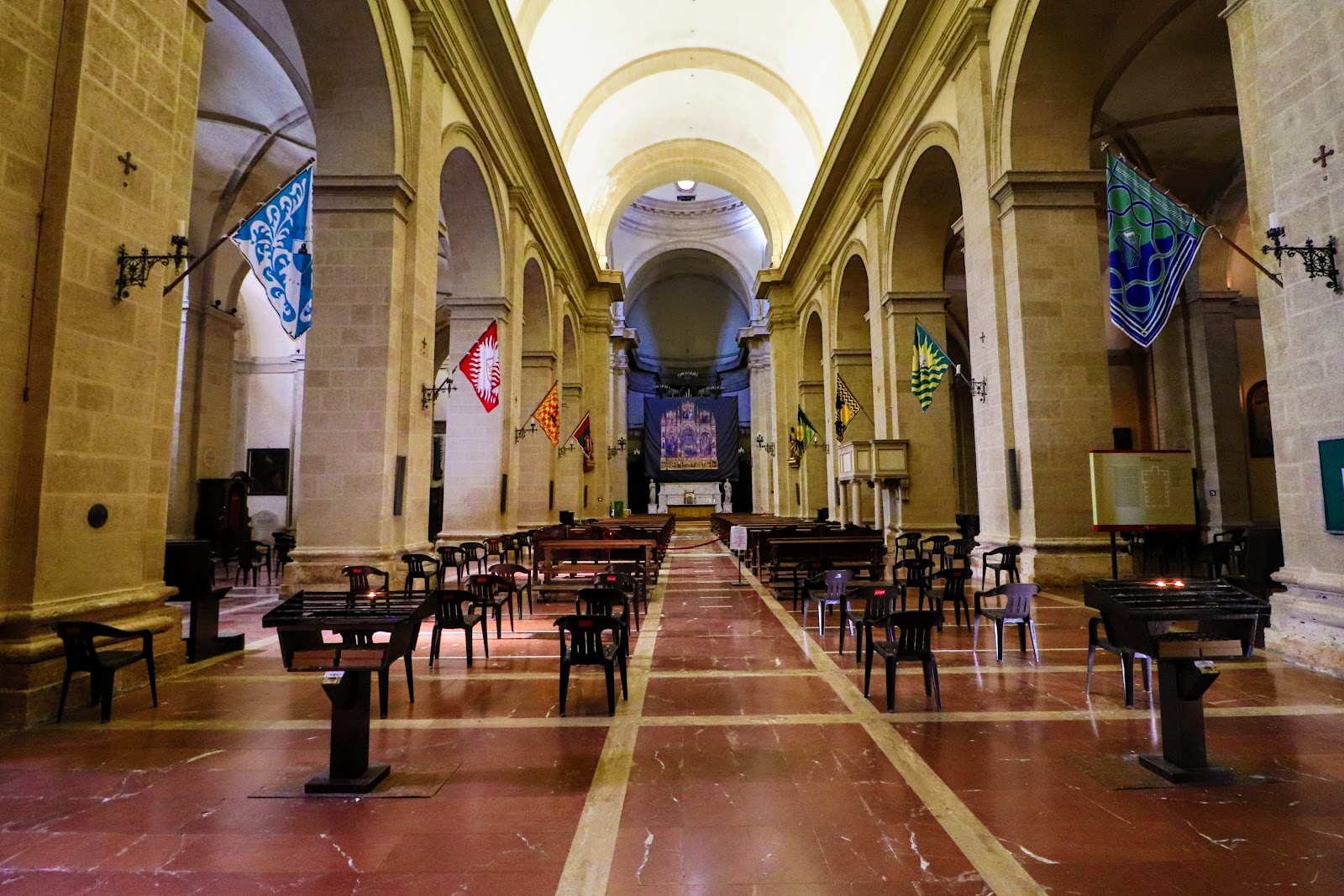
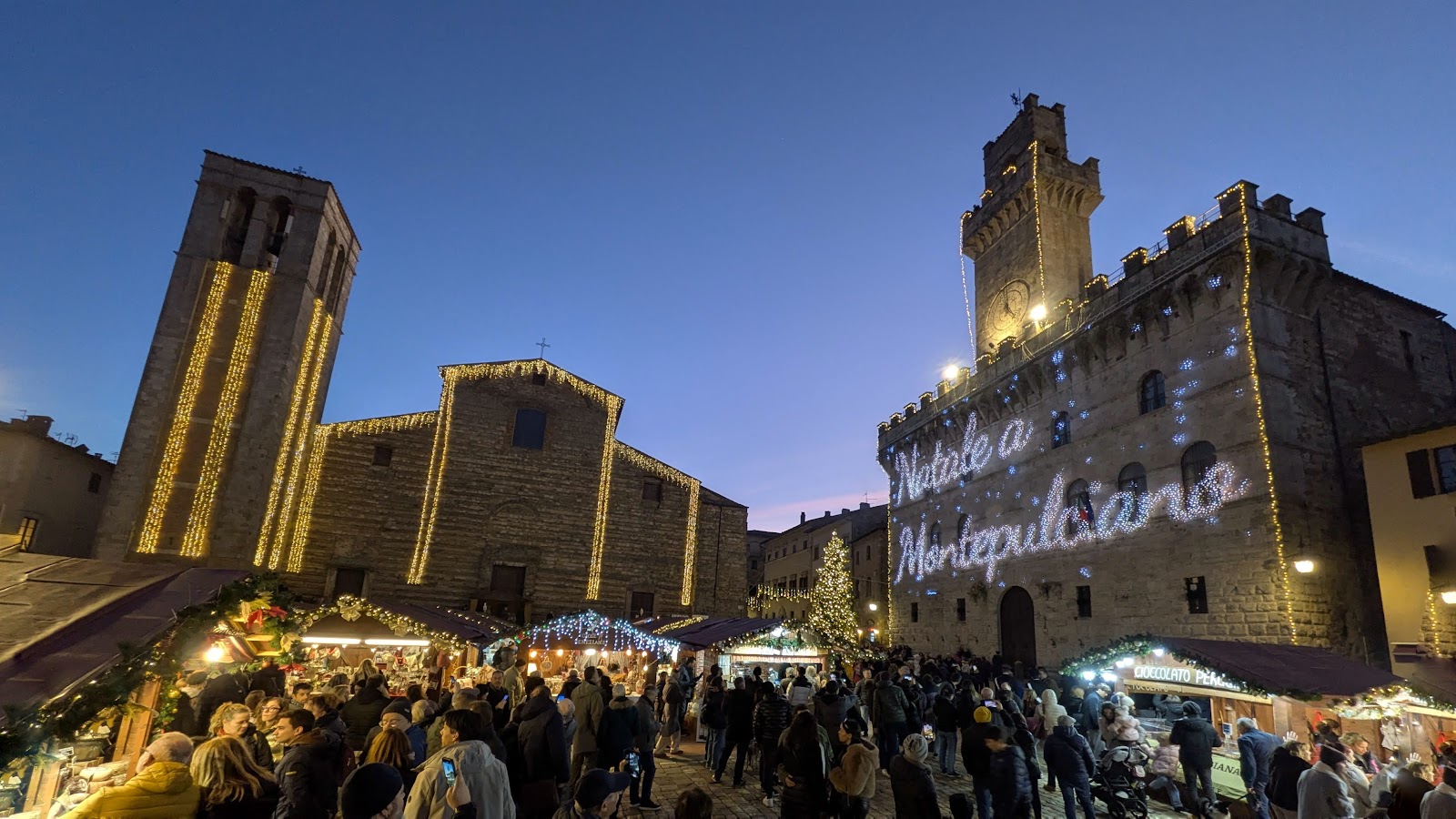
The cathedral on Piazza Grande has been unfinished for three centuries, and nobody seems bothered. Its bare stone façade — never sheathed in the marble Ippolito Scalza's plans called for — stands at the highest point of Montepulciano looking more honest for it. Step inside and the austerity falls away: three naves divided by pillars and round arches, a barrel-vaulted ceiling, and at the far end Taddeo di Bartolo's 1401 triptych of the Assumption, enormous and gold-lit, painted by a Sienese artist who tucked his own face among the apostles.
Around the walls, pieces of Michelozzo's marble funerary monument for the archpriest Bartolomeo Aragazzi are distributed almost casually — a figure here, a relief there — because the tomb was broken apart in the 17th century and never properly reassembled. Some sections ended up at the Victoria and Albert Museum in London.
💛 What travellers fall for
People who come back tend to spend time with the Aragazzi fragments rather than moving straight to the altarpiece. Once you know the monument was originally one unified work — and that Aragazzi commissioned it for himself while still alive — the scattered marble figures read differently. The medieval bell tower outside, the one surviving piece of the original church, is worth a look before you go in.
The story behind Cattedrale di Santa Maria Assunta
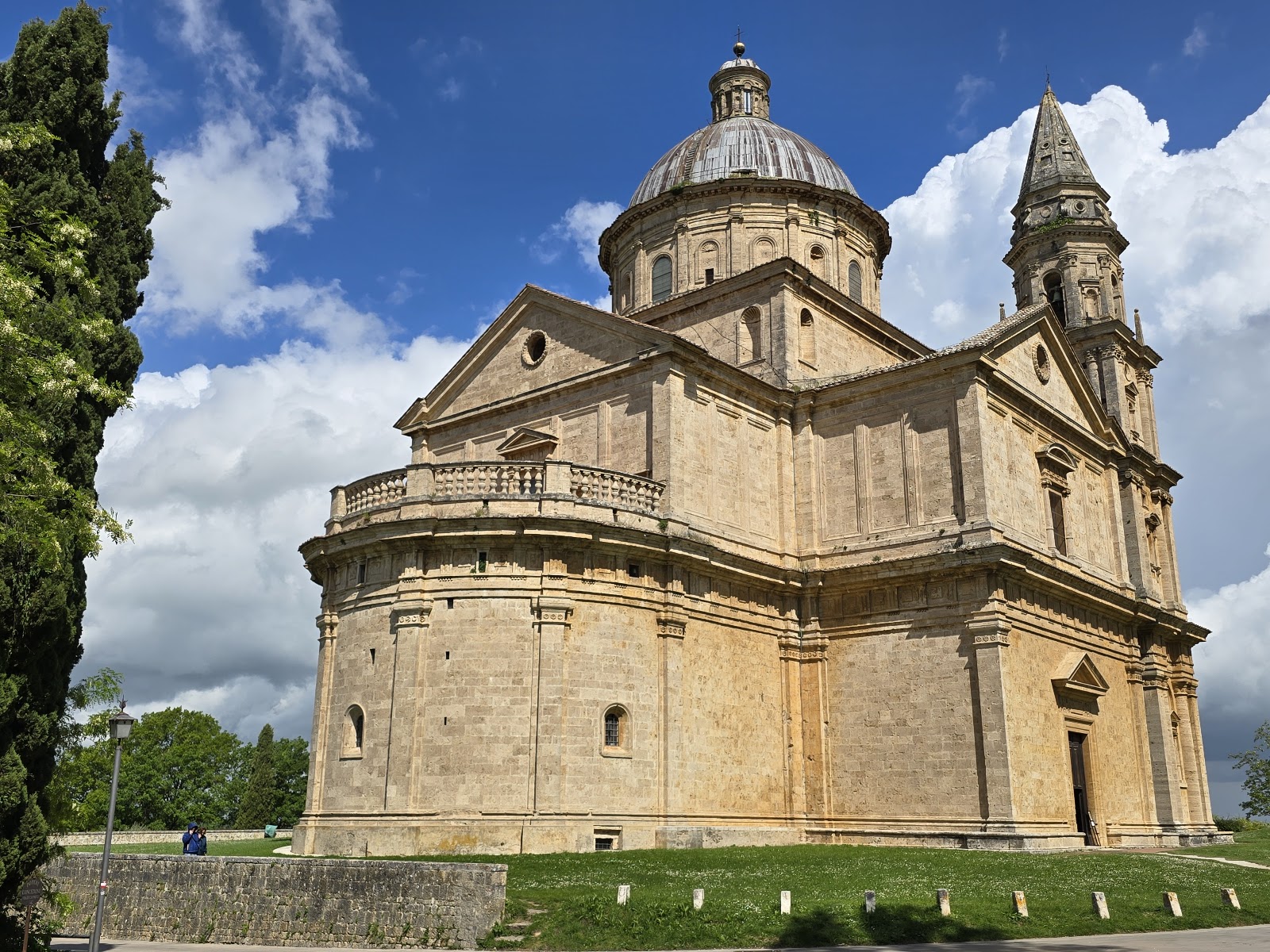
The site has been a place of worship since around the year 1000, when the parish church of Santa Maria held rights that traced back to an even older church outside the town walls — where the Tempio di San Biagio stands today. When Montepulciano became a bishopric in 1570, the existing church was deemed insufficient and work began on something grander.
Progress was slow and contentious. A design competition was held in 1586; Ippolito Scalza's project was selected in 1594. Construction ran until 1680, with the building consecrated on June 19, 1712, by Bishop Francesco Maria Arrighi. Only the 14th-century bell tower survived from the original structure. The planned marble exterior was never completed, leaving the façade in the bare stone you see today.

Good to know
Entry is free. The cathedral closes for a midday break, so go early morning or after 3pm. Parking outside the walls at Parcheggio 8 (Il Bersaglio) gives you a relatively manageable walk up to Piazza Grande.
Where is Cattedrale di Santa Maria Assunta?
More tickets & tours for Cattedrale di Santa Maria Assunta
Book directly at the provider
What travellers say about Cattedrale di Santa Maria Assunta
Compared to many Duomos in Tuscany, this one was a bit disappointing. The altarpiece was gone. In its place went a canvas, possibly due to restoration work, on which you could see what it looked like. For me the best thing about this Duomo was the contrast, the outside and the inside
⛪ Relatively small cathedral but so beatiful. Padua Cathedral, or Basilica Cathedral of Saint Mary of the Assumption (Italian: Duomo di Padova; Basilica Cattedrale di Santa Maria Assunta), is a Roman Catholic minor basilica and the cathedral located on the east end of Piazza Duomo, adjacent to the Bishop's palace, in Padua, region of Veneto, Italy. The cathedral, dedicated to the Assumption of the Virgin Mary, is the seat of the bishop of Padua. The church building, first erected as seat of a bishop of the diocese in the 4th century, has undergone major reconstructions over the centuries. The present church is the third structure built on the same site. The first cathedra was erected after the Edict of Milan in 313 and destroyed by an earthquake on 3 January 1117. It was rebuilt in Romanesque style: the appearance of that medieval church can be seen in the frescoes by Giusto de' Menabuoi in the adjoining baptistery. The current building dates from a reconstruction during the sixteenth century. While in the past the design was attributed to Michelangelo, it was performed rather by Andrea della Valle and Agostino Righetto, and has much in common with earlier Paduan churches. Construction began on the new Renaissance building in 1551 and went on for two centuries, being completed in 1754, yet leaving the façade unfinished. ⛪ Diğerleri ile karşılaştırdığımızda biraz küçük bir katedral ama çok güzel.
One of the places you will need to visit when in town. Really nice church ⛪️
It's a very boring church compared to other Italian churches I've seen (Duomo in Siena and Orvieto etc.).
Nothing to see here. But there was a Christmas market which was super cute.
More of Montepulciano
Discover where to stay, what to do and the best deals for your trip.
Explore Montepulciano →More attractions in Montepulciano
All of Montepulciano →

Background adapted from Wikipedia (CC BY-SA) · map data © OpenStreetMap contributors · ratings & place photos via Google · other photos with per-image credit. Ticket links may earn us a commission at no extra cost to you.