
Fonte Aretusa
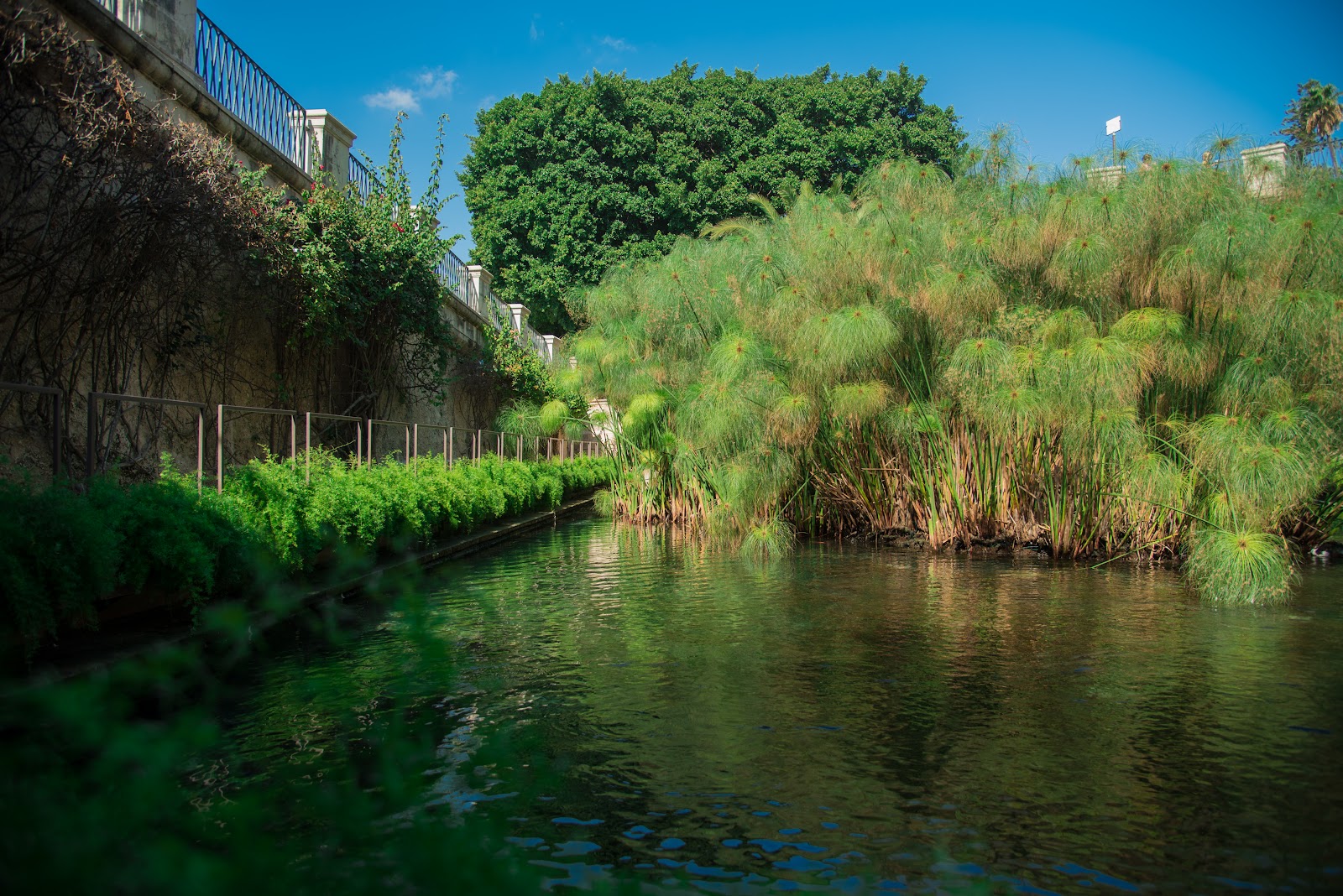
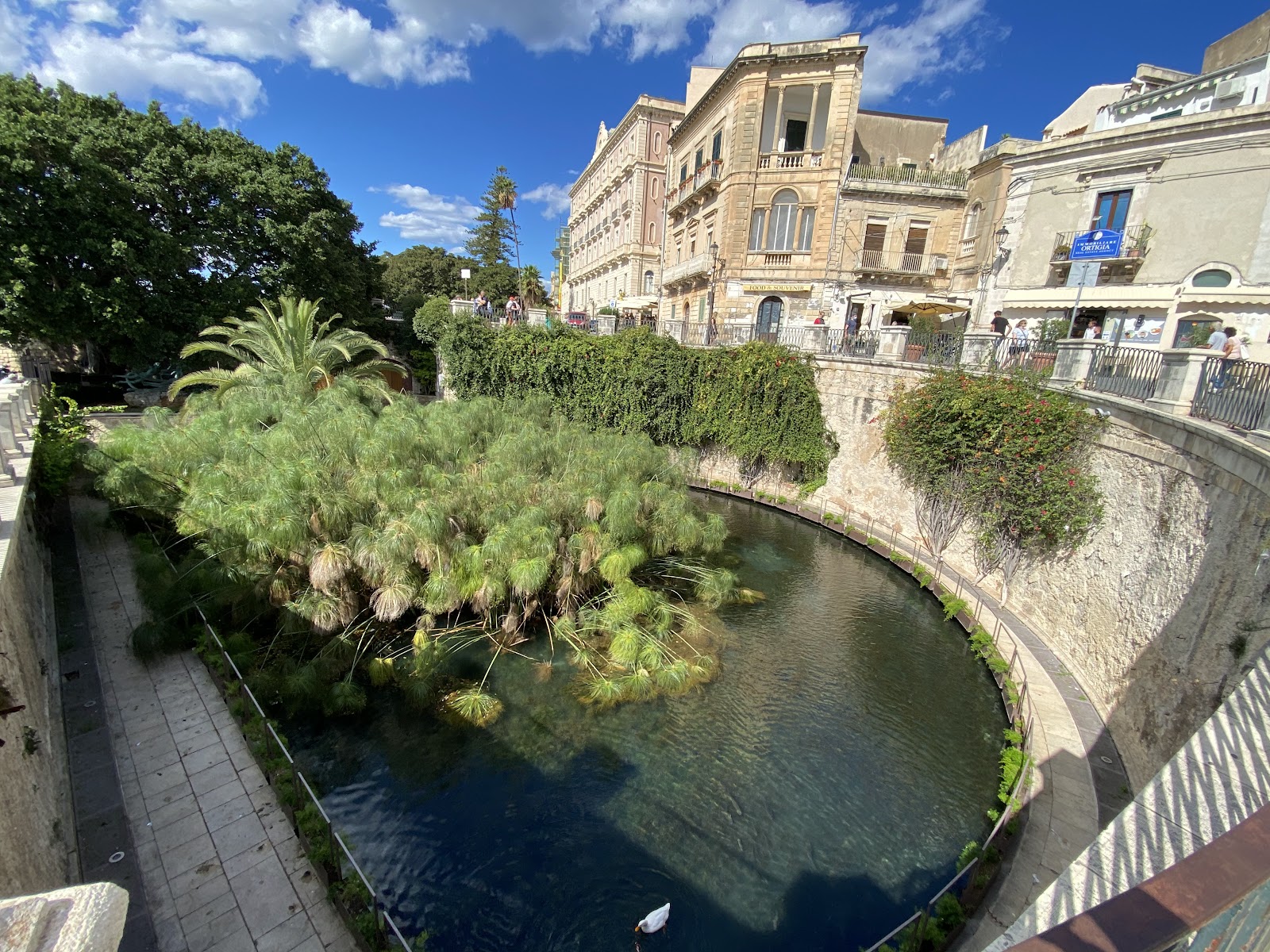
At the southern tip of Ortigia, a freshwater spring rises directly from the sea — or rather, rises beside it, separated from the harbour by nothing more than a low wall. This is Fonte Aretusa, a natural basin ringed by papyrus that grows in one of only two wild colonies in all of Europe. Ducks drift between the tall stems. The water, once pure enough that Horatio Nelson drew from it before sailing to meet Napoleon at Abukir in 1798, has since gone brackish — softened by centuries of earthquakes — but the spring itself has never stopped flowing.
The semicircular basin you see today was shaped in 1843, though the spring has been a symbol of Syracuse since the city's earliest coins, struck by Greek colonists from Corinth in the 8th century BCE. After dark, it is lit from sunset to midnight, and the papyrus casts long shadows across the water.
💛 What travellers fall for
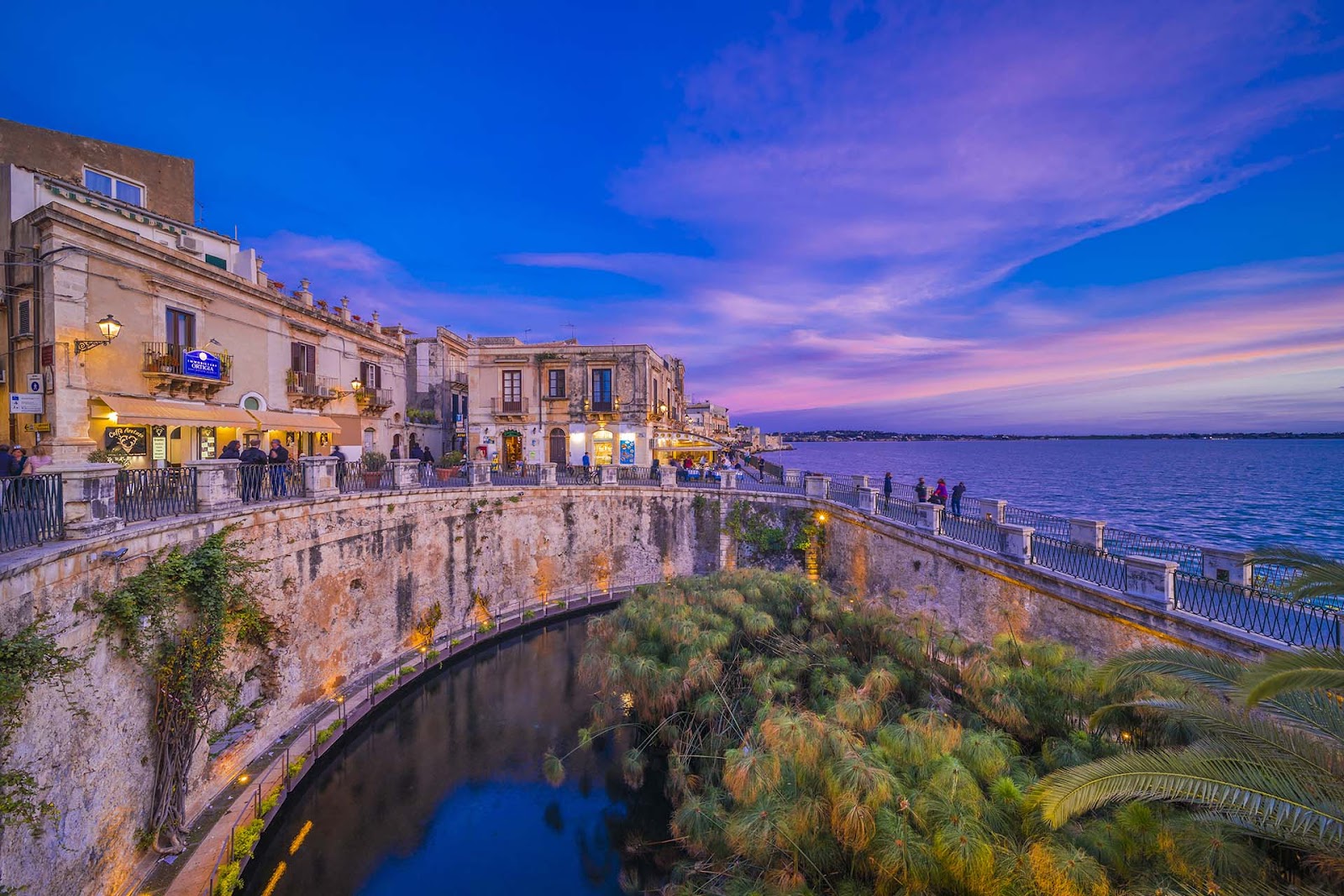
People who return to Ortigia tend to end their evenings here. The western wall is low enough to sit on, and the light on the harbour at dusk is particular — pink going gold going grey. The 1992 bronze by Biagio Poidomani, depicting the young Alphaeus mid-chase, is easy to miss; look for it just beside the basin.
The story behind Fonte Aretusa
Syracuse's Greek founders treated this spring as something close to sacred, and the myth they attached to it travelled far. The nymph Arethusa, fleeing the river god Alphaeus, was transformed into a freshwater spring here on the island — her pursuer becoming the river that, legend held, flowed beneath the sea from the Peloponnese to emerge beside her. Pindar, Virgil and Cicero all wrote of it. The spring appeared on ancient Syracusan coinage as an emblem of the city itself.
In 1540 Charles V incorporated the site into new fortifications, and the present basin was formed in 1843. Excavations nearby uncovered three tanneries from the 18th century, where the spring's water was channelled underground to feed leather-washing tanks — a more industrial chapter in a very long story.
Good to know
Free and open around the clock. Since October 2024, a ticketed walk around the interior runs Tuesday to Sunday, 4–7 pm, for €5 (€3 reduced). A multilingual audio guide is included. Spring and early autumn are the most comfortable seasons; July and August can be punishing by midday.
Mid-April to mid-May and mid-September to mid-October are the most pleasant windows — warm enough to linger, cool enough to walk. Summer temperatures regularly exceed 30°C, and the stone of Ortigia holds the heat well into the evening; the fountain's nighttime lighting makes a late visit in July or August a reasonable trade-off.
Where is Fonte Aretusa?
More tickets & tours for Fonte Aretusa
Book directly at the provider
What travellers say about Fonte Aretusa
Arethusa Spring, known locally as Fonte Aretusa, is one of Ortygia’s most enchanting landmarks—a place where history, myth, and natural beauty blend effortlessly. Situated along the waterfront, just a short walk from the bustling heart of Syracuse, the spring feels like a quiet pause in time, inviting visitors to slow down and admire a rare and ancient wonder. According to Greek mythology, the nymph Arethusa fled from Arcadia and emerged here in Syracuse as a freshwater spring. Standing by the water’s edge, it’s easy to understand how such a legend took root. The spring forms a calm, circular pool bordered by stone and lush greenery, with tall papyrus plants rising gracefully from the water. Seeing papyrus growing naturally in Europe is incredibly rare, and it gives the site a unique, almost exotic character. The pool is home to ducks, fish, and a few elegant swans, which glide across the water and add to the serene atmosphere. From the edge of the spring, visitors can look out toward the sea, where the deep blue of the Mediterranean contrasts beautifully with the soft, reflective surface of the freshwater basin. Fonte Aretusa is not a long stop—perhaps fifteen or twenty minutes—but it is undeniably memorable. Whether you’re drawn by the mythology, the natural setting, or simply the peaceful ambiance, the spring offers a lovely moment of calm amid Ortygia’s lively streets. Overall, Arethusa Spring is a charming and iconic spot, perfect for photos, quiet reflection, and appreciating one of Syracuse’s most poetic landmarks.
The Arethusa Spring (Fonte Aretusa) is a legendary freshwater spring situated on the island of Ortigia in the historical center of Syracuse, Sicily. Famous for its lush papyrus plants and myth of a nymph turning into water to escape a river god, it is one of the city's most emblematic landmarks
Beautiful place and area. Along this side you can get the best sunsets. This natural spring is stunning and seeing wildlife there. Also plenty of places to eat and drink.
Historical Fresh Water Spring feeding the city of Ortigia - Siracusa, in Sicily. Filled with fish & fowl.
Presenting Mrs. Ashley Tirzah Moon & Mrs. Guidance River Moon 👰🏻♀️💍👰🏿♀️💕🔔💒🇮🇹🌈 We are so excited to share our Italian wedding with y'all. This day was simply magical in every single way. I am so blessed to have the honor of marrying my soul mate in such a beautiful and romantic place; in front of my professors and classmates. I am so grateful to all of the people that made our day breathtakingly special from start to finish. We began our nuptuals with an intimate prayer in front of the Cathedral, just between me and my bride. After the ceremony in front of the cathedral we exchanged vows and joined our souls with a beautiful water ceremony at Fonte Aretusa. Followed by a beautiful dinner overlooking the Mediterranean Sea. Wedding #1 is complete, now to do it all over again in front of our friends and family in Santa Barbara in just a few days time! 🛐👰🏻♀️💍👰🏿♀️🔔🗓️ Absolutely amazing! Such a beautiful place to walk around and see the Mediterranean Sea and different birds. This was a cute little spot the directly into the walkway.
More of Siracusa
Discover where to stay, what to do and the best deals for your trip.
Explore Siracusa →More attractions in Siracusa
All of Siracusa →

Background adapted from Wikipedia (CC BY-SA) · map data © OpenStreetMap contributors · ratings & place photos via Google · other photos with per-image credit. Ticket links may earn us a commission at no extra cost to you.