
Fontana di Sant'Andrea
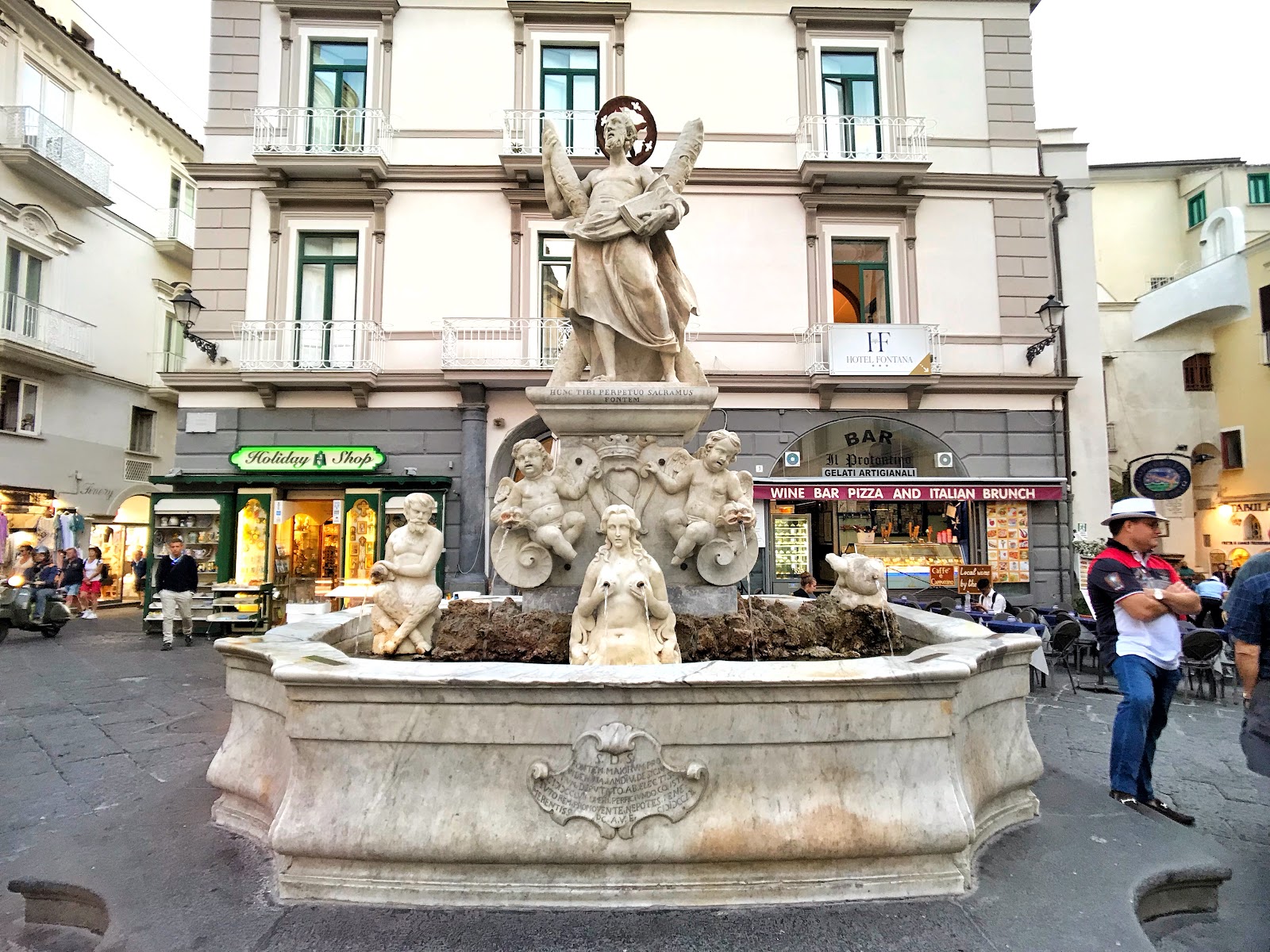
At the centre of Piazza del Duomo, before you even register the cathedral's long staircase, your eye lands on a fountain of white Carrara marble. A siren rises from the basin, and around her: a dove, a satyr locals call the Pulicano — said to resemble an Amalfi fisherman — and the Apostle Andrew himself, each figure standing in for one of the classical elements. On hot afternoons, travellers fill water bottles from its spouts.
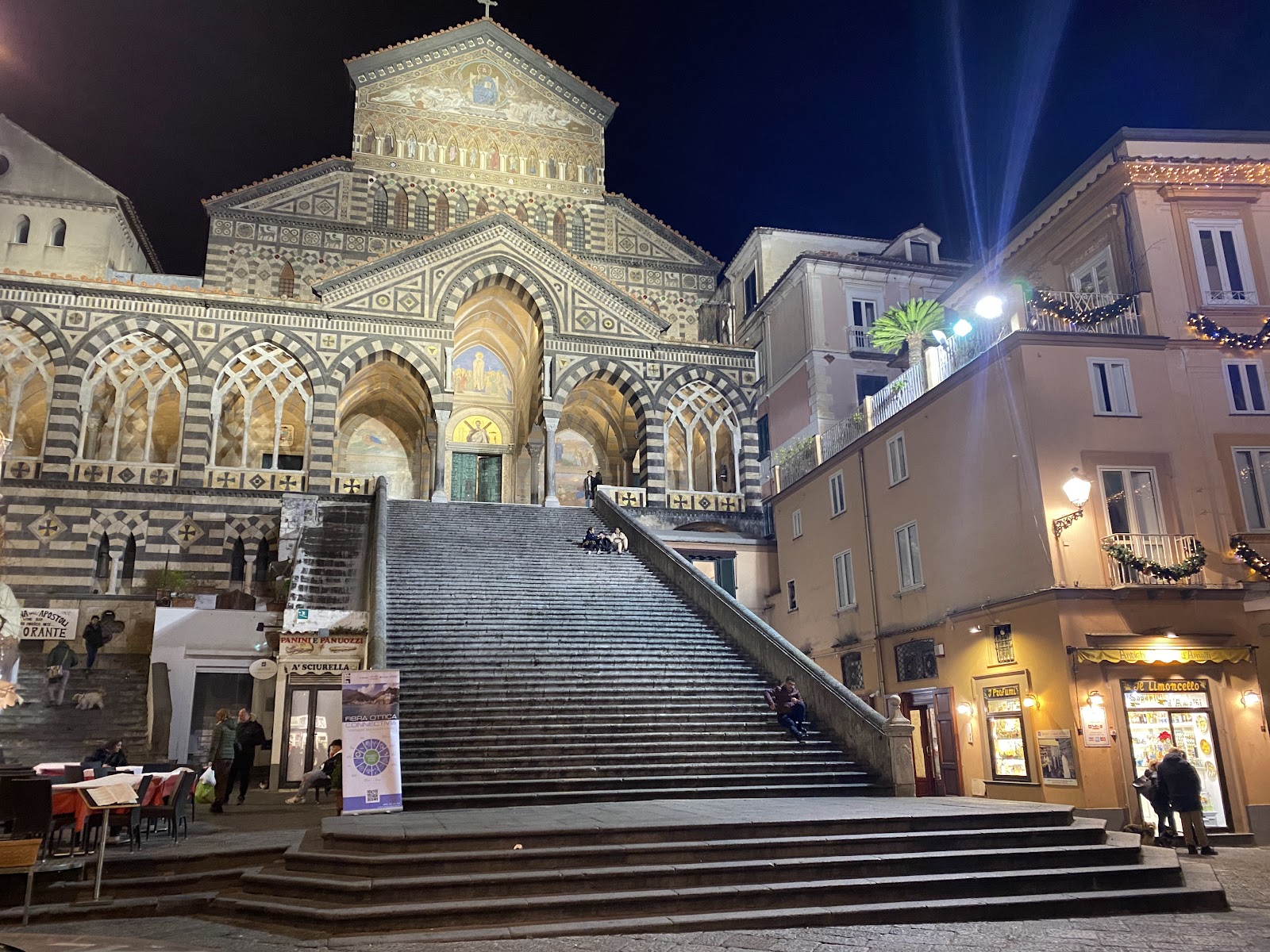
The fountain is the square's social hinge. Young people gather here at weekends, market vendors set up around its edges, and on 30 November and 27 June, the Feast of Sant'Andrea begins right here before the procession winds down to the beach.
💛 What travellers fall for
People who come back to Amalfi tend to check in on the fountain first — partly habit, partly because the light on the marble shifts dramatically between morning and evening. Come early if you want to photograph it without a crowd framing every shot. The Pulicano figure, said to wear the face of a local fisherman, rewards a closer look.
The story behind Fontana di Sant'Andrea
In 1757 the city government decided to beautify Piazza del Duomo and commissioned a fountain that locals had long wanted. The work went to Gennaro Pagano, a Neapolitan marble carver, who agreed to complete it for 315 ducats — working from a design whose authorship remains uncertain, though likely his own. By 1760 the fountain stood at the foot of the cathedral's monumental staircase.
In 1869 it was moved to its current position directly opposite the cathedral, shifting from architectural ornament to the square's centrepiece. A restoration in 2018 addressed both the stonework and the internal water system, returning the fountain to working order.
Good to know
Free to enter the piazza at any hour. The 10-minute walk from the ferry terminal is straightforward. Morning and late afternoon are noticeably quieter than midday. Parking at Luna Rossa runs around €2.50 per hour if you're arriving by car.
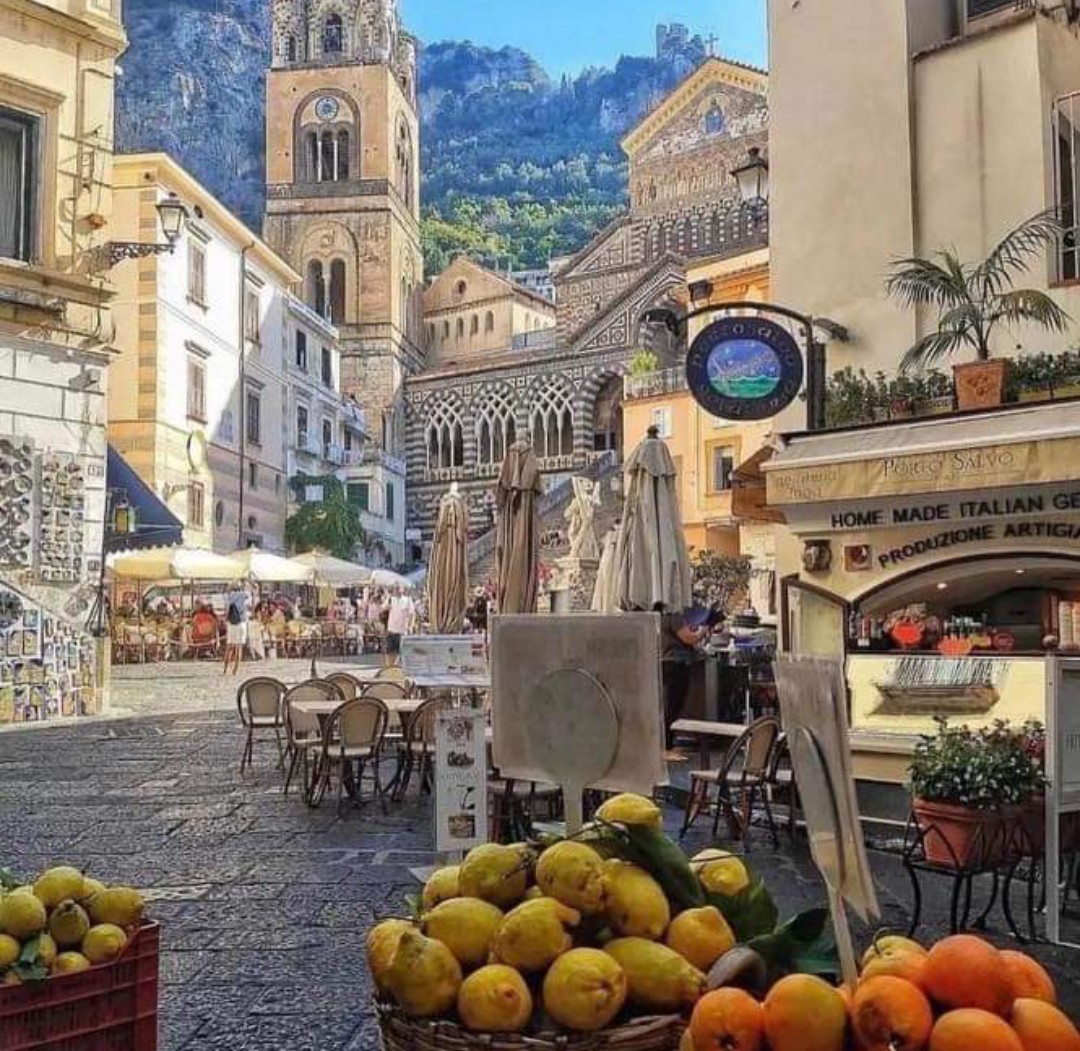
The piazza is open to the sky but sheltered on most sides by buildings, which cuts the wind. Summer middays are genuinely hot here, making the fountain's water a practical as well as aesthetic presence. Spring and autumn bring cooler, less crowded conditions.
Where is Fontana di Sant'Andrea?
More tickets & tours for Fontana di Sant'Andrea
Book directly at the provider
What travellers say about Fontana di Sant'Andrea
The Fountain of Saint Andrew in Amalfi is located in the heart of the city, right next to the Cathedral of Saint Andrew. In its vicinity, there are also many terraces and souvenir shops. The water is drinkable and very cold.
Stopped by here whilst doing an Amalfi Coast road trip across Italy. The Amalfi area & Duomo is quite underwhelming. It’s a huge tourist trap, very busy, with little charm or much to do. Yes, it’s pretty…but there’s also a lot of pretty areas to explore within other towns. However whilst I was here, I had to try the Lemon Sorbet as it seems to be the only thing to do. I also found a silly shop which sold a *ahem* spicy plant seeds should I say (see pic). That’s about the only thing which made me smile here. It’s something which is ticked off the list, but I wouldn’t go out my way to visit here, or even make a day of it because you can do it in an hour.
a historic fountain located in the town's central square, near the Amalfi Cathedral. it is surrounded by many small shops for lemon sorbet and restaurants. The fountain is an artistic picturesque and one of the must visit places. Small streets lined with local products shops are also there.
Saint Andrew’s Fountain in Amalfi is a beautiful Baroque landmark right in the town square. The finely carved statues and crystal-clear water make it a peaceful spot to pause and take photos. Surrounded by charming cafés and bustling streets, it perfectly captures the spirit of Amalfi.
The Saint Andrew’s Fountain (Fontana di Sant’Andrea) is a prominent and historic landmark located in the Piazza del Duomo in Amalfi, Italy. It stands directly in front of the Amalfi Cathedral (Cattedrale di Sant’Andrea), which is dedicated to Saint Andrew, the patron saint of the town. Key Features: 1. Historical Significance: The fountain dates back to 1300, though it has undergone several modifications and restorations over the centuries. It was originally built to provide the residents of Amalfi with fresh water. 2. Architectural Style: The fountain is a mix of Gothic and Renaissance elements, featuring a central basin with a decorative marble structure. It includes ornate sculptures, carvings, and reliefs, representing religious and civic symbols. 3. Iconography: At the top of the fountain, you’ll find a statue of Saint Andrew, depicted holding a cross. Surrounding it are detailed reliefs that tell stories related to the saint and his importance to Amalfi. 4. Location: The fountain is located in the main square of Amalfi, making it a central part of the town’s social and cultural life. It is often a gathering place for locals and tourists. 5. Cultural Importance: The Saint Andrew’s Fountain is not just an architectural feature but also an integral part of Amalfi’s identity, linking the town’s history with its patron saint, Saint Andrew, whose relics are housed in the Amalfi Cathedral. If you’re visiting Amalfi, the fountain serves as a beautiful and historic landmark to explore, located right at the heart of the town’s vibrant center.
More of Amalfi
Discover where to stay, what to do and the best deals for your trip.
Explore Amalfi →More attractions in Amalfi
All of Amalfi →

Background adapted from Wikipedia (CC BY-SA) · map data © OpenStreetMap contributors · ratings & place photos via Google · other photos with per-image credit. Ticket links may earn us a commission at no extra cost to you.