
Eremo Le Celle
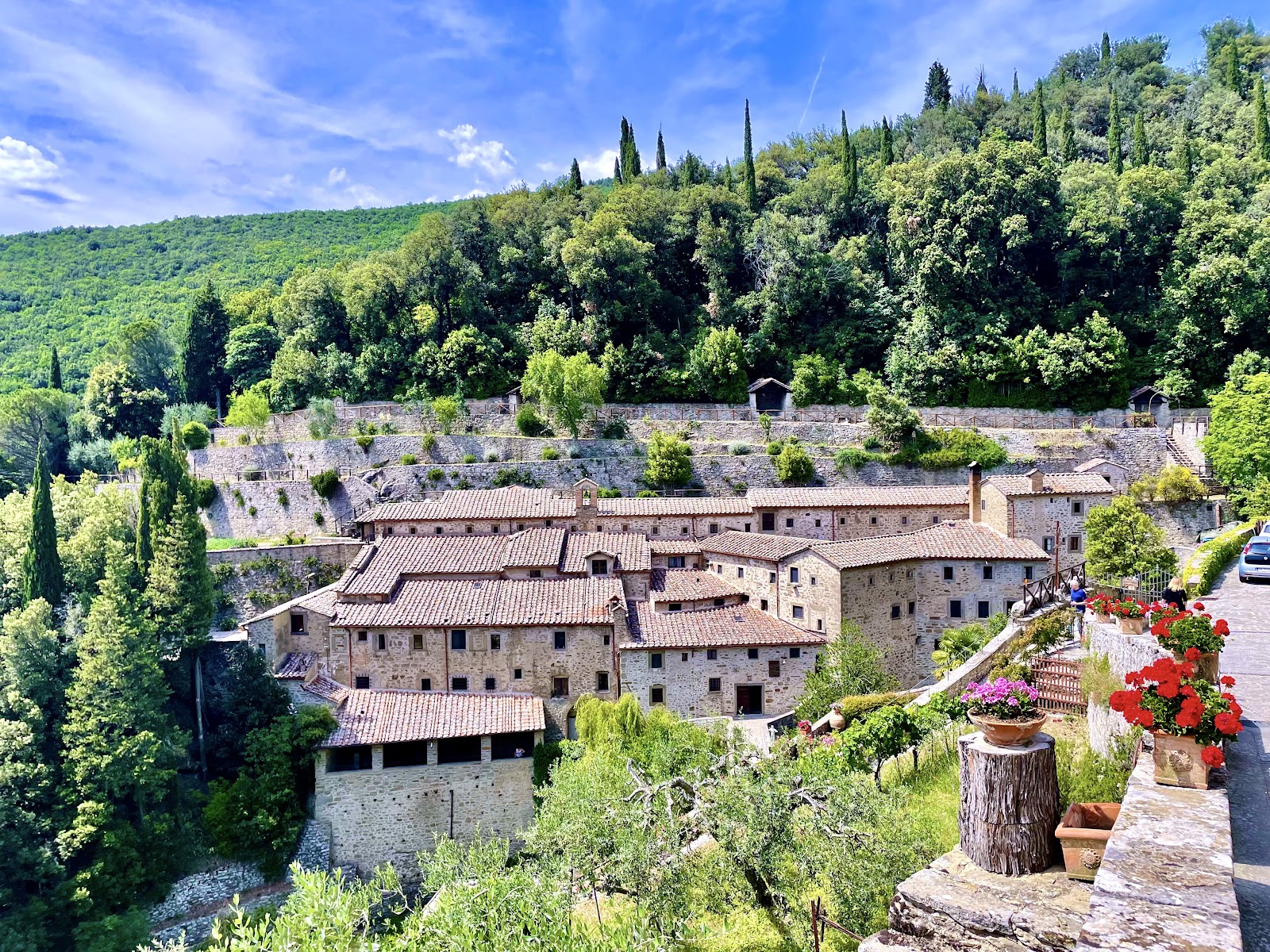
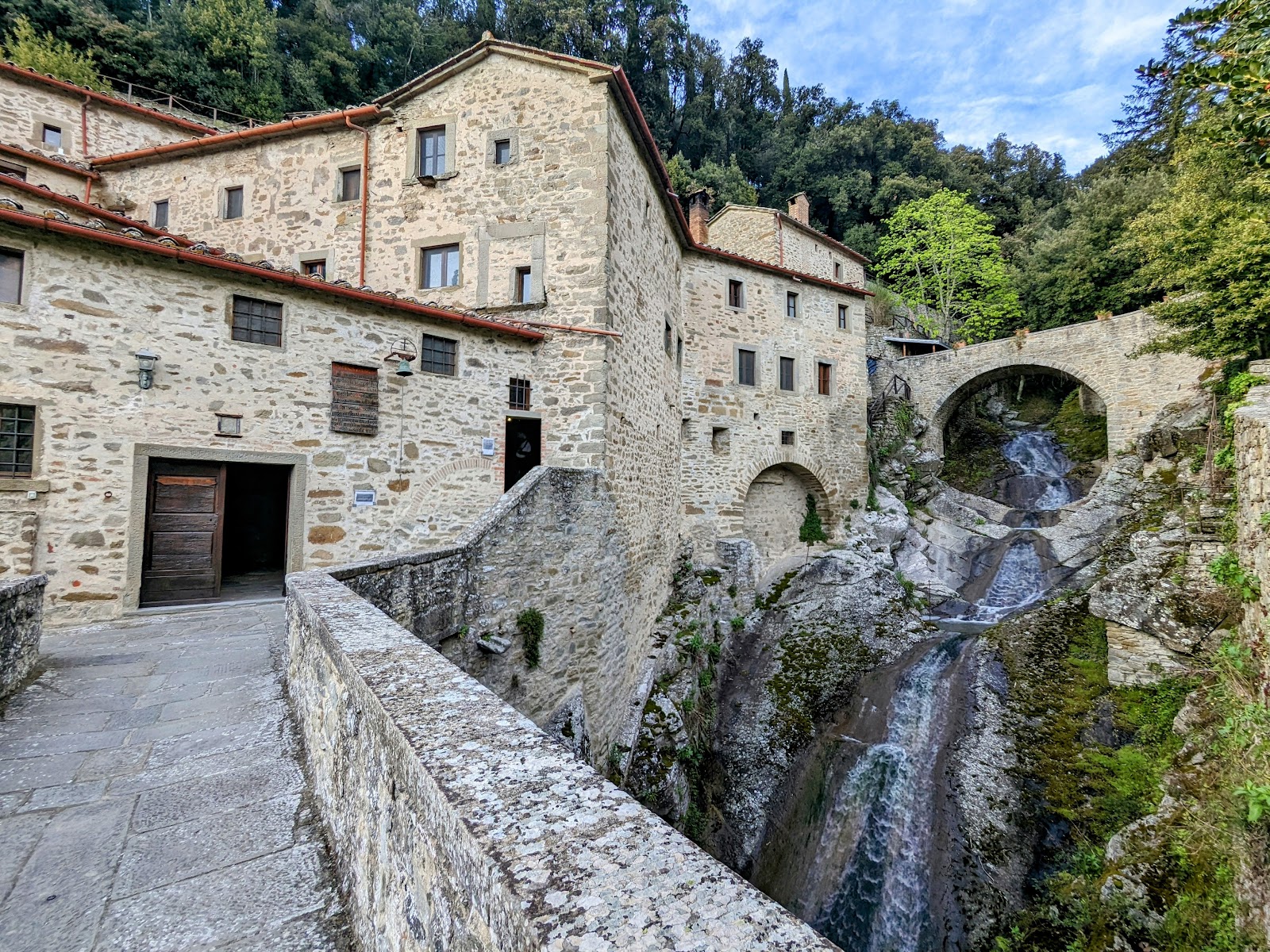
Three km north of Cortona, a mountain stream cuts a gorge through Monte Sant'Egidio, and the hermitage of Le Celle steps down its terraced walls to meet it. The buildings follow the shape of the hillside, angled to catch the sun, and three stone bridges — the oldest from 1594, the grandest commissioned by a Grand Duke in 1728 — stitch the two banks together. Holm oaks crowd close, and when the bells call the six resident Capuchin friars to vespers, the sound travels a long way through the trees.
Francis of Assisi came here around 1211, drawn by the solitude of the gorge. He dictated his final testament here in 1226. The community that grew around his memory still lives by a strict rule, so most of what you see from the paths and bridges is the exterior of a working monastic life — stone, water, silence.
💛 What travellers fall for
People who come back tend to arrive in the late afternoon, when the light drops into the gorge and the stream noise covers everything else. The sentiero 561, an ancient basalt track up from Cortona, takes about fifty minutes on foot and deposits you at the hermitage already quieted down. The walk out, downhill, is the better direction.
The story behind Eremo Le Celle
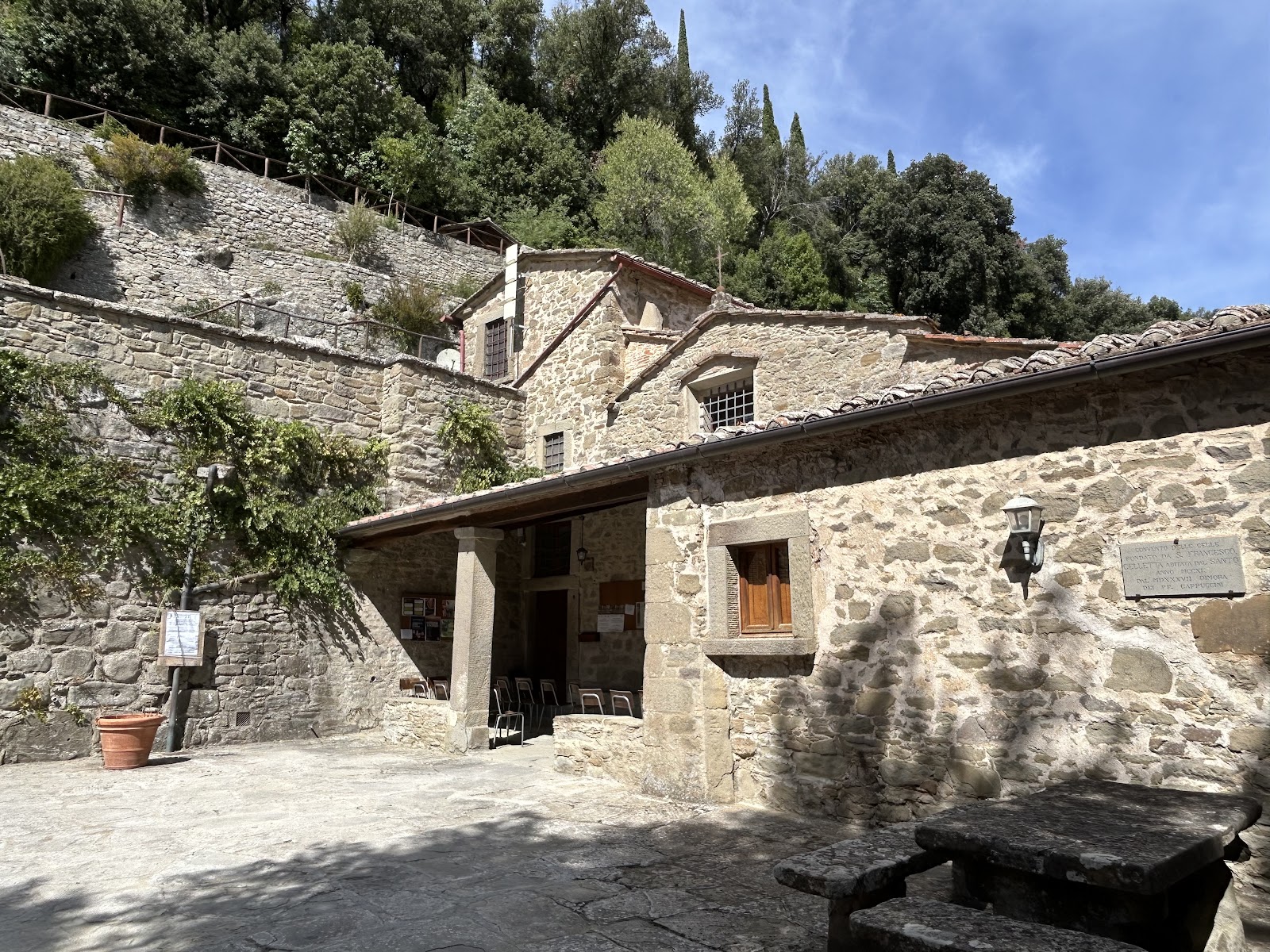
Around 1211, Francis of Assisi received a parcel of land on Monte Sant'Egidio from a young Cortona nobleman, Guido Vagnottelli — later venerated as Blessed Guido — and established a simple hermitage in the gorge. He returned in 1226 and dictated his will here. After his death, Brother Elias of Cortona, who would become Minister General of the Franciscans, built a sanctuary, refectory and five stone cells in 1235, formalising what had been a place of retreat into a community.
The hermitage fell into near-abandonment before the Capuchin Order took it over in 1537, shaping the severe, terraced form it holds today. Napoleon's government expelled the monks between 1804 and 1811; they returned and stayed, training novices here until 1988. The church was rededicated to Anthony of Padua in 1634 and holds seventeenth-century Tuscan paintings. The last major renovation was in 1969.
Good to know
No public transport runs here; it's a 5 km drive (parking available) or a 50-minute walk up sentiero 561. Many interior spaces are closed to visitors — the community is active, not a museum. Entrance appears to be free. Respect the silence and the posted rules.
Spring and early autumn are the most comfortable seasons for the walk up from Cortona — the gorge stays cool even in summer, but the path itself is exposed in places. Winter mornings can be cold and the track slippery after rain.
Where is Eremo Le Celle?
More tickets & tours for Eremo Le Celle
Book directly at the provider
What travellers say about Eremo Le Celle
Tranquil surroundings, you can see why the Francisans chose to build here. A very spiritual place, St Francis's cell is tiny! An easy drive from Cortona. Very quiet when we visited (end Dec 25).
It was a serine experience to go there. The place was beautiful and worth the trip. It is a hike if you walk so take a taxi.
This is a must do hike from Cortona if you like walking. (You can also drive directly there). From Cortona, take the lower dirt road which comes out at the tar road about half way. Took us 1:15 to walk there and 45 mins back just staying on the road. Enter through the Antique Road past the cross when you arrive for a great entrance to this old monastery. You will exit back out near the car parking area. Very tranquil with so much history. Well worth it.
We took a 55 minute scenic walk from the town of Cortona. The walk there was beautiful. There are hills and the trail is both roadway and gravel. Once you get there it is so serene! The area with the waterfall is magnificent! They have little bracelets and things for sale via the honor system. There are trails to walk around the monastery as well.
Unlike some historical sites that are merely museums, the Hermitage of "Le Celle" is still inhabited by a community of friars. This continuity ensures that the site's spiritual purpose remains central, and it serves as a tangible link to the life and legacy of St. Francis of Assisi. The hermitage origins date back to 1211 when St. Francis received the land from a local nobleman, and who became his first follower. St. Francis cell (known for the small caves and shelters, not imprisonment), know for their small and extremely rustic attributes. These embody the ideals of St. Francis, extreme poverty, simplicity/humility, and connection to nature. St. Francis returned here frequently being drawn to the peacefulness and and rugged terrain. His last visit was 1226, the year of his death, and it's believed where he dictated his last will and testament. I find the sign that reads: "Fermati Fel silenzio davanti a io riscopri chi sei" Translation into English: "Stop in silence before God rediscover who you are" to be very profound.
More of Cortona
Discover where to stay, what to do and the best deals for your trip.
Explore Cortona →More attractions in Cortona
All of Cortona →

Background adapted from Wikipedia (CC BY-SA) · map data © OpenStreetMap contributors · ratings & place photos via Google · other photos with per-image credit. Ticket links may earn us a commission at no extra cost to you.