
Museo dell'Accademia Etrusca e della Città di Cortona (MAEC)

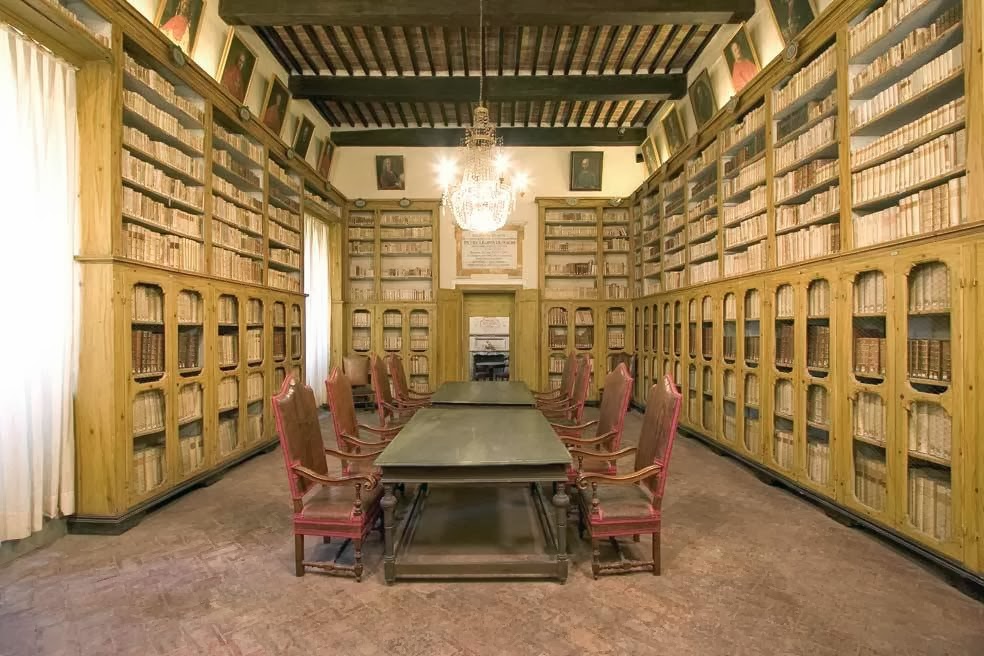
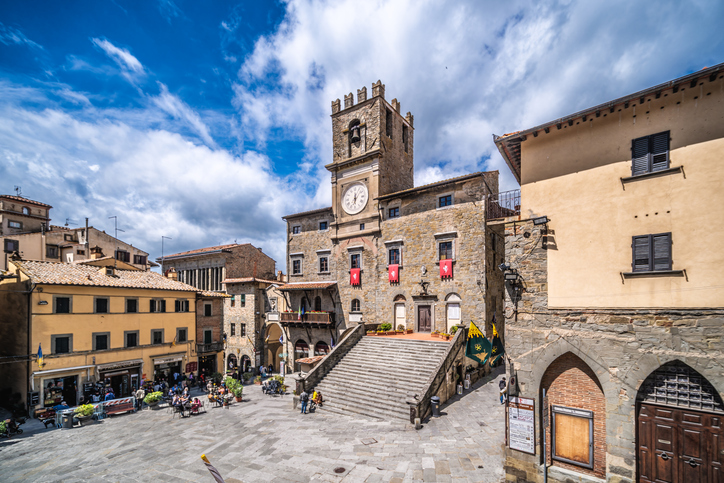
The entrance to MAEC sits on Piazza Signorelli, and the building itself — Palazzo Casali, raised by Cortona's ruling family in the thirteenth century — gives you the first clue that this is not a conventional regional museum. Below the piano nobile where the academy once held its meetings, two floors of former prison cells now house the Etruscan and Roman city collection, the stone walls still carrying the weight of that earlier purpose.
What the rooms contain is genuinely surprising in scope: a five-foot bronze chandelier cast by Etruscan hands in the fifth or sixth century BC, an Egyptian funerary boat dating to around 2000 BC, and the Cortona Tablet — a bronze document inscribed with roughly two hundred words of Etruscan, one of the longest texts in the language to survive.
💛 What travellers fall for
People who come back tend to linger longest with the Cortona Tablet — not because they can read it, but because holding that much Etruscan language in your gaze feels like standing at the edge of something almost decipherable. The Braille guide and tactile stations are worth knowing about if you're visiting with someone who has limited sight.
The story behind Museo dell'Accademia Etrusca e della Città di Cortona (MAEC)
In 1726, three brothers — Marcello, Filippo, and Ridolfino Venuti — gathered with other Cortona noblemen to found what began modestly as a society for purchasing books. Within a year it had become the Accademia di Scienze et Erudizioni, and the following year their uncle, Abbot Onofrio Baldelli, donated his personal collection of antiquities and his library to the institution, effectively founding the museum.
Grand Duke Giangastone de' Medici granted the use of Palazzo Casali as a home for the collection. After restoration work, both museum and library settled into the piano nobile in 1753, making it one of the earliest public museums in Italy. The institution expanded over the centuries — Bishop Guido Corbelli's Egyptian collection arrived as a donation, Carlo Ginori gave a porcelain shrine in 1756, and works by Cortona-born Futurist painter Gino Severini were added later. In 2005, a reorganisation created the current MAEC, integrating the Accademia Etrusca's holdings with the broader city collection.

Good to know
MAEC is open daily April through October (10 a.m.–7 p.m.) and Tuesday through Sunday the rest of the year (10 a.m.–5 p.m.), closed 25 December. First Sundays April–October 2026 are free. A Trenitalia regional or Frecciarossa ticket to Camucia-Cortona or Terontola-Cortona gets you a discount, valid up to two days before entry. Budget at least ninety minutes; thirty rooms reward a slower pace.
Where is Museo dell'Accademia Etrusca e della Città di Cortona (MAEC)?
More tickets & tours for Museo dell'Accademia Etrusca e della Città di Cortona (MAEC)
Book directly at the provider
What travellers say about Museo dell'Accademia Etrusca e della Città di Cortona (MAEC)
This is a must see 👀 museum if you are in Cortona. There's about 19 rooms of exhibitions. It easily takes a couple of hours to get around. There's a number of artefacts that are 6th Century BC or around that time. There's also a lot of renaissance art 🎨 works.
This small museum is well curated with an impressive collection of art reflecting the history of this town and immediate area. The Etruscan lamp is a prized relic housed and on display here. Many artifacts from pre-Roman times found in this area as well as art by artists from this area and relics collected over the centuries may be found here.
There were a lot of wonderful exhibits, many of which had no explanation at all or only in Italian. There is apparently an app which will provide an audio guide, except the Wi-Fi was not working. Cell coverage is very spotty especially in the underground floors. Since I was primarily interested in the early history of the Cortona area, I had very little guidance. There's a very interesting bronze plaque about a court case, and there was an English translation, but there was no mention of the language or alphabet. The progression is a bit unclear as well. The rooms are numbered, but not always sequentially, and at one point I had to go through an empty dark room and go behind the wall to find the way to the next area. There are exit signs, but most of these lead to alarmed doors. So, very interesting exhibits, but not user-friendly if you don't speak Italian.
A very interesting museum showcasing the rich history of the Etruscan people from their origins to present day. Lots of exhibits, including a separate Egyptian collection. Whilst it is great for adults the written description is very academic and heavy so will be easily lost on children. If it were more interactive it would be an outstanding museum. Worth visiting nevertheless.
The superb and most astounding Archaeological museum of Tuscany! It describes local history from paleolithic times to XVIII centuries. Amont the artefacts there are famous Tabula Cortonensis (bronze tablet with Etruscan text), Etruscan bronze lamp and (suddenly) Tempietto Ginori (porcelain thing some Tuscanian lord tried to bribe new Austrian Great duke). And many Etruscan urns - I really like them!
More of Cortona
Discover where to stay, what to do and the best deals for your trip.
Explore Cortona →More attractions in Cortona
All of Cortona →
Background adapted from Wikipedia (CC BY-SA) · map data © OpenStreetMap contributors · ratings & place photos via Google · other photos with per-image credit. Ticket links may earn us a commission at no extra cost to you.