
Ear of Dionysius

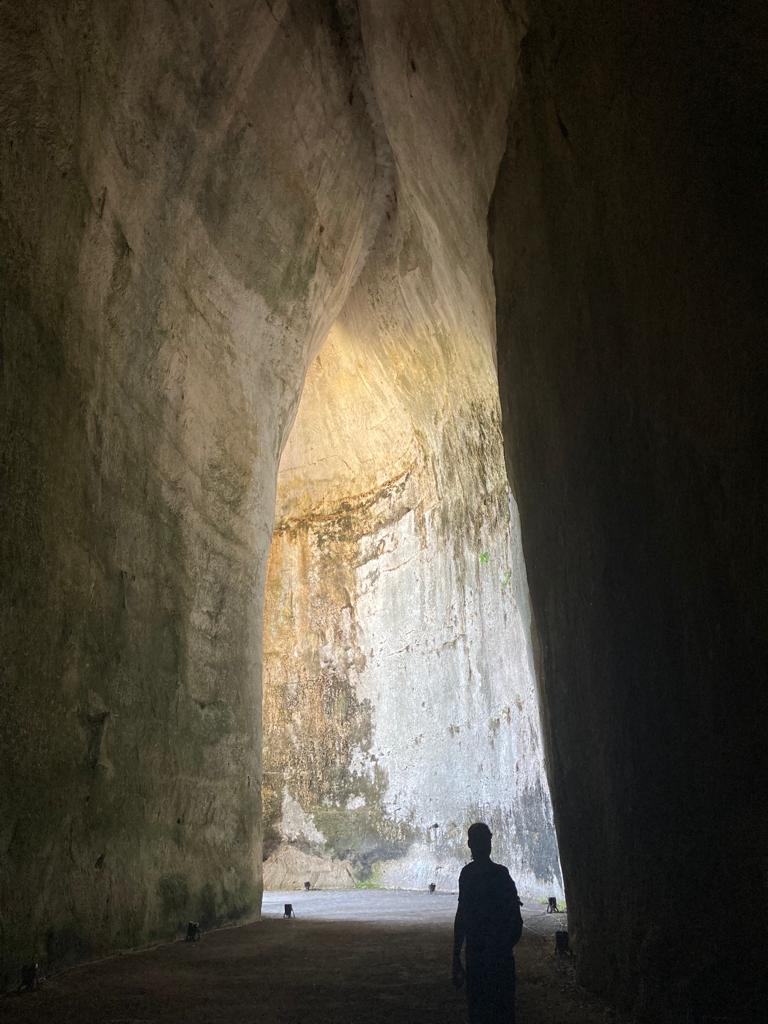
Stand at the entrance to the Ear of Dionysius and you're looking at a limestone cave 23 metres high and 65 metres deep, its walls tapering upward to a narrow slit that gives it the rough shape of a human ear. The S-curve of the interior and the sheer polished stone create acoustics so precise that an 18th-century traveller, Jean-Pierre Houël, tested them with a horn, a shot, and a drum — each sound returning amplified and multiplied through the dark.
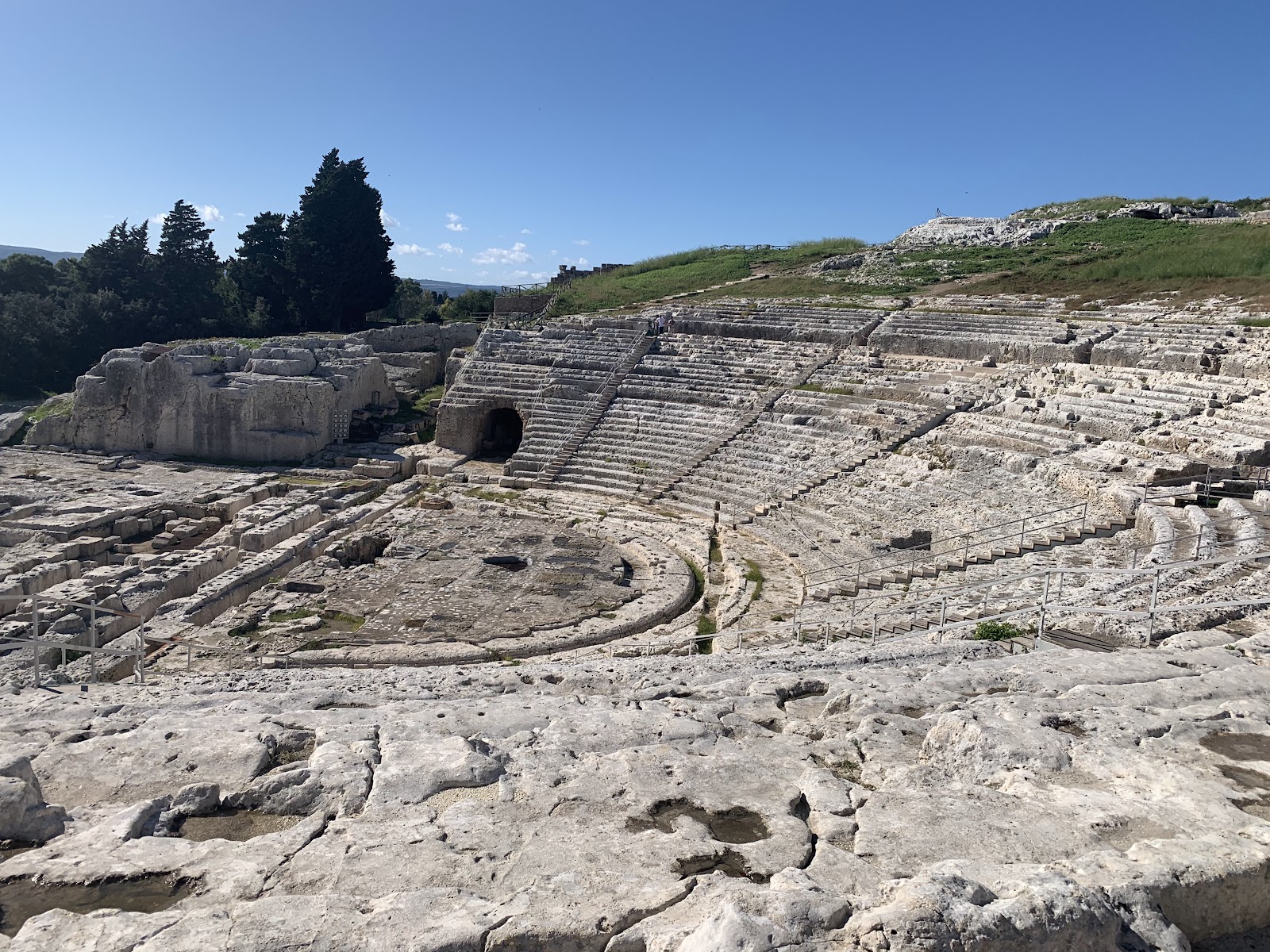
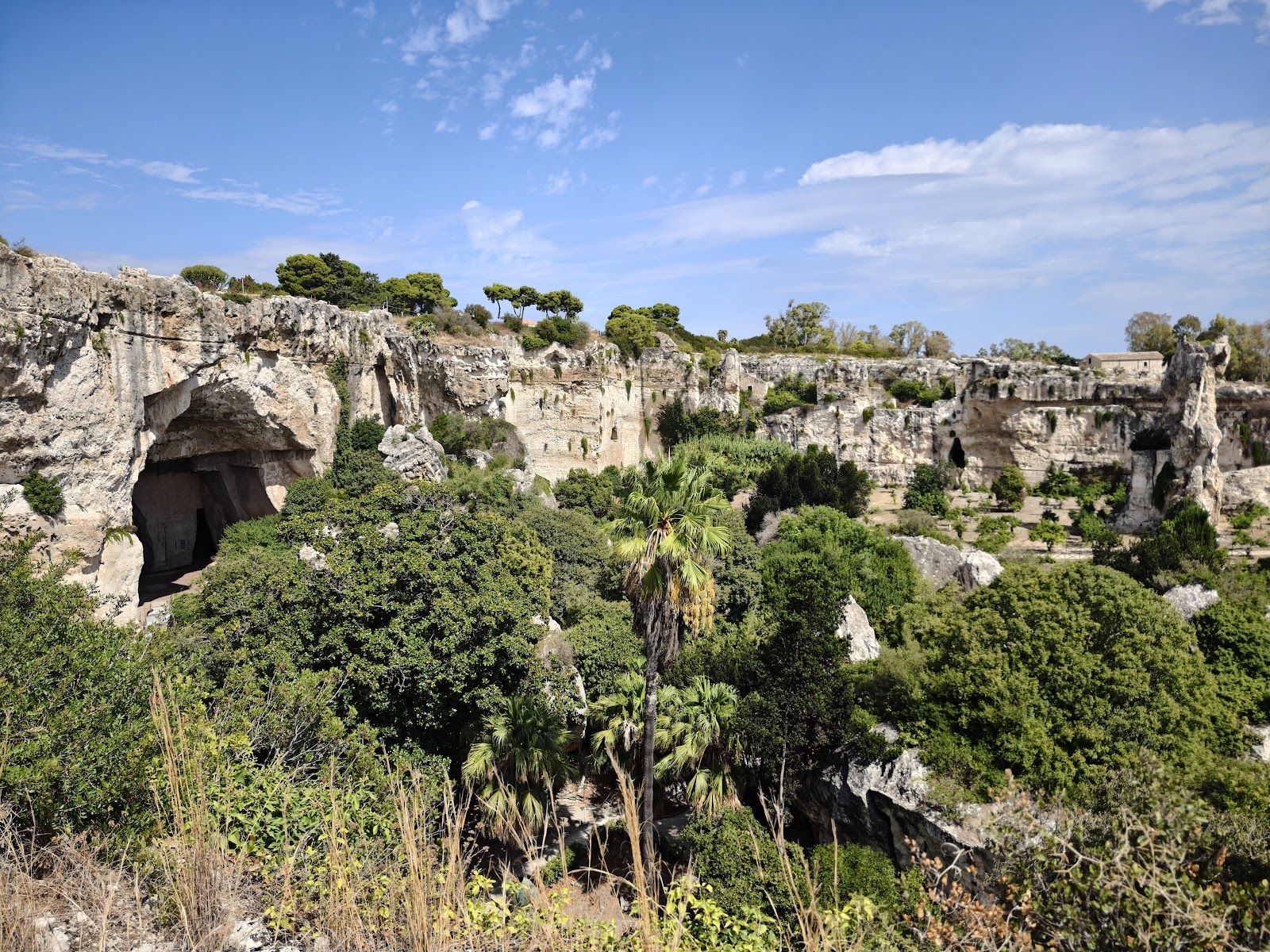
Carved from the Temenites hill, probably as a limestone quarry, this cave sits inside the Latomia del Paradiso within the Neapolis Archaeological Park, just behind the Greek theatre.
💛 What travellers fall for
People who come back tend to bring something small to make a sound — a clap, a coin tapped on stone. The focal point that once concentrated the acoustics to their most extreme is no longer accessible, but even a whisper near the entrance carries. Arrive early, before tour groups, and the cave holds a rare, particular quiet.
The story behind Ear of Dionysius
The cave began as a quarry, limestone cut from the Temenites hill during Greek and Roman times, later shaped into a water cistern before an earthquake rendered it unusable. For centuries it was known as Crypta loquens — the cave that speaks — a name that acknowledged its acoustics without quite explaining them.
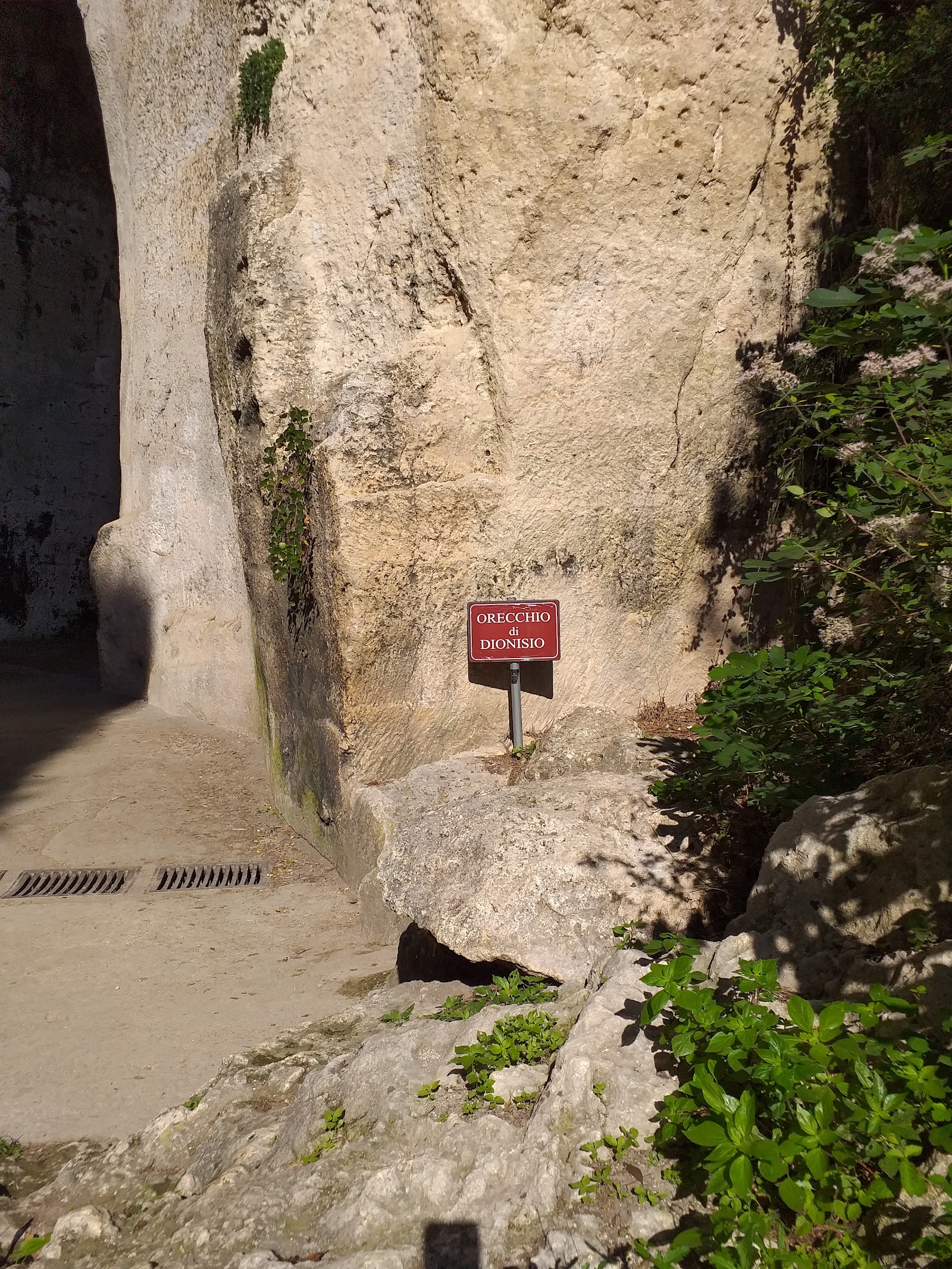
In 1608, the painter Caravaggio was brought here by the Syracusan scholar Vincenzo Mirabella. It was Caravaggio who gave it the name Orecchio di Dionisio, linking the cave's ear-like form to Dionysius I, the tyrant who ruled Syracuse from 405 to 367 BC. The legend — that Dionysius used the cave's acoustics to eavesdrop on prisoners held in the latomiae, among them the poet Philoxenus — has no documentary basis, but it stuck.
Good to know
Entry is included in the Neapolis Archaeological Park ticket; check the park's official site for current prices and hours, which shift seasonally. Plan two to three hours for the wider park. There's little shade on the path, so a morning visit in summer is worth the early start.
Spring and autumn keep the heat manageable and the crowds thinner. A summer visit is possible but the path through the park offers little shade; early morning is the practical solution.
Where is Ear of Dionysius?
More tickets & tours for Ear of Dionysius
Book directly at the provider
What travellers say about Ear of Dionysius
Absolutely loved this place!! It's a must do!! 2 things though, just small things. Offer a map for the walk around, you can get them printed for next to nothing and Signage, Signage, Signage this needs to be updated and cleaned up. There is definitely not enough clear directional signage. Lastly with the amount charged to enter the place could do with a mow and clean up. The history people pay to see speakers for itself but the people managing it need to do some work. Whom ever that is.
The "Ear of Dionysus" and the Greek theater are worth the price of admission. It's an epic sight and the history is quite jarring. Imagining a cave of political prisonors shackled to the wall and wailing in this echo chamber chills one's spine. It's a fascinating rock formation that was shaped by quarrymen and water. There were apparently a series of "tyrants" who ruled during the era the nickname was given to the structure. There's a small cutout high above (a square window into this Grecian God's proverbial ear) wherein the reigning "Mad Tyrant" would have his minions or himself listen to what the prisoners were saying. With a cave full of a 20 people the sounds become an amorphous blob of shifting tones that echo and move in the strangest ways. If one tries (at least from the ground) to hear what any one is saying it becomes easy to understand how paranoia could lead to hearing plots amidst banal banter.
Really interesting place. Staff was slightly rude, and most of the places were booked to private arrangements, which was not communicated at ticket offices, so we did not get full value for the money, which was quite a lot.
Originally, this place was not on my itinerary while visiting the area. I'm incredibly glad plans changed because WOW is this place cool. I'm a guy who loves caves and natural wonder so this place was amazing. The ticket is a tad pricey at €17 but it was worth it. The ruins and the statues were unforgettable. That and the giant head in the main cave... Nothing can replace that uncanny feeling of seeing its gigantic scale for the first time after your eyes adjust. So recommend.
Very fascinating ancient ruins. They did a good job building accessible pathways so you can explore ruins. It was cool to see side by side Greek and Roman ruins! Including what is described by a sign as the largest Greek altar in the world!! There is a lovely little cafe, of course, on the way in/out as well.
More of Siracusa
Discover where to stay, what to do and the best deals for your trip.
Explore Siracusa →More attractions in Siracusa
All of Siracusa →

Background adapted from Wikipedia (CC BY-SA) · map data © OpenStreetMap contributors · ratings & place photos via Google · other photos with per-image credit. Ticket links may earn us a commission at no extra cost to you.