
Cattedrale di San Marco
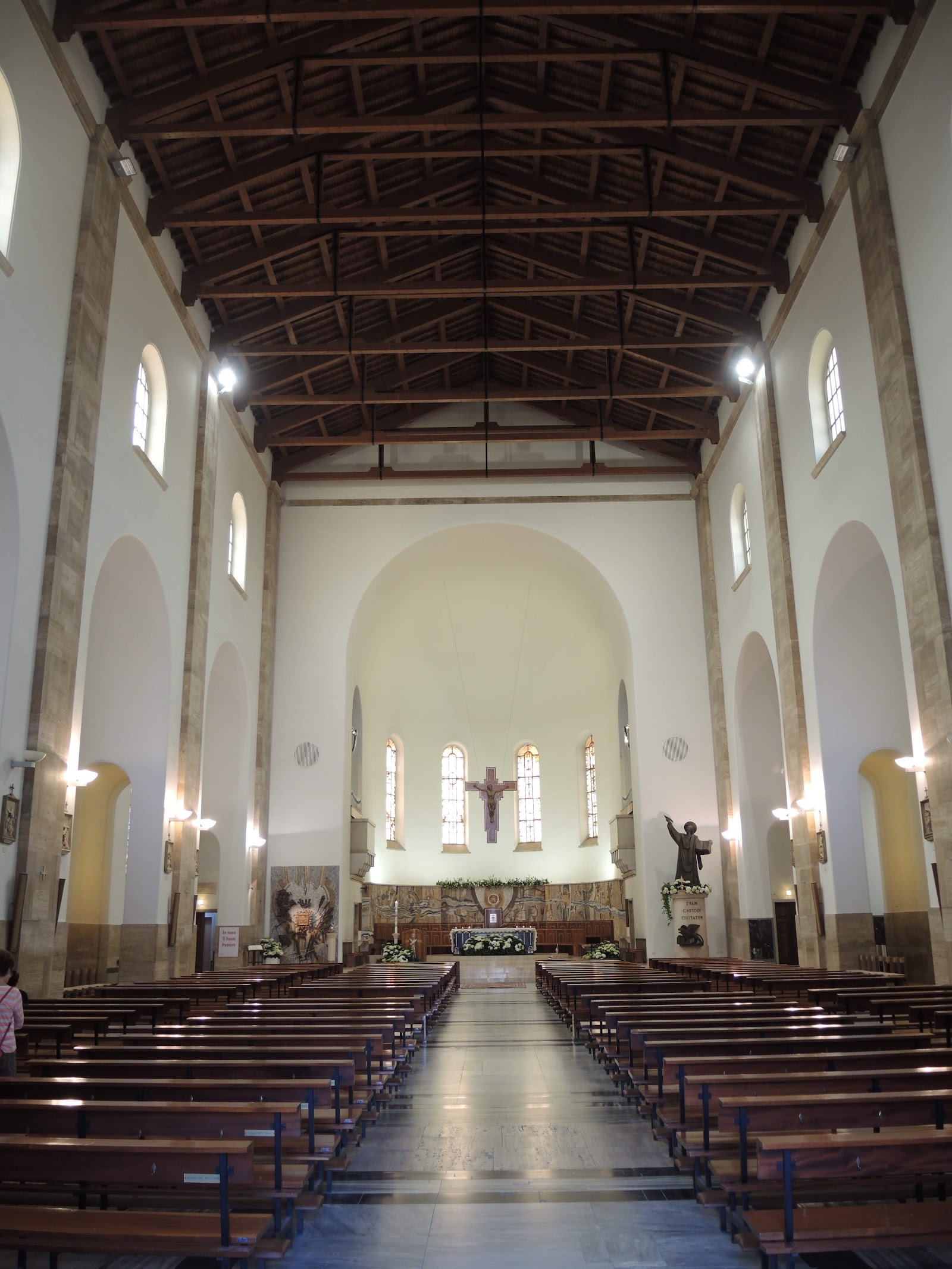
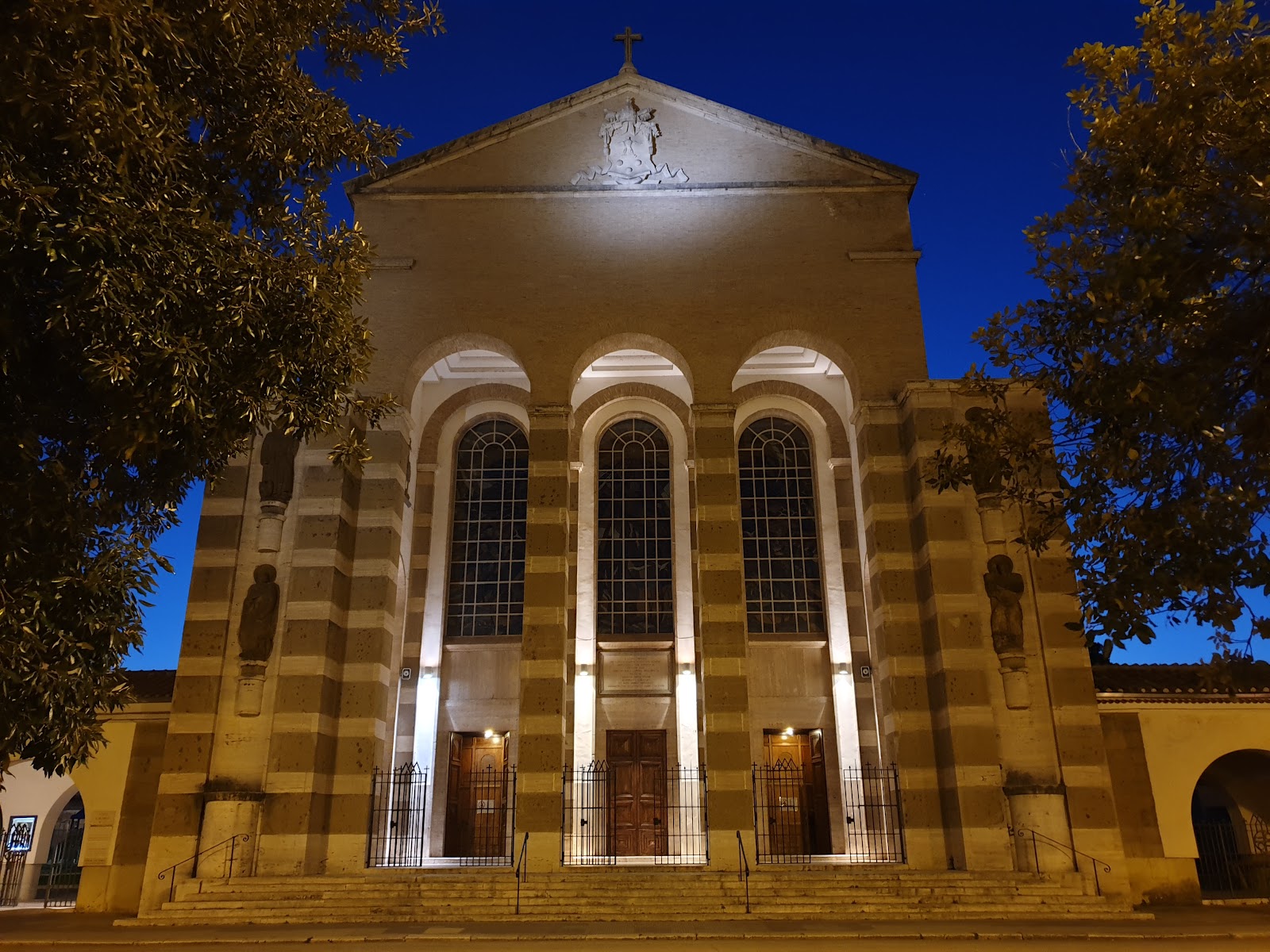
The alternating bands of tufa and travertine on the facade of San Marco are the first clue that this is no ordinary church. Latina itself is barely ninety years old, and the cathedral was built in a single year — 1932 to 1933 — as the spiritual anchor of a city conjured from drained marshland. It sits on Piazza San Marco, on the main axis road that Oriolo Frezzotti drew ruler-straight through his rational, Fascist-era urban plan.
Step inside and the nave opens under exposed wooden trusses, the structure divided by yellow marble lesenes into four bays, with chapels branching off either side under barrel vaults. The 2001 stained glass windows depict two subjects that tell you exactly what kind of place this is: scenes from the life of Don Bosco, and the reclamation of the Pontine marshes.
💛 What travellers fall for
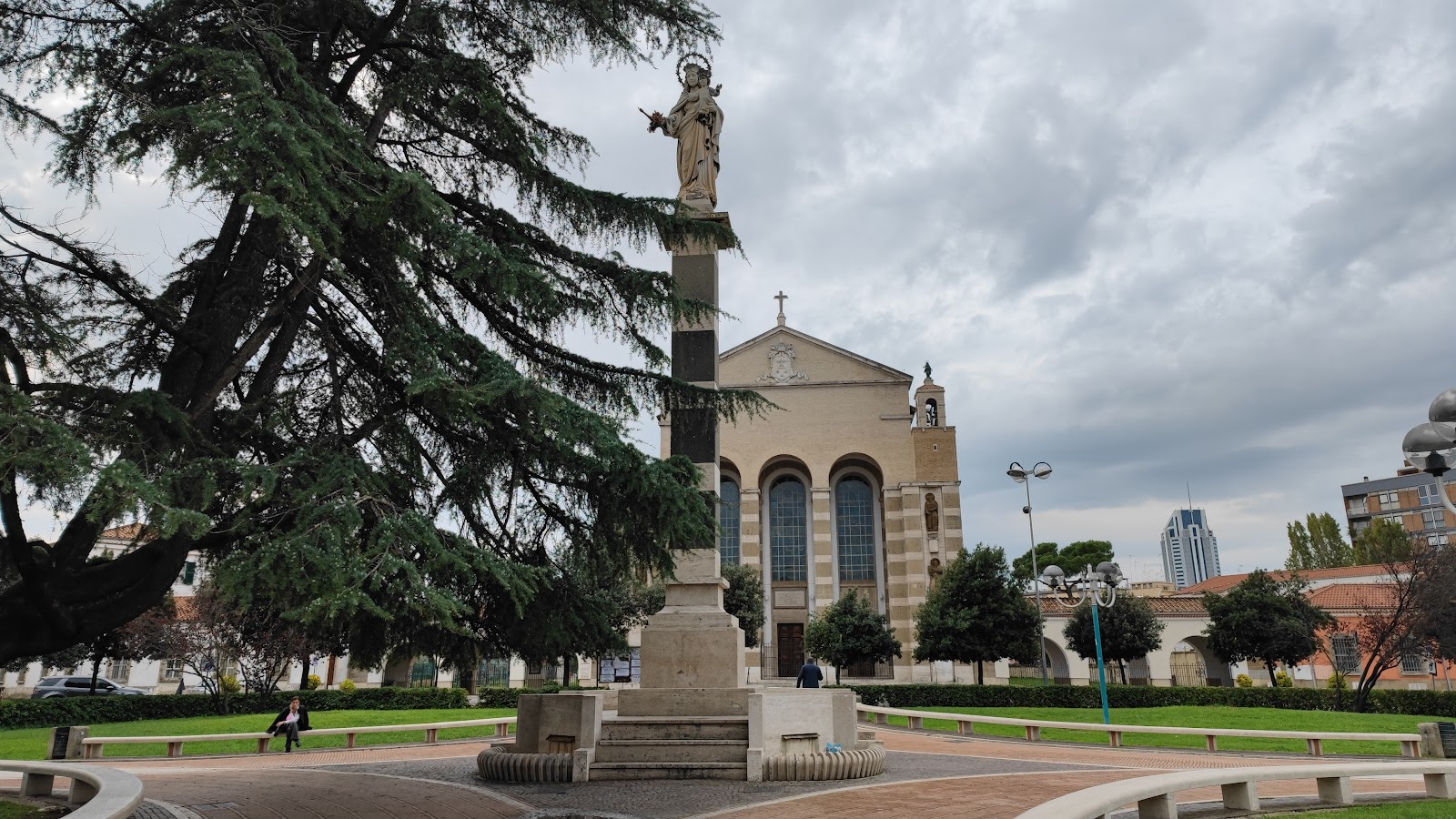
People who come back tend to linger in the fourth chapel on the right — slightly deeper than the others — where a polychrome Madonna Ausiliatrice stands above a marble altar. They also look up at the bell tower: isolated to the right of the facade, topped with a marble replica of Milan's Madonnina, rising about 37 metres. It's an odd, telling detail in a city that was built to have no past.
The story behind Cattedrale di San Marco
Latina — originally named Littoria — was founded on 30 June 1932 as part of Mussolini's Agro Pontino land-reclamation programme. Construction of the cathedral began that same year; it was dedicated on 18 December 1933. The choice of Saint Mark as patron was deliberate: most of the colonists settled here came from the Veneto, where Mark is the patron saint of Venice.
Cardinal Enrico Gasparri instituted the parish on 23 November 1933, with the Salesians of Don Bosco invited to run it — reportedly at the insistence of both the population and Mussolini, with Pope Pius XI's blessing. The building was designed by Oriolo Frezzotti, who also laid out the city's entire urban plan. It became a cathedral proper on 30 September 1986, when the diocese of Latina-Terracina-Sezze-Priverno was formally established.
Good to know
The cathedral is on Piazza San Marco, a short walk from Piazza del Popolo along Latina's central axis. From Latina railway station (FL7 line), follow Via della Stazione toward Piazza del Quadrato, then Via Pio VI — it's on your right. Entry is free. No verified opening hours; checking locally before an early or late visit is wise.
Where is Cattedrale di San Marco?
More tickets & tours for Cattedrale di San Marco
Book directly at the provider
What travellers say about Cattedrale di San Marco
Nice place to meditate and pray
Historical and silent place...
Good
Amen
Venice and Milan. Construction began in 1932 and was designed by architect Oriolo Frezzotti. It was completed a year later and dedicated on December 18, 1933. The dedication to the evangelist Saint Mark, chosen as the patron saint of the nascent city, was intended to emphasize the special connection between the Pontine Marshes and the Venetian regions, from which most of the settlers assigned to the lands reclaimed from the marshes came. On September 30, 1986, the church of San Marco became a cathedral. The lower portion of the exterior features alternating bands of tuff and travertine. The gabled façade features a portico that opens, at the front, with three tall round arches resting on square pillars. The square bell tower is surmounted by a belfry containing three bells, and above it stands a marble replica of the Madonnina from Milan Cathedral. We were unable to visit the interior because it was closed at 2:00 PM. Must-see Hello from Roby and Lucy from Sant'Anastasia (Naples)
More of Latina
Discover where to stay, what to do and the best deals for your trip.
Explore Latina →More attractions in Latina
All of Latina →

Background adapted from Wikipedia (CC BY-SA) · map data © OpenStreetMap contributors · ratings & place photos via Google · other photos with per-image credit. Ticket links may earn us a commission at no extra cost to you.