
Cattedrale di Rovigo (Duomo di Rovigo)

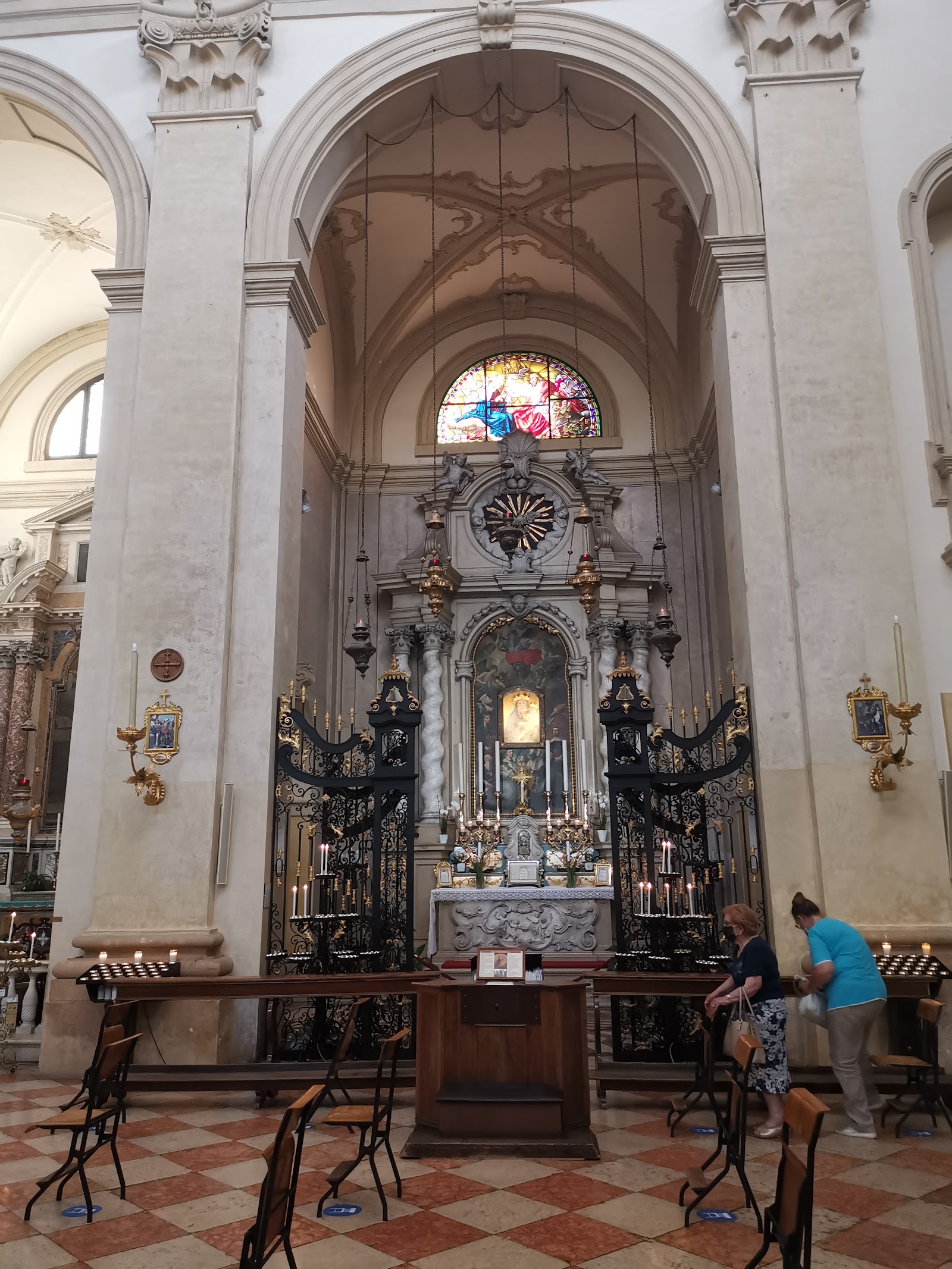
The first thing you notice about the Duomo di Rovigo is what isn't there. The facade is plain, unfinished brick — no marble cladding, no grand sculptural programme — just a 19th-century portal and a Christ Redeemer statue overhead, the residue of centuries of interrupted ambitions. Step through anyway. Inside, the Baroque interior opens across three naves, and the artworks accumulate quietly: a Palma il Giovane canvas from 1625, two paintings attributed to Garofalo flanking the apse, a 1718 tabernacle by Andrea Corradini with small statuettes of Hope and Faith worked in fine detail.

💛 What travellers fall for
People who come back tend to linger near the Corradini tabernacle — it rewards close looking in a way the broader interior doesn't demand. The 15th-century Madonna delle Grazie fresco, salvaged from a demolished baptistery, is easy to walk past; worth slowing down for.
The story behind Cattedrale di Rovigo (Duomo di Rovigo)
A place of worship has stood here since at least the 8th or 9th century; the parish of Santo Stefano is documented as far back as 964, when an archpriest named Leone appears in the records. A new stone church was begun in 1067 under Bishop Benedetto and consecrated in 1461, but by the late 17th century the structure was in poor shape. In 1696 the Paduan architect Girolamo Frigimelica was commissioned to design a replacement, with Bishop Carlo Labia blessing the foundation stone and the city council committing 2,000 ducats. Construction, directed by Vincenzo Bellettato, moved slowly.
The first Mass in the new building was celebrated on 14 February 1711 by Bishop Filippo della Torre, even as the dome and facade remained unfinished. The dome, completed between 1770 and 1778, was demolished in 1785 after structural failures and rebuilt by Giuseppe Sabatini, with Giacomo Quaglia finishing the work in the early 19th century. The facade never received its intended marble cladding — a bequest for it in 1737 was blocked by Venetian law, and later neoclassical and eclectic designs were approved but never executed. The unadorned brick wall you see today is, in its way, an honest record of all that didn't happen.
Good to know
Entry is free. The interior can be closed during services, so check before making a special trip. It's a 15-to-20-minute walk from Rovigo station, or a short bus ride to the cathedral piazza. No need to budget more than 30-45 minutes.
Where is Cattedrale di Rovigo (Duomo di Rovigo)?
More tickets & tours for Cattedrale di Rovigo (Duomo di Rovigo)
Book directly at the provider
What travellers say about Cattedrale di Rovigo (Duomo di Rovigo)
Historical and Old Architecture
Place to visit in Rovigo.
Beautiful, impressive duomo without the buzzing of tourists in other more famous Italian cities. Calm and peaceful!
The church always leaves something to be desired in terms of condition, first of all the flowers left there last July with the caretaker, he scolded me, yelling at me not to bring flowers in front of the monsignor anymore. In the summer everything is closed, it looks like a burning furnace, it's always reported but no one does anything. I understand why the faithful run away from the cathedral, what a shame :(
The most important and largest church in Rovigo is the Cathedral of Santo Stefano. A predecessor church stood on this site since 964. The Paduan Girolamo Frigimelica designed the current Baroque cathedral in 1696, and construction continued until 1729. Unfortunately, the portal remained unfinished. A jewel within the church is the bronze Easter candlestick by Desiderio da Firenze (mid-16th century).
More of Rovigo
Discover where to stay, what to do and the best deals for your trip.
Explore Rovigo →More attractions in Rovigo
All of Rovigo →


Background adapted from Wikipedia (CC BY-SA) · map data © OpenStreetMap contributors · ratings & place photos via Google · other photos with per-image credit. Ticket links may earn us a commission at no extra cost to you.