
Castello di Masnago
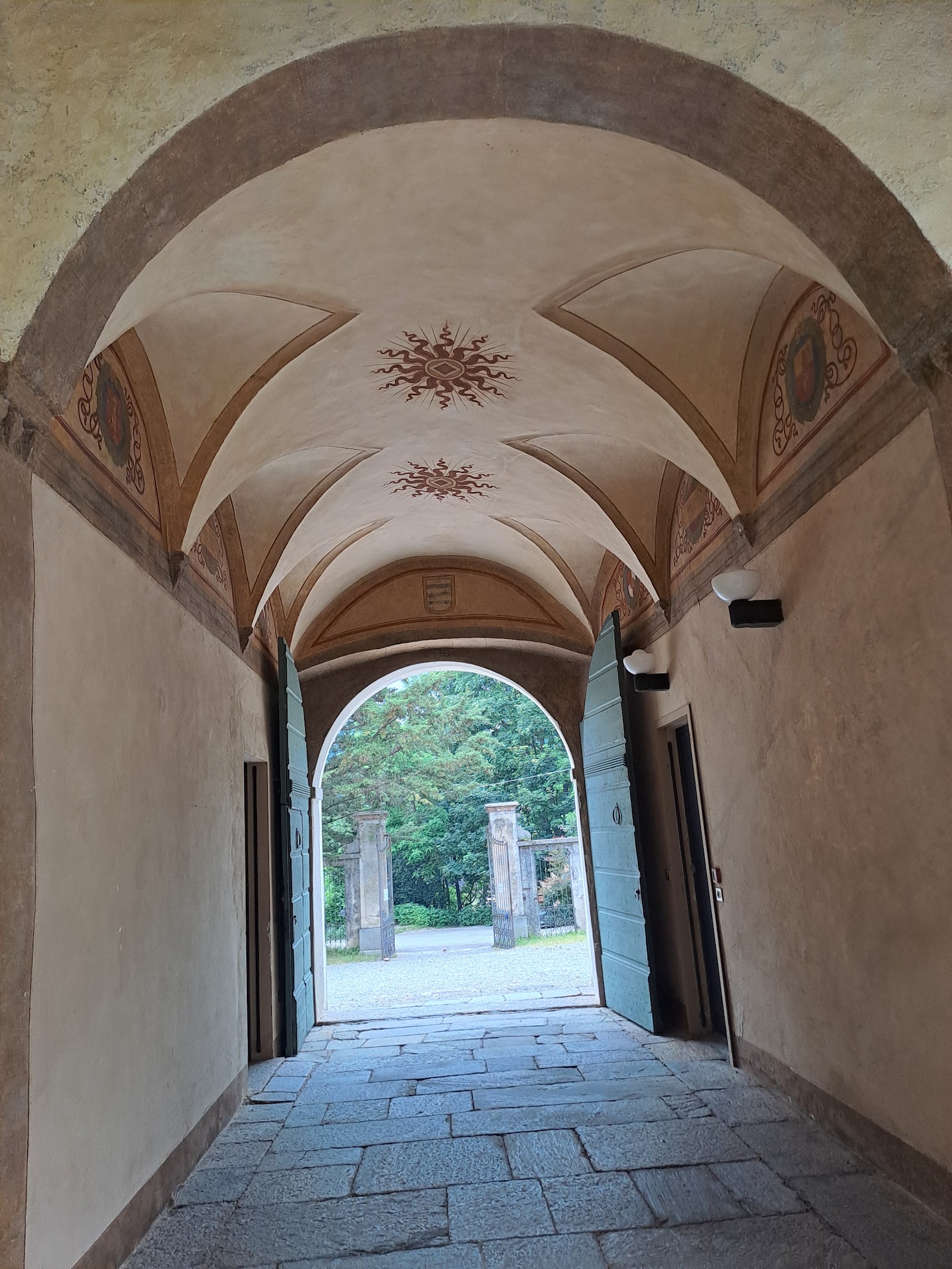
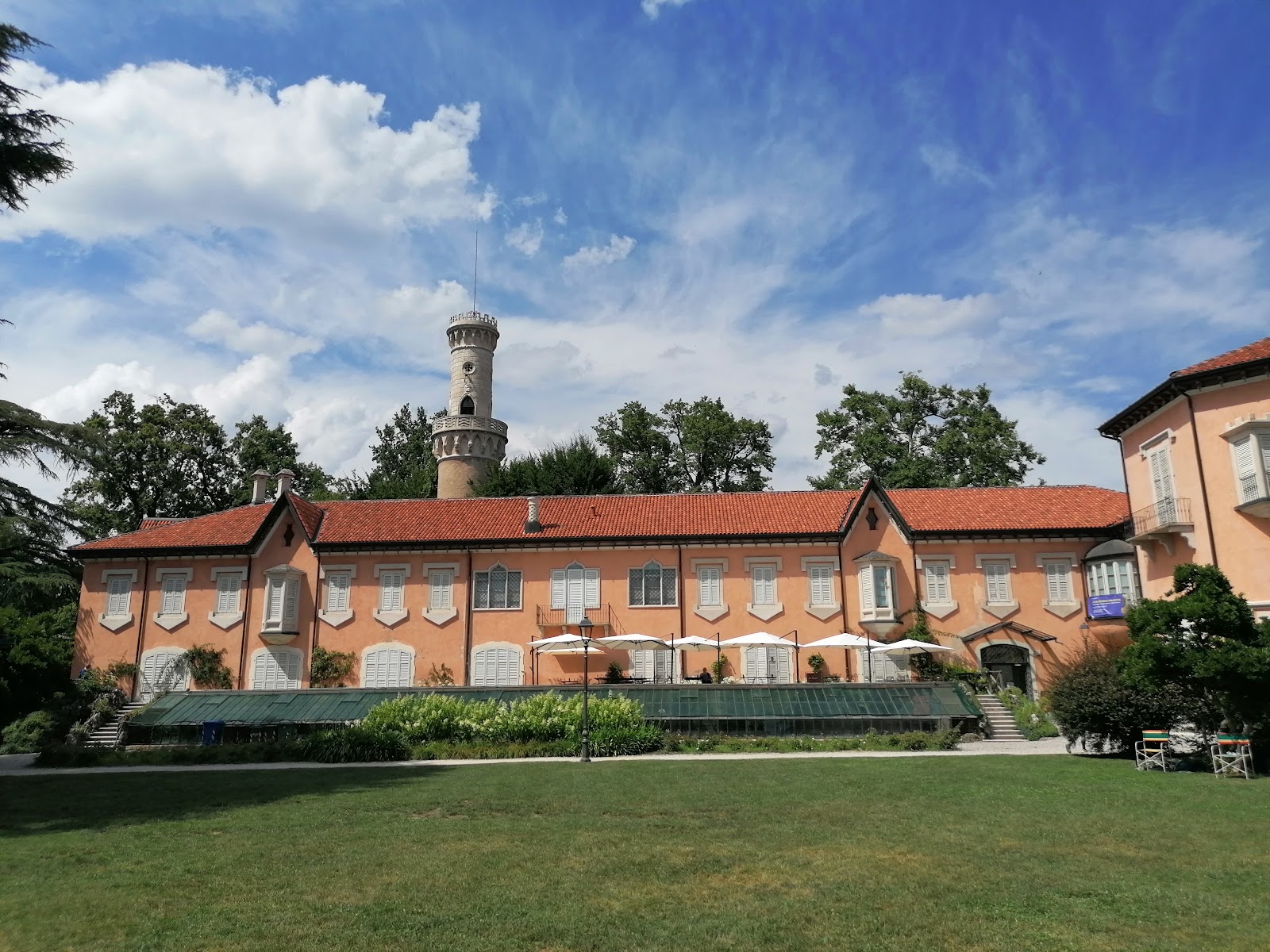
A 12th-century watchtower stands at the top of a park containing 103 species of trees — yews, holm oak, a rare strawberry tree — and on the entrance pillars, two stone lions that the Castiglioni family put there in the 18th century and never came back to collect. Inside, on the ground floor of the castle, a painted lady plays an organ under a decorated tent. The fresco has been there since the 15th century and was only uncovered in 1937.
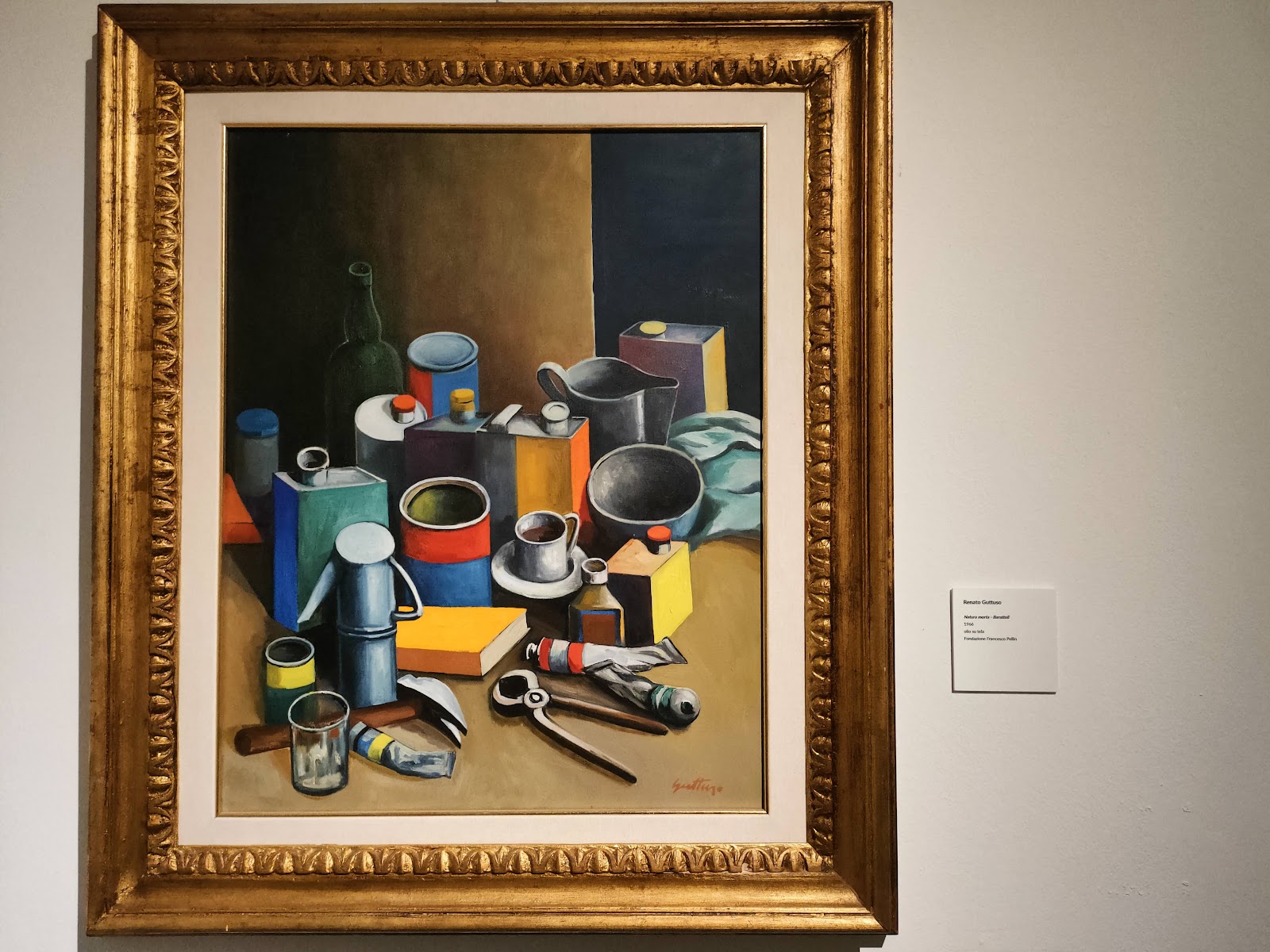
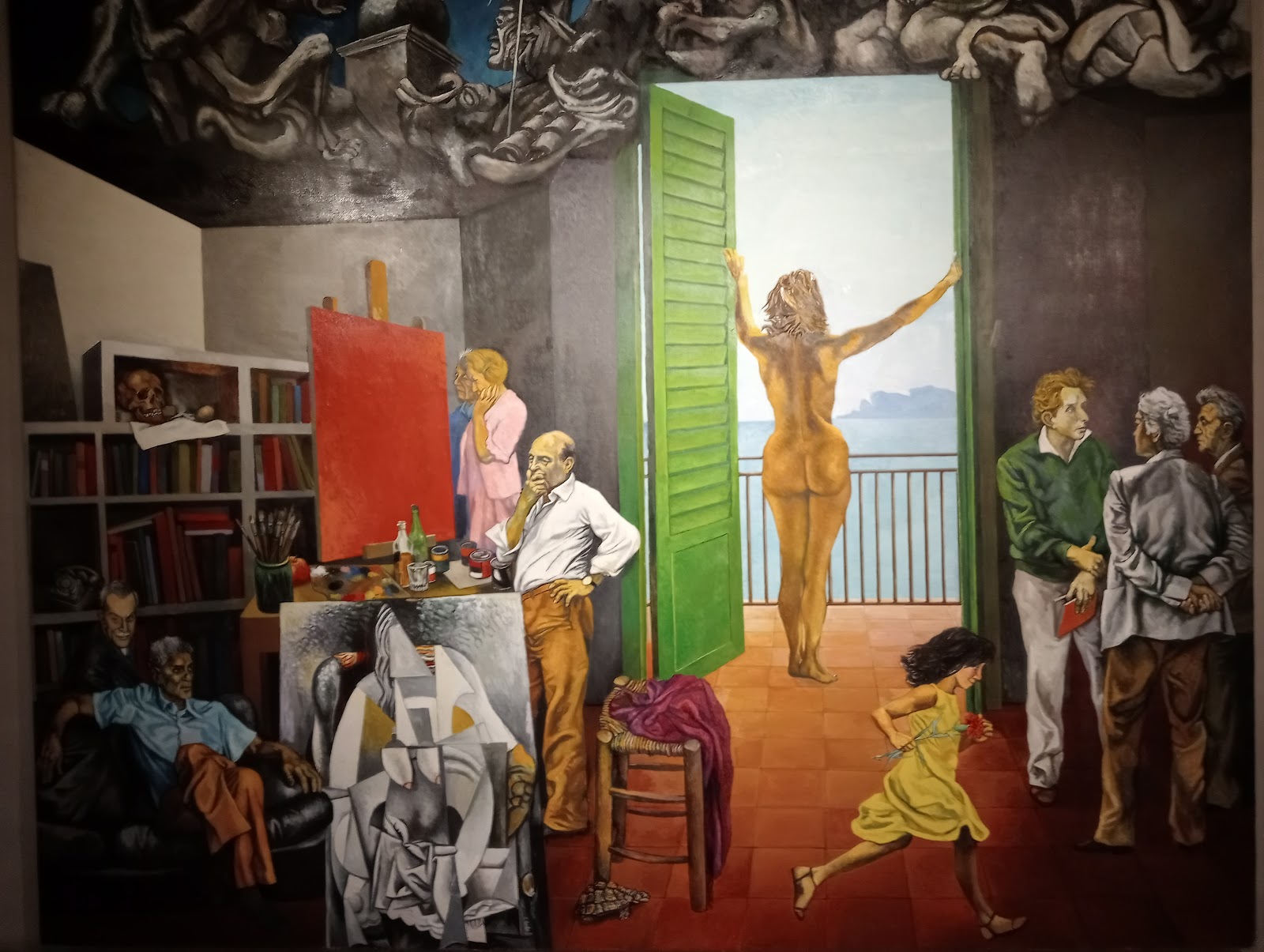
Castello di Masnago is now Varese's museum of modern and contemporary art, which means Fontana and Balla hang in rooms that once hosted courtly leisure. The combination is stranger and more interesting than it sounds.
💛 What travellers fall for
People who return tend to split the visit deliberately: the park and exterior first, then the frescoes, then the contemporary collection. The Sala degli Svaghi on the ground floor — the courtly scenes, the organ, the family crests woven into the tent — repays a slow look. The upper-floor Sala dei Vizi e delle Virtù is quieter and often empty.
The story behind Castello di Masnago
The tower at the core of the castle dates to the 12th century, built to watch over the surrounding terrain. The Castiglioni family arrived in 1422 and over the following decades reshaped it into a residence. In the mid-15th century, Maria Lampugnani — widow of Giovanni Castiglioni — lived here, and it was during her tenure that the Sala degli Svaghi was frescoed. The artist remains unidentified; critics have attributed the work variously to Jacquerio, the Master of Giochi Borromeo, and Bonifacio Bembo.
In the 18th century, Marquis Giuseppe Castiglioni and his wife Paola Litta added a west wing and formal Italian garden. The Castiglioni Stampa family sold to Angelo Mantegazza in 1934, and it was Mantegazza's 1937 restoration work that brought both fresco cycles to light. The municipality of Varese acquired the property in 1981 and opened it to the public in 1995.
Good to know
Take bus E to Sanvito/Piemonte or bus P to Crispi/Monguelfo, or park on Via Monguelfo and walk up through the park to reach the museum entrance on Via Cola di Rienzo. Closed Mondays. Thursday through Sunday you get afternoon hours (2–6 p.m.); Tuesday and Wednesday are mornings only. Admission is €5.
Where is Castello di Masnago?
More tickets & tours for Castello di Masnago
Book directly at the provider
What travellers say about Castello di Masnago
A nice medieval castle tucked away in Varese
Nice place and garden.
One of the most interesting features of the Museum of Modern and Contemporary Art of Masnago Castle is undoubtedly its location: the Museum of Modern and Contemporary Art of Masnago Castle is located within an ancient castle whose origins date back to the Middle Ages. The complex, developed between the 11th and 18th centuries, still preserves the medieval defensive tower and splendid frescoed rooms that recount the transformation of the ancient fortification into a noble residence. Particularly evocative are the Hall of Leisure and the Hall of Vices and Virtues, decorated with refined 15th-century pictorial cycles in the International Gothic style, which often end up attracting as much, if not more, attention than the museum's works themselves. The castle is also surrounded by Mantegazza Park, a large green space filled with centuries-old trees that makes a visit even more enjoyable. The museum's collection includes paintings, sculptures, and graphic works spanning the 16th to the 20th century, with a strong presence by Lombard artists such as Francesco Hayez, Daniele Ranzoni, Giuseppe Pellizza da Volpedo, and Enrico Baj. The exhibition itinerary allows visitors to observe the evolution of art between tradition and modernity, creating an interesting dialogue between the works and the historical settings that house them. Despite these positive aspects, the museum leaves a somewhat mixed impression. The collections are interesting but relatively small, and some rooms are less engaging for those unfamiliar with modern Lombard art. The layout also appears rather traditional in some areas, with limited interactive or multimedia tools that could further enhance the experience. The visit is pleasant, especially for the charm of the castle, the historic frescoes, and the surrounding park. As a museum of modern and contemporary art, it offers some interesting insights, but not a collection large enough or innovative enough to make it a must-see. Recommended for those who appreciate the combination of art, history, and architecture, rather than for those looking for a large contemporary art museum.
Works of art within a work of art. A beautiful and curated exhibition of local artists spanning the last six centuries, housed in a frescoed castle that alone is worth the visit. Super affordable for the quantity and quality of the art on display.
On the feast of Saint Anthony the Abbot, patron saint of animals, the small church of Viconago was opened. The frescoes, which are not from the same period as the church, are very interesting!
More of Varese
Discover where to stay, what to do and the best deals for your trip.
Explore Varese →More attractions in Varese
All of Varese →
Background adapted from Wikipedia (CC BY-SA) · map data © OpenStreetMap contributors · ratings & place photos via Google · other photos with per-image credit. Ticket links may earn us a commission at no extra cost to you.