
Capitolium (Tempio Capitolino)
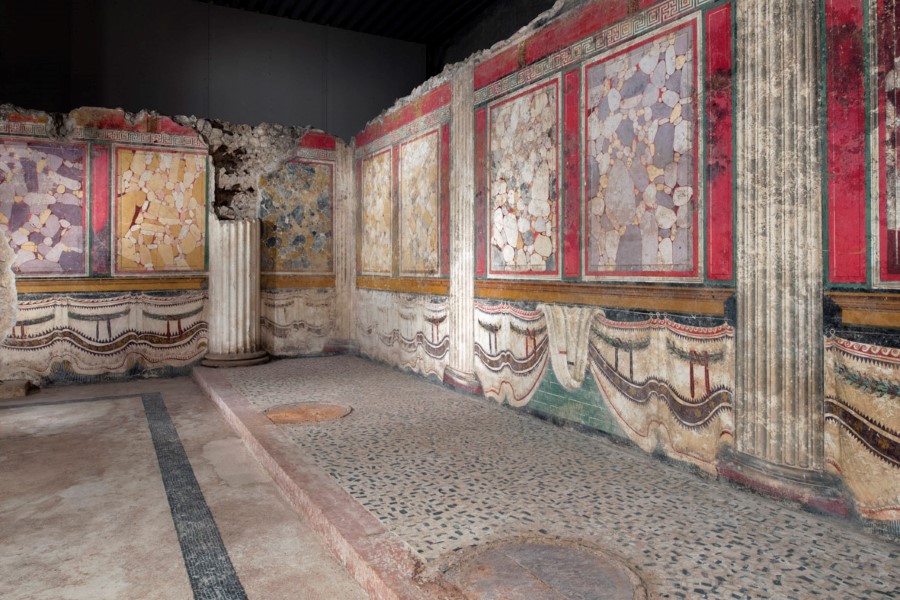
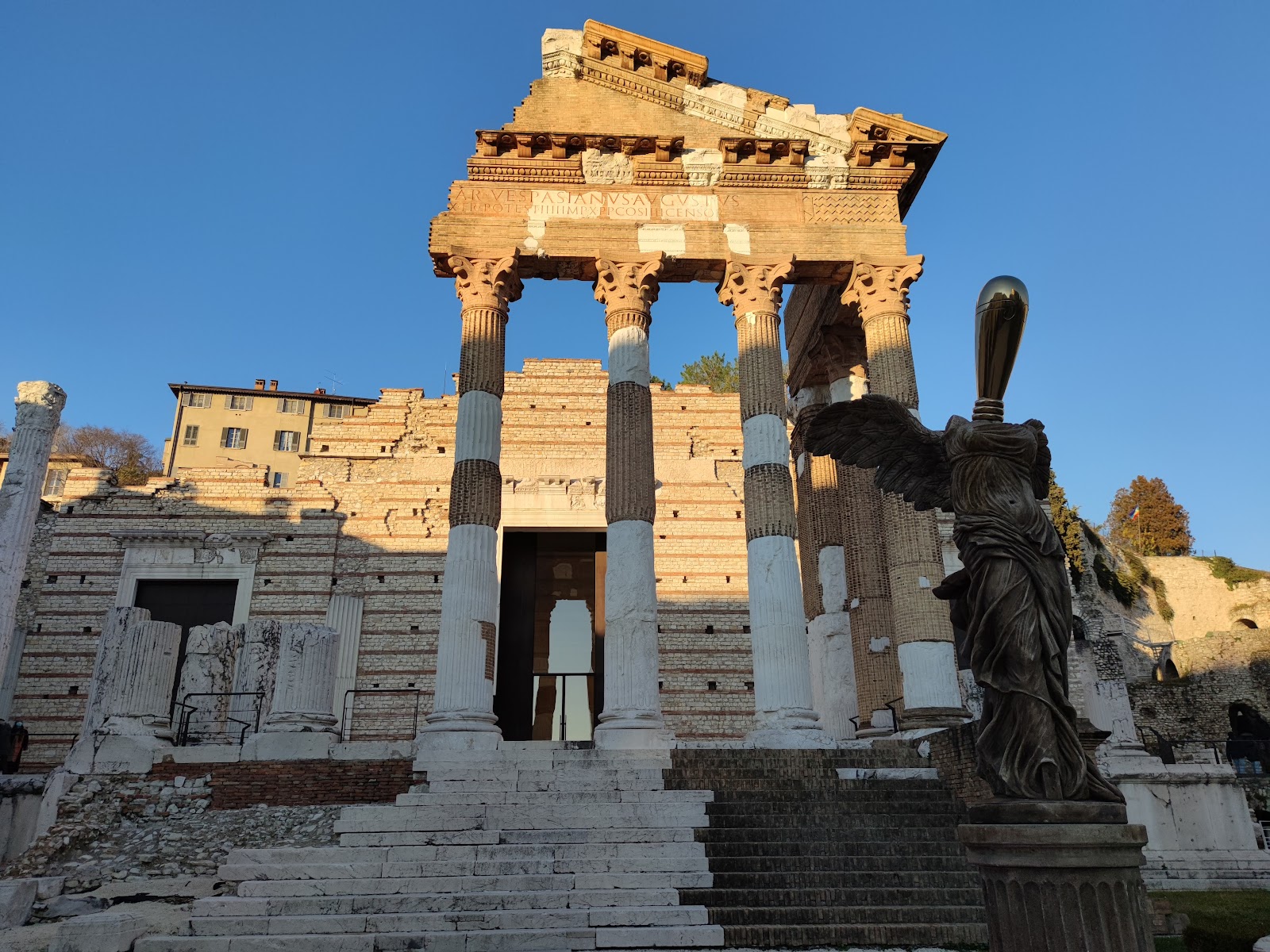
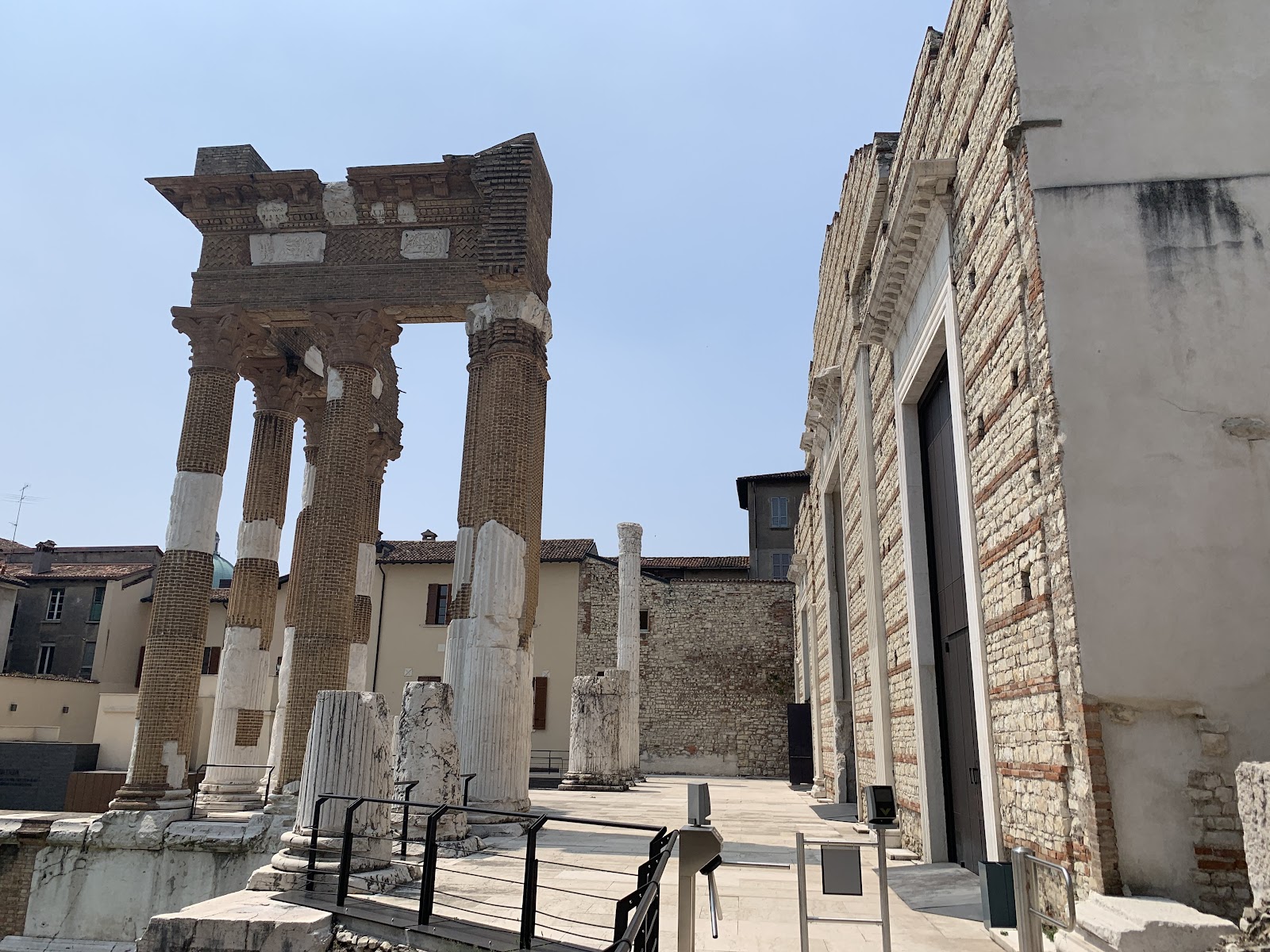
The site sits 4.5 metres below the modern street, which tells you something before you even step down. Brescia has simply grown over the top of its Roman self, and the Capitolium is where you see that most plainly — a first-century temple to Jupiter, Juno and Minerva, commissioned by Emperor Vespasian in 73 AD, its six Corinthian columns rising eleven metres out of the excavated earth.
Inside the cellae, the original opus sectile floors — geometric patterns in coloured marble — have survived nearly two thousand years. The eastern chamber now holds the Winged Victory, a 194-centimetre bronze figure pulled from a temple wall in 1826 and recently returned from a two-year restoration in Florence. She stands in a setting designed by Spanish architect Juan Navarro Baldeweg, and she is the reason many people come.
💛 What travellers fall for
People who return tend to time it for a weekday morning, when the site is quiet enough to hear your own footsteps on the ancient marble threshold. The integrated ticket is worth picking up — it covers the Republican sanctuary below and the civic museums, and the frescoed chambers down there, restored and reopened in 2015, are consistently the detail visitors say they almost missed.
The story behind Capitolium (Tempio Capitolino)
Vespasian commissioned the temple in 73 AD on the site of an earlier Republican sanctuary, partly to honour Brescia's contribution of troops to his victory over the rival general Vitellius in the civil war of 69 AD. The temple burned during barbarian invasions in the fourth century and was never rebuilt. A medieval landslide from Cidneo Hill buried the entire complex, and it stayed underground until 1823, when the Brescia municipality, private donors, and the Ateneo di Brescia funded excavations that required demolishing the houses and gardens that had grown above it.
The Winged Victory turned up in 1826, alongside six imperial portrait heads and hundreds of other bronze pieces. Architects Rodolfo Vantini and Luigi Basiletti led the initial restoration in the 1830s. A more ambitious partial reconstruction of the columns and pronaos followed between 1935 and 1938. The site reopened to the public in 2013 and carries UNESCO World Heritage status — designated in 2011 as part of the Longobards in Italy listing — alongside a Blue Shield designation awarded in May 2023.
Good to know
Take bus lines 2, 6, or 10 to Piazza Martiri di Belfiore — it's a short walk from there. The historical centre is a ZTL zone, so driving in isn't an option. Closed Mondays. Last admission times shift by season, so check before you go.
Where is Capitolium (Tempio Capitolino)?
More tickets & tours for Capitolium (Tempio Capitolino)
Book directly at the provider
What travellers say about Capitolium (Tempio Capitolino)
DON’T GO INSIDE. THE BEST THING IS OUTSIDE, AND IT’S FREE. Did I go inside? Yes. Was it worth it? Not at all. The ruins outside are beautiful so I really wanted to check what was in the archeological park. But there was barely anything. Just some tiny low walls and a few ancient objects. That’s literally it. You can’t walk around the museum freely - they put you in small groups and control how much time you have in each room. And let me tell you, you can see each room in 3 minutes but they keep you there for such a long time that you’d start questioning what you’re there for. Here are the only two pictures I took because everything was so boring that I didn’t even bother. Remember that this not a guided tour. There’s no guide, but different staff members opening and closing doors for you. The visit was said to last 40 minutes, but my group finished it in 30, and I’d have done it in 10 had I been free to see things by myself. It’s a total waste of time and money. It’s really, really disappointing. Go straight to the city museum that’s only 5-minute walk away. That one’s much better.
The site is beautifully preserved, and walking through it really gives you a sense of what life might have been like centuries ago.
When buying tickets for this museum you get access to others as well so you can easily make a day of exploring ancient Roman sites. If you are a fan of history and ancient Rome this is a must. Short but very impactful. Go early to avoid big crowds.
The Tempio Capitolino in Brescia is a stunning Roman temple built in 73 AD under Emperor Vespasian. Part of a UNESCO World Heritage Site, it features well-preserved columns, marble floors, and informative exhibits. A must-see for history lovers, it offers a fascinating glimpse into ancient Roman life.
The ruins are really interesting to see and there is an interesting video of their interpretation of what it would have been. However, the way the groups are managed really decreases the experience. Every 20 minutes, a group of 20 goes in and is rushed through everything, because the staff is in a hurry apparently. No time to go through everything slowly and constantly the other 20 people closely around you.
More of Brescia
Discover where to stay, what to do and the best deals for your trip.
Explore Brescia →More attractions in Brescia
All of Brescia →
Background adapted from Wikipedia (CC BY-SA) · map data © OpenStreetMap contributors · ratings & place photos via Google · other photos with per-image credit. Ticket links may earn us a commission at no extra cost to you.