
Ancient City Walls of Paestum

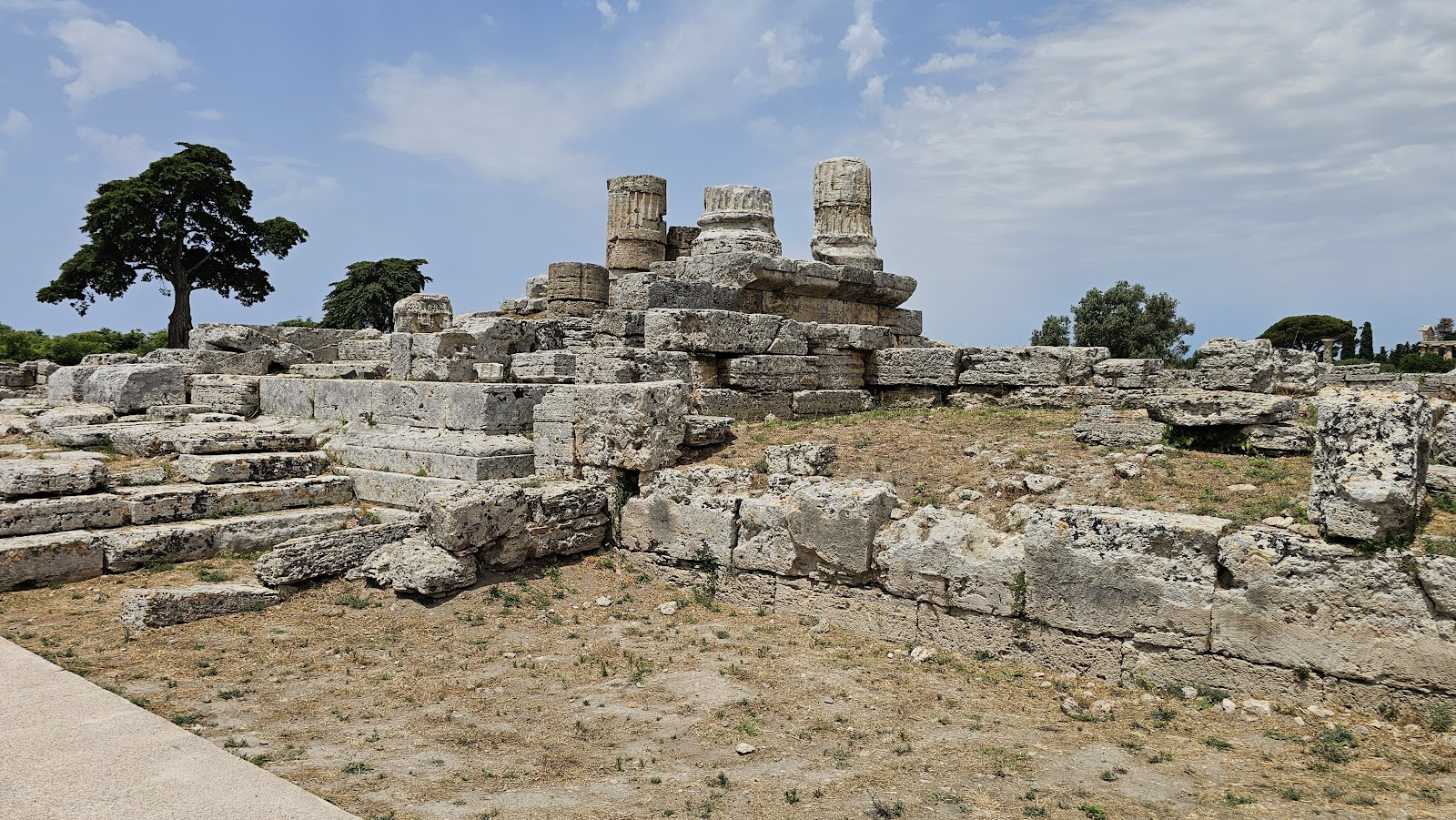
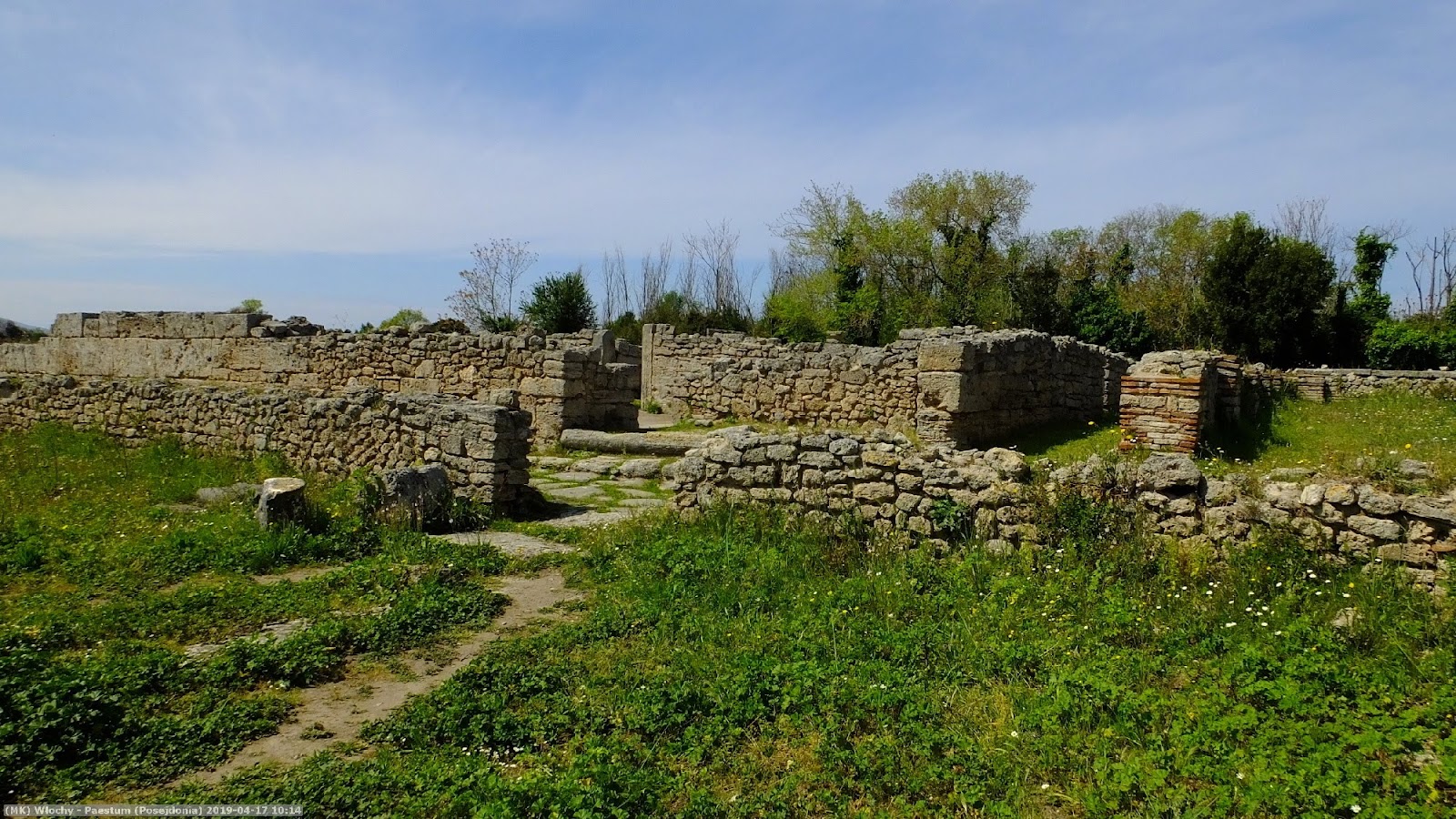
Four and three-quarter kilometres of limestone and travertine still ring the plain at Paestum, rising in places to seven metres — thick enough, at five to seven metres through, that the wall itself is a kind of landscape. You walk beside it rather than past it, tracing a perimeter that has held its rough shape for more than two thousand years.
Most visitors come for the three Doric temples inside, and the temples deserve every word written about them. But the walls are what give the site its scale — the reason the temples feel placed rather than stranded.

💛 What travellers fall for
People who return tend to walk the southern stretch toward Porta Giustizia first, before the heat builds. That gate is where traces of the original Greek earthwork — an embankment and wooden palisade from the 6th or 5th century BCE — were found beneath the later stone. It puts the whole timeline in your hands.
The story behind Ancient City Walls of Paestum
Greek Achaeans from Sybaris founded the city around 600 BCE, naming it Poseidonia after Poseidon. The earliest defences were modest — earthen banks and wooden palisades. The stone walls came later, their main phase beginning in the 4th century BCE after Lucanian peoples took control of the city and changed its name to Paestum.
Roman rule followed in 273 BCE, when a Latin colony was established and the urban fabric was rearranged around a forum. The walls were repaired and modified across at least three centuries, acquiring 24 towers and 47 smaller openings — postierle — designed for military sorties. In 1930, a road cut through the northern sector, destroying the gate known as Porta Aurea.

Good to know
Paestum station (Naples–Salerno–Reggio Calabria line) sits directly east of the walls; walk roughly one kilometre to the Porta Sirena entrance. The site opens at 8:30 AM year-round — arrive early in summer, as there is no shade. A single ticket (€15 March–November) covers three days and includes Velia.
August averages around 29°C (84°F) with little shade on the wall circuit — a hat and water matter more than they seem to in the morning cool. October through March brings the site down to around 13°C (55°F) and noticeably thinner crowds, which suits the exposed perimeter walk well.
Where is Ancient City Walls of Paestum?
More tickets & tours for Ancient City Walls of Paestum
Book directly at the provider
What travellers say about Ancient City Walls of Paestum
I had high expectations for Paestum, but I must admit that reality exceeded them. Over the years I have visited other extraordinary archaeological sites, from Sicily to Athens, but I honestly do not remember seeing temples preserved in such remarkable condition. What impressed me the most was precisely their state of preservation. The temples are almost perfect, and seeing them in person allows you to fully appreciate their grandeur. Walking among these remains of Magna Graecia is a truly unforgettable experience and feels like taking a journey back in time. The archaeological area is extensive, very well maintained, and enjoyable to explore, while the museum perfectly complements the visit. As an Italian, visiting a place like this also fills me with a certain sense of pride, because Paestum represents one of the greatest historical and archaeological treasures of our country. In my opinion, this is a place that everyone should visit at least once in their lifetime.
This was an amazing experience NOT to be missed if you’re nearby. I’ve created some AI Images of what each ruin might have looked like and attached a historical timeline. Enjoy, I did!! Paestum, originally known as Poseidonia, has a rich layers-of-civilization history that reflects the shifting powers of the ancient Mediterranean. Timeline of Paestum • 600 BCE: The city was founded by Greek colonists from Sybaris, who named it Poseidonia in honor of the god of the sea. • 550 BCE: Construction began on the Temple of Hera I (often called the Basilica), the oldest of the three great temples. • 500 BCE: The Temple of Athena (formerly attributed to Ceres) was built at the highest point of the city. • 460–450 BCE: The Temple of Hera II (traditionally known as the Temple of Poseidon) was completed, representing the peak of Doric architecture. • 400 BCE: The city was conquered by the Lucanians, an Oscan-speaking people from the Italian interior, who renamed the city but maintained many Greek customs. • 273 BCE: Following the Roman victory over Pyrrhus, the city became a Latin colony and was officially renamed Paestum. The Romans added the forum, amphitheater, and more standardized urban housing. • 500–900 CE: Due to the silting of the Salso River, the area became swampy and malarial. Combined with Saracen raids, the population eventually abandoned the city for the nearby hills. • 1748: The ruins were "rediscovered" during the construction of modern roads in the Kingdom of Naples, eventually becoming a centerpiece of the European "Grand Tour."
A very beautiful archaeological park – make sure to visit the museum as well, and use the Paestum mobile app for the park visit itself, which includes additional audio explanations and a route map. We were lucky to visit on June 2nd, a national holiday, so entry was free, but entry is also free at many Italian museums on the first Sunday of every month.
Greek and Roman archeological site with some of the most intact temples anywhere. Only a fraction of this ancient city site excavated. Pretty setting, but 5 million school kids visiting too. Nice archeological museum holding some of the artifacts from site excavation.
Just an overview below of where we ended up today. We were supposed to go to Capri, but apparently they were only going one way. So, it was a very cool surprise going here today. I've never heard of it and can day it was a interesting as Herculaneum, but dated much much earlier. Paestum was established around 600 BCE by settlers from Sybaris, a Greek colony in southern Italy, under the name of Poseidonia (Ancient Greek: Ποσειδωνία). The city thrived as a Greek settlement for about two centuries, witnessing the development of democracy. In 400 BCE, the Lucanians seized the city. Romans took over in 273 BCE, renaming it Paestum and establishing a Latin colony. Later, its decline ensued from shifts in trade routes and the onset of flooding and marsh formation.[4] As Pesto or Paestum, the town became a bishopric (now only titular), but it was abandoned in the Early Middle Ages, and left undisturbed and largely forgotten until the eighteenth century. Today the remains of the city are found in the modern frazione of Paestum, which is part of the comune of Capaccio Paestum in the Province of Salerno in the region of Campania, Italy. The modern settlement, directly to the south of the archaeological site, is a popular seaside resort with long sandy beaches. The Paestum railway station on the Naples-Salerno-Reggio Calabria railway line is directly to the east of the ancient city walls.
More of Paestum
Discover where to stay, what to do and the best deals for your trip.
Explore Paestum →More attractions in Paestum
All of Paestum →

Background adapted from Wikipedia (CC BY-SA) · map data © OpenStreetMap contributors · ratings & place photos via Google · other photos with per-image credit. Ticket links may earn us a commission at no extra cost to you.