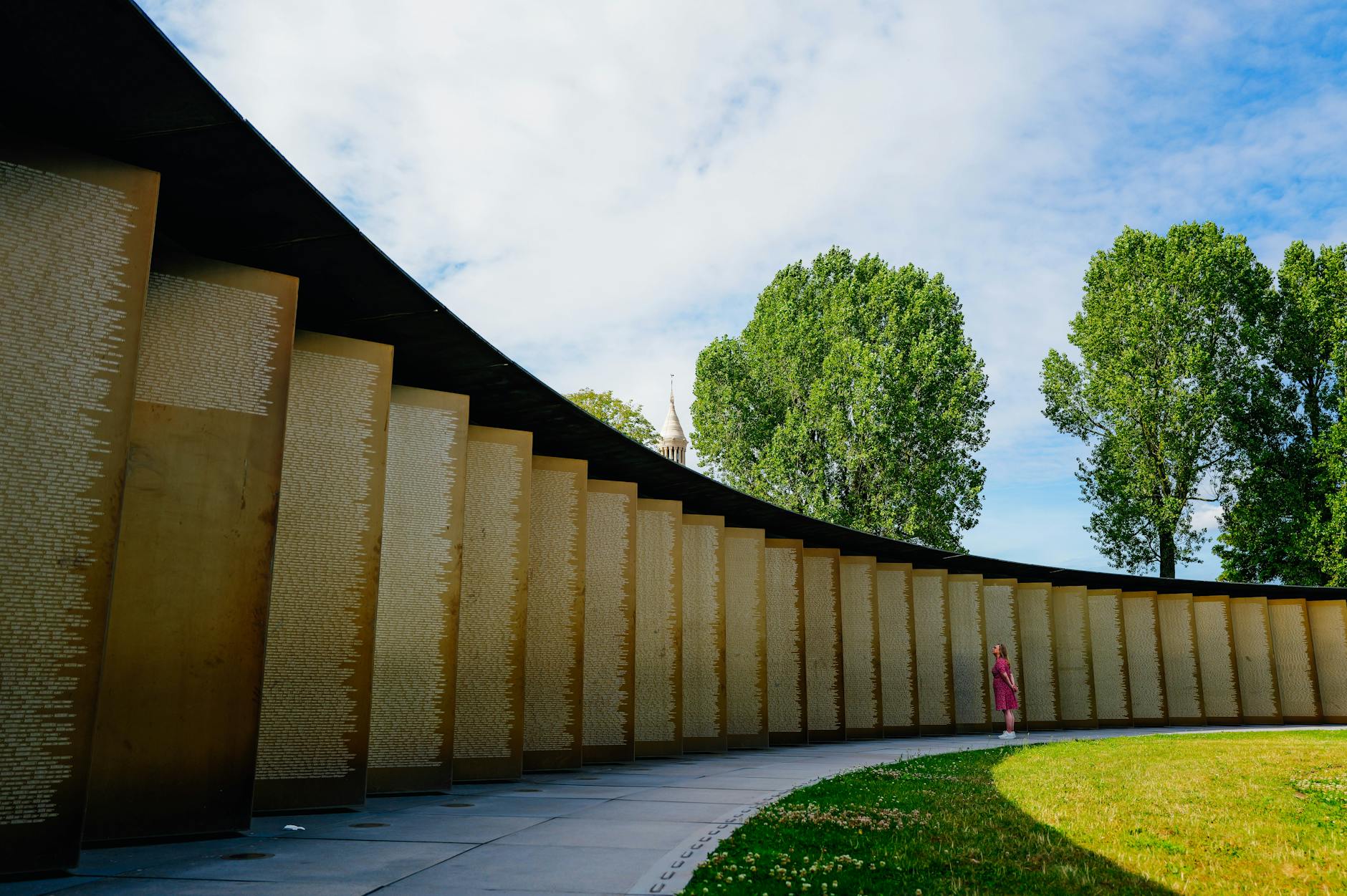
Butte de Vauquois
Thirty kilometres south of Verdun, the Butte de Vauquois looks like an ordinary wooded hill until you realise the enormous crater splitting its summit was blown there by rival French and German mines detonated underground between 1915 and 1918. The panoramic view from the top is extraordinary — and eerie.

The Crater Landscape
French and German troops fought a subterranean war here, digging more than 17 km of tunnels and detonating 519 mines over three years. The result is a summit that has been physically torn in two, with a gaping void where the village of Vauquois once stood, now flanked by opposing trench lines frozen in time.
The Association des Amis de Vauquois leads guided tours into the surviving German tunnels on weekend afternoons, taking visitors 15 metres underground into chambers that still contain original graffiti, ventilation systems and even a narrow-gauge railway track.
The View and the Village
From the rim of the crater on a clear day you can see the Argonne Forest rolling away to the horizon and, to the north-east, the faint outline of the Verdun ridge. It is one of the most atmospheric viewpoints in all of the Grand Est, combining wide natural beauty with the weight of history.
The reconstructed village at the base of the hill has a small free museum and a moving monument listing the 545 inhabitants who were evacuated in 1914 and never returned. The whole site is free to visit and rarely crowded — a genuine hidden gem on the WWI circuit.
More of Verdun
Discover where to stay, what to do and the best deals for your trip.
Explore Verdun →