Pico Sacro Viewpoint
Rising 533 metres above the Ulla River valley just 15 km southeast of Santiago, Pico Sacro is a granite-topped hill steeped in Jacobean legend — it was here, according to tradition, that the oxen carrying Saint James's body finally stopped, marking the spot for his burial. Today it rewards the short hike to the summit with some of the widest, most unspoilt panoramas in all of Galicia.
The Hike and the Summit
The trail from the small village of Calo takes around 45 minutes at a gentle pace, winding through oak and eucalyptus forest before emerging onto open granite moorland. The path is well-marked but can be muddy after rain — sturdy shoes are advisable year-round in Galicia.
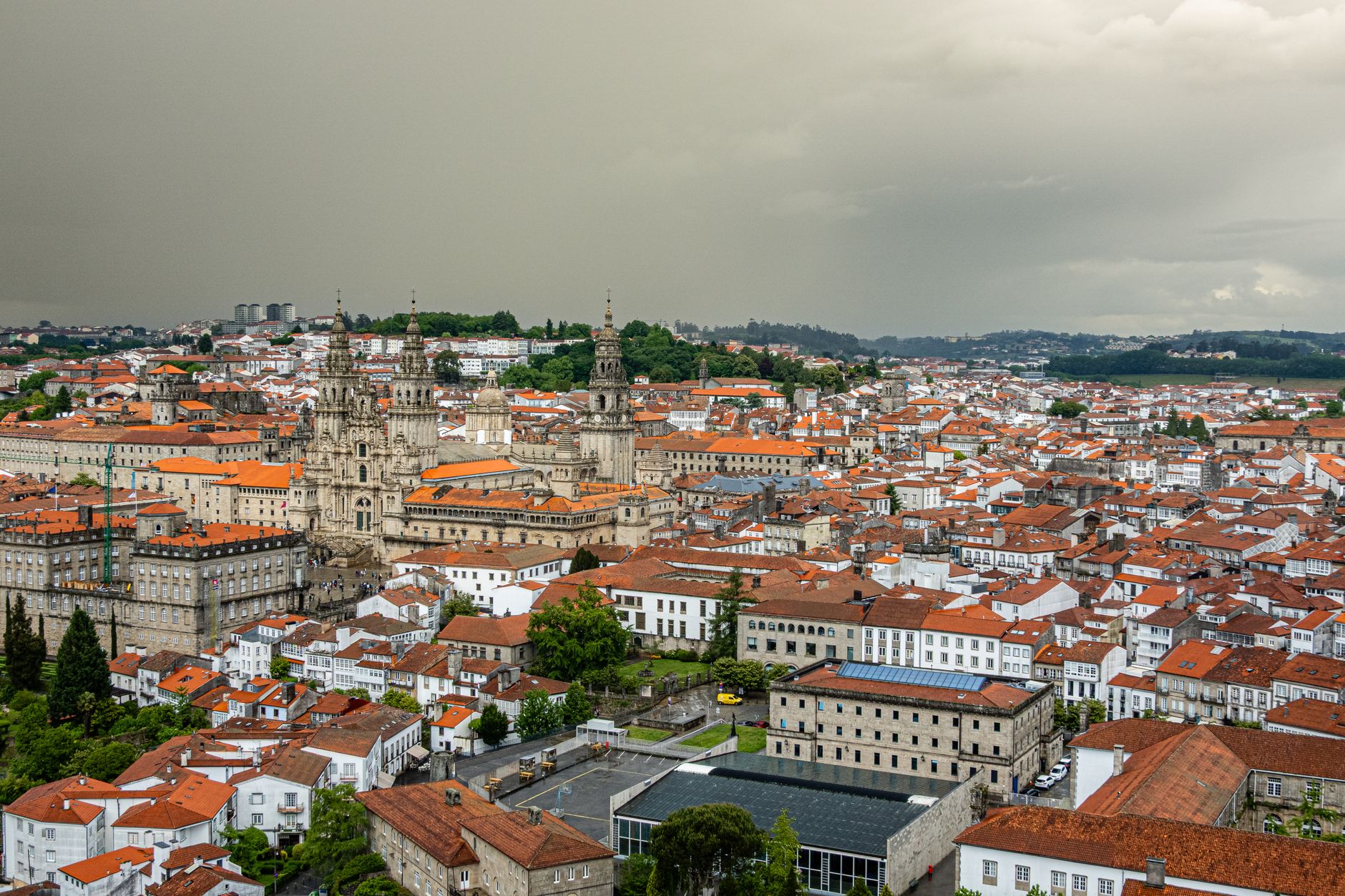
At the summit you'll find the ruins of a medieval hermitage dedicated to Saint Barbara and a scattering of large granite boulders that locals have climbed for centuries. On a clear day the view stretches from the towers of Santiago Cathedral in the northwest to the Arousa estuary glinting on the horizon to the southwest — a truly cinematic reward for minimal effort.
Legend and Atmosphere
The hill has a long pre-Christian sacred history and was associated with a fire-breathing serpent in Galician mythology, which adds an atmospheric edge to the windswept summit. Galician pilgrims have detoured here for centuries, and you'll often find the place almost entirely to yourself even in high summer — a rarity near Santiago.
The light on Pico Sacro at golden hour is extraordinary, with the granite boulders turning amber and the valley below dissolving into a patchwork of green fields and silver rivers. If you have a car, timing your visit for late afternoon is strongly recommended.
Getting There
Pico Sacro is not reachable by public transport, so a rental car or taxi from Santiago is the practical option. The drive takes about 20 minutes via the SC-20 ring road towards Padrón, then following signs to Calo.
There is a small free car park at the trailhead in Calo. Combine the visit with a stop in the nearby town of Padrón, famous as the origin of the small green peppers (pementos de Padrón) that appear on every Galician menu.
More of Santiago de Compostela
Discover where to stay, what to do and the best deals for your trip.
Explore Santiago de Compostela →