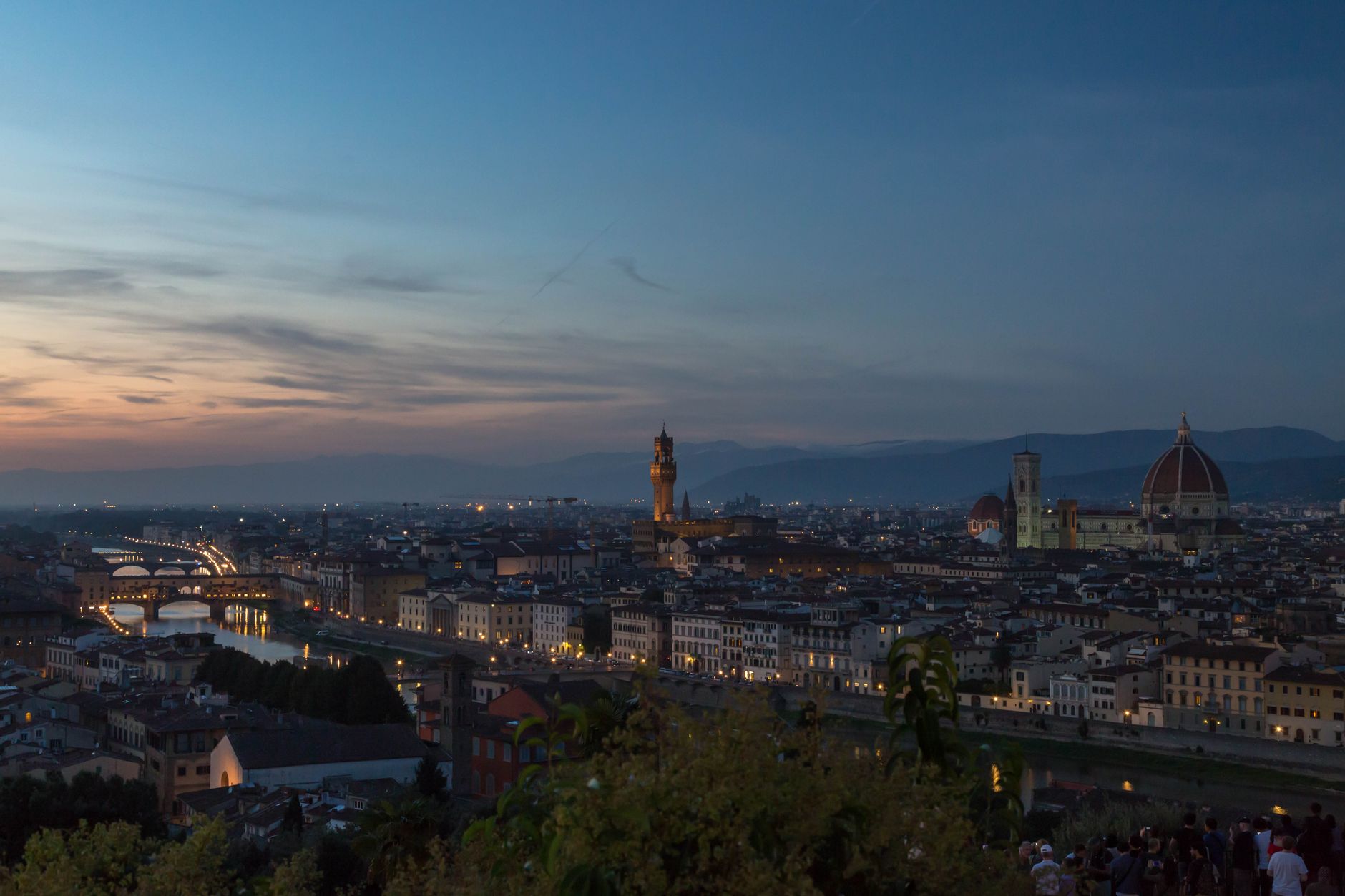
Basilica di Santa Croce
The largest Franciscan church in the world doubles as Florence's most moving mausoleum, sheltering the tombs of Michelangelo, Galileo and Machiavelli beneath soaring Gothic vaults. Stand here long enough and the weight of Italian civilisation settles quietly on your shoulders.

The Church Itself
Begun in 1294 and consecrated in 1442, Santa Croce's austere white-and-green marble facade belies the extraordinary richness inside: 16 funerary chapels, frescoes by Giotto in the Bardi and Peruzzi chapels, and Donatello's gilded Annunciation in pietra serena stone.
Walk slowly down the right nave and you pass Vasari's monument to Michelangelo, Canova's cenotaph to Alfieri and the plain slab marking where Galileo finally received a Christian burial in 1737, nearly a century after his death.

The Pazzi Chapel & Cloister
Exit through the sacristy into Brunelleschi's Pazzi Chapel, a Renaissance jewel of perfect geometric calm finished around 1461. The terracotta roundels of the Apostles by Luca della Robbia glow a celestial blue against white plaster — one of the most photographed interiors in Florence.
The first cloister beyond it is a sun-dappled rectangle of grass and grey stone that feels remarkably peaceful given you are metres from one of the city's busiest piazzas. Sit on a stone bench and let tour groups wash past you.

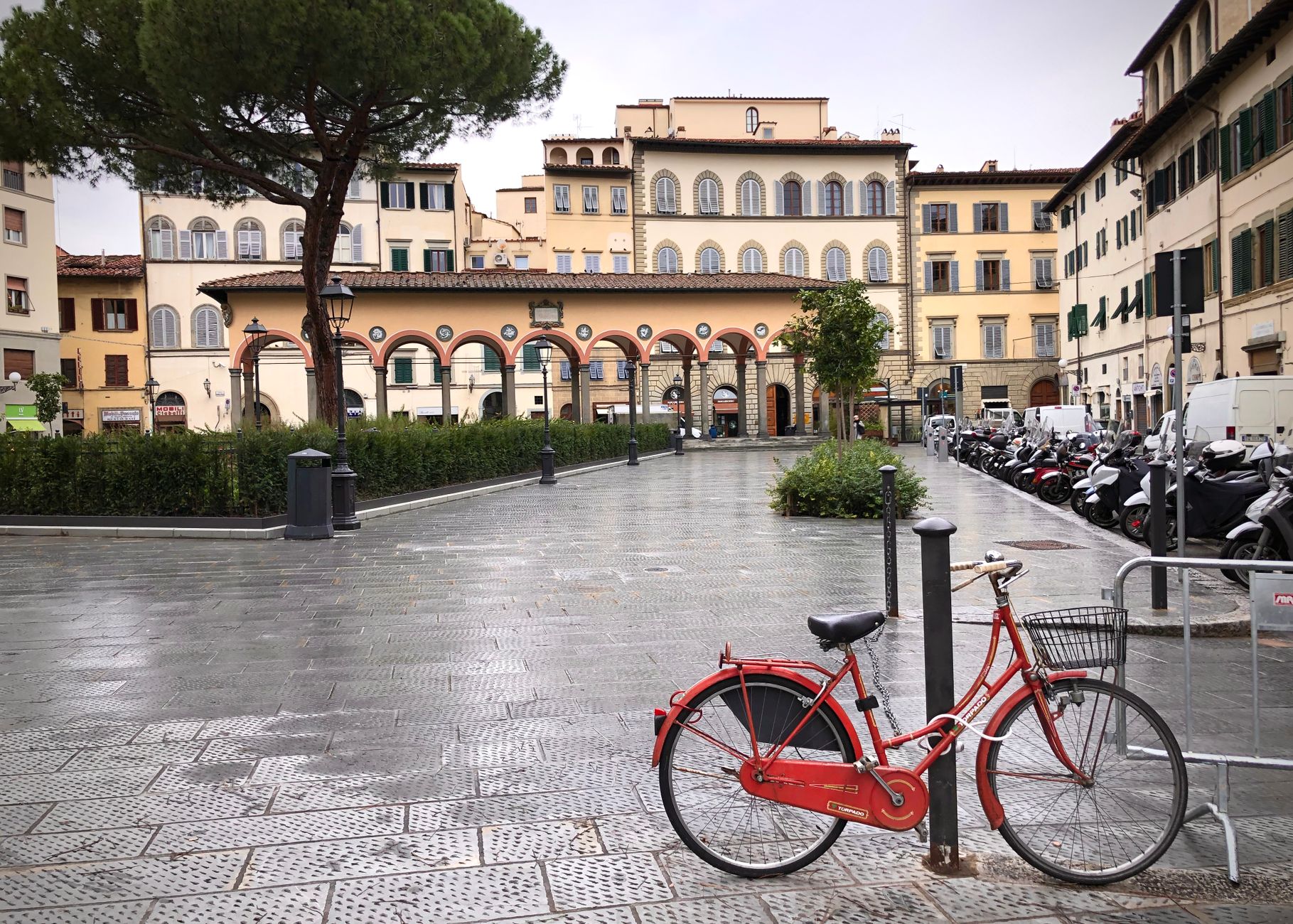
Piazza Santa Croce
The wide, slightly sloping piazza in front of the basilica is the social heart of the neighbourhood. Every June it hosts the Calcio Storico Fiorentino, a ferocious 16th-century form of football played in period costume — if your dates align, book tickets months in advance.
In the evening, locals reclaim the square with aperitivo in hand. The ochre and terracotta facades turn amber in the late light, making this one of the best free photographic moments in the city.
More of Santa Croce
Discover where to stay, what to do and the best deals for your trip.
Explore Santa Croce →