
Santa Croce
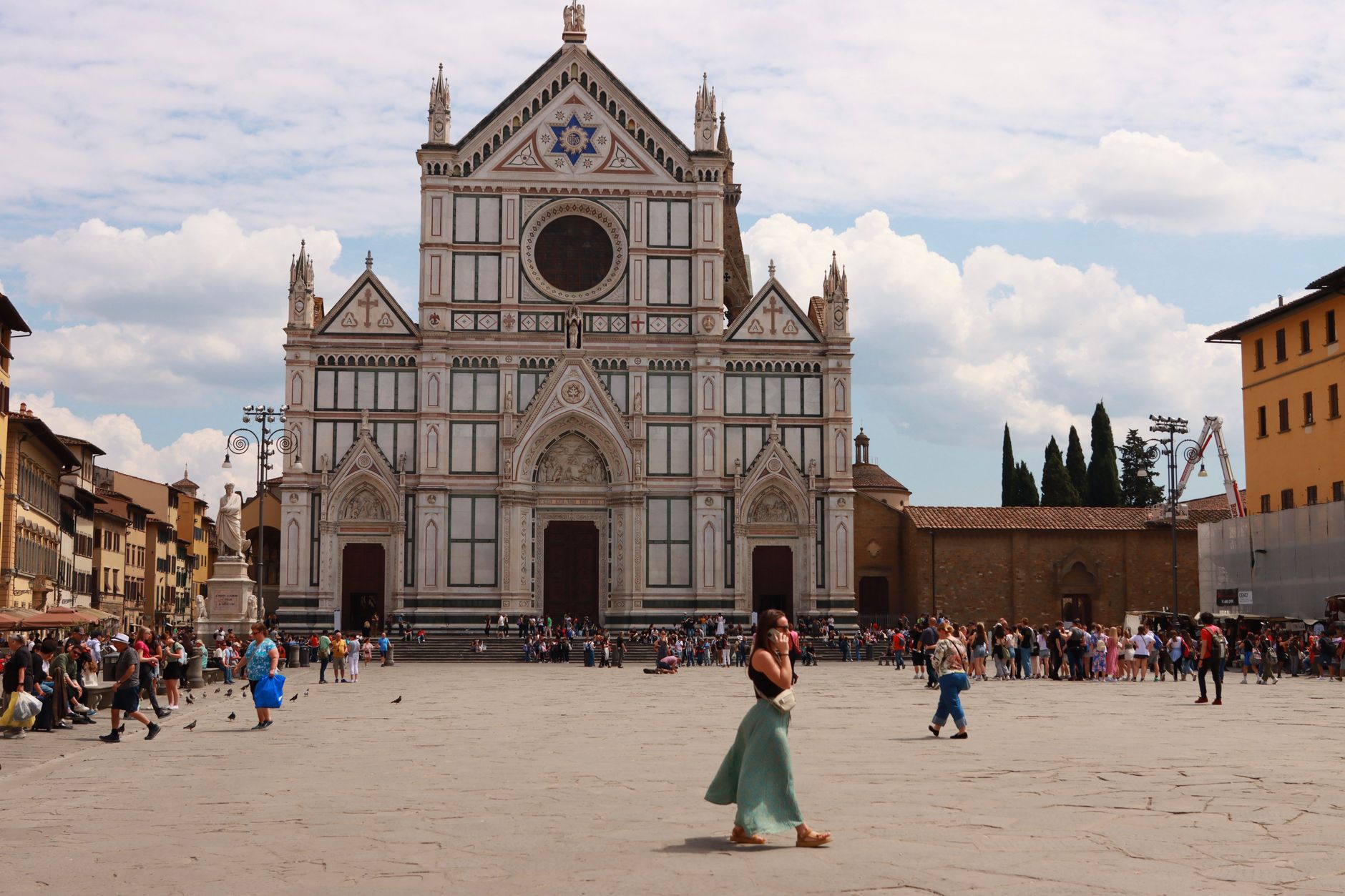
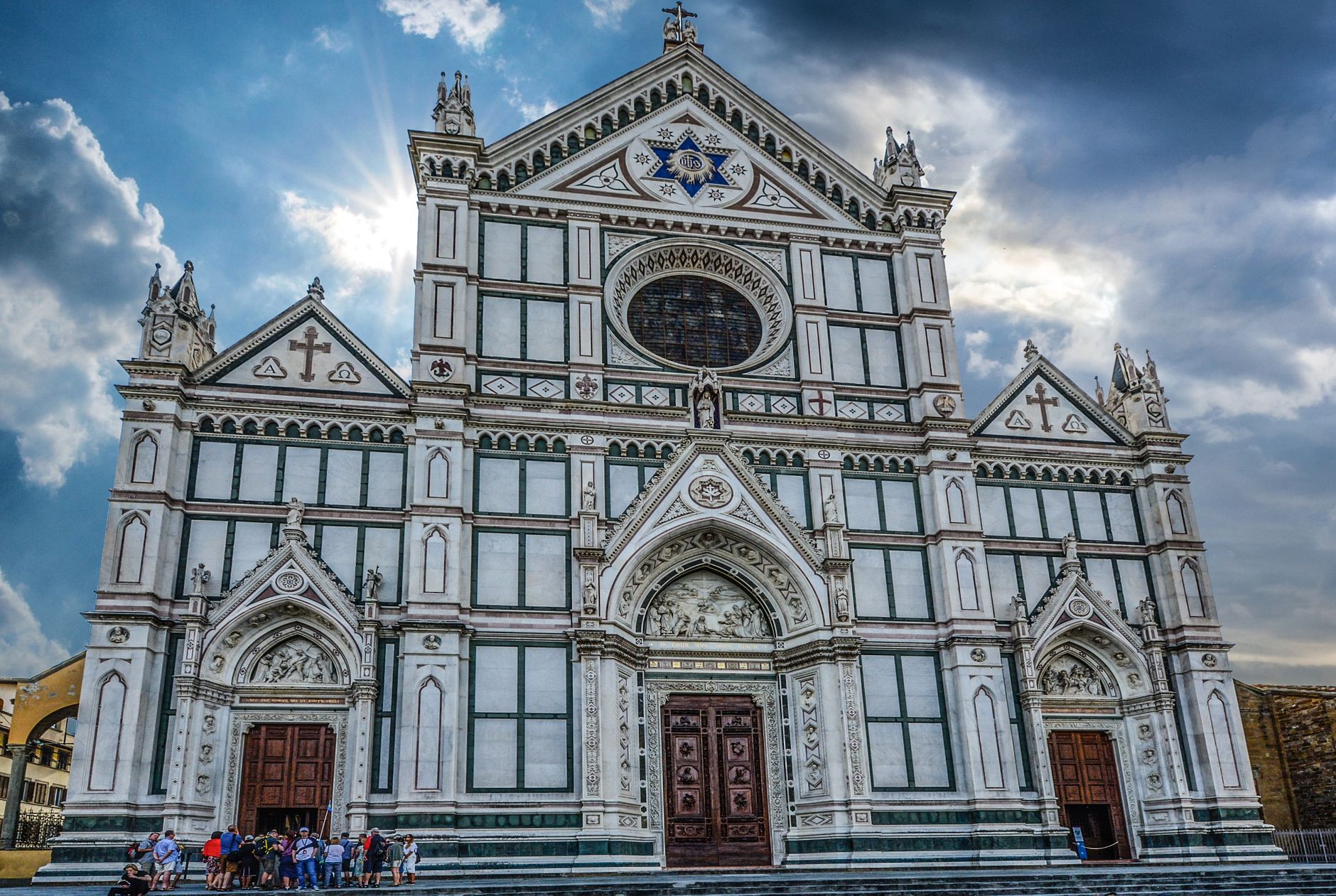
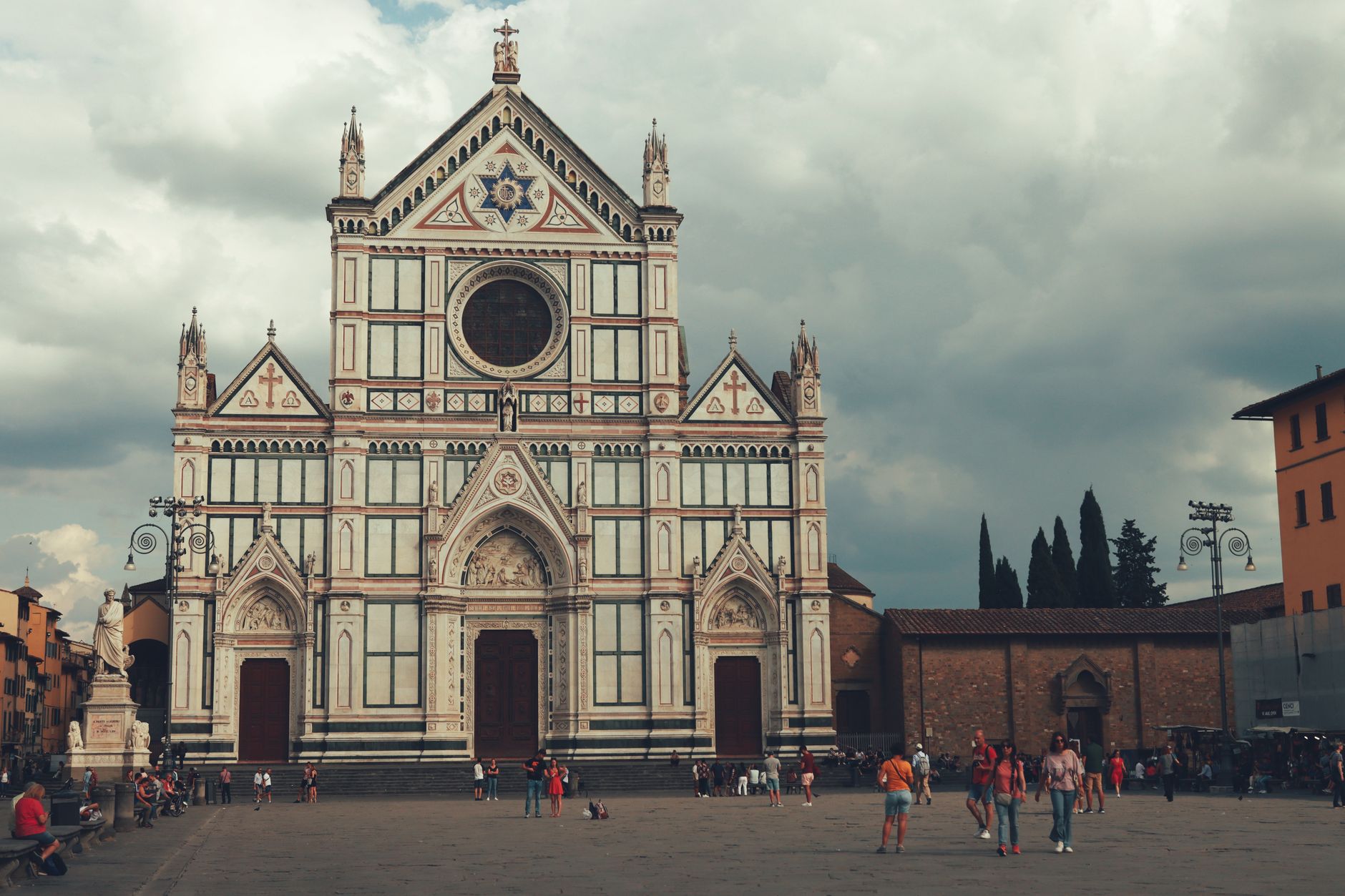
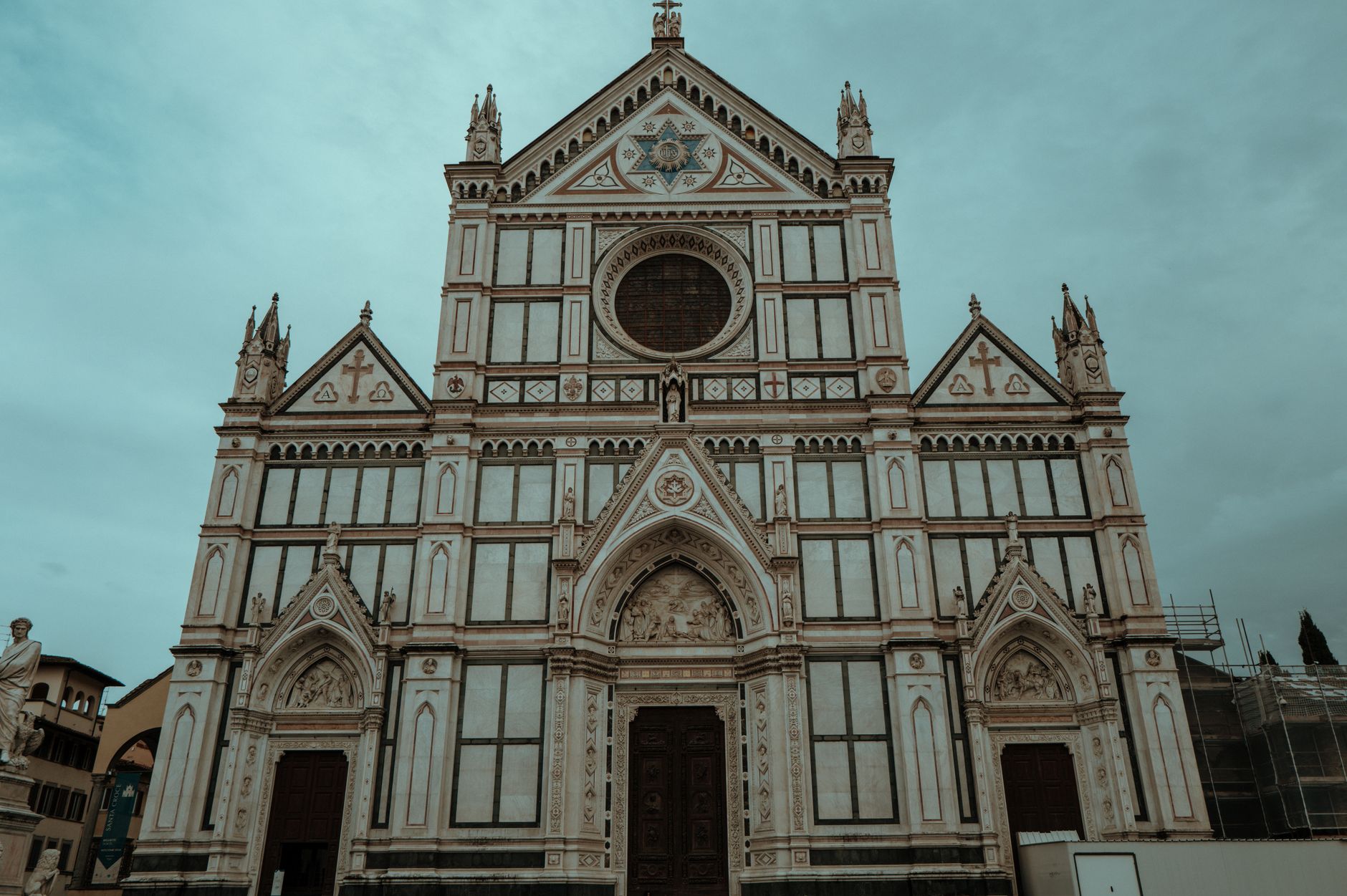
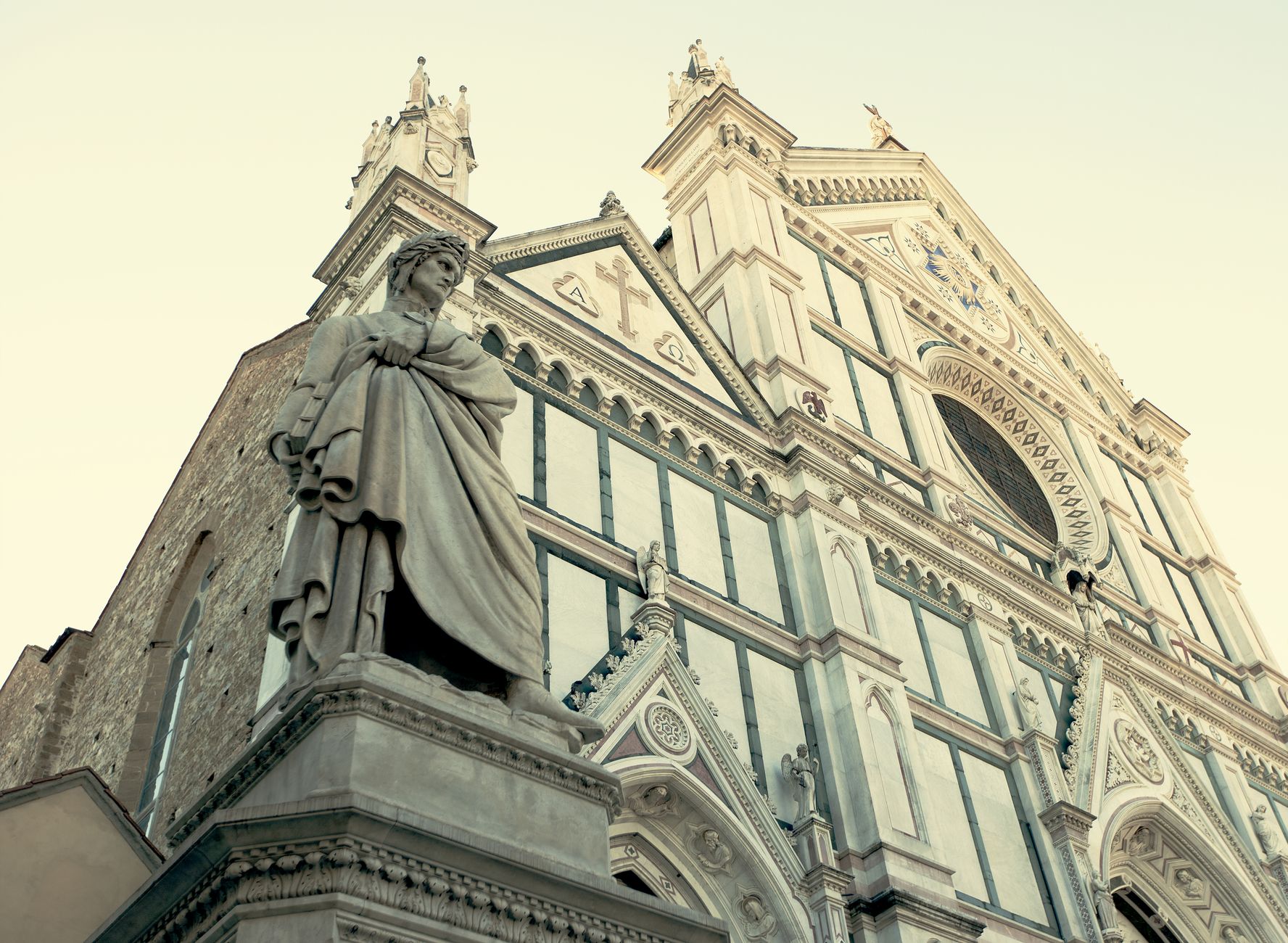
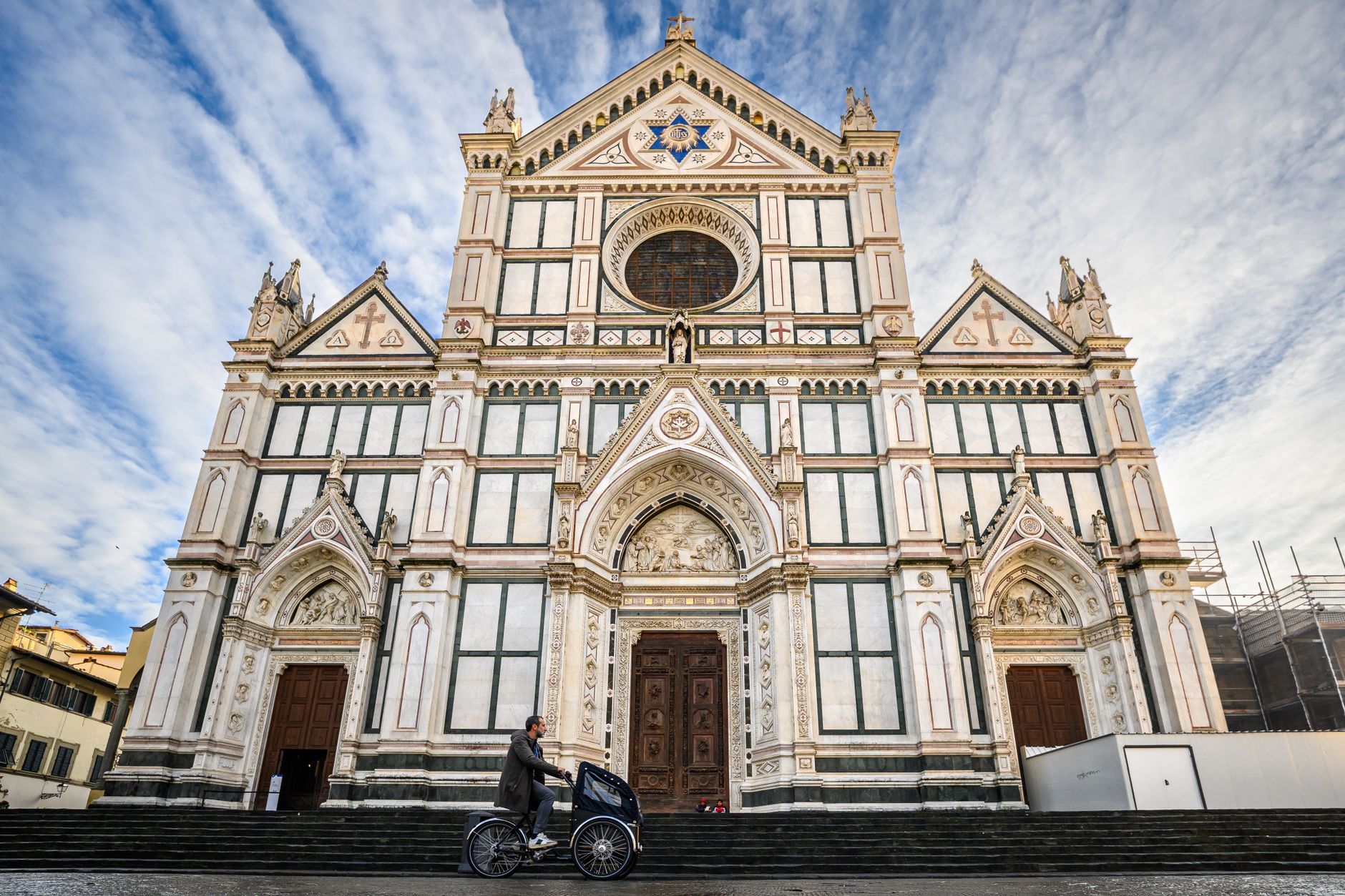
The piazza outside Santa Croce is wide and sun-bleached, locals cutting across it on bikes as if the basilica at its far end were just part of the furniture. Step inside and the scale quietly reasserts itself: 115 metres of nave, sixteen chapels, and the floor itself a patchwork of tomb slabs worn smooth by centuries of feet. Michelangelo is buried here. So are Machiavelli and Galileo. The largest Franciscan church in the world carries that weight without ceremony.
What makes Santa Croce worth a slow visit is the layering — Giotto's frescoes in the Bardi and Peruzzi chapels, Donatello's carved Annunciation, and then, tucked off the cloister, Brunelleschi's Pazzi Chapel: a small room so precisely proportioned it almost seems to think.
💛 What travellers fall for
People who come back tend to head straight for the refectory, where Cimabue's Crucifix hangs — damaged in the 1966 flood and never quite restored to what it was, which is part of what makes it so affecting. The Leather School in the old friary dormitory is worth the detour: you can watch the work, and buy directly from the artisans.
Experiences you don't want to miss




Deals in Santa Croce
Book directly at the provider

How Santa Croce came to be
Franciscan friars reached Florence around 1209, and a modest church on this site was already noted by the time Francis was canonised in 1228. That building was replaced, then outgrown again. On 3 May 1294 — or 1295, sources differ — the foundation stone of the current basilica was laid to a design by Arnolfo di Cambio, Florence's leading architect. He died before it was finished, somewhere between 1302 and 1310, but the building was largely complete by the century's end. It waited until 1443 for formal consecration, by Pope Eugene IV.
In 1566 Duke Cosimo I called in Giorgio Vasari to bring the interior into line with Counter-Reformation taste: the rood screen came down, fourteen uniform altars went up. Then in November 1966 the Arno flooded the entire quarter, driving heating oil and mud through the nave and into the chapels. Repairs to the art alone took decades.
Who and what shaped it
People who shaped it
Landmark buildings
See Santa Croce in motion
Plan your visit
On the map
When to go
Spring and early autumn are the most comfortable seasons — mild enough to walk from the city centre without arriving overheated. July and August bring intense heat to the piazza; the interior stays cooler, but the crowds peak then too.
Right now
Background & history adapted from Wikipedia (CC BY-SA) · specs from Wikidata (CC0) · weather from Open-Meteo · map data © OpenStreetMap contributors · photos from Wikimedia Commons / Unsplash with per-image credit. No third-party reviews or social posts reproduced.