Pont du Gard
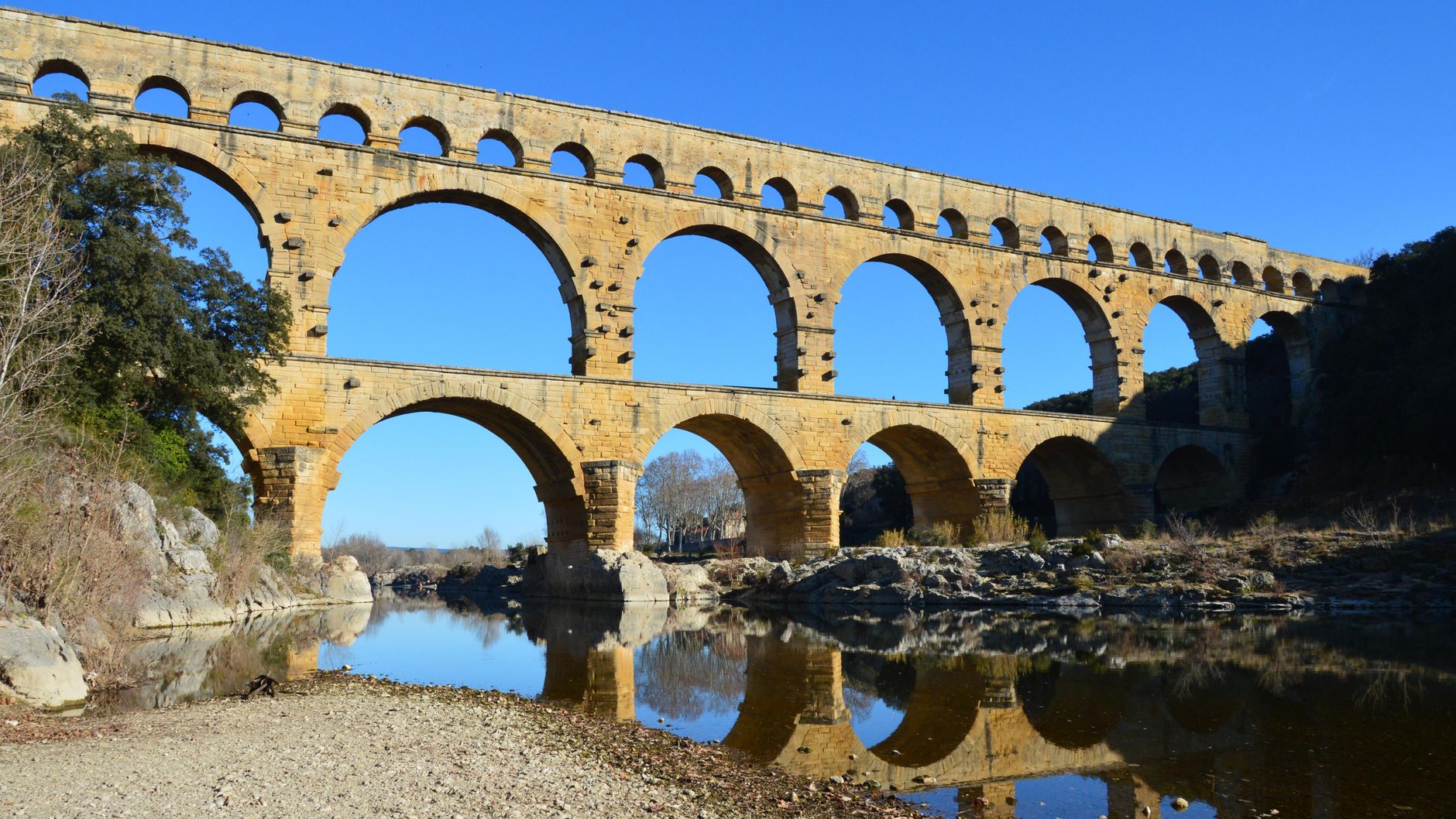
Rising three tiers above the turquoise Gardon river, the Pont du Gard is the tallest Roman aqueduct bridge ever built and one of the best-preserved ancient structures on earth. Standing beneath its honey-gold arches on a summer morning, before the crowds arrive, is genuinely jaw-dropping.

Engineering that still stuns
Completed around 50 AD, the bridge stretches 275 metres and reaches 49 metres at its highest point — all without a drop of mortar holding the massive limestone blocks together. The Romans cut each stone to fit with such precision that the structure has barely shifted in two millennia.
The top tier once carried water 50 kilometres from Uzès to Nîmes, supplying a city of 50,000 people. Walking the middle tier (with a guide) gives you a vertiginous view straight down to kayakers threading the river below.

Swimming, kayaking and the museum
The site includes a superb museum, the Mémoire de Garrigue, where you can trace the full engineering story through scale models and original Roman tools. Allow at least 90 minutes inside before heading to the riverbank.
In July and August the Gardon becomes a natural lido: families wade in the shallows directly beneath the arches for the most photogenic swim in France. Hire a canoe from Collias village, 8 km upstream, and paddle down to arrive at the bridge from the water — a perspective most visitors never see.
Getting there and timing your visit
The site is 23 km north-east of Nîmes via the D981 road. There is no train station nearby, so a car or organised day-trip bus from Nîmes or Avignon is the practical option.
Arrive at opening time (9 am) or after 5 pm in summer to avoid tour-group peaks. The golden-hour light on the stone in late afternoon is extraordinary and worth planning around.
More of Occitanie
Discover where to stay, what to do and the best deals for your trip.
Explore Occitanie →