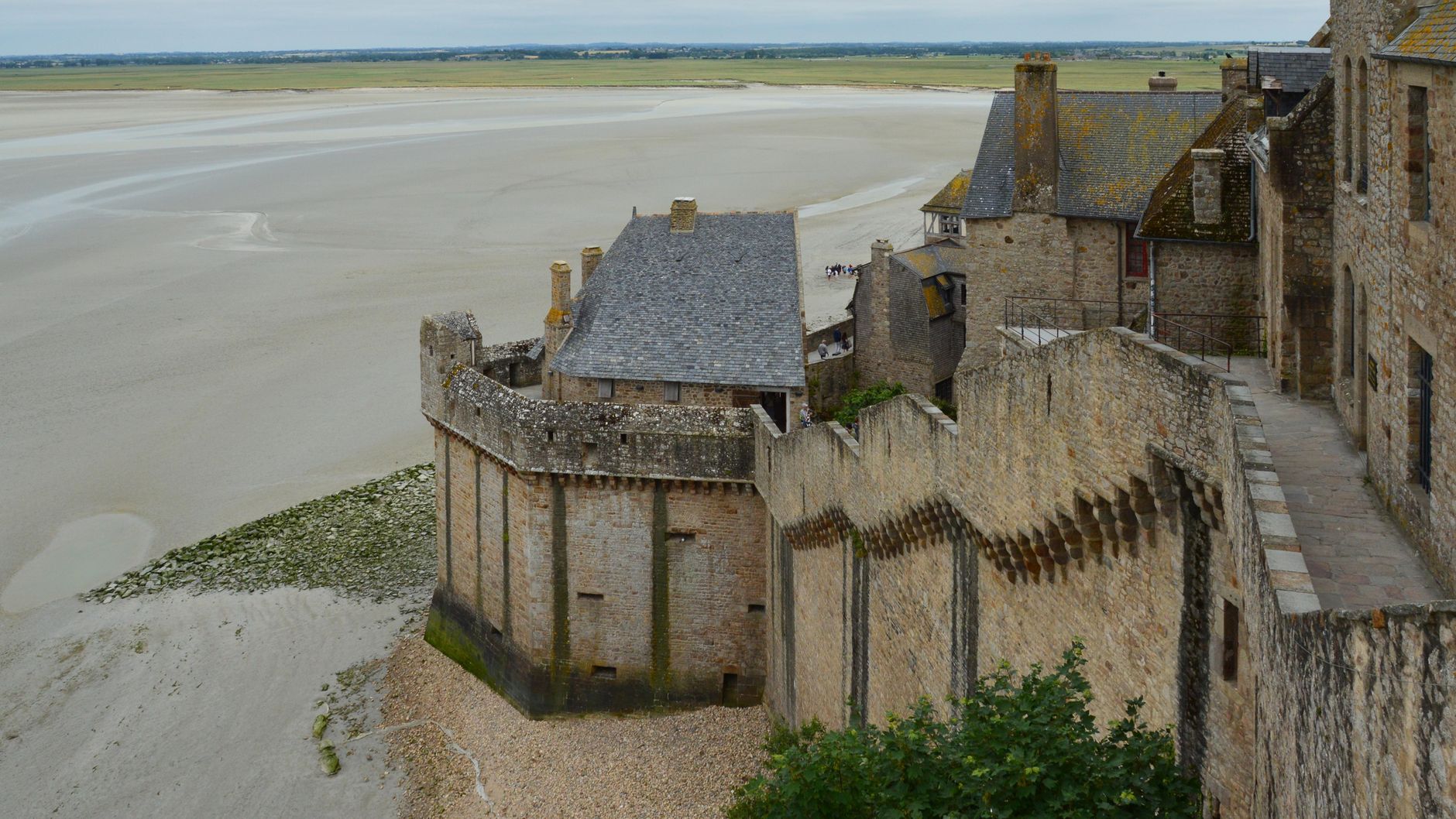
The Tidal Bay of Mont Saint-Michel
The Bay of Mont Saint-Michel hosts the largest tidal range in continental Europe — up to 14 metres between low and high water — and watching the sea sprint back across 15 kilometres of flat sand at the speed of a galloping horse is one of nature's great spectacles.

Reading the Tides
The bay's tidal coefficient determines how dramatic each tide will be; coefficients above 100 (published on maree.info and local tourist office websites) produce the most spectacular flooding of the causeway and island base. Equinox tides in March and September regularly exceed 110 and draw thousands of spectators.
At low tide the sand stretches to the horizon in every direction, ribbed and gleaming, dotted with the channels of the Couesnon and Sélune rivers that meander unpredictably across the flats.
Where to Watch the Tide Come In
The viewing platform on the causeway between the mainland car park and the island is the safest and most accessible spot. For higher ground and a broader perspective, the ramparts on the island's north face put you directly above the advancing water.
During exceptional equinox tides, the sea can cover the causeway road entirely — a sight that once required waiting for the water to recede before leaving the island, just as medieval pilgrims did.
The Salt Marsh Ecosystem
The pré-salé salt marshes fringing the bay support a unique ecosystem of glasswort, sea lavender and sea purslane. The sheep that graze here absorb the salinity through the plants, giving the celebrated pré-salé lamb its distinctive mineral flavour.
The bay is a UNESCO World Heritage Site and Ramsar wetland, sheltering migratory wading birds including dunlin, knot and bar-tailed godwit in enormous numbers during autumn passage.
More of Mont Saint-Michel
Discover where to stay, what to do and the best deals for your trip.
Explore Mont Saint-Michel →