Remparts Gallo-Romains & Jardins de l'Archevêché Terrace
The Archbishop's Gardens (Jardins de l'Archevêché) sit on a raised terrace behind the cathedral, laid out in formal French style with clipped box hedges and rose beds — but the real reason to come is the view back across the apse of Saint-Étienne, which is arguably the finest angle on the entire cathedral. Add the surviving stretch of Gallo-Roman ramparts at the garden's edge and you have a layere

The Best Cathedral Viewpoint in Bourges
From the upper terrace of the Archbishop's Gardens, the full sweep of the cathedral's east end fills the skyline — the five-aisled apse, the flying buttresses and the two asymmetric towers all visible at once. Photographers should come in the late afternoon when the stone turns gold and the shadows of the buttresses lengthen dramatically.
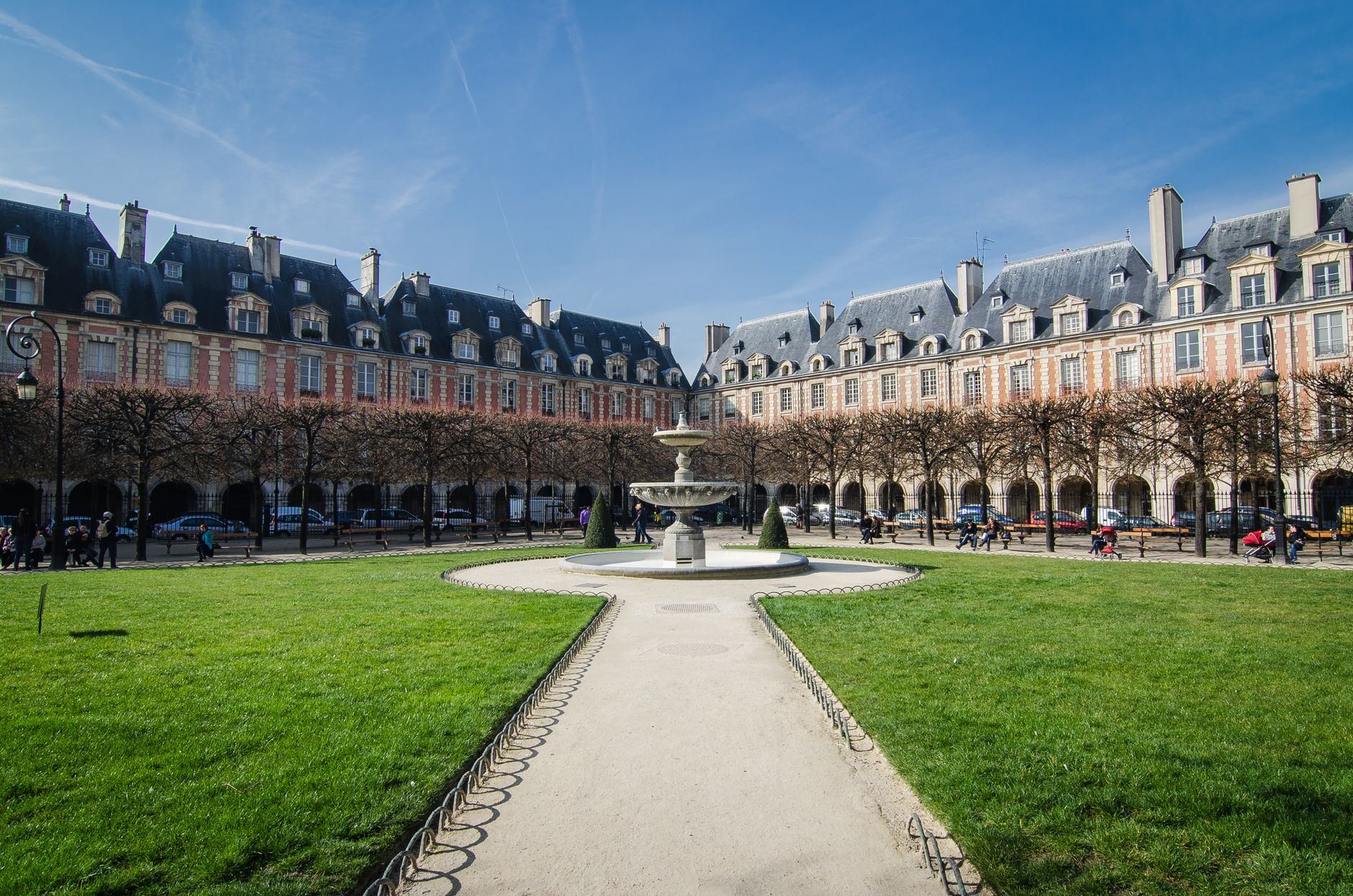
The formal garden itself was redesigned in the 17th century and retains its original geometry: a central allée, symmetrical parterres and a small fountain. It is beautifully maintained and free to enter.
The Gallo-Roman Ramparts
At the northern edge of the gardens, a substantial section of the 3rd-century Roman wall — built when Bourges was the city of Avaricum — still stands to several metres in height. The alternating courses of stone and Roman brick are clearly visible and give a vivid sense of how formidable this fortification once was.
Information panels in French and English explain how the medieval city was built directly on top of the Roman street grid, a palimpsest of urbanism you can trace on a map at the garden entrance.
When to Visit
The gardens are open daily from dawn to dusk and are free. They are at their most beautiful in June when the roses are in full bloom, and again in October when the plane trees turn copper.
Combine a visit with a walk along the Rue Bourbonnoux, the medieval street that runs along the base of the old ramparts toward the Palais Jacques-Cœur.
More of Bourges
Discover where to stay, what to do and the best deals for your trip.
Explore Bourges →