
Bourges
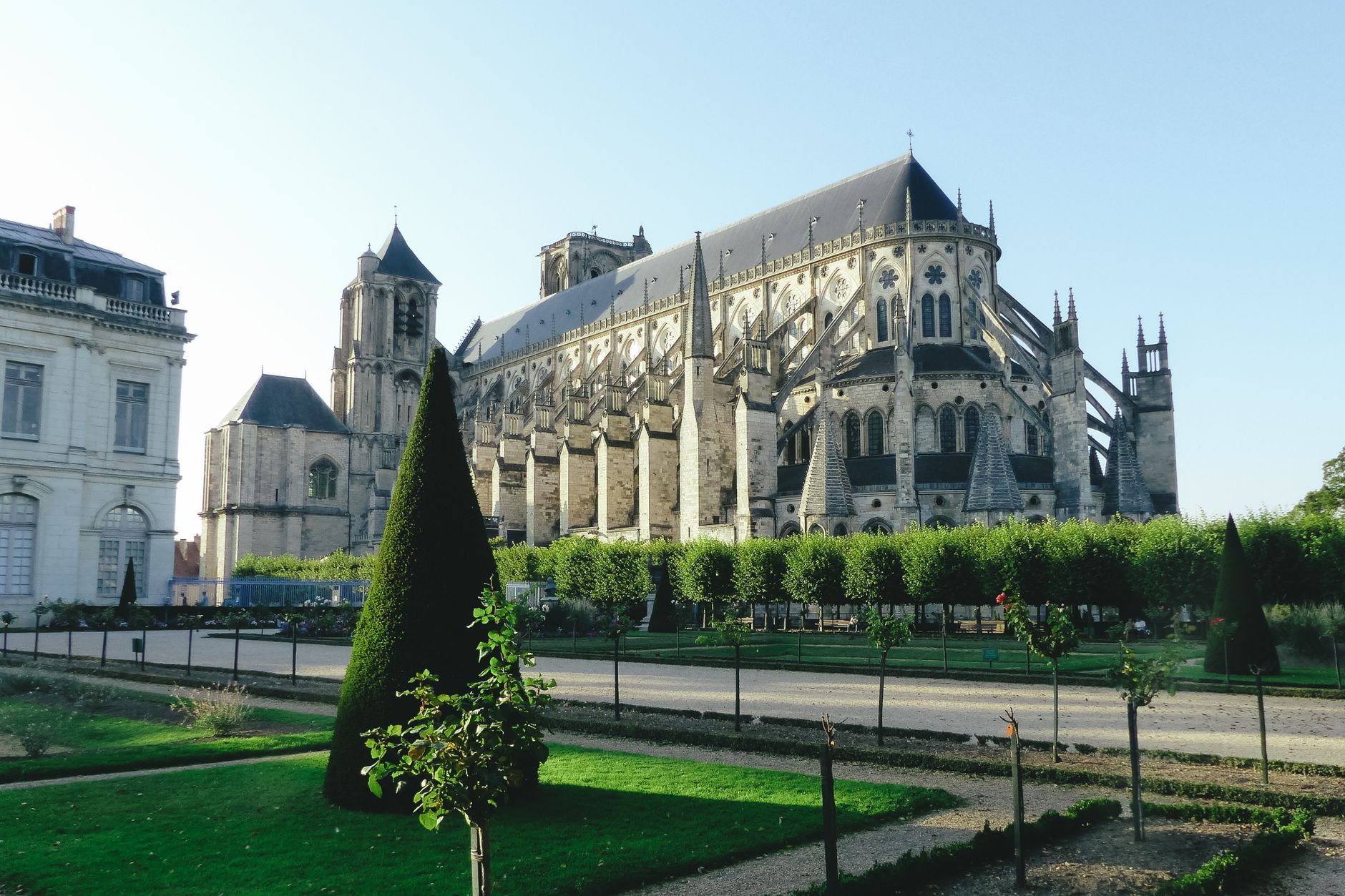
The first thing you notice in Bourges is the cathedral — not because you go looking for it, but because it simply appears above the rooftops, two mismatched towers tilting slightly against each other like old friends who disagree. One is 58 metres and silent (no bells were ever hung there, owing to structural doubts that predate its own consecration in 1324); the other collapsed in 1506 and was rebuilt two years later, taller, on the city's money and the faithful's appetite for Lenten butter.
Beyond the cathedral, Bourges is a city that rewards slow walking. More than 400 half-timbered houses line streets that have been reshaping themselves since the Gauls called the place Avaricum. Five minutes from the west door, the Marais — 135 hectares of market gardens threaded by rivers and canals — pulls the city back towards something quieter and older.
💛 What travellers fall for
People who come back tend to time an evening visit to the cathedral between May and September, when the light through the 13th-to-17th-century windows shifts from gold to amber without anyone announcing it. The climb — 396 steps to the top of the north tower — is worth doing once for the view over the marshes and Lake Auron, but the windows are the reason to return.
Experiences you don't want to miss



Deals in Bourges
Book directly at the provider
How Bourges came to be
The Gauls who lived here in the fourth century BC placed Avaricum at the centre of a Celtic confederacy. In 52 BC, during the Gallic Wars, the townspeople talked the war council out of burning it to the ground — a piece of persuasion that preserved the settlement but didn't save it from Julius Caesar regardless. A Roman diocese followed around 250 CE, and Christianity arrived with Saint Ursinus around 300.
The city's medieval peak came through two figures. Charles VII sheltered here in the 1420s during the Hundred Years' War — his son, the future Louis XI, was born in Bourges in 1423 — and it was here that Charles issued the Pragmatic Sanction of Bourges in 1438. That same decade, the merchant Jacques Coeur, born in the city in 1400, was building a trade fleet between France and the East and rising to become royal treasurer. His palace, completed in 1450, still stands. A catastrophic fire in 1487 destroyed a third of Bourges and began a long economic retreat from which the city never fully returned to its earlier prominence.
Who and what shaped it
People who shaped it
Landmark buildings
See Bourges in motion
Plan your visit
On the map
When to go
Bourges sits in the middle of France with no coast to moderate it: winters are cold and grey, summers warm and occasionally hot. Spring and early autumn — May, June, September — give you comfortable temperatures and the long-evening light that the cathedral's stained glass was made for.
Right now
Background & history adapted from Wikipedia (CC BY-SA) · specs from Wikidata (CC0) · weather from Open-Meteo · map data © OpenStreetMap contributors · photos from Wikimedia Commons / Unsplash with per-image credit. No third-party reviews or social posts reproduced.