La Patum de Berga
Once a year, Berga's medieval Plaça de Sant Pere erupts into a swirling storm of fire and percussion that has been shaking the town since at least 1454. This is not a show staged for tourists — it is a living, breathing ritual that the whole town owns, and it will rattle something loose in your chest.
A Festival Born from Medieval Processions
La Patum grew out of the paratheatrical performances that accompanied Corpus Christi processions during the Middle Ages, and its documented history in Berga stretches back to 1454. Over five centuries the festival has shed none of its raw energy, remaining one of the most visceral popular celebrations in all of Europe.
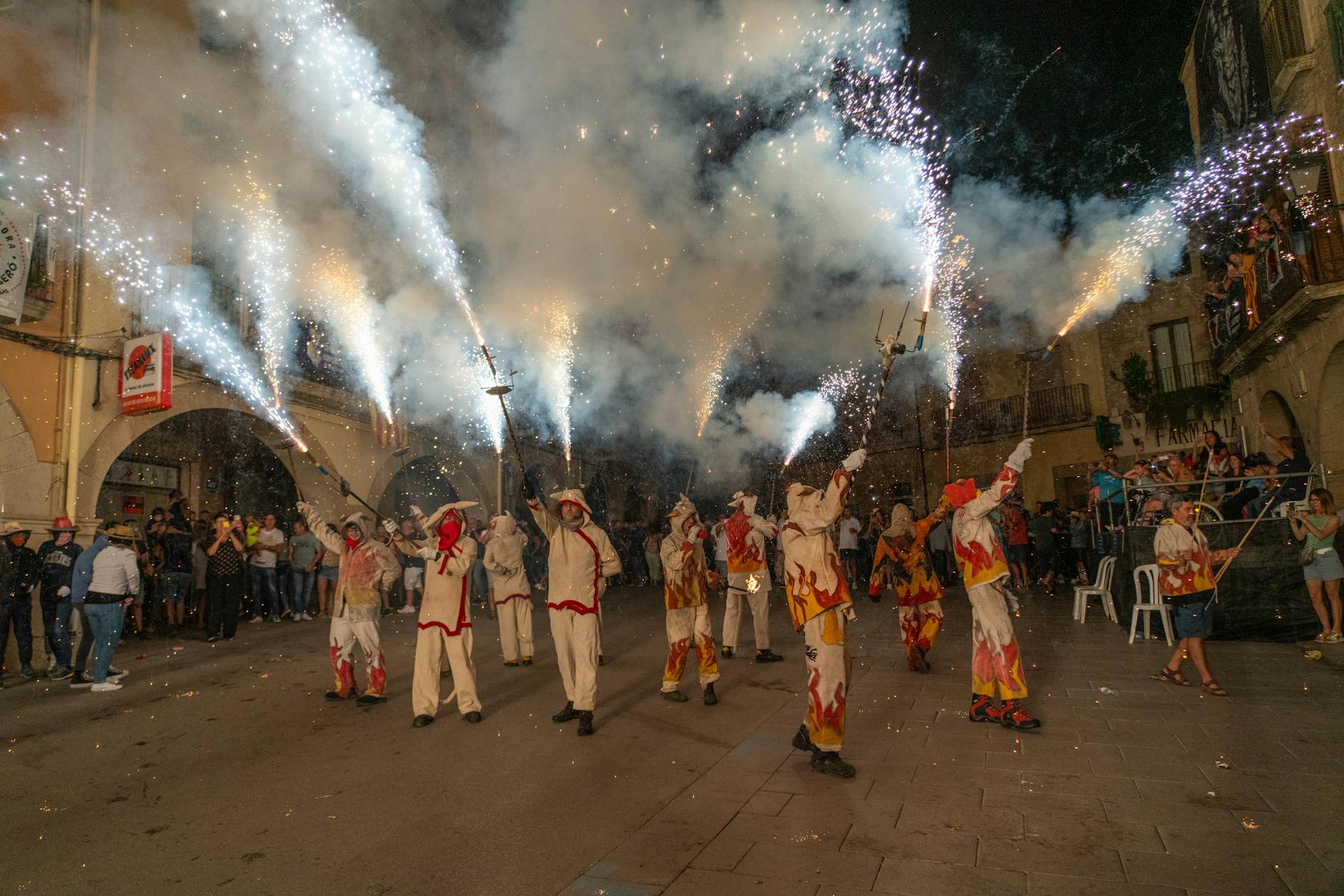
The name itself comes from the booming sound of the tabal, a great drum whose rhythmic thunder sets every dance in motion. Giants, eagles, two-headed dragons called guites, big-heads and fire-carrying plens (devils) all take to the streets in a sequence of salts — dances that alternate between solemn daylight ceremony and explosive nocturnal spectacle.

The Climax: Salt de Plens
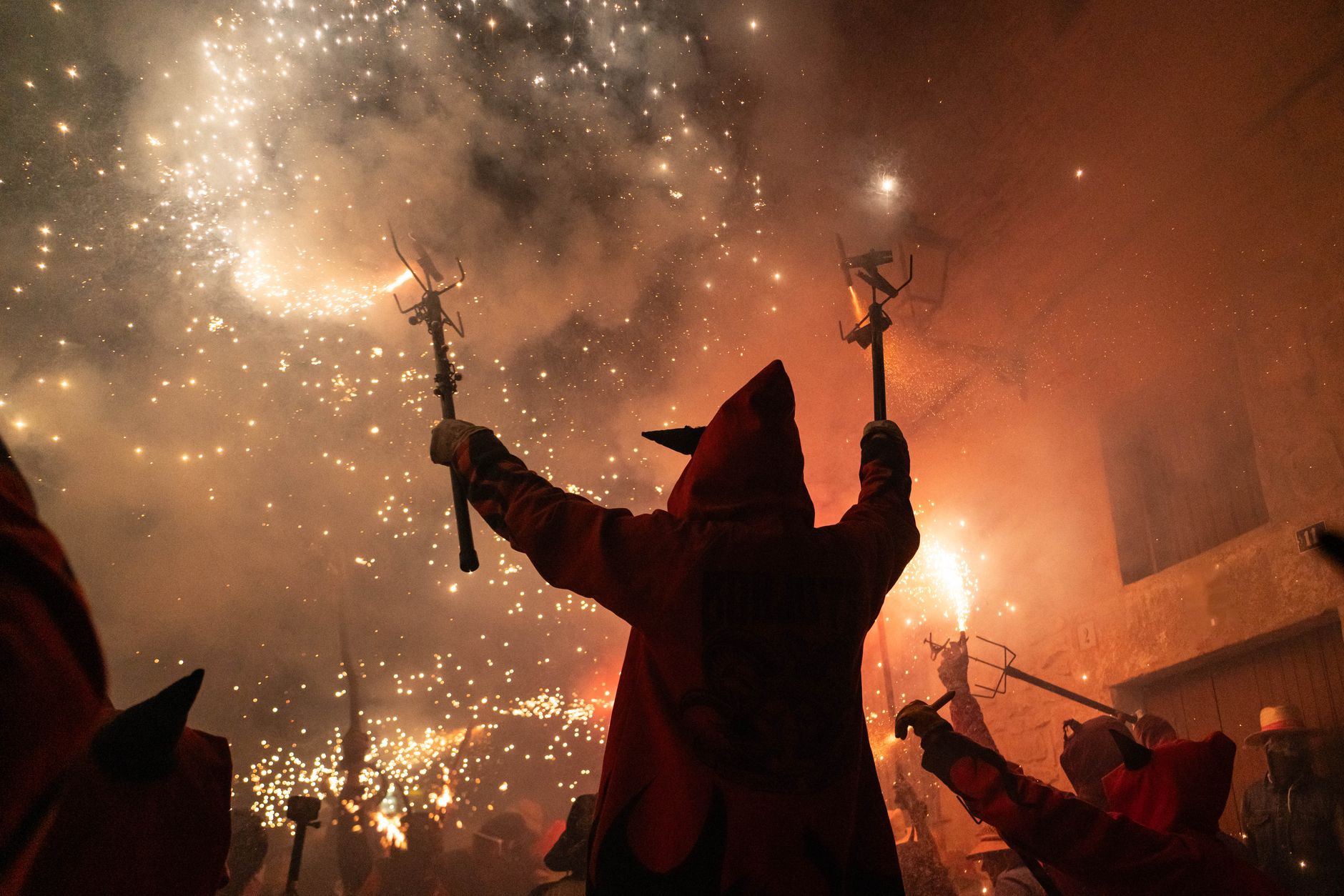
The undisputed high point of La Patum is the salt de plens, when dozens of performers dressed as fire devils leap through the crowd to the drum's relentless beat, showering everyone nearby with sparks from their pyrotechnic costumes. Plaça de Sant Pere transforms, in the words of the Catalan government's heritage body, into a scene where fire devils 'transform Berga's main square into a fiery hell.'
UNESCO recognised La Patum in 2005 as a Masterpiece of the Oral and Intangible Heritage of Humanity — one of only a handful of Spanish festivals to earn that distinction. The Generalitat de Catalunya had already declared it a Traditional Festival of National Interest back in 1983.
Planning Your Visit
La Patum takes place during Corpus Christi, generally between late May and late June, with the main days falling on the Thursday and Sunday of that week. Midday sessions are more solemn and family-oriented; night sessions are participatory, loud and fire-drenched — arrive early for a spot in the square.
Even outside festival week, you can visit the Museu de la Patum inside the town hall on Plaça de Sant Pere to see the giant figures up close and understand the festival's iconography before you ever hear the tabal.
La Patum de Berga on video
More of Berga
Discover where to stay, what to do and the best deals for your trip.
Explore Berga →