
Villa Neroniana (Nero's Villa ruins)
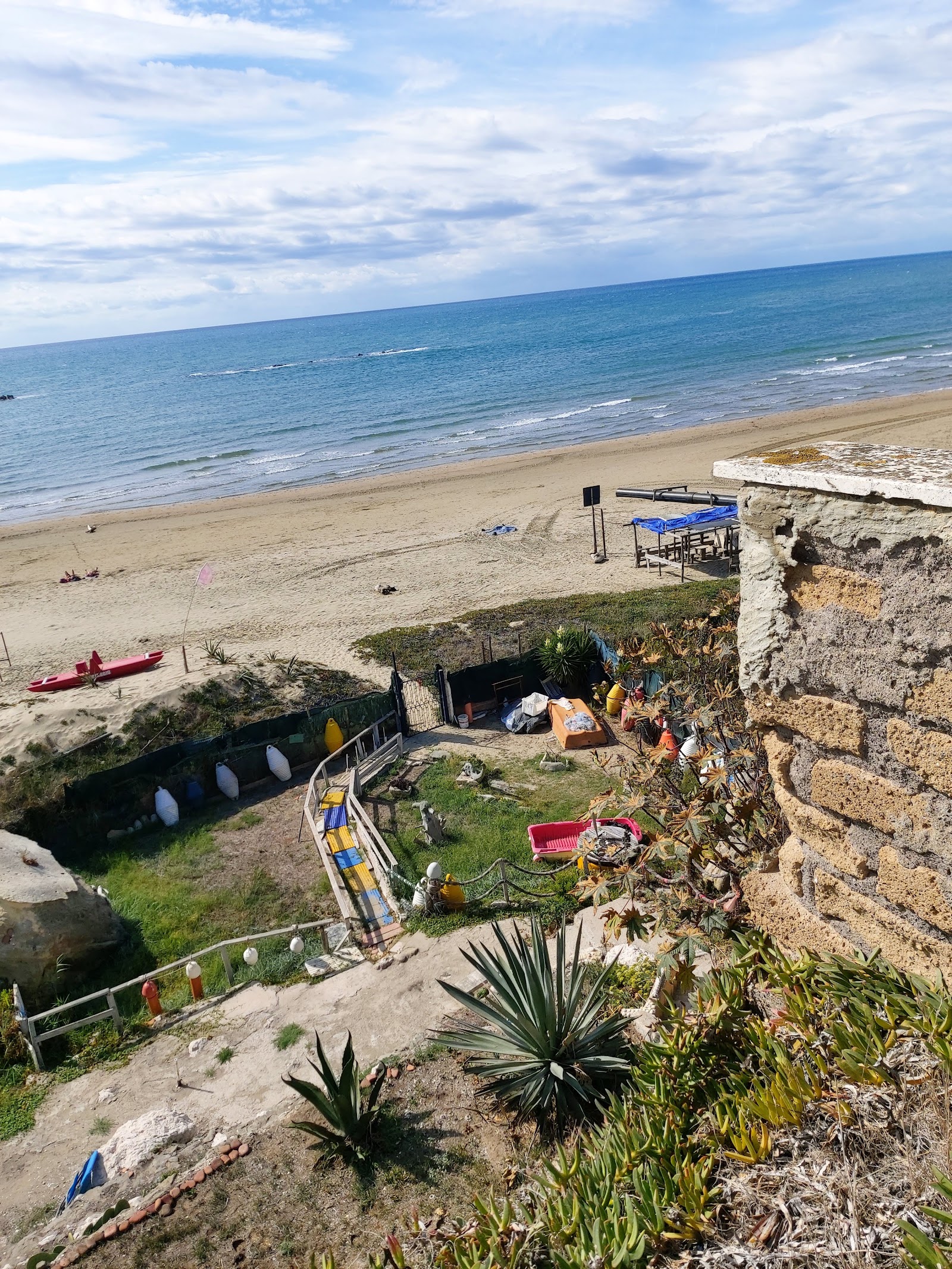
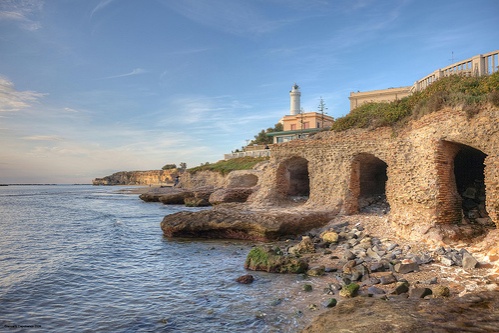
At the edge of Capo d'Anzio, where a low promontory drops roughly three metres to the sea, you can stand beside walls that Nero ordered built and watch swimmers climb out of the water directly below. The ruins stretch for about 800 metres along this coastline — a scale that only becomes legible when you walk the length of the beach and keep finding more.
Entrance is free, though you'll leave your name and age at the gate. Most of the upper-level structures are barriered off, but the calidarium's walls still carry their geometric marble inlay, and the vaulted chambers of the Grotte di Nerone open at the base of the promontory.
💛 What travellers fall for
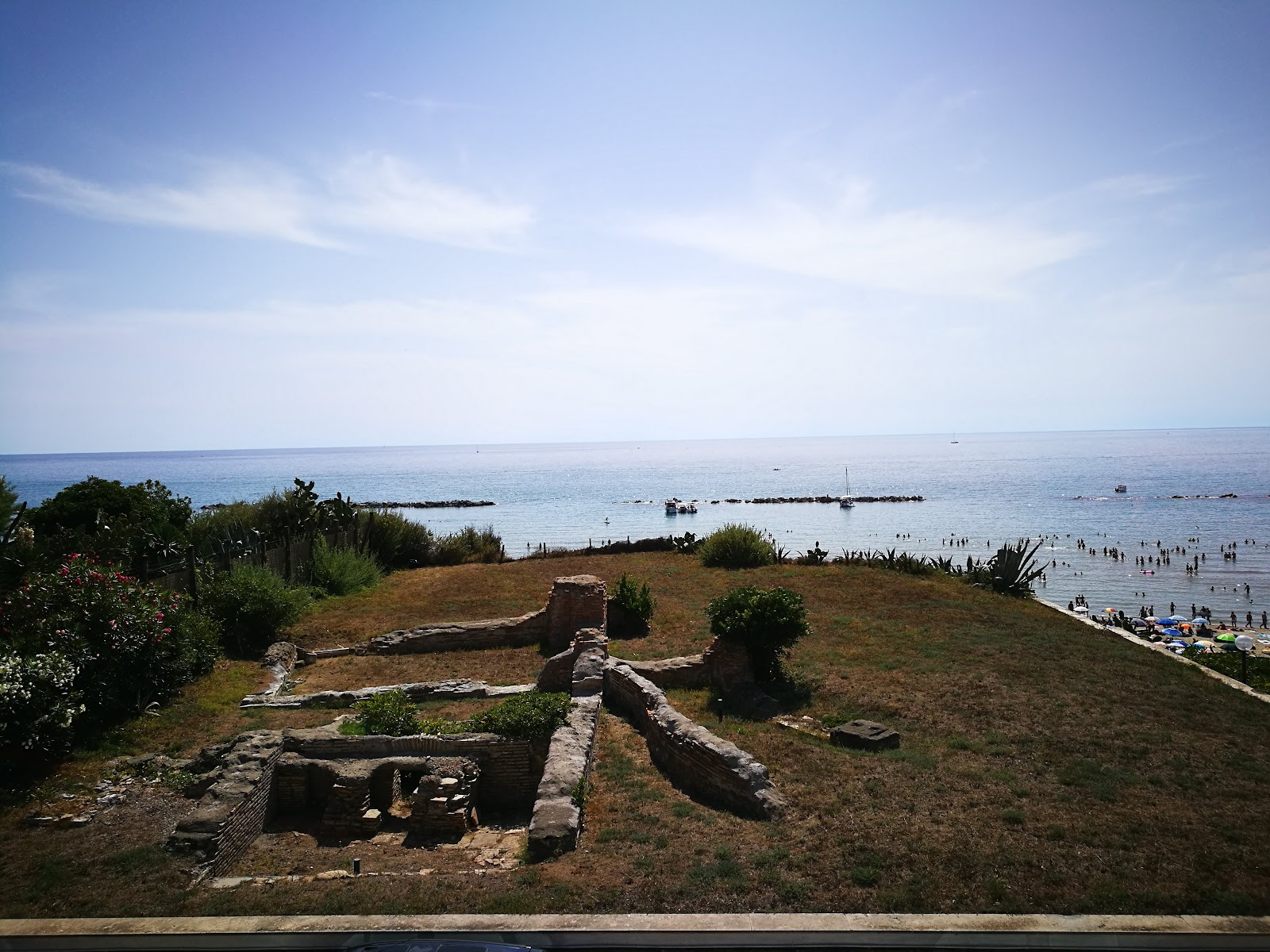
People who come back tend to do the same thing: arrive by the late-morning opening, walk the ruins, then drop down to the free stretch of beach below for a swim with the Roman masonry right there above the waterline. The views from the sand are genuinely better than from the site itself — keep that in mind before you spend too long peering through barriers.
The story behind Villa Neroniana (Nero's Villa ruins)
A symmetrical villa stood here in the 2nd century BC, but Nero — who was born in Antium, the town's ancient name — tore it down and replaced it with something far more ambitious: a complex of pavilions arranged around a seafront exedra, with nymphaea, thermal baths, gardens, terraces, and spaces for theatrical and musical performance. Augustus had used the earlier structure; Nero remade it entirely.
After Nero, the complex kept growing. Domitian, Hadrian, and Septimius Severus all added to it across roughly two centuries. An imperial library followed in a later phase. The site was eventually abandoned after successive raids by the Vandals, Ostrogoths, and Saracens, and lay largely unexamined until 19th-century excavations began pulling it back into view — including, at some point, the Fanciulla d'Anzio and the Borghese Gladiator, both now in Rome.
Good to know
Trains from Rome reach Anzio in about an hour, running hourly; the site is a ten-minute walk downhill from the station. Hours shift seasonally — confirmed as 10:30–12:30 and 16:00–18:00 from mid-September through May; call ahead for summer hours. Bring ID details for the entrance register.
Summer is the obvious season — July and August are dry and warm, with sea temperatures reaching nearly 26°C, and the beach below the ruins is swimmable and relatively quiet by Roman coast standards. Winter visits are cooler and wetter, with January averaging under 10°C; November is the wettest month by a considerable margin.
Where is Villa Neroniana (Nero's Villa ruins)?
More tickets & tours for Villa Neroniana (Nero's Villa ruins)
Book directly at the provider
What travellers say about Villa Neroniana (Nero's Villa ruins)
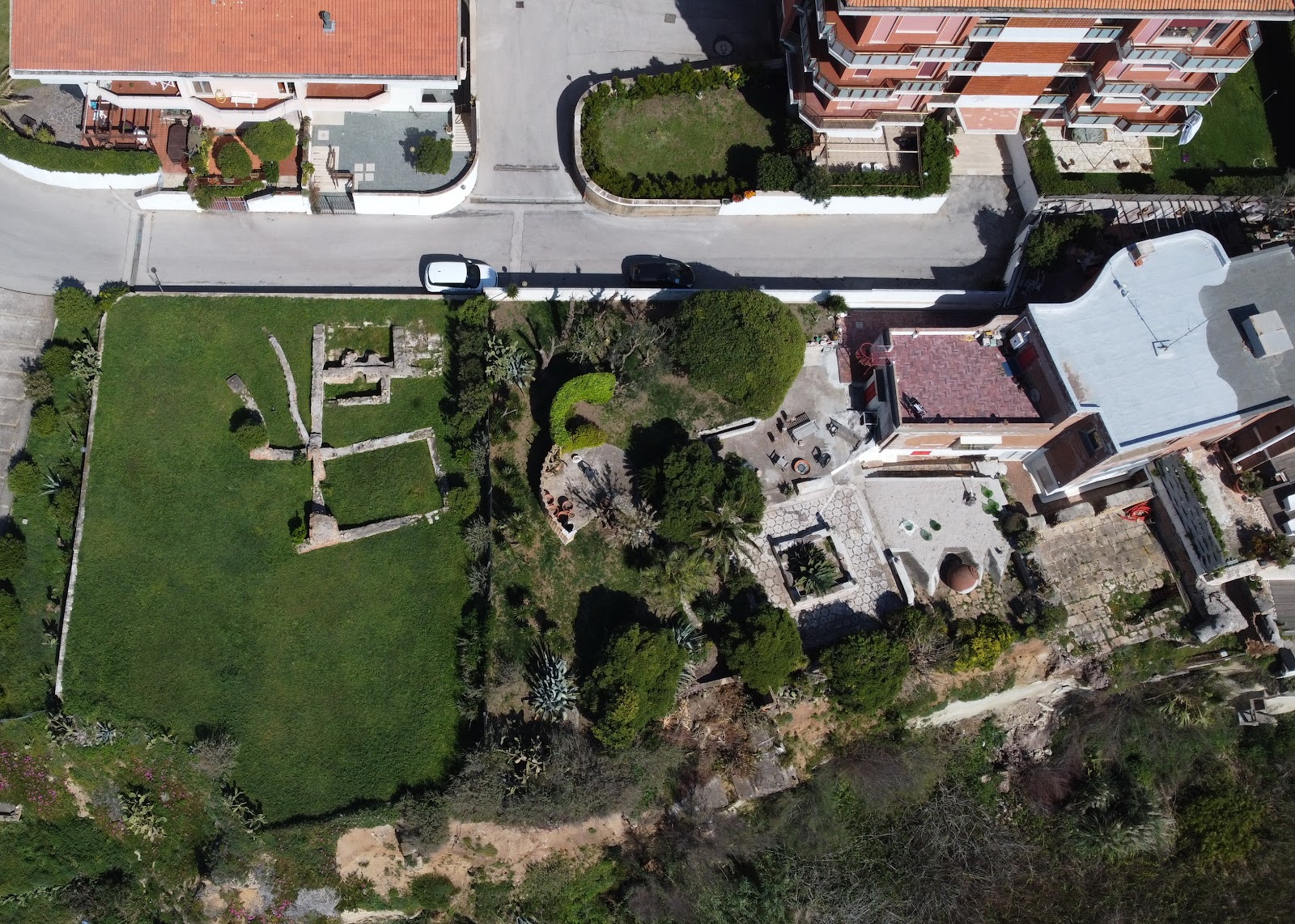
The current remains of the villa are those saved from the periodic collapses that were interrupted only with the construction of the breakwaters. They are divided between the condominium in via Ardeatina 7 and the villa in via di Villa Neroniana. Of particular importance is the mosaic in black and white tiles that decorated the peristilium with impluvium (1st century BC)
Big villa Cicerone
Not open to visitors, private This opus reticulatum villa, whose origins are difficult to discern, was built at the end of the Republic or rather in the early Augustan period. Only the quadrangular atrium with the impluvium remains today. Created from a larger opus reticulatum room, the atrium had walls covered in cipollino marble and a black and white mosaic floor decorated with a motif of interlocking circles. The atrium is square with sides measuring 8 meters, and the mosaic decoration—in keeping with the brick walls—is arranged in a band around the square pool, 4 meters on each side. The pool, missing its original corners and with some traces of its marble facing, is between two bands of black tesserae. The ornamental motif consists of interlocking circles with overlapping parts in black. The resulting hexagons with concave sides are decorated in the center with a rosette motif. The motif of intertwined circles is quite common in the 2nd century AD and finds precise confirmation in Ostia Antica.
Cicero's Villa Some Notes on the Identification of Cicero's Villa at Anzio From "Ancient Mosaics in Italy - First Region - Antium," edited by Valnea Santa Maria Scrinari and Maria Luisa Morricone Matini, C.N.R., published in 1975 by the Istituto Poligrafico dello Stato, Rome. Page 9: Along with the frequent clusters of villa ruins along the roads leading to Anzio and from Anzio to Circei and Terracina, the most vivid and effective source is Cicero: he is constantly trading between his properties in Formia (II, 8); Arpinum (II, 8); Tusculum (II, 9); and Rome (II, 8). Yet he stays in Antium more willingly than anywhere else (II, 6) and insists on inviting his friend Atticus (IV, 4a) and solicits his help in organizing his library (IV, 4a - IV, 5 - IV, 8). He will indeed have the help of the freedman Tyrannius (IV, 4a) and then of the two librarians Dionysus and Menophilus in 56 BC that Atticus procures for him. Meanwhile, he tells his friend that Antium hosts excellent gladiatorial contests (IV, 4a) and that the games are held there in early May (II, 8). He also explains how to reach his villa: "de via recta in hortos" (IV, 5) and in describing it, he clearly refers to its location by the sea... aut libris me delecto... aut fluctus numero (II, 6). There is yet another piece of information that interests us: Atticus wanted to buy some house or villa, and Cicero in 56 BC explained to him that he could find nothing already built to buy in the countryside, nor "in oppido est quiddam (IV, 8) ... et proximum quidem nostris aedibus." This is essential information for identifying Cicero's villa "in oppido," that is, on the coast of Antium, still an oppidum, that is, surrounded by its beautiful Volscian rampart. If the road leading there has no particular name but is simply called recta and passes not through the city but through the vegetable gardens, that is, tangent to the countryside, we can well imagine the villa on the western coast, recognizing it as one of the many settlements that today overlook the edge of the northernmost cliff of the great imperial complex. It is likely that this is the villa he sold years later to Lepidus and that he mentions in the letter to Atticus from Astura, where he evidently owned a new property and stayed in 45 BC. C. (XIII, 47 a).
More of Anzio
Discover where to stay, what to do and the best deals for your trip.
Explore Anzio →More attractions in Anzio
All of Anzio →
Background adapted from Wikipedia (CC BY-SA) · map data © OpenStreetMap contributors · ratings & place photos via Google · other photos with per-image credit. Ticket links may earn us a commission at no extra cost to you.