
Torre Civica di Pavia
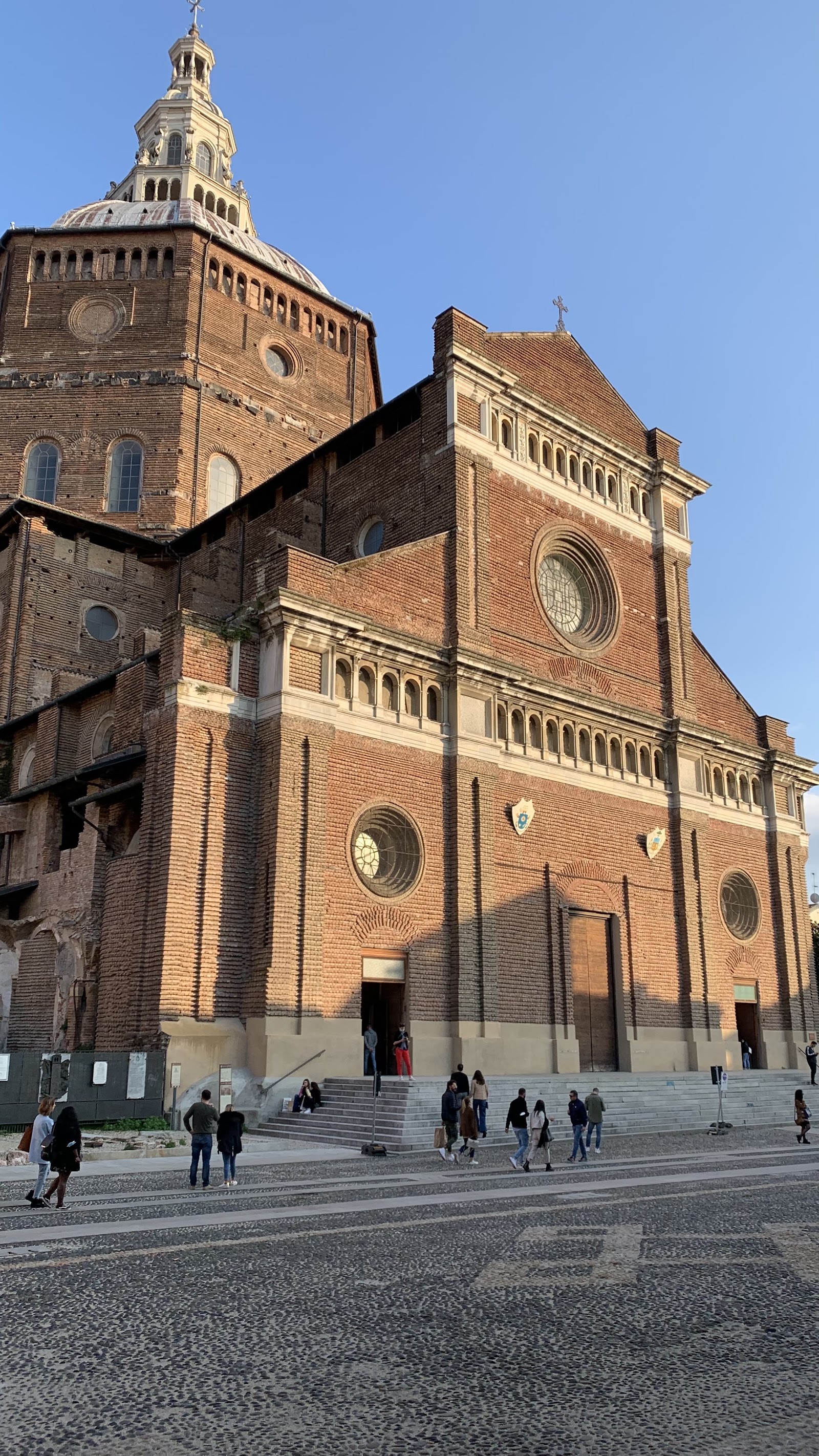
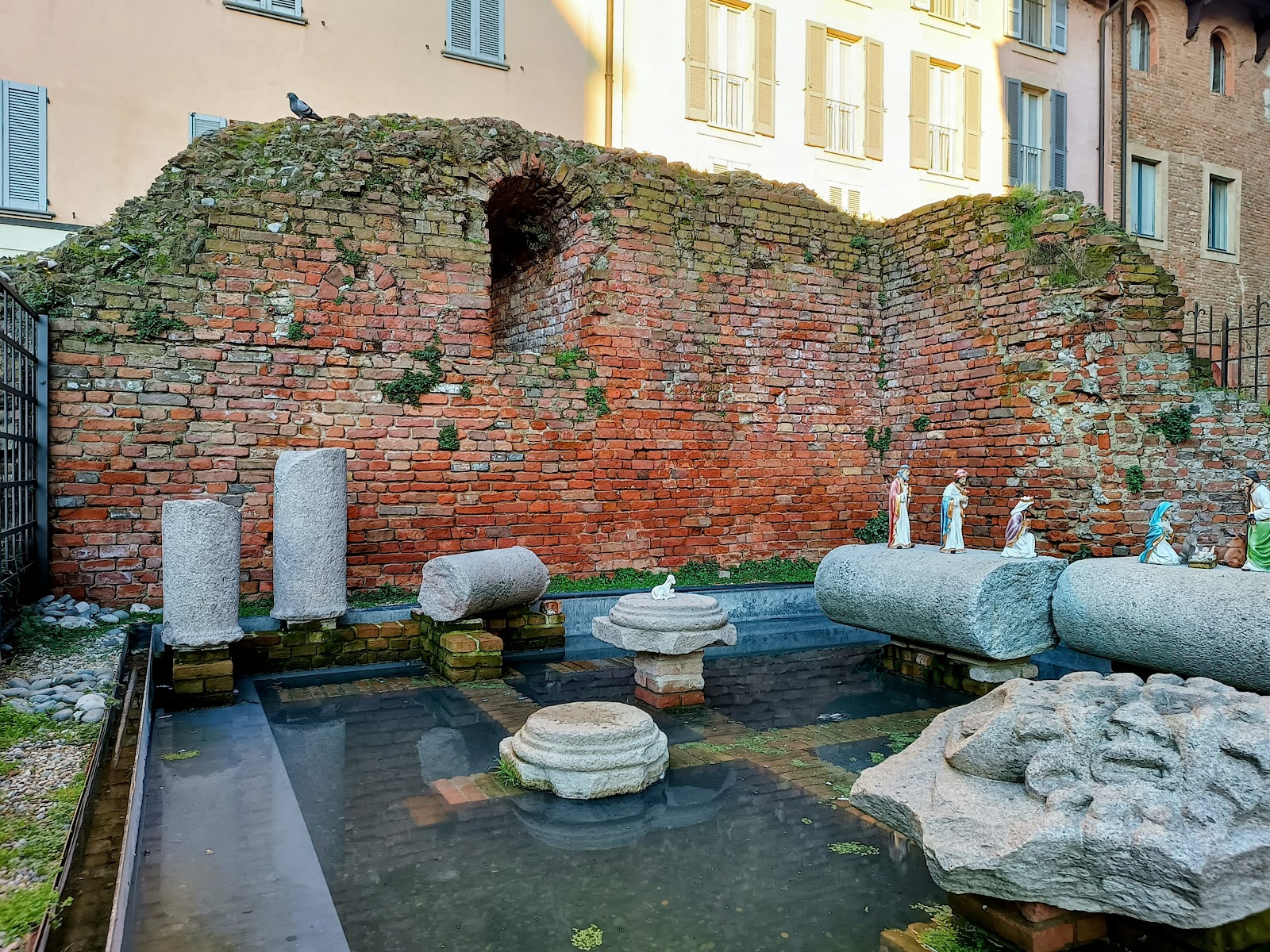
At 8:55 on the morning of 17 March 1989, a tower that had stood in the centre of Pavia for nearly a thousand years came down in seconds. Four people died — a newspaper seller, a barber's customer, two teenagers. What remains today in Piazza del Duomo is a ruined stump enclosed in a steel-and-glass cage, its mirrored roof throwing the sky and the cathedral facade back at you in fragments.
The Torre Civica was never just a bell tower. Founded in the 11th century by Bishop Guglielmo d'Este, it rose to 72 metres over several building campaigns and changed hands from bishop to commune by the 12th century — a civic landmark in the most literal sense. Now it is a monument to its own absence.
💛 What travellers fall for
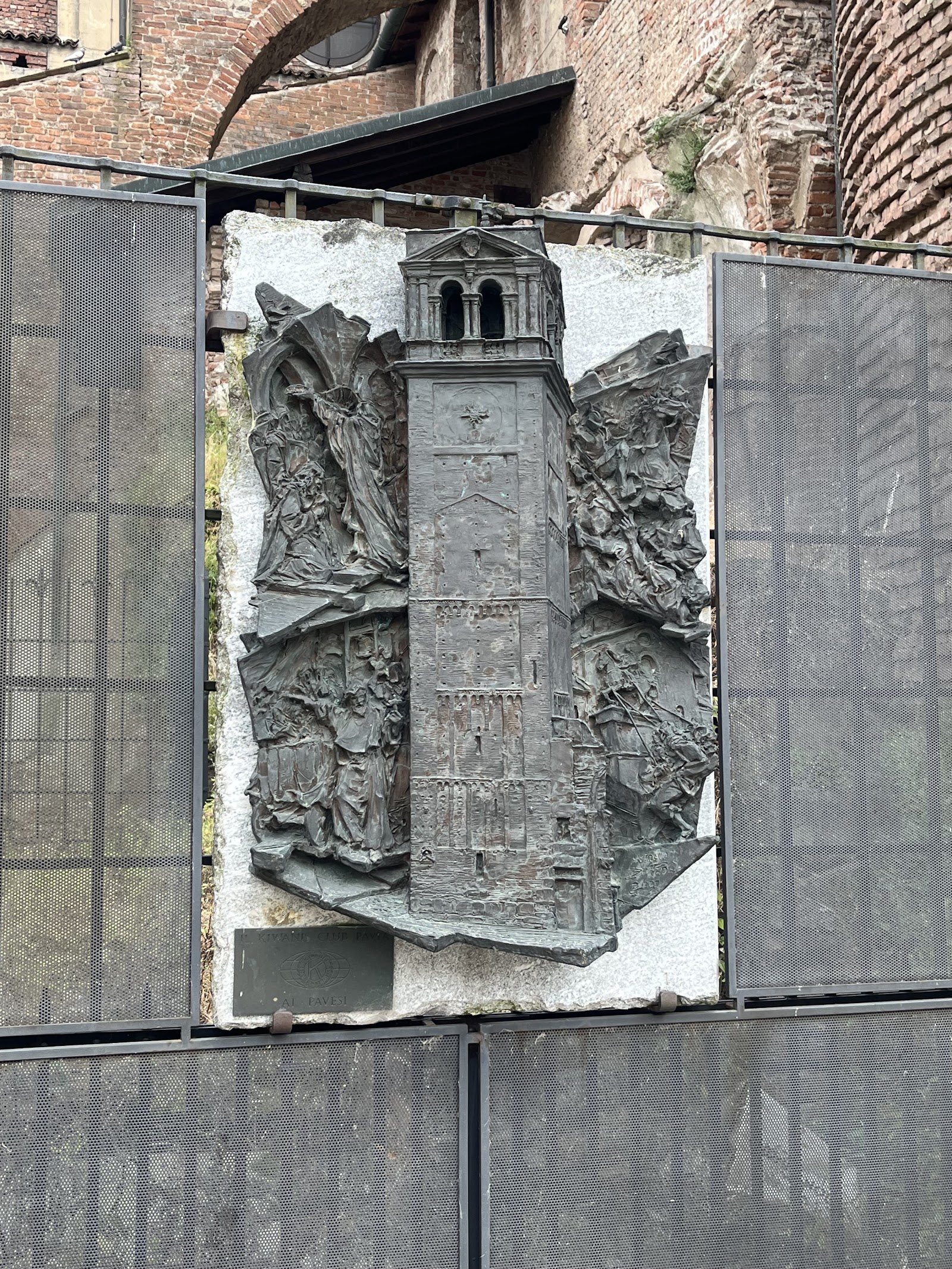
People who linger tend to walk the perimeter twice: once for the ruins themselves, once for the bronze bas-relief on the fence that shows the tower as it stood. The bell cast by Lorenzo Birro of Milan in 1608 — recovered intact — sits in the courtyard of the Broletto, a short walk across the piazza, and is easy to miss if nobody tells you to look.
The story behind Torre Civica di Pavia
Bishop Guglielmo d'Este began the tower around 1060, and construction continued in stages for well over five centuries — the granite belfry was only completed in 1598, with architect Pellegrino Tibaldi overseeing the upper works between 1583 and 1585. The walls at the base reached 2.8 metres thick, their brick faces enclosing a core of lime mortar, river gravel, and recycled material. Decorative ceramic basins of Egyptian and Maghrebi origin were set into the exterior in the 11th and 12th centuries.
By the 12th century the commune had taken control from the bishop, and the tower became a shared civic symbol. In 1994, following a parliamentary debate in which art critic Vittorio Sgarbi secured 10 billion lire for reconstruction, the proposal was rejected — opponents, including art historian Rossana Bossaglia and the city's own mayor, argued that rebuilding it would produce a historical fiction. The ruins stayed.
Good to know
Access to the ruins and memorial is free and open-air; no ticket needed. Hours are inconsistent, so treat it as a piazza stop rather than a timed visit. Budget 20–30 minutes here, then head to Castello Visconteo to see the ceramic basins recovered from the rubble.
Spring — mid-April through early June — and September offer the most comfortable conditions for standing in the open piazza. Summer days regularly reach 30°C and occasionally higher; winter brings fog rolling in from the Po plain, thickest in the early morning.
Where is Torre Civica di Pavia?
More tickets & tours for Torre Civica di Pavia
Book directly at the provider
What travellers say about Torre Civica di Pavia
I visited the ruins as part of a day trip to Pavia. Although I was deeply saddened to contemplate how 900 years of history collapsed in minutes at least they preserved what little remained and we can imagine how the tower must have appeared it all its proud glory
“In memory of four innocents … Civic Tower, Pavia. There’s a story here, if you look closely. In 1989 the tower unexplainable collapsed, killing four people … Wikipedia collects what we know. Very sad. At least their names are listed for all to see.
Unfortunately, on 17th March 1989, the tower fell down destroying part of the close church. Douring the disaster, 4 persons died and where the tower was, a memorial have been built.
This place is just beside of Duomo...is a towe that fallen down
Closed on a weekday! Will have to revisit again. No hours were posted!
More of Pavia
Discover where to stay, what to do and the best deals for your trip.
Explore Pavia →More attractions in Pavia
All of Pavia →

Background adapted from Wikipedia (CC BY-SA) · map data © OpenStreetMap contributors · ratings & place photos via Google · other photos with per-image credit. Ticket links may earn us a commission at no extra cost to you.