
Spanish Steps
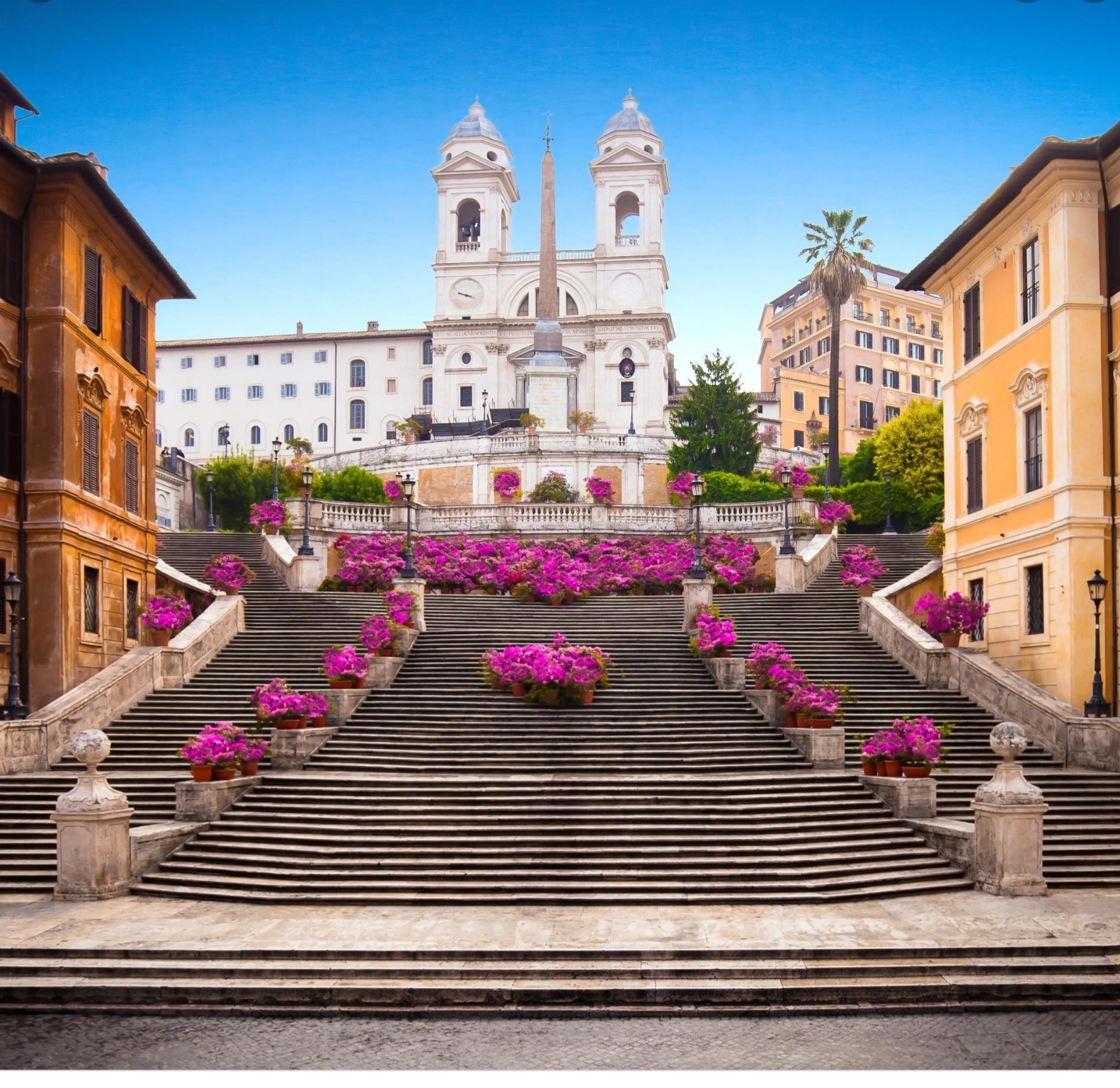
One hundred and thirty-five steps climb a 29-metre slope between Piazza di Spagna and the twin-towered church of Trinità dei Monti above it — and at the bottom, half-submerged in the pavement, a boat-shaped fountain quietly overflows. The Fontana della Barcaccia was designed by Pietro Bernini, father of the more famous Gian Lorenzo, and its low profile is no accident: water pressure here was too weak to push a jet skyward, so the fountain sinks into the ground instead, spilling over the gunwales of a stone barge said to echo a real boat stranded on this spot after the Tiber flooded in 1598.
The steps themselves are a stage as much as a staircase — photographers, flower sellers, and people watching other people watching the view have all claimed their corners of it.
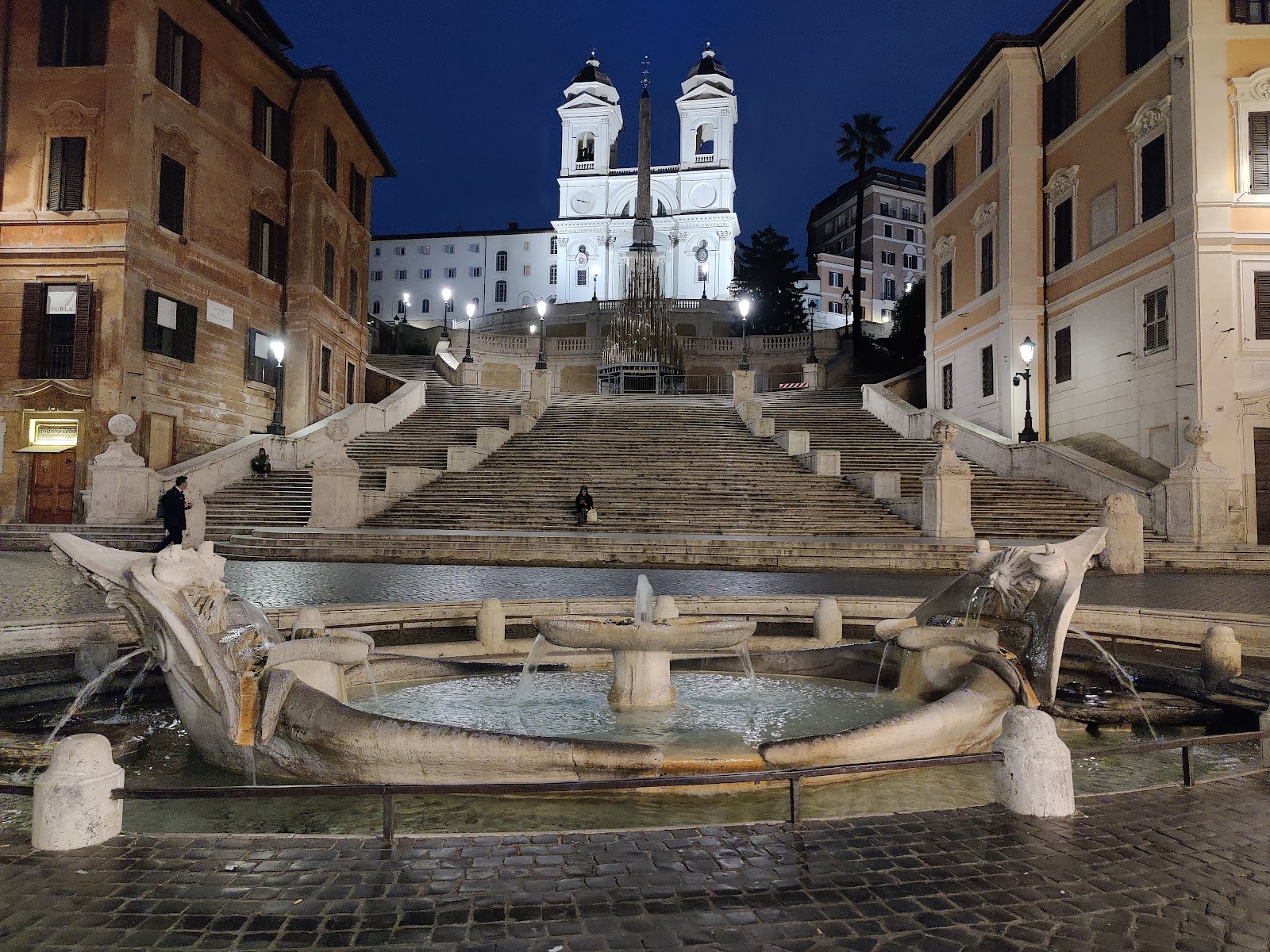
💛 What travellers fall for
Regulars know to arrive before eight in the morning, when the travertine is still cool and the piazza below is close to empty. The Keats-Shelley Memorial House, right on the square, opens later but rewards the detour — it is a small, serious museum in the rooms where John Keats died in 1821. In May, the steps are lined with terracotta pots of pink azaleas worth timing a visit around.
The story behind Spanish Steps
The idea of a grand staircase linking Piazza di Spagna to the French church above it circulated for decades before anyone built it. The money finally came from Étienne Gueffier, a French diplomat who died in 1660 leaving 20,000 scudi for the purpose — though his nephew successfully contested the will and claimed half, stalling the project for a generation. Pope Clement XI revived it in the early 18th century, a competition was held in 1717, and Francesco de Sanctis won, working alongside Alessandro Specchi. Construction ran from 1723 to 1725.
The staircase takes its name not from France, which funded it, but from the Spanish Embassy to the Holy See in the square below. An early design called for an equestrian statue of Louis XIV at the top; papal opposition killed that idea. The steps stood largely unaltered until a €1.5 million restoration, financed by Bulgari, was completed in 2016.
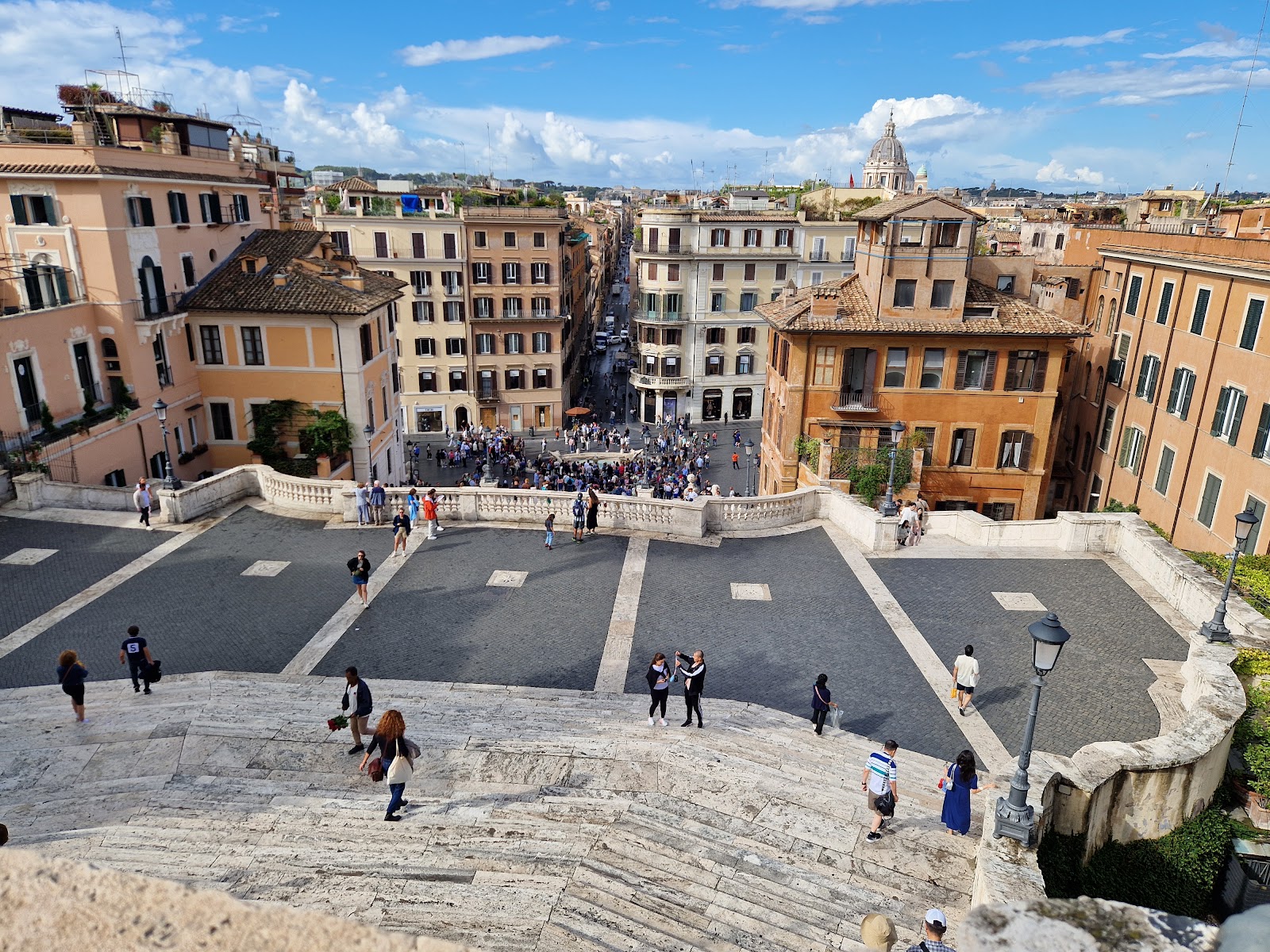
Good to know
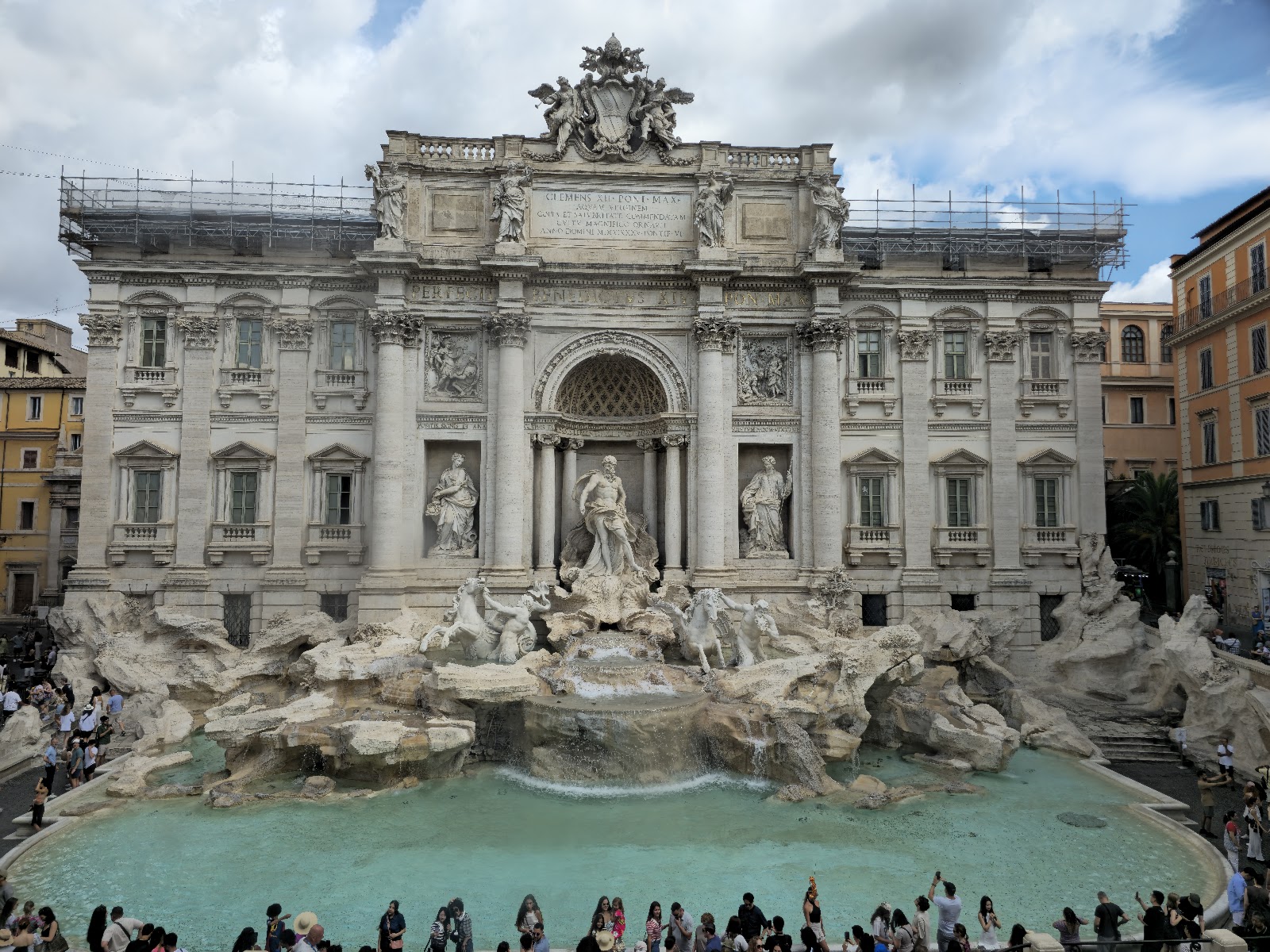
Free, open around the clock, no ticket needed. Note: sitting on the steps carries a €250 fine, and eating on them risks €400 — the rules are enforced. The Spagna metro stop (Line A) surfaces right beside the square. Trevi Fountain is a ten-minute walk east.
Rome summers are hot and the open travertine holds the heat; early morning is the most comfortable time to linger between June and August. May brings the azalea display that covers the steps in pink, and at Christmas a 19th-century nativity scene appears on the first landing — both worth factoring into when you go.
Where is Spanish Steps?
More tickets & tours for Spanish Steps
Book directly at the provider
What travellers say about Spanish Steps
The iconic Spanish Steps are more than just a staircase — they’re a living postcard of Rome. Connecting Piazza di Spagna at the base with the beautiful Trinità dei Monti church at the top, the 135-step Baroque masterpiece is a favorite gathering spot for travelers and locals alike. Sitting here at sunset, watching the golden light fall over the city, feels straight out of a romantic film. 🌟 Famous For • Stunning Baroque architecture (built in 1725) • Springtime azalea flower displays • Luxury shopping streets nearby (Via dei Condotti) • A historic meeting point for artists, poets, and fashion lovers • The Fontana della Barcaccia (boat-shaped fountain) at the base It’s especially magical in the early morning or evening when the crowds thin out and the atmosphere feels intimate. ⸻ 🚇 How to Reach Getting there is very easy: • Metro: Take Line A and get down at Spagna station — the exit opens directly near the steps. • Bus: Several buses stop at Piazza di Spagna. • Taxi/Uber: Easily accessible, but walking through Rome’s charming streets is highly recommended. If you’re exploring Rome on foot, it’s conveniently located near major landmarks like the Trevi Fountain and Pantheon. ⸻ 🕒 Timings The steps are open 24 hours and free to visit. However, sitting on the steps is regulated (you’re not allowed to eat or create a mess). For the best experience: • Early morning (7–9 AM) for peaceful photos • Sunset for romantic views • Late evening for a calm ambiance ⸻ 🍝 Nearby Famous Restaurants After soaking in the view, treat yourself at: • Ristorante Alla Rampa – Classic Roman dishes just steps away. • Il Gabriello – A refined spot known for authentic pasta and wine. • Babingtons Tea Room – Historic English tea room founded in 1893. The Spanish Steps perfectly capture Rome’s charm — artistic, romantic, lively, and effortlessly beautiful. Whether you’re there for photography, people-watching, or simply to feel the city’s heartbeat, it’s an unforgettable stop on any Roman itinerary. 🇮🇹✨
The Spanish Steps are an absolute must-visit when you’re in Rome. The atmosphere is incredible, with beautiful historic architecture, elegant surroundings, and a real sense of the city’s charm. It’s the perfect place to sit for a while, people-watch, and soak up the unique atmosphere. The area is full of lovely cafés, gelaterias, and some of the world’s most famous luxury shops, making it a fantastic place to explore. The views from the top of the steps are well worth the climb, and every corner is perfect for photos. Whether you visit during the day or in the evening, the Spanish Steps have a special charm that makes them one of Rome’s most iconic landmarks. A beautiful place that everyone should experience at least once.
The Spanish Steps, located in the heart of Rome between Piazza di Spagna and the Trinità dei Monti church, are very easy to reach. I got there by Metro Line A and got off at the Spagna station, which is only a short walk from the steps. I really enjoyed visiting this place. The Spanish Steps are beautiful, and when you walk up the stairs, you can enjoy a lovely view of the surrounding area. The atmosphere is lively and perfect for taking photos, relaxing, and simply enjoying Rome. At the top of the steps stands the Sallustian Obelisk. At first, I thought it was another Egyptian obelisk because it looks very similar to those in Egypt. However, it is actually an ancient Roman obelisk made in the Egyptian style and decorated with hieroglyphs. It gives the place a special and historic atmosphere. Overall, the Spanish Steps are one of the most charming spots in Rome, and I highly recommend visiting them, especially if you enjoy history, architecture, and beautiful city views.
Historical beauty! I’ve been there twice. It’s kept clean and great to visit early in the day or at night. Easy walk to all other key places in the city of Rome -Trevi, Colosseum and Pantheon. Great views of Rome from the top. You might see police come around to remove people sitting on the steps.
The Spanish Steps are one of those iconic Rome landmarks you almost have to experience at least once — even just for the atmosphere alone. It’s the perfect spot for people watching, taking a break between sightseeing stops, and soaking in the nonstop energy of the plaza. The area around the steps is filled with cafés, restaurants, and upscale shopping, making it easy to spend more time here than you planned. If your feet are tired but you still want to check another famous landmark off your bucket list, this is also a convenient stop on the hop-on-hop-off bus route. Grab a seat, take in the views, enjoy the atmosphere for a while, and then hop back on when you’re ready for the next adventure.
More of Rome
Discover where to stay, what to do and the best deals for your trip.
Explore Rome →More attractions in Rome
All of Rome →
Background adapted from Wikipedia (CC BY-SA) · map data © OpenStreetMap contributors · ratings & place photos via Google · other photos with per-image credit. Ticket links may earn us a commission at no extra cost to you.