
Piazza Navona
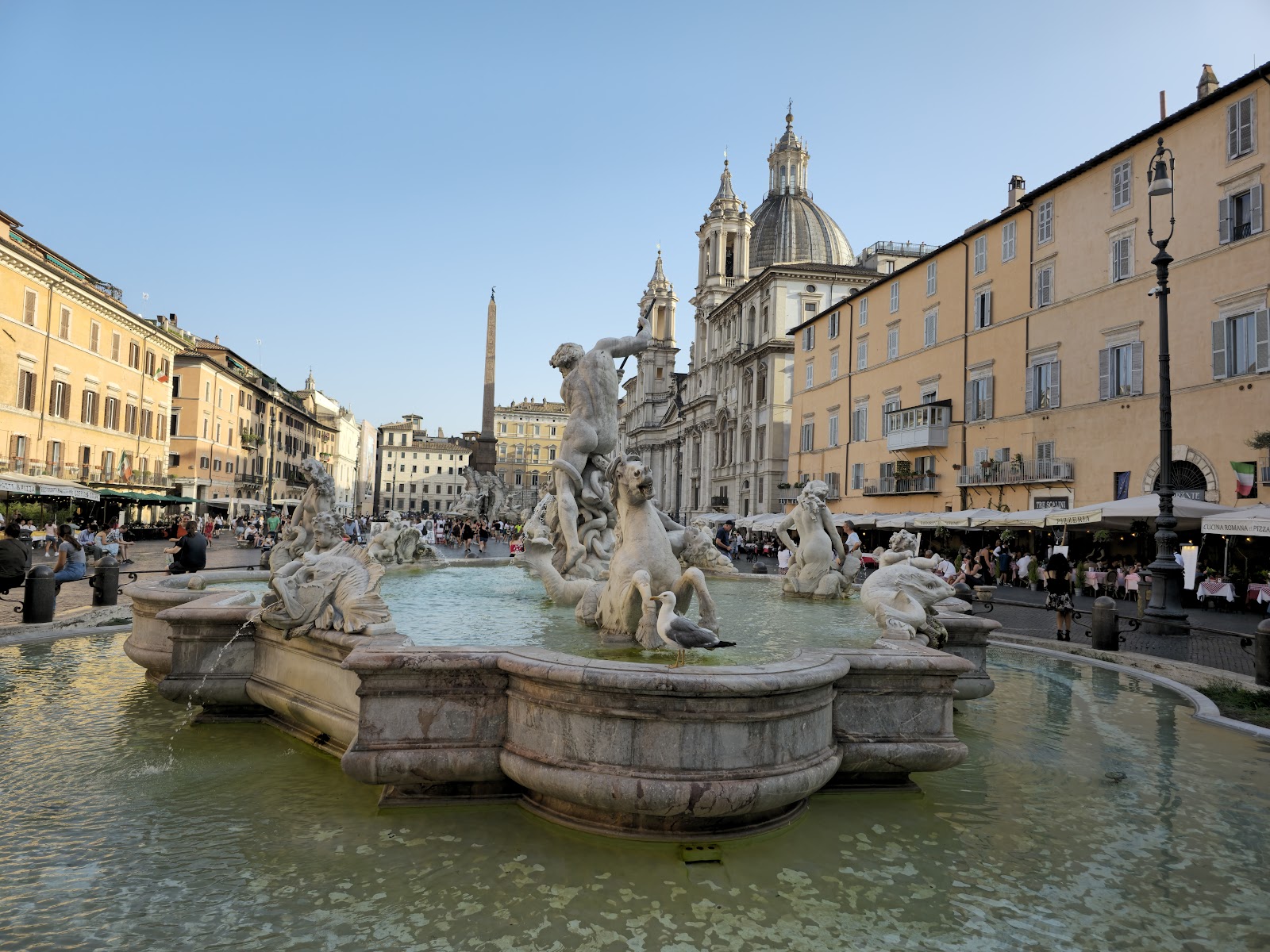
The shape of Piazza Navona is the first thing to understand: it is an oval because it was once a stadium. Emperor Domitian built it in 80 AD for athletic competitions — the Greek word for contest, agone, is where the name Navona eventually came from, through centuries of Roman pronunciation doing what Roman pronunciation does.
What you see today is largely the vision of one pope, Innocent X, who spent his pontificate from 1644 to 1655 remaking this space as a monument to his family, the Pamphilj. Three fountains, a church, a palace — all Baroque, all on the same elongated footprint the ancient Romans left behind.
💛 What travellers fall for
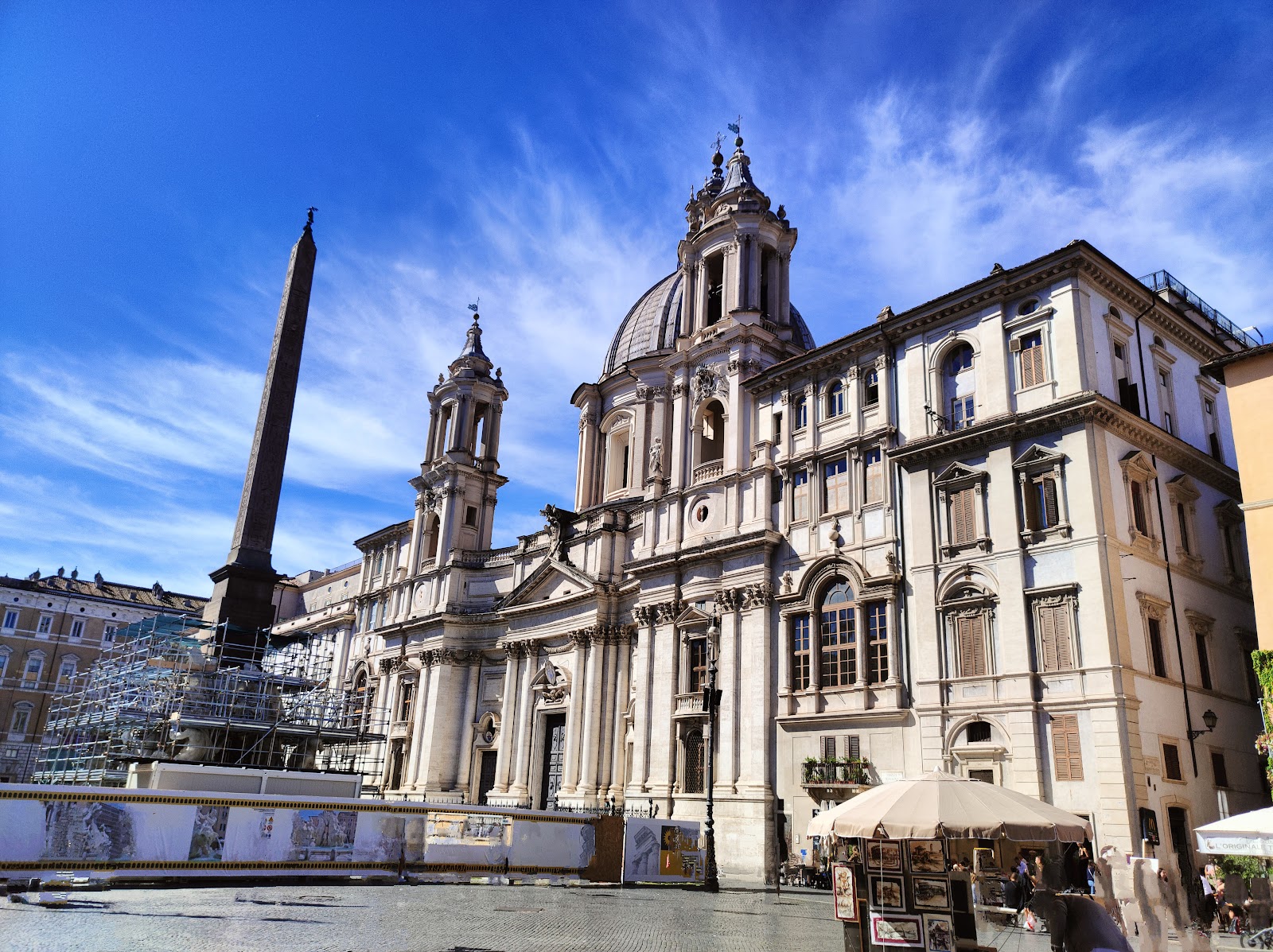
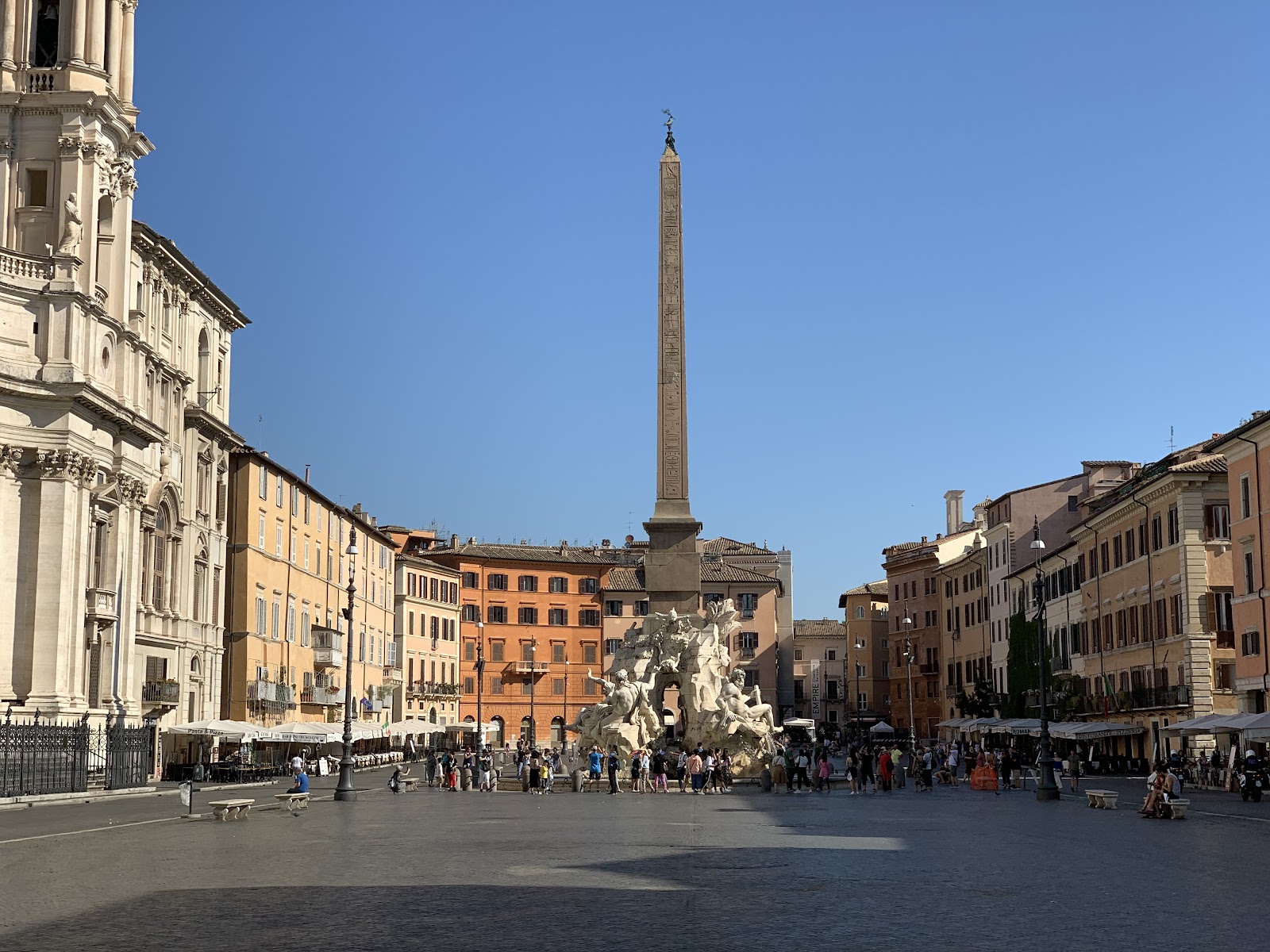
People who return consistently mention the same hour: early morning, before the café terraces fill and the portrait artists set up. The fountains — scrubbed clean in a 2024 restoration — catch the light differently then. The Fountain of the Four Rivers reads better when you can actually walk around it slowly, reading each river figure without negotiating around selfie sticks.
The story behind Piazza Navona
Before it was a piazza it was a racetrack. Domitian's Stadium of 80 AD held athletic games for roughly four centuries, then slowly became the bones of a neighbourhood — the curved outer walls absorbed into medieval buildings, the track floor becoming open ground. By the late 15th century the city market had moved here from the Campidoglio, and the space settled into everyday Roman life.
The Baroque transformation came fast and deliberately. Innocent X, elected pope in 1644, commissioned Girolamo Rainaldi and his son Carlo to expand the family palace and begin a new church. When the church project stalled, Borromini took it over in 1653, producing Sant'Agnese in Agone with its concave façade. The centrepiece — Bernini's Fountain of the Four Rivers, with its 16-metre obelisk and four marble river gods representing the Nile, Ganges, Danube and Río de la Plata — was completed in 1651, the commission won after Bernini presented a silver model that convinced the pope to switch from Borromini's plan entirely.
Good to know
The piazza is a 10-minute walk from Campo de' Fiori and roughly 15 from the Pantheon. No entry fee, open around the clock. Midday in summer brings thick crowds; mornings and evenings are quieter. Palazzo Pamphilj — now the Brazilian Embassy — requires a pre-booked guided tour to enter.
Summer afternoons here are genuinely hot, the stone radiating heat with nowhere much to shelter. Spring and October are the most comfortable for lingering. Winter evenings can be cold but the piazza empties out and the fountains are all yours.
Where is Piazza Navona?
More tickets & tours for Piazza Navona
Book directly at the provider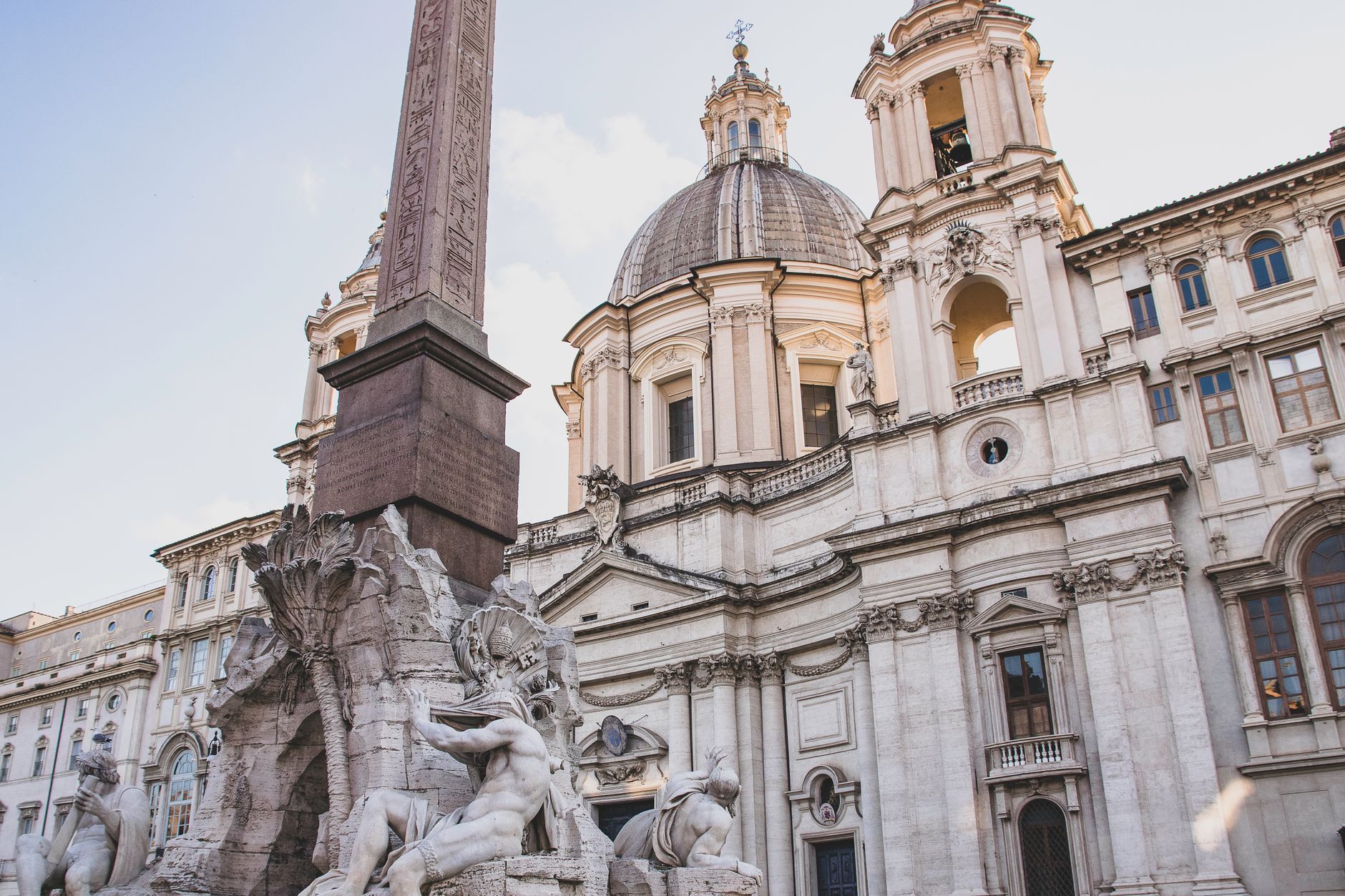
What travellers say about Piazza Navona
Piazza Navona is one of my favorite squares in Rome. It is always full of people, street artists, and beautiful architecture. What many visitors do not realize is that this area was built on the site of the ancient Stadium of Domitian, where athletic competitions were held nearly 2,000 years ago. The long shape of the square still follows the outline of the old stadium. Today it is a great place to walk around, have a coffee, and enjoy the atmosphere while being surrounded by layers of Roman history
Piazza Navona is one of the most beautiful and lively places in Rome. The square has a wonderful atmosphere, surrounded by impressive historic buildings, charming cafés, and talented street performers. The fountains are stunning and create a unique setting that makes the entire area feel special. It is a perfect place to take a walk, relax, enjoy a coffee, or simply admire the architecture and history. The square is clean, well maintained, and full of life throughout the day and evening. Its central location makes it easy to visit while exploring Rome. I highly recommend Piazza Navona to anyone looking to experience the beauty, culture, and vibrant atmosphere of the city. Visitors can easily spend hours here enjoying the sights and atmosphere.
A beautiful piazza with restaurants surrounding it. The fountains at the center were spectacular. You'll see Bernini's Fountain of the Four Rivers, and the church of Sant'Agnese in Agone, designed by Borromini. We stopped by on our way to Trevi Fountain.
After Trevi Fountain and the Spanish Steps, we headed to Piazza Navona, one of Rome's most famous and beautiful squares. It's elongated share is because the area was originally used as an athletic stadium (Circus Agnoalis) and held 20,000 fans. After the fall of the Roman Empire, houses were built where the stands used to be. In the 17th century, Pope Innocent X commissioned the Sant Agnese in Agnone church, a place and the artist Bernini to build Fontana dei Quattro Fiumi or The Fountain of the Four Rivers. Each statue represents the four major rivers of the four continents which papal authority had spread - Nile (representing Africa), Ganges (Asia), Danube (Europe), and Rio de la Plata. (Americas) More details can be found on wikipedia. Two smaller fountains are also in the square created by Giacomo della Porta, an apprentice of Michelangelo. They are called the Fontana del Moro (the Fountain of the Moor) and the Fontana del Nettuno (Fountain of Neptune). We went to Bernini restaurant which even being close to the Piazza was still reasonably priced. I had the best affogato I have ever had.
I really loved Piazza Navona. It is one of those places where you feel the charm of Rome immediately. The square is beautiful, full of life, and surrounded by stunning buildings. We spent some time just walking slowly and enjoying the atmosphere. Definitely one of my favorite spots in the city.
More of Rome
Discover where to stay, what to do and the best deals for your trip.
Explore Rome →More attractions in Rome
All of Rome →
Background adapted from Wikipedia (CC BY-SA) · map data © OpenStreetMap contributors · ratings & place photos via Google · other photos with per-image credit. Ticket links may earn us a commission at no extra cost to you.