
Palatine Hill
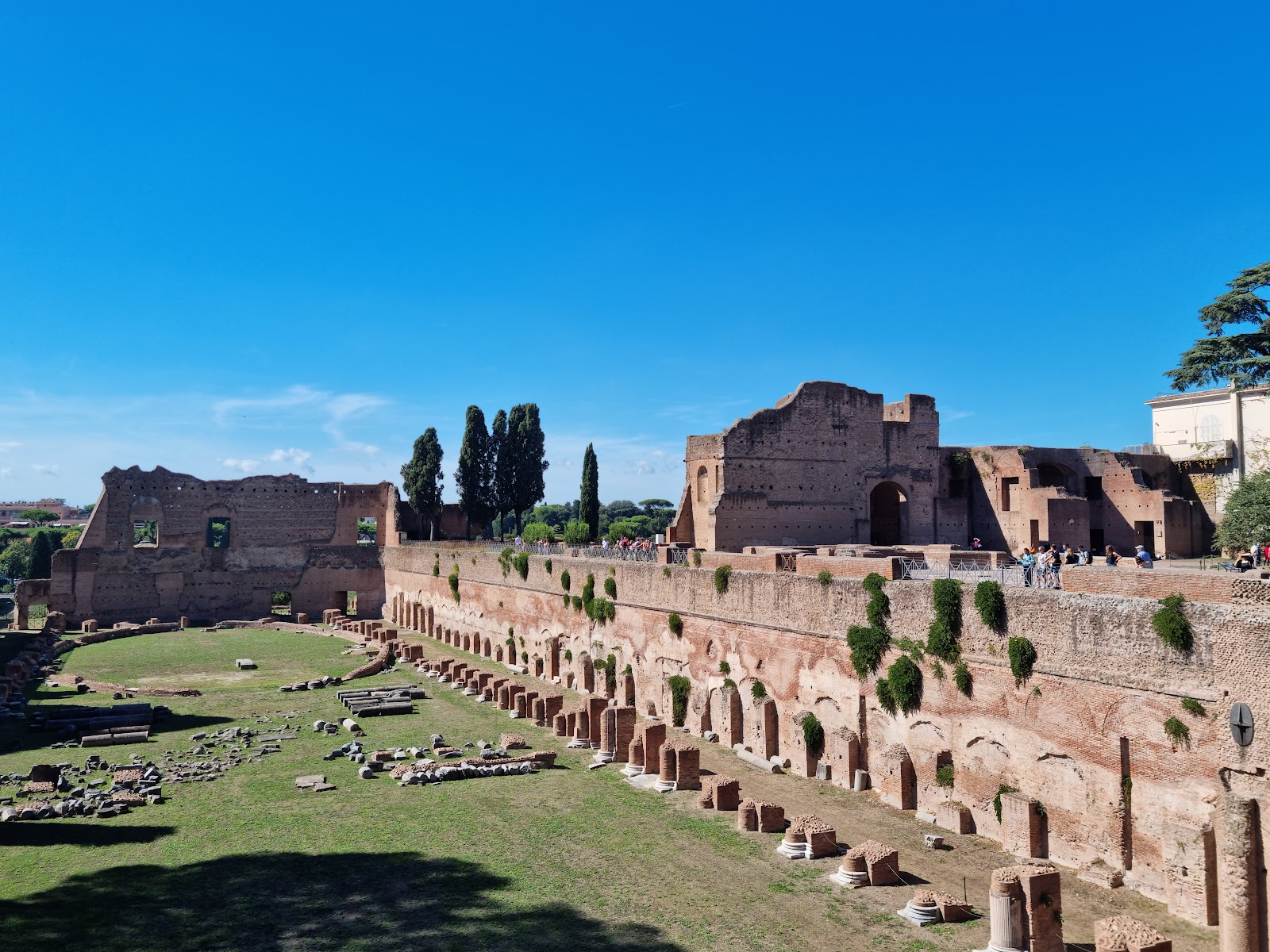
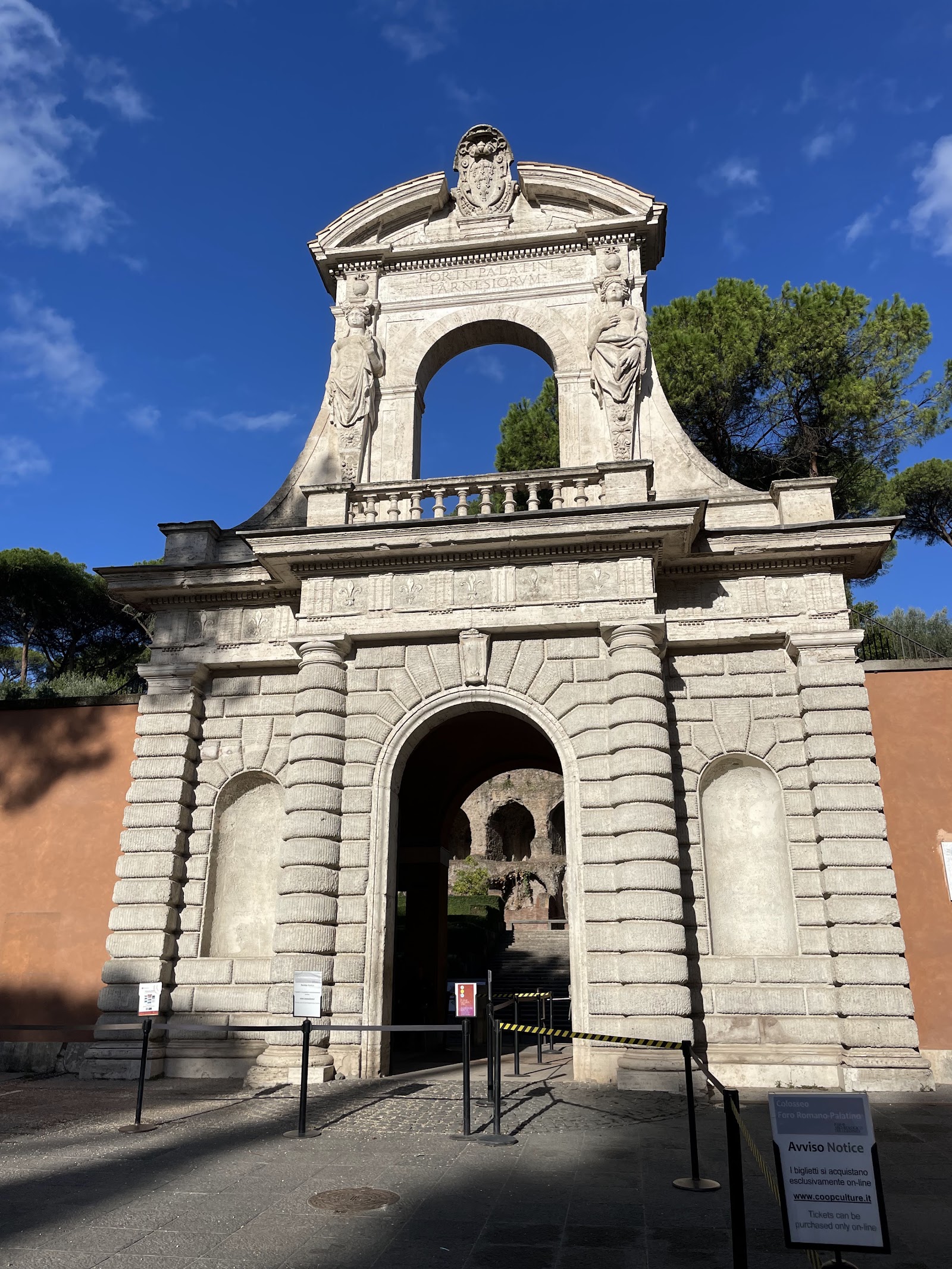
Stand on the Palatine and you are standing on the oldest inhabited ground in Rome — people lived here as far back as the 10th century BC, and the hut foundations unearthed in 1907 still sit in the open air, measuring roughly five metres by four. This is where Augustus was born, where Domitian had his architect Rabirius reshape the entire topography of a hill to accommodate an imperial palace, and where the Farnese family later laid out one of Europe's earliest botanical gardens on top of it all.
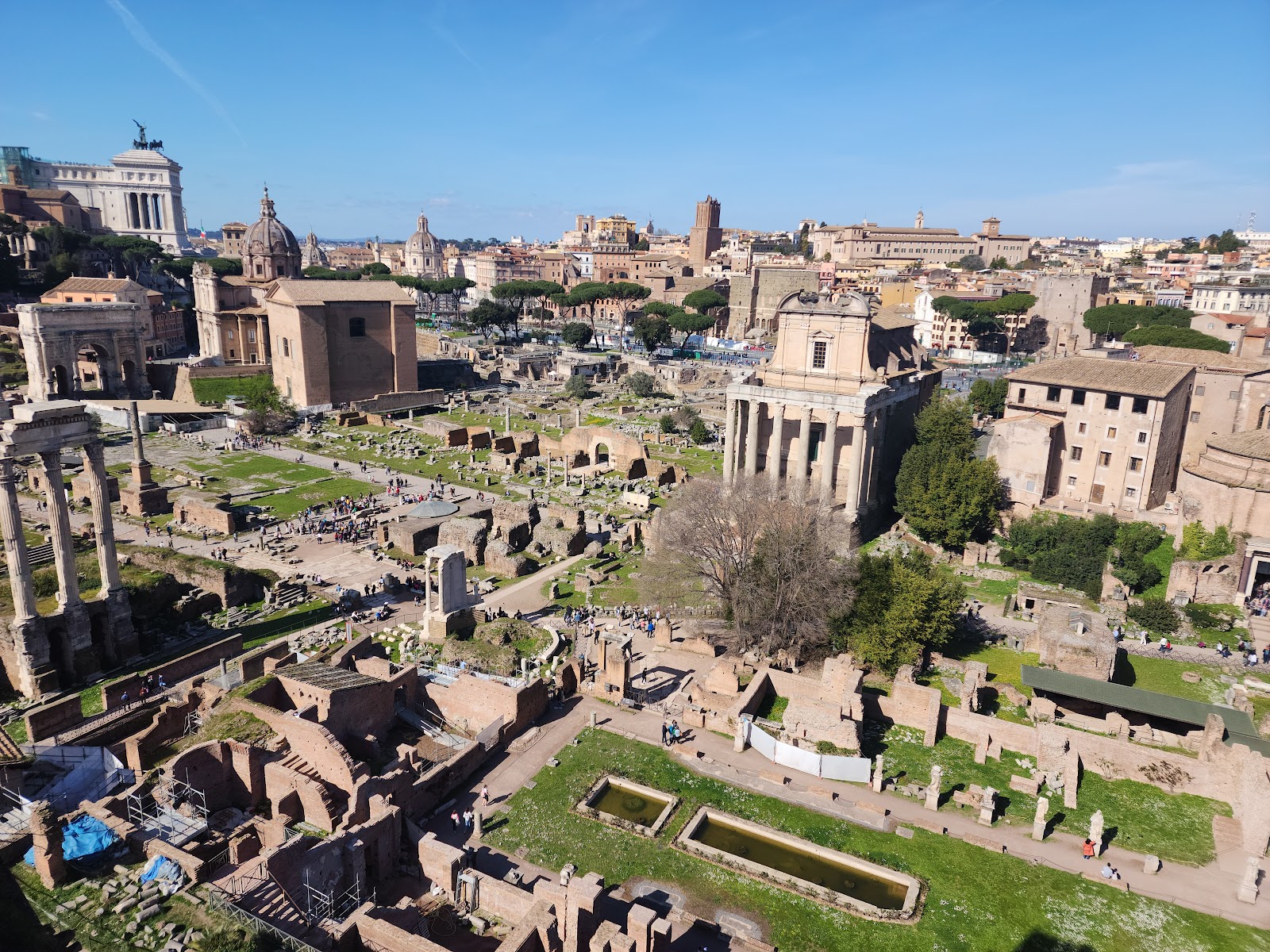
The layers are the point. Beneath the Farnese Gardens lie the ruins of the Domus Tiberiana. Beneath those, older walls still. Walk the hill slowly and you keep catching the Roman Forum below on one side, the Circus Maximus on the other.
💛 What travellers fall for
Regulars tend to head straight to the House of Livia before the crowds find it — the frescoes inside are among the best-preserved in Rome and the space is intimate enough that you can actually read the painted details. The Palatine Museum, housed in a surviving wing of the Villa Mattei building, is easy to rush past but worth an hour for the mosaic fragments alone.
The story behind Palatine Hill
Excavations date continuous habitation on the Palatine to the 10th century BC, and huts used for funerary purposes between the 9th and 7th centuries have been identified. Roman tradition held that Romulus and Remus founded the city here in 753 BC, and the Casa Romuli — the elongated hut foundations discovered by Dante Vaglieri in 1907 — is still pointed to as physical evidence of that founding moment.
During the Republic, leading citizens built their houses on the hill. Under the Empire it became the seat of imperial power: Augustus established his residence here, Tiberius built the first true imperial palace, and Domitian commissioned Rabirius to redesign the entire summit, inaugurating his palace in 92 CE. Septimius Severus later extended the complex to the southeast with the Septizodium. After Rome's fall the hill passed through medieval fortification, Renaissance garden-making, and finally systematic archaeological excavation from the 18th century onward.
Good to know
Entry is combined with the Colosseum and Roman Forum ticket. Morning visits give you the best light on the frescoes and cooler temperatures on the exposed terraces. Wear shoes with grip — the paths between ruins are uneven. Allow two to three hours minimum.
Summer on the Palatine is exposed and hot — there is little shade on the upper terraces between noon and four. Spring and autumn are the most comfortable seasons for a long visit. Winter mornings can be sharp but the site is rarely crowded, and the low light picks out the texture of the brick ruins well.
Where is Palatine Hill?
More tickets & tours for Palatine Hill
Book directly at the provider
What travellers say about Palatine Hill
Palatine Hill was one of the highlights of our visit to Rome and is an absolute must-see alongside the Roman Forum and Colosseum. The combination of history, archaeology, and incredible views makes it one of the most rewarding places to explore in the city. According to Roman legend, this is where Romulus founded Rome in 753 BC, making it the birthplace of one of the greatest empires in history. Later, it became the most prestigious address in ancient Rome, with emperors building enormous palaces on the hill overlooking the Forum below. In fact, the word “palace” is derived from “Palatine”. Walking around the site today, you can still see the remains of vast imperial residences, courtyards, gardens, and terraces. It’s amazing to imagine that Roman emperors once lived here, looking out over the heart of the empire. The scale of the ruins is impressive, and there are fascinating details around every corner. One thing we particularly enjoyed was that Palatine Hill felt less crowded and more relaxed than some of Rome’s other major attractions. There are plenty of shaded areas, trees, and open spaces, making it a pleasant place to explore even on a warm day. The views across the Roman Forum, Circus Maximus, and surrounding city are spectacular and provide some of the best photo opportunities in Rome. We’d recommend allowing plenty of time rather than rushing through. The history here spans more than two thousand years, and it’s easy to miss interesting details if you’re in a hurry. For anyone interested in Roman history, archaeology, or simply beautiful views, Palatine Hill is a five-star experience and one of the most memorable parts of visiting Rome.
Palatine Hill is one of the most enjoyable parts of visiting the Roman Forum area. It’s much quieter than the Colosseum, and walking among the ruins of imperial palaces feels both relaxing and impressive. The views overlooking the Forum and Circus Maximus are fantastic, especially on a sunny day. There’s plenty of space to wander, sit in the shade, and take in the history without the crowds. A great place to slow down and appreciate ancient Rome.
Best time to visit in the evening. “Palatine Hill is like walking through the heart of ancient Rome. The ruins, gardens, and views create an unforgettable atmosphere. It’s less crowded than the Colosseum but equally impressive. If you enjoy history and photography, this place is absolutely worth visiting.”
This place is a wonderful look into history. Beware prepared to walk 15k plus steps. You can combo your ticket with the colosseum which will save you a lot of money. They do check passport and ticket verification. Bag checks are also required. Bringing a map can be helpful, the ones posted around the park don’t actually say where you are. The super sites are cool to visit, especially the underground church, but they’re not required. They are included with the colosseum tickets.
Palatine Hill: Hiking for Photos After hiking to the Palatine Hill, I quickly reached the Palatine Stadium (the Hippodromos). This was the Emperor’s private sports and leisure garden within the massive Domus Augustana palace complex. The Experience * The Hidden Spa: Less than a minute’s walk away, I found low, red-brick arches in the grass. Without a sign, it is difficult to recognize these as the Severan Baths or the Emperor’s private spa area. * The Colosseum Ridge: My final hiking goal was the perfect Colosseum photo. If you want a shot of the entire Colosseum unobstructed, this is the place to be. Traveler Strategy * Label Check: Use a guide; without signs, the Severan Baths look like simple brick piles. * Photo Spot: The ridge past the Stadium offers the best unobstructed view of the entire Colosseum. * Quick Loop: The Stadium and Spa are a 1-minute walk apart—perfect for a fast visit.
More of Rome
Discover where to stay, what to do and the best deals for your trip.
Explore Rome →More attractions in Rome
All of Rome →
Background adapted from Wikipedia (CC BY-SA) · map data © OpenStreetMap contributors · ratings & place photos via Google · other photos with per-image credit. Ticket links may earn us a commission at no extra cost to you.