
Sant'Agostino Church
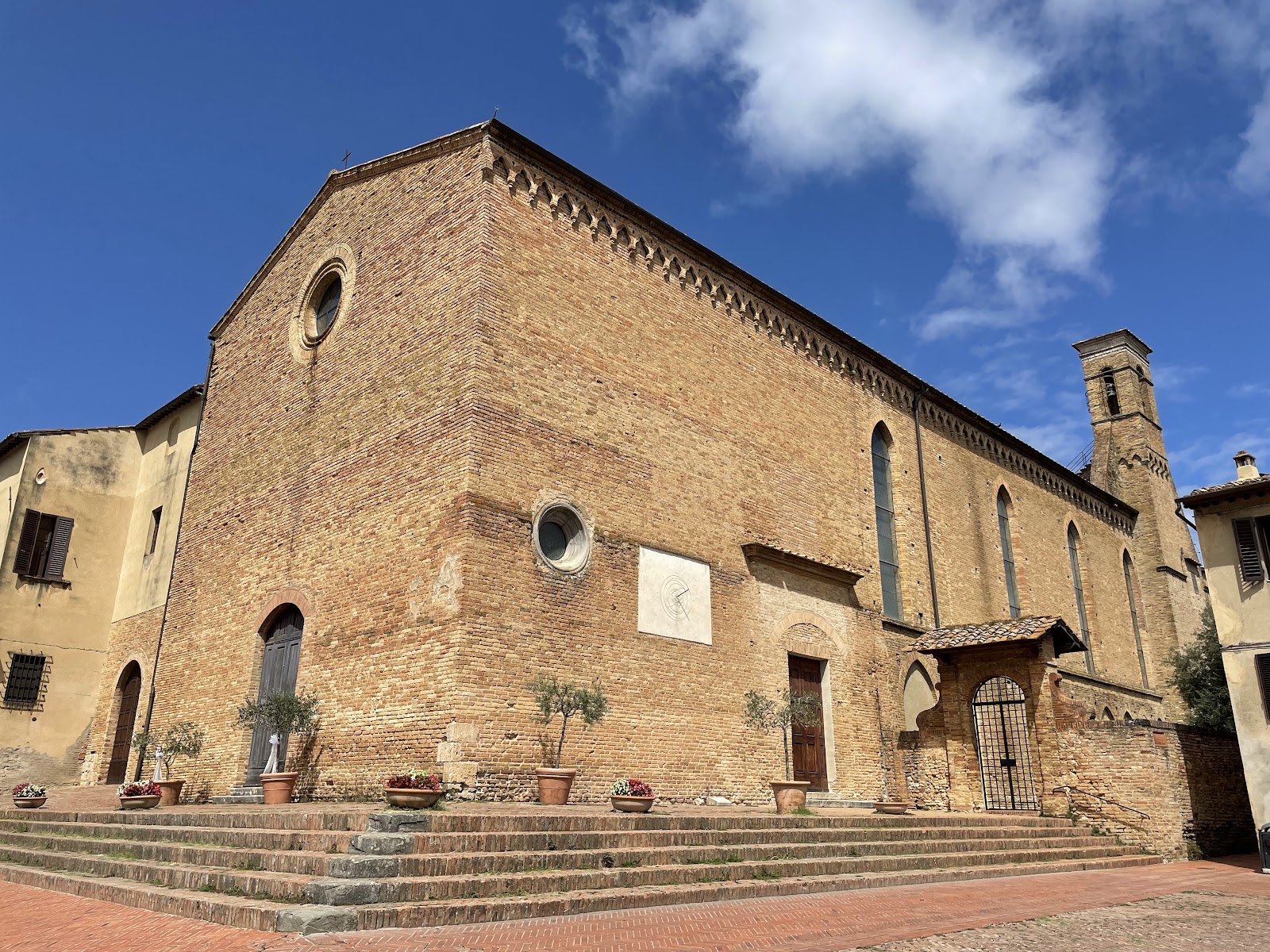
The entrance to Sant'Agostino is not where you expect it — the main doorway faces the piazza, but you actually enter through a door on the side wall, a small disorientation that sets the tone for a church full of things that reward closer attention. Inside, the brick nave is plain and long, Augustinian austerity intact after seven centuries.
What fills that plainness is the work of Benozzo Gozzoli: seventeen panels tracing the life of Saint Augustine around the high altar, painted between 1463 and 1467. The cycle is one of the most complete fresco narratives in Tuscany, and this church, the second largest in San Gimignano, holds it almost to itself.

💛 What travellers fall for
People who come back tend to spend the most time in the Cappella di San Bartolo — Benedetto da Maiano's white marble altar is detailed enough to occupy a long look, and the original majolica floor by Andrea della Robbia is easy to overlook underfoot. The Gozzoli fresco of San Sebastian, dated by a painted inscription to July 28, 1464, is a quieter find than the main cycle.
The story behind Sant'Agostino Church
The Bishop of Volterra approved construction on July 26, 1280, and the church was consecrated just eighteen years later, on March 31, 1298, by Cardinal Matteo d'Acquasparta — a fast build for its era. The Order of Saint Augustine ran both church and convent; the cloister, originally open on two sides, was enclosed to its current form in the mid-1400s.
The art arrived in layers. Lippo Memmi painted his Madonna and Child in 1317, the oldest fresco in town. Benozzo Gozzoli came to San Gimignano in 1463, having left Florence during a plague outbreak, and spent four years here — commissioned by the Augustinian monk Fra Domenico Strambi. Piero del Pollaiuolo added his Coronation of the Virgin in 1483. The remains of San Bartolo, a lay Franciscan who died of leprosy in 1300, have been housed in the chapel bearing his name since the medieval period.

Good to know
The church closes from noon to 3 pm, so plan your visit for morning or late afternoon. No ticket is needed for individual entry, though a donation box sits near the door. Allow a genuine two hours if you want to read the Gozzoli cycle properly. Guided tours run around 5–7 euros and are worth it for the fresco details.
Where is Sant'Agostino Church?
More tickets & tours for Sant'Agostino Church
Book directly at the provider
What travellers say about Sant'Agostino Church
Audio guide didn't work, and the "security guard" was constantly shhh-ing people. The church is run down and what frescos are visible look like they were painted by a 4 year old. AND they charge 5 Euro per person. Still, if you want to pay to walk around a musty rundown ancient church listening to someone shh-ing everyone, have fun. We'll stick to seeing Duomos.
What a wonderful Church. We celebrated mass in a small Chapel on Sunday and it was very special.
One of the most peaceful places! A must see in San Gimignano. Not as busy as the other places so it’s ideal. Beautiful frescos. Walking in the Cloisters is bliss. No cost to enter but donations are accepted. There is a cute little shop too at the front of the church. English mass is in the chapel on a Sunday, but there are services throughout the week. X
May 2025. Nice church with attached cloister and square (This is another case of an entry with 1000+ reviews being deleted. What's going on?)
there’s a way outside and u can see the overview of outside! But the way is close to the parking and roadway side
More of San Gimignano
Discover where to stay, what to do and the best deals for your trip.
Explore San Gimignano →More attractions in San Gimignano
All of San Gimignano →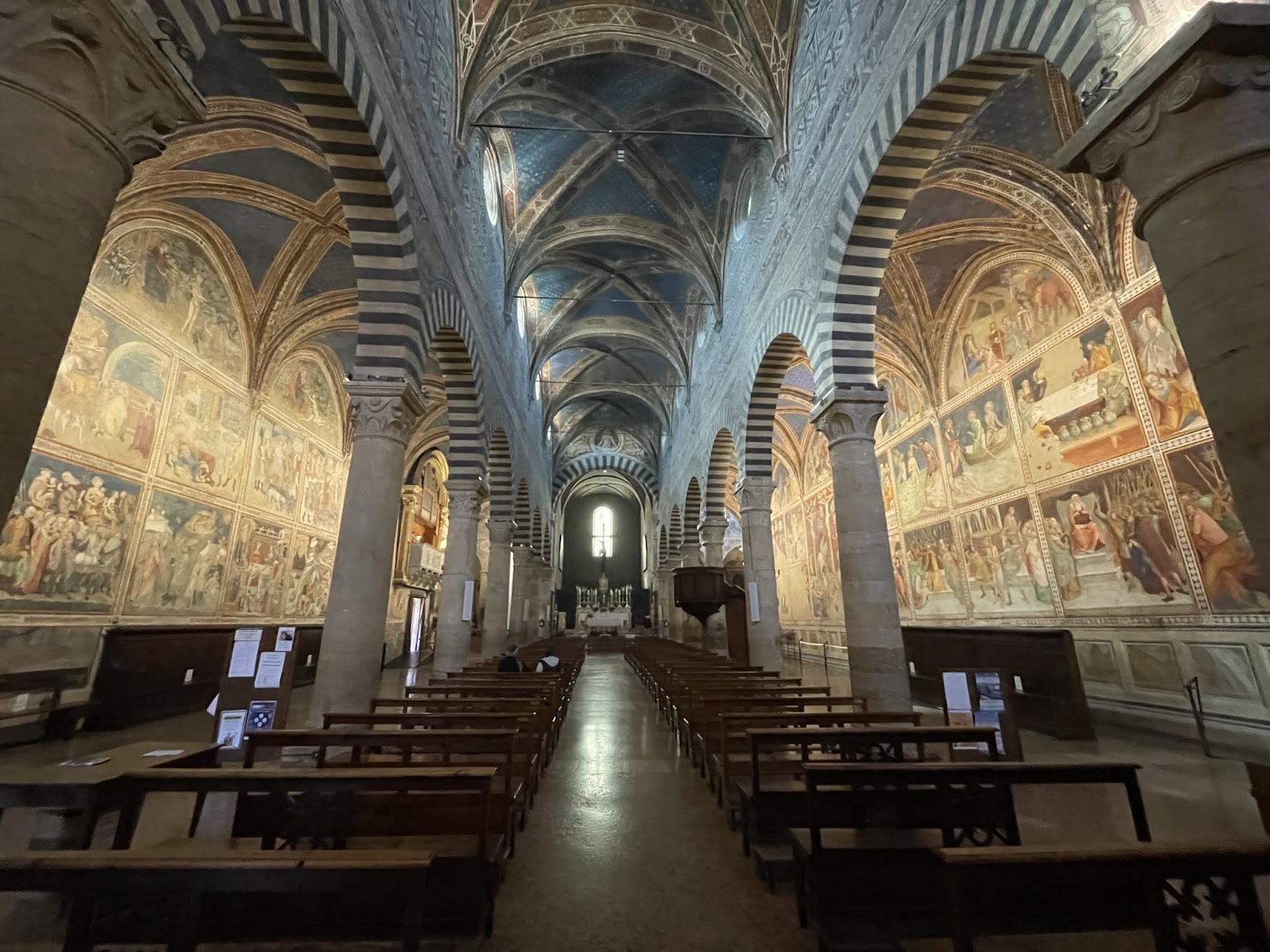

Background adapted from Wikipedia (CC BY-SA) · map data © OpenStreetMap contributors · ratings & place photos via Google · other photos with per-image credit. Ticket links may earn us a commission at no extra cost to you.