
Pinacoteca Ambrosiana
On the ground floor of the Palazzo dell'Ambrosiana, a glass case holds a lock of Lucrezia Borgia's hair — golden, still intact after five centuries — and in the 1800s, poets made pilgrimages specifically to see it. That detail tells you something about this place: it traffics in the singular object, the thing that shouldn't still exist but does.
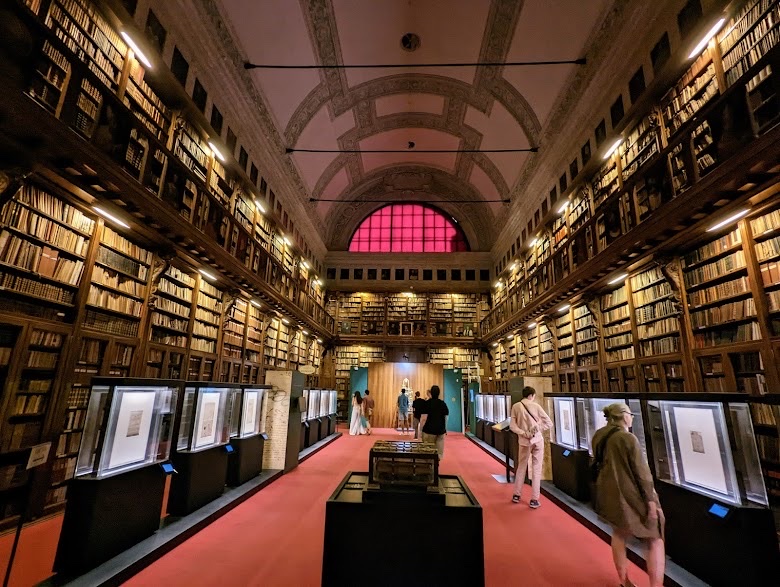
Spread across 24 rooms, the Pinacoteca holds over 1,500 works on wood, canvas, and copper, including Raphael's full-scale cartoon for the School of Athens — the largest surviving Renaissance preparatory drawing — and Leonardo da Vinci's Codex Atlanticus, 1,750 pages of technical drawings that range from war machines to water studies.
💛 What travellers fall for
People who come back tend to linger in the Federiciana Room, where the Codex Atlanticus is displayed, and in the courtyard — the Cortile degli Spiriti Magni — where ten stone figures including Dante, Goethe, and Manzoni stand in a circle that feels less decorative than deliberate. Thursday and Friday mornings are quieter than almost any other major Milanese collection.
The story behind Pinacoteca Ambrosiana
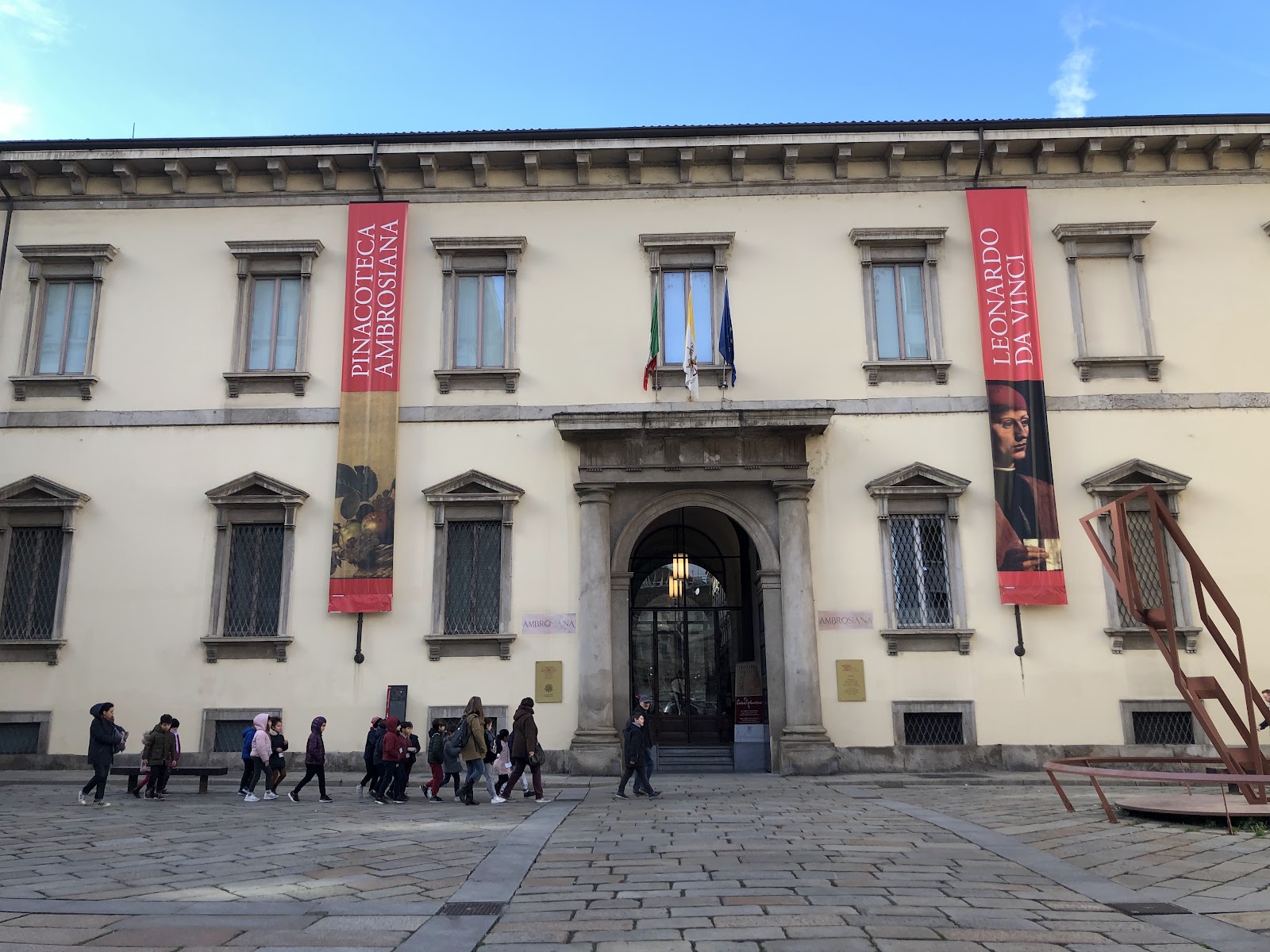
Cardinal Federico Borromeo spent decades acquiring paintings, sculptures, and drawings before donating the entire collection to Milan in 1618, founding the Pinacoteca as a public institution at a time when that concept was still radical. Construction of the Palazzo dell'Ambrosiana had begun in 1611, and the library — the Biblioteca Ambrosiana — preceded the gallery by eleven years, making the whole complex one of Europe's earliest purpose-built cultural institutions.
The collection's story is not without rupture. During the Napoleonic occupation, French authorities requisitioned prized manuscripts including Leonardo codices; only a portion came back after 1815. What remains is still formidable, and since 2009 the Federiciana Room has housed the Codex Atlanticus in a dedicated permanent exhibition.
Good to know
Take the M1 or M3 to Duomo, then walk five minutes south. Closed Wednesdays. The ticket office shuts at 17:30, so arrive by 16:00 if you want unhurried time. Budget 90 minutes for the Pinacoteca; add 30 for the Crypt of San Sepolcro, though note the crypt is not wheelchair accessible. Rooms are intentionally dim and cool — bring a layer.
Where is Pinacoteca Ambrosiana?
More tickets & tours for Pinacoteca Ambrosiana
Book directly at the provider
What travellers say about Pinacoteca Ambrosiana
Pinacoteca Ambrosiana is a large and very interesting museum with a wide variety of artworks. The museum is well organized, with clearly marked routes and free lockers available for bags and backpacks. One of the highlights is the collection of Leonardo da Vinci’s sketches, which is fascinating to see up close. A slightly unusual detail is that you exit the museum in a different location than where you entered, meaning you have to walk back outside to retrieve your belongings from the lockers. The crypt beneath the museum is also worth visiting. It is small but very well presented, with clear information and a unique atmosphere. It is described as the “heart” of Milan, which adds an extra layer of interest.
This place has such a big variety of things to see! If you a an art lover and a museum-wanderer, I advise you to save 2,5-3 hours to see everything this place can offer you in peace. Halls, rooms, interactive parts and ancient ones, stairs, corridors, balcony to see the inner courtyard, floors, a library and a crypt.
The collection is excellent and absolutely worth visiting, especially the works by Raphael, Leonardo and Caravaggio. However, I was very disappointed by the closing procedures. I arrived about an hour before the official closing time and purchased a full-price ticket, but the second floor was closed approximately 30 minutes before closing, preventing visitors from seeing important parts of the collection. Even more frustrating, the museum shop closed before the museum itself. I left around 10 minutes before the official closing time and was unable to buy even a small souvenir. I completely understand that staff need time to close the museum, but if entire sections and services become unavailable well before the advertised closing time, this should be clearly communicated to visitors before they purchase tickets. As a visitor from abroad who adjusted a work schedule to make time for the museum, I felt that visitors were being rushed out rather than welcomed until the published closing hour. Wonderful collection. Disappointing visitor experience 💔
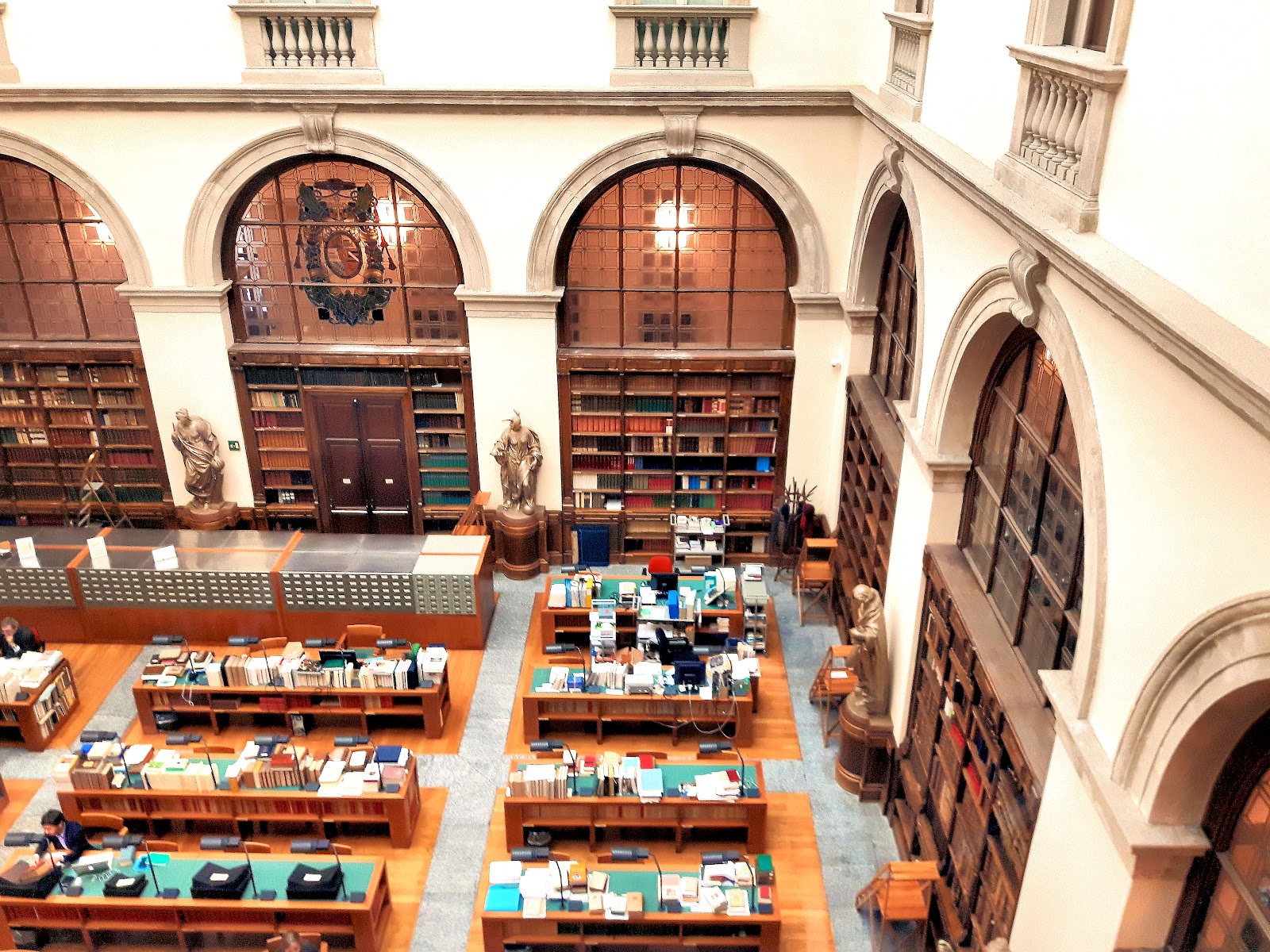
Our visit took about 1 hour and 45 minutes, including the crypt. We arrived at 10:00 am, and it wasn’t crowded - just one group ahead of us. We had pre-booked tickets via GetYourGuide and entered without waiting. There was also no queue for the crypt. The gallery and museum are impressive and rich in history. As the first public library open to the public, the Ambrosiana is remarkable in its own right, including the building. Beyond the paintings, the Cartone of Rafaello movie, the library itself is stunning, and seeing Leonardo da Vinci’s Codex is truly a highlight.
This place is still underrated by tourists. There are not just only for the the original codex Atlantico by Leonardo da Vinci, but also a lot of precious collections by Borromeo family. As the family name is named at the many hospitals in Europe, you can feel how Borromeo family is deeply rooted in Milan. Highly recommend for visits.
More of Milan
Discover where to stay, what to do and the best deals for your trip.
Explore Milan →More attractions in Milan
All of Milan →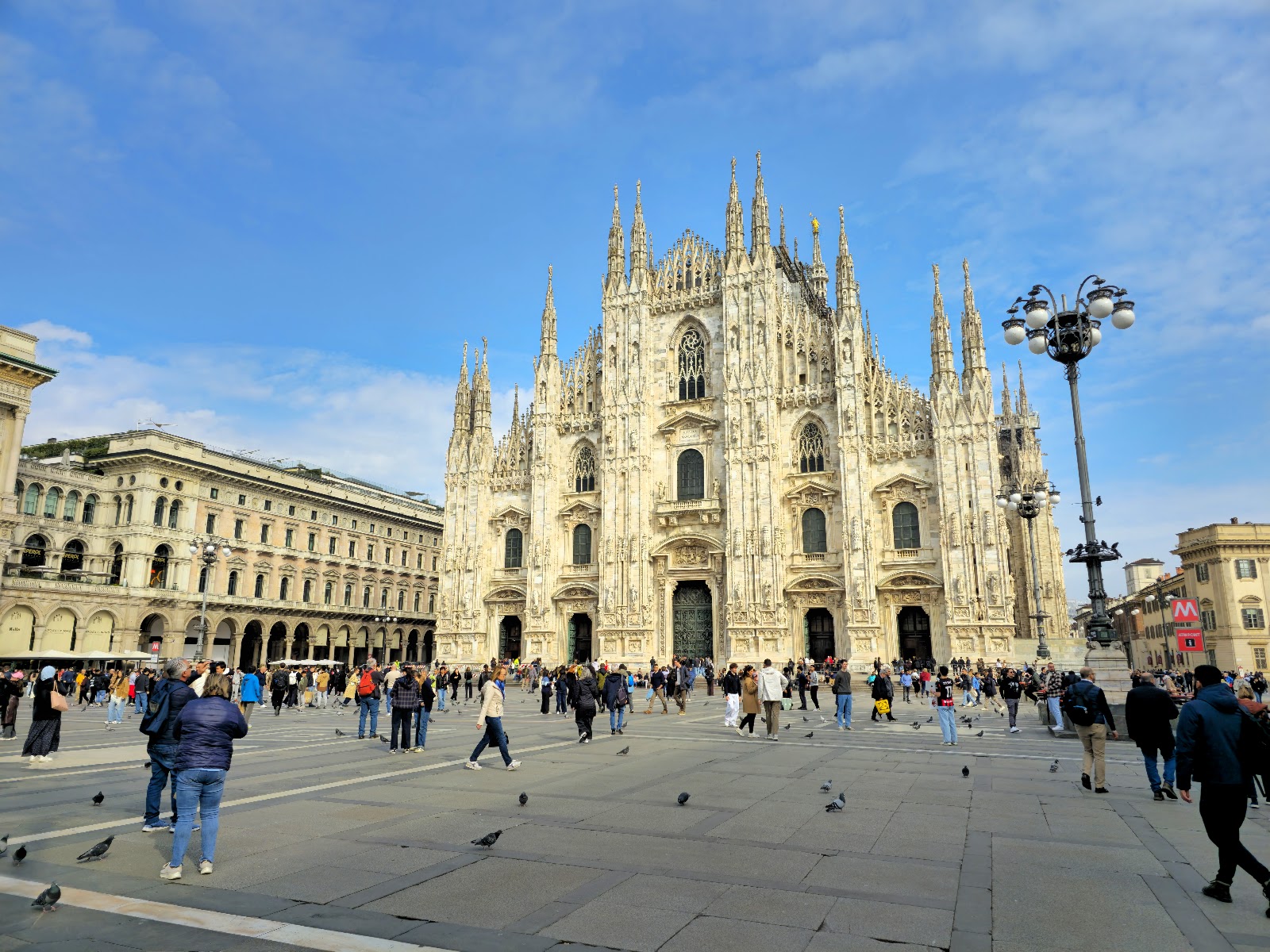

Background adapted from Wikipedia (CC BY-SA) · map data © OpenStreetMap contributors · ratings & place photos via Google · other photos with per-image credit. Ticket links may earn us a commission at no extra cost to you.