
Nazca Lines (Líneas de Nazca)
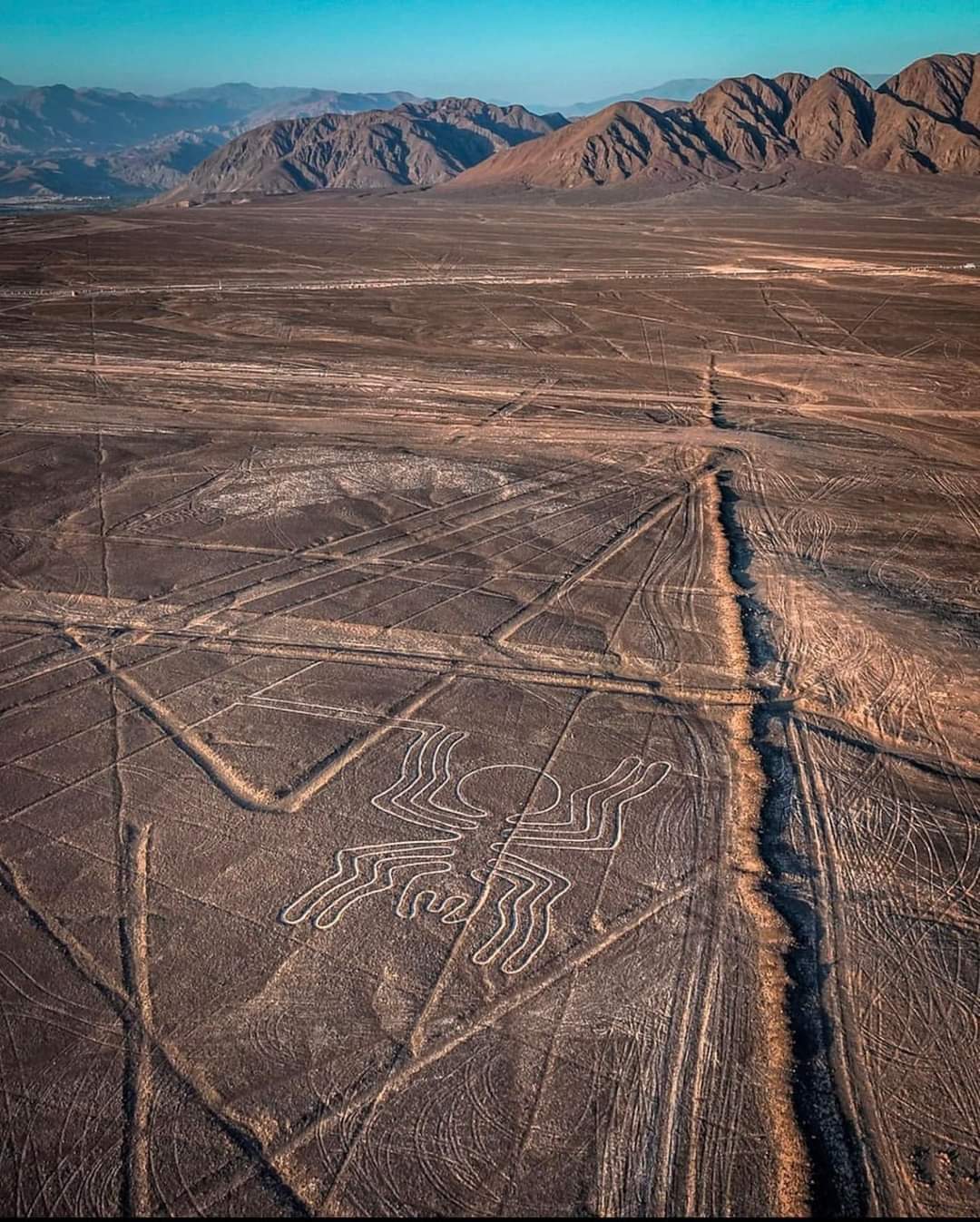
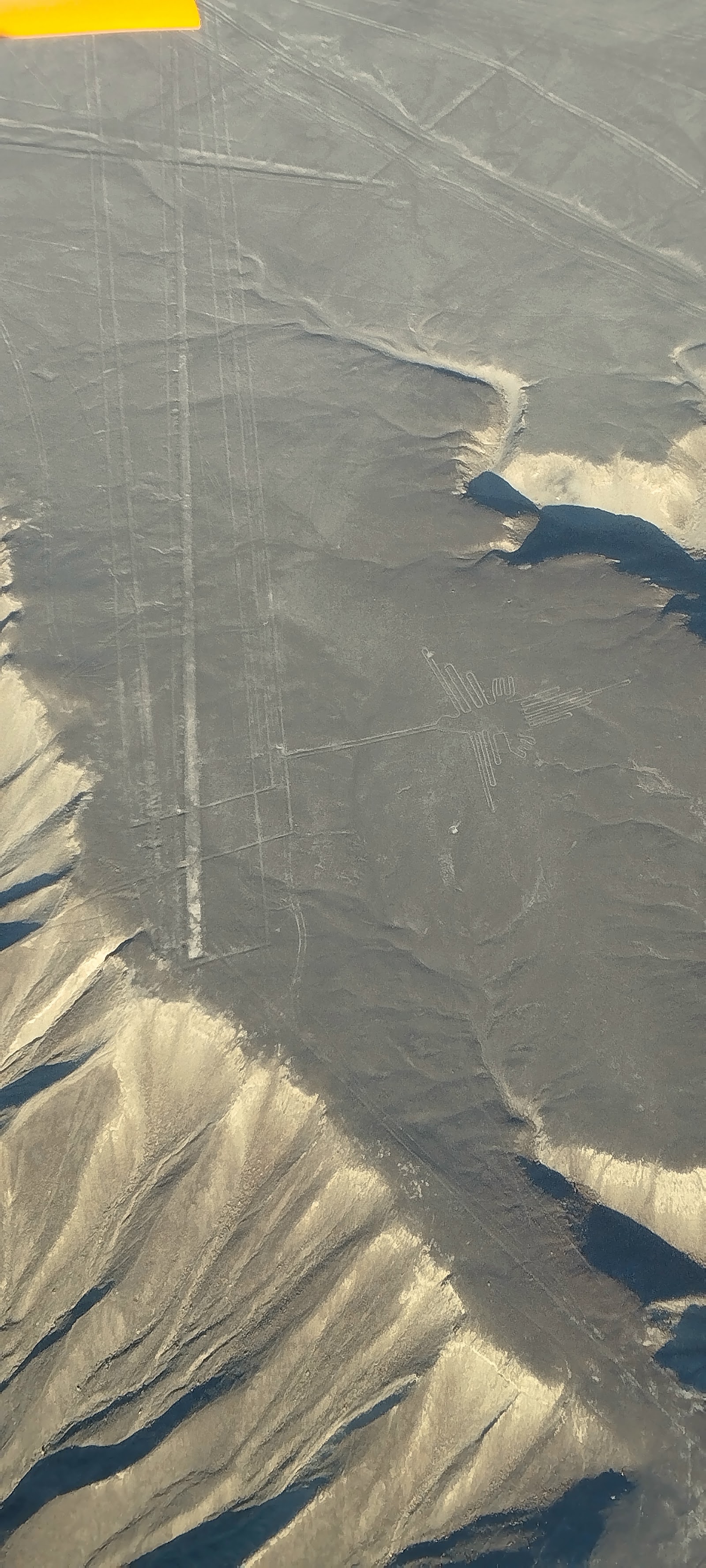
From the air, the scale registers before the meaning does. A hummingbird stretches 93 metres across the pale desert floor. A condor spans 134. The lines that connect them run arrow-straight for up to 48 kilometres, drawn into a plateau so dry it receives roughly 4mm of rain a year — which is precisely why they survive at all.
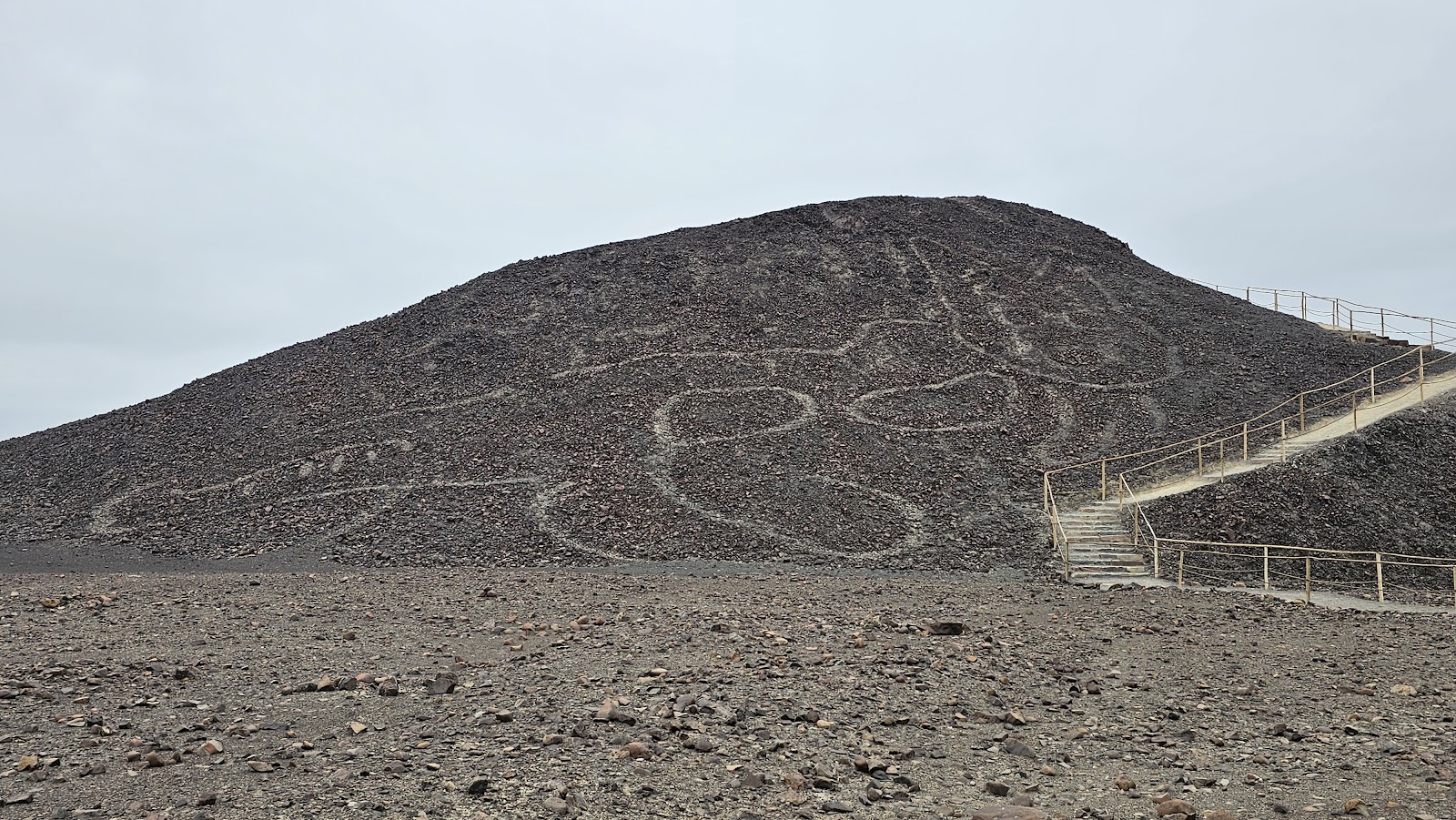
The Nazca Lines cover around 50 square kilometres of high arid tableland between the towns of Nazca and Palpa, about 400 kilometres south of Lima. More than 70 animal figures, 300 geometric shapes and 800 straight lines were scratched into the earth by removing a thin layer of reddish-brown pebbles to expose the yellow-grey subsoil beneath — a technique that is, at its core, almost absurdly simple.
💛 What travellers fall for
People who've done this more than once tend to book the first flight of the day, around 9 AM, before the thermal winds pick up and the banking turns get rougher. They also come with cash for the airport add-ons — the TUUA tax and the tourist ticket — which the advertised flight price never includes. Bring something for motion sickness if small aircraft are not your friend.
The story behind Nazca Lines (Líneas de Nazca)
The older figures date to the Paracas culture, around 400–200 BC; the majority were made during the Nazca culture's florescence, from roughly 200 BC to 500 AD. Peruvian archaeologist Toribio Mejia Xesspe began the first systematic study in 1926, but the lines remained largely unknown outside the region until commercial pilots started flying over them in the 1930s.
American historian Paul Kosok observed them from a plane in 1941 and proposed an astronomical function. German scholar María Reiche arrived in Peru in 1932, eventually devoted fifty years to the site, and developed the astronomical-calendar theory further while lobbying hard for preservation. UNESCO recognised the site in 1994. In 2024, a team from Yamagata University using AI identified 303 previously unknown geoglyphs — parrots, cats, killer whales, severed heads — suggesting the plateau still has more to say.
Good to know
The only way in is by bus from Lima — a 7-to-8-hour ride. Aerial tours run 9 AM to 3 PM; morning slots are calmer. Weight limits on the small planes are strict (90–100 kg per passenger). The roadside observation towers on the Pan-American Highway offer a free ground-level look at the Tree and Hands geoglyphs if you want context before or after your flight.
The plateau is one of the driest places on earth; rain is genuinely rare at any time of year. The dry season from May through September brings the clearest skies and temperatures between 15°C and 25°C, making it the most reliable window for flights, though mornings are the smoothest for flying in any season.
Where is Nazca Lines (Líneas de Nazca)?
More tickets & tours for Nazca Lines (Líneas de Nazca)
Book directly at the provider
What travellers say about Nazca Lines (Líneas de Nazca)
unmissable. There is av viewing tower where 3 of the glyphs can be seen, but for really spectacular view (provided you dont get air-sick) its possible to do a plane ride over them (in very small wobbly planes) - the pilot dips the wing down to point at the shapes (amazing!)
Grab a flight tour over the lines. Well worth your time and money! $80 at ticket May 2026 plus airport fees.
If you appeared to be in Nasca (like us) and did not want to miss out on #1 tourist attraction here, think twice. We took the plane flight (85 eur/person) as thought it will be a unique experience. It’s still nice, BUT keep in mind: 1. The lines are smaller & less cooler than you think they are 2. The flight itself makes most people nauseous. Be ready for that, even if you did flights before. I got sick and numb in my arms, so even though I desperately tried, I could not enjoy it. To sum up: if you came here specifically to visit the lines, I guess you will like it, go for it. If you’re a casual tourist explorer like us, probably also ok to skip and do something else. Hope it helps to those who have a strong fear of missing out like me! :)
Very nice experience! Avoid eating a couple of hours in advance to limit risk of mooting sickness issues.
First, i am impressed with how the lines were made. Next, do watch the video at the airport while you wait (and you will have to wait). Third, be very prepared for a bumpy ride. I do not get air or seasick but this made me feel a little queasy. If you have a UV and polarised filter for your camera lenses, do consider using them. Once the sun is high and strong enough, the pictures do not come out well.
More of Peru
Discover where to stay, what to do and the best deals for your trip.
Explore Peru →More attractions in Peru
All of Peru →
Background adapted from Wikipedia (CC BY-SA) · map data © OpenStreetMap contributors · ratings & place photos via Google · other photos with per-image credit. Ticket links may earn us a commission at no extra cost to you.