
Monasterio de Santa Catalina de Siena
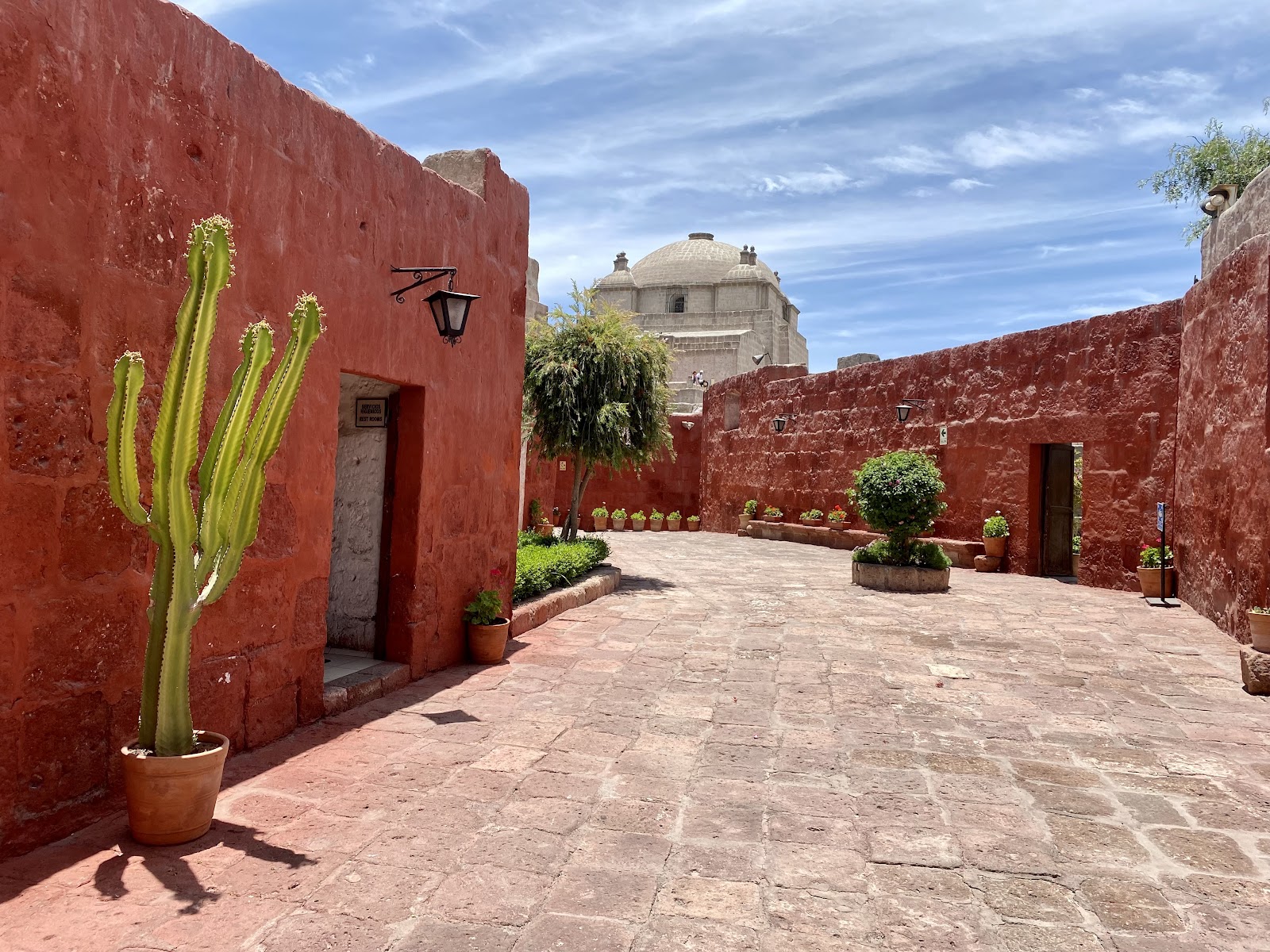
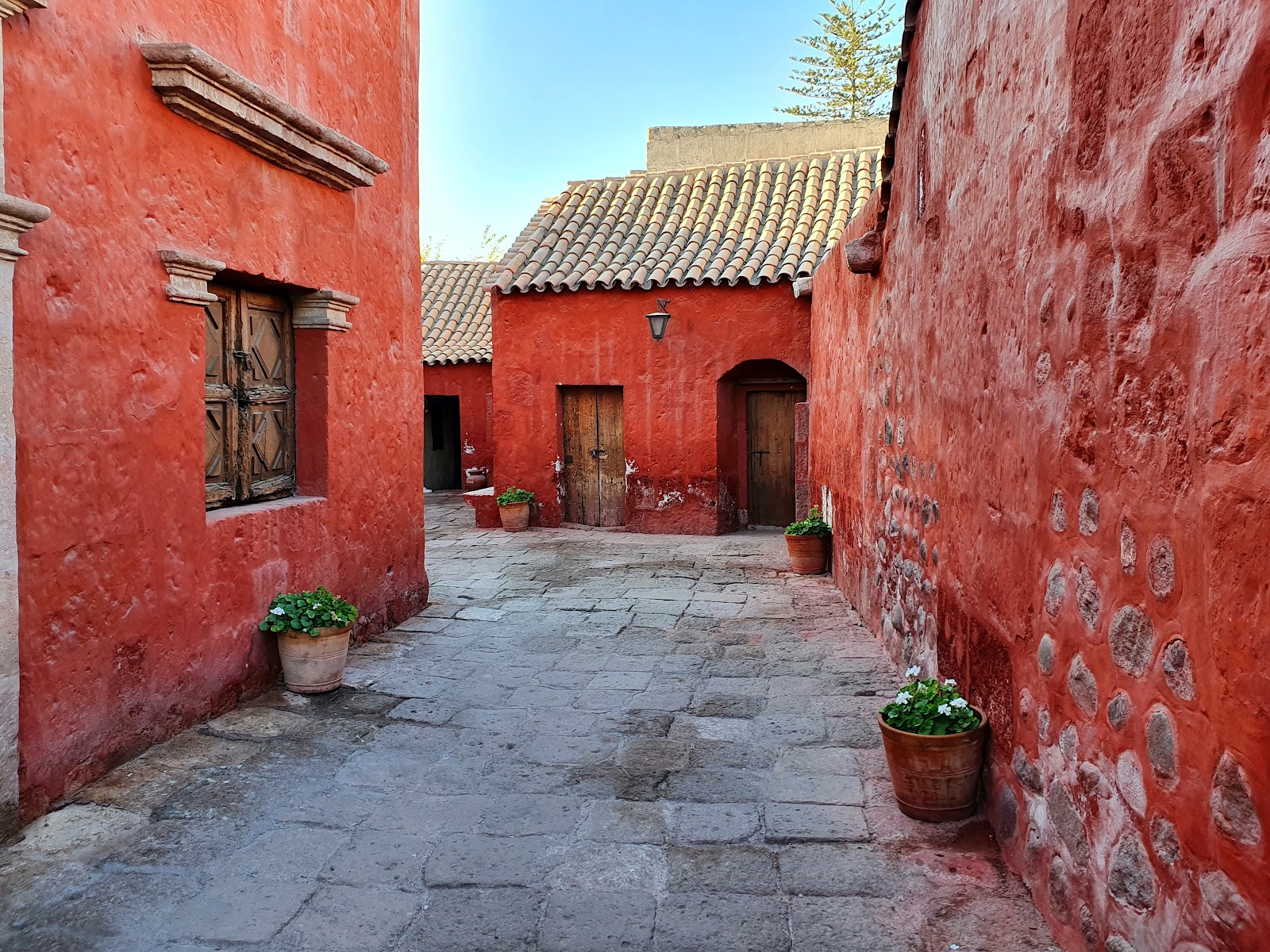
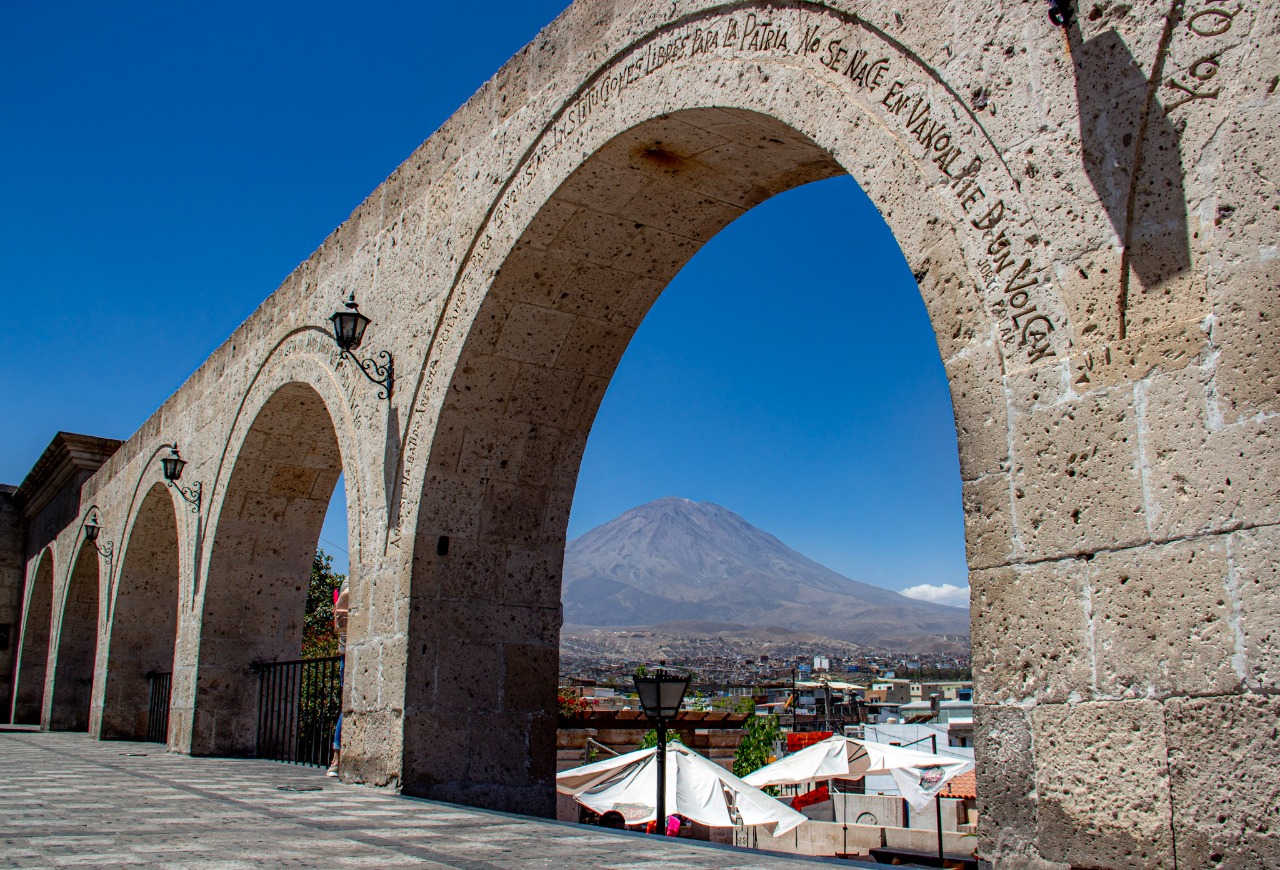
Step through the portal on Calle Santa Catalina and you're no longer in Arequipa — you're inside a walled city of 20,000 square metres, its streets narrow and a little crooked, its walls painted in deep ochre and terracotta that hold the Andean light differently at every hour. Built from the same pale volcanic ashlar quarried from the flanks of Misti and Chachani, the whole complex feels carved rather than constructed.
Nuns still live in the northern quarter, and that fact matters: this isn't a museum dressed up as a convent. The Courtyard of Silence still requires quiet during prayer hours, the Cloister of the Orange Trees still has its three wooden crosses, and the coffee shop sells desserts made by the sisters.
💛 What travellers fall for
People who come back tend to say the same thing: go on a Tuesday or Thursday evening for the candlelit visit. The Main Cloister — built between 1715 and 1723, the largest in the complex — reads completely differently by candlelight than it does at noon. Arrive early enough to linger in the picture gallery before the tour groups arrive; 400-odd Cusco School paintings, mostly 16th to 18th century, reward slow looking.
The story behind Monasterio de Santa Catalina de Siena
The convent was founded on September 10, 1579, after Viceroy Francisco Toledo granted a licence during his time in Arequipa. Doña María de Guzmán, a widow, became its first prioress and formally took the habit on October 2, 1580. The early community was notably mixed — women of European descent, mixed heritage, and daughters of indigenous curacas all lived within the same walls.
Earthquakes in 1582, 1600 and 1604 destroyed the original buildings; what you walk through today largely dates from the last third of the 17th century, with the Main Cloister added between 1715 and 1723 and the bell tower completed in 1748. The convent remained entirely closed to outsiders until 1970, when much of it opened to the public. It now forms part of the UNESCO-listed Historical Centre of Arequipa.

Good to know
It's a five-to-eight-minute walk from the Plaza de Armas along busy streets. Budget at least two hours; three if you're moving slowly. Tickets can be booked online with a time slot. Knees and shoulders must be covered. Closed on Good Friday, Christmas Day and New Year's Day.
Where is Monasterio de Santa Catalina de Siena?
More tickets & tours for Monasterio de Santa Catalina de Siena
Book directly at the provider
What travellers say about Monasterio de Santa Catalina de Siena
This place was extremely beautiful and full of history. It's a photographer's dream. I definitely recommend getting a guide when you're there, as there aren't any information boards and you'll want to hear the interesting stories about the lives of the nuns. And the guide service was really cheap too. She only asked us for 20 soles for the both of us, but we gave her $10 USD which is about 34 soles. This place is the highlight of Arequipa and not to be missed.
Very beautiful and has a rich history. I especially enjoyed the guided visit with one of the ladies inside. Don’t bother getting a tour from outside of the monastery and just do a tour with the first available official guide inside. Our guide was informative, took photos of us and answered all our questions. it is 10 soles per person for the guided tour which i think is a steal
A friend of ours used to live in Arequipa and before we came to visit, she told us that we had to visit this monastery. She said that she often would visit when she lived in the city because she found it so calming and peaceful. After visiting the monastery, I completely agree with her. This place is a great place to decompress. We downloaded the free app and did the guided audio tour... learning the history of the monastery was impressive. Essentially, each nun would have their dowery donated to the monastery. Depending upon the means of the nun's family, the nun would get a room or "apartment" of corresponding size. Some of these apartments were far more extensive than I realized and had their own kitchens, sitting rooms, etc. The vibrant colors and flowers all around the monastery were refreshing in the "white city". While the audio tour can take some time, I definitely think it's worth it to know what you're looking at.
One of the most fascinating places in Peru and easily a highlight of Arequipa. It feels less like a monastery and more like an entire hidden city, with colorful streets, courtyards, fountains, and beautifully preserved colonial architecture. Walking through it is like stepping back in time. The contrast between the bright blue and red walls, the volcanic stone, and the flowers makes the whole place incredibly photogenic, but it’s not just visually beautiful, the atmosphere is genuinely peaceful and unique. There’s also a lot of interesting history about the lives of the nuns and how isolated the community once was. The complex is much larger than expected, so it’s worth taking your time instead of rushing through. One of the most memorable places I visited in Peru.
Easily one of the best things to do in Arequipa. Each corner offering something completely different and the vibrant colours making it such an exciting experience. Historical architecture preserved very well and easy to get around if you stick left.
More of Peru
Discover where to stay, what to do and the best deals for your trip.
Explore Peru →More attractions in Peru
All of Peru →
Background adapted from Wikipedia (CC BY-SA) · map data © OpenStreetMap contributors · ratings & place photos via Google · other photos with per-image credit. Ticket links may earn us a commission at no extra cost to you.