
Iglesia y Convento de San Francisco
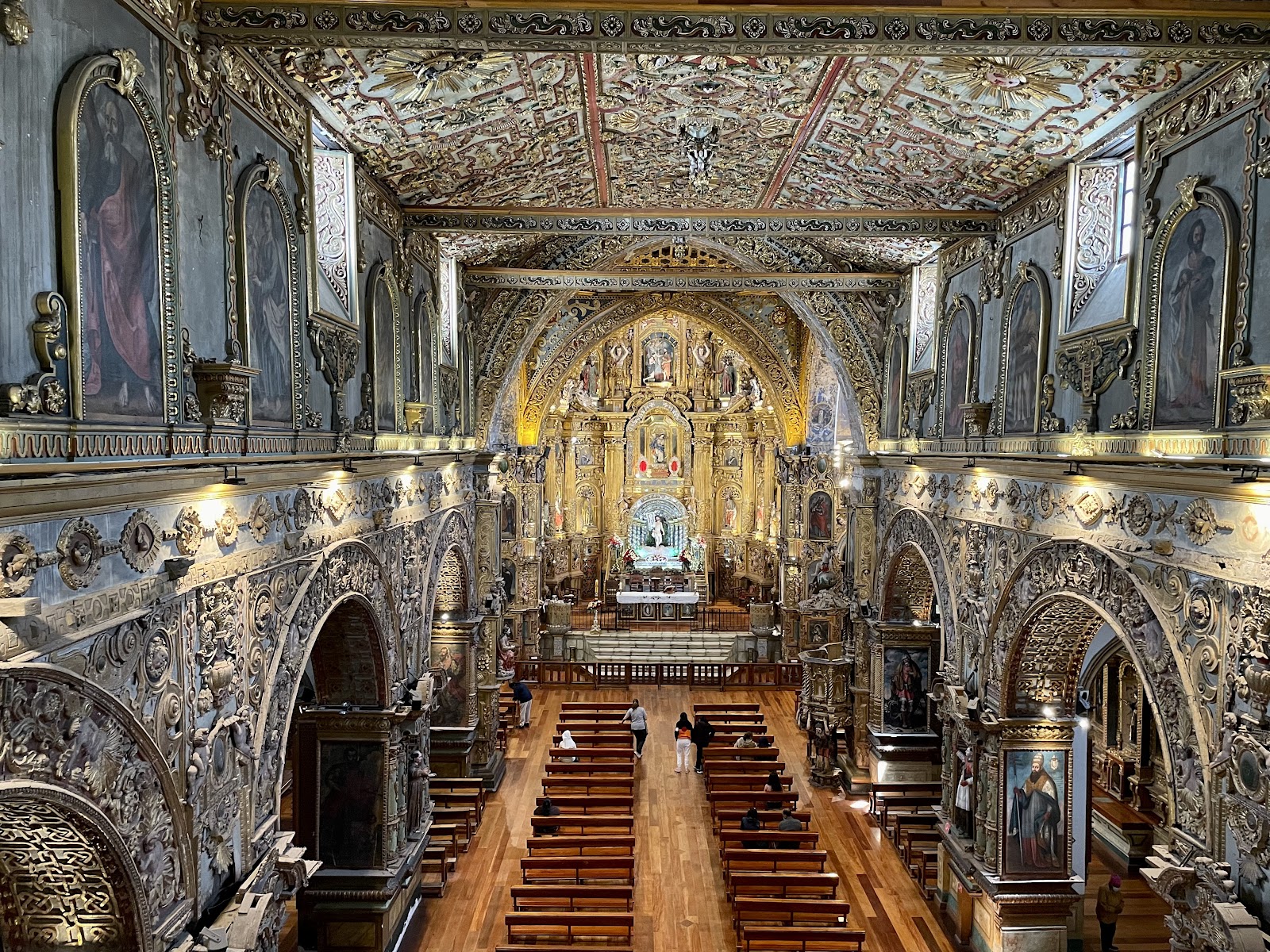
The cornerstone went down on January 25, 1536 — just over a year after the Spanish founded Quito — and the complex that grew from it never really stopped being built. What stands today across three and a half hectares is the largest colonial religious ensemble in South America: thirteen cloisters, three temples, an atrium you can cross in about two minutes at a slow walk, and a museum holding more than 3,500 works of colonial art.
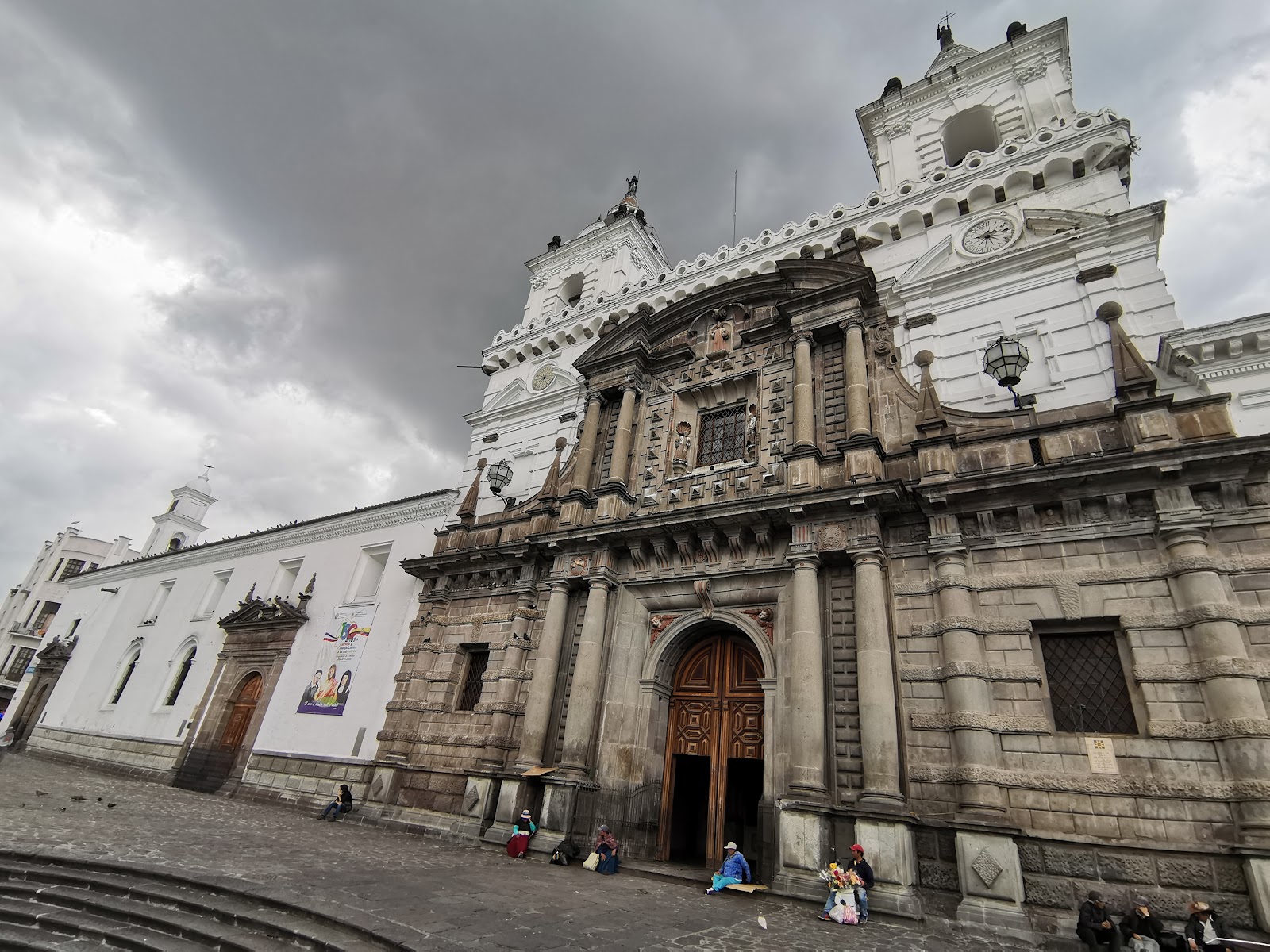
The church faces its own square in the middle of Quito's historic centre, the twin stone towers rising above Doric columns on a facade completed in 1618. Step inside and the main altar alone — paintings, carvings, and statues layered across centuries — traces the entire arc of what became the Quito School of art.
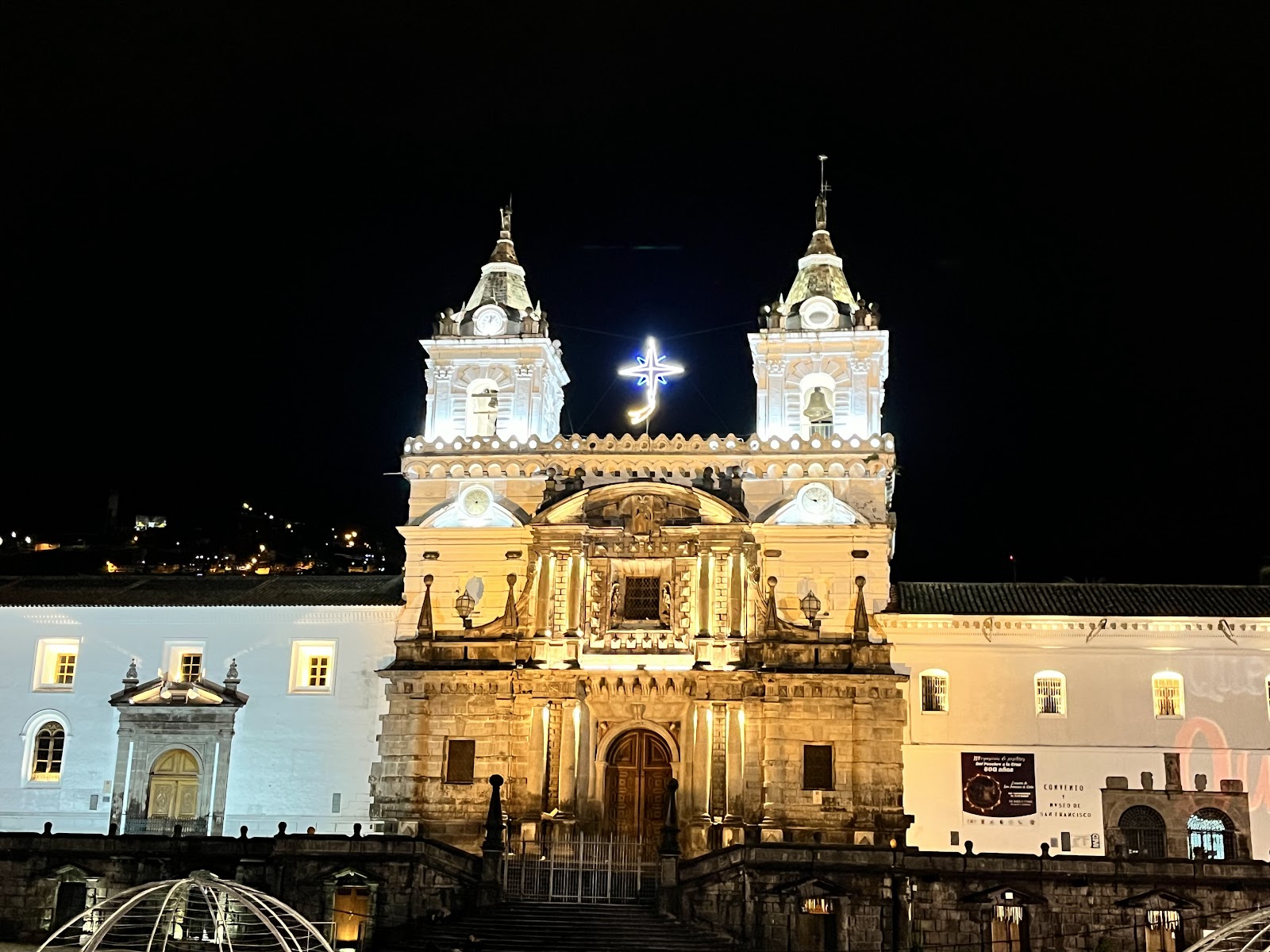
💛 What travellers fall for
Regulars tend to do the museum first, before the tour groups arrive around ten. The choir — the one room where photographs are allowed — is worth the small extra fee: the carved wooden stalls and the view down into the nave from above repay a slower look. The bell tower on the right side of the convent gives you the roofline of the historic centre with almost no one else up there.
The story behind Iglesia y Convento de San Francisco
Three Franciscan friars — Jodoco Ricke, Pedro Gocial, and Alonso de Baena, the first two cousins of Charles V — arrived in December 1535 and laid the cornerstone of what would become the first Franciscan church in Ecuador the following January. The original structure was a modest adobe and reed building called the Conversion of San Pedro. Over the next two centuries, master builders including Francisco Benítez from Portugal, the Quito-born architect Friar Antonio Rodríguez, and the mason Gaspar de Borges gradually raised the monumental ensemble that was consecrated in 1605 and considered substantially complete by 1755.
Earthquakes repeatedly interrupted that arc. The 1755 event damaged vaults and walls across the complex; the 1868 earthquake brought down the upper sections of both bell towers, which were never rebuilt to their original height. The Bernardo de Legarda sculpture of the Virgin of the Apocalypse, completed in 1734, survived intact and remains one of the centrepieces of the collection.
Good to know
Take the Quito Metro to the San Francisco stop — it puts you at the door. Church entry is free; museum admission is $2. The church itself forbids photography, so leave the camera in the bag until the choir. Budget two hours minimum; the scale of the complex earns the time.
Where is Iglesia y Convento de San Francisco?
More tickets & tours for Iglesia y Convento de San Francisco
Book directly at the provider
What travellers say about Iglesia y Convento de San Francisco
Gold leaf covers the Baroque main altar of the 16th century Basilica and Convent of San Francisco in Quito, Ecuador. The central image on the altar is a winged statue of the Virgen de Quito (1734) by Bernardo de Legarda. The church has a remarkable Mudéjar ceiling representative of Islamic-influenced decorative art popular in 16th century Spain. A side altar in the church has a statue of Saint Francis of Assisi dressed in his characteristic brown woolen robe tied with a three-knotted cord. A crucifix and skull are in his hands.
If you're into churches, then this is probably a must see. If you aren't, it is still pretty neat. Interesting architecture, lots of stained glass. Of note: info online said $2 to get in and another $1 to go up the towers. The $2 remains correct, but it is now $4 to go up. I can't say if it was worth it as I was tired and feeling a bit of the altitude sickness so going up more stairs felt like a reasonable pass.
This church is another example of the rich and extravagant architecture of the 1600s. Built to house the governor of the region is was quickly turned into the main fortress of the Jesuit priests of the area. Its Baroque style and ornate carvings give it a very distinctive look and feel. It is actually being used as a seminarian place to this day. Impressive!
Didn’t go inside the church, however I can say that the outside plaza is such a beautiful place. It’s huge, full of people - mostly locals - with a great vibe. Highly recommended.
We didn’t go inside of the actual church but we visited the shops underneath. The church was closed for lunch. The shops underneath feature long tunnels of wares and souvenirs that can be purchased that are made by local artist and artisans. It’s a highly recommend visit. The church is just across from the Quito Metro station.
More of Ecuador
Discover where to stay, what to do and the best deals for your trip.
Explore Ecuador →More attractions in Ecuador
All of Ecuador →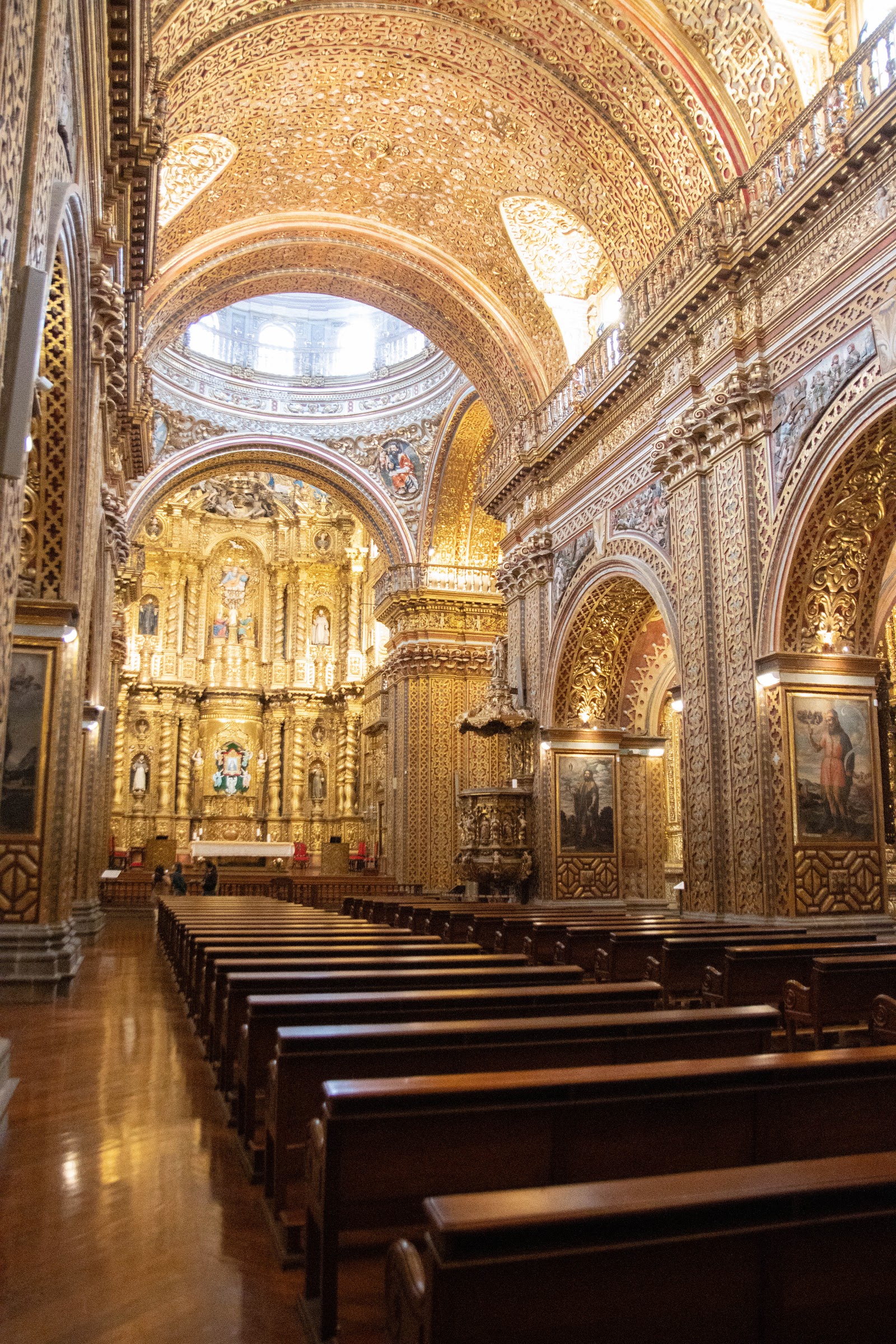
Background adapted from Wikipedia (CC BY-SA) · map data © OpenStreetMap contributors · ratings & place photos via Google · other photos with per-image credit. Ticket links may earn us a commission at no extra cost to you.