
Iglesia de la Compañía de Jesús
Stand at the corner of García Moreno and Sucre and the facade stops you before you've decided to stop. Every centimetre of volcanic stone is carved — saints, scrollwork, columns layered on columns — and that's before you've pushed open the door.
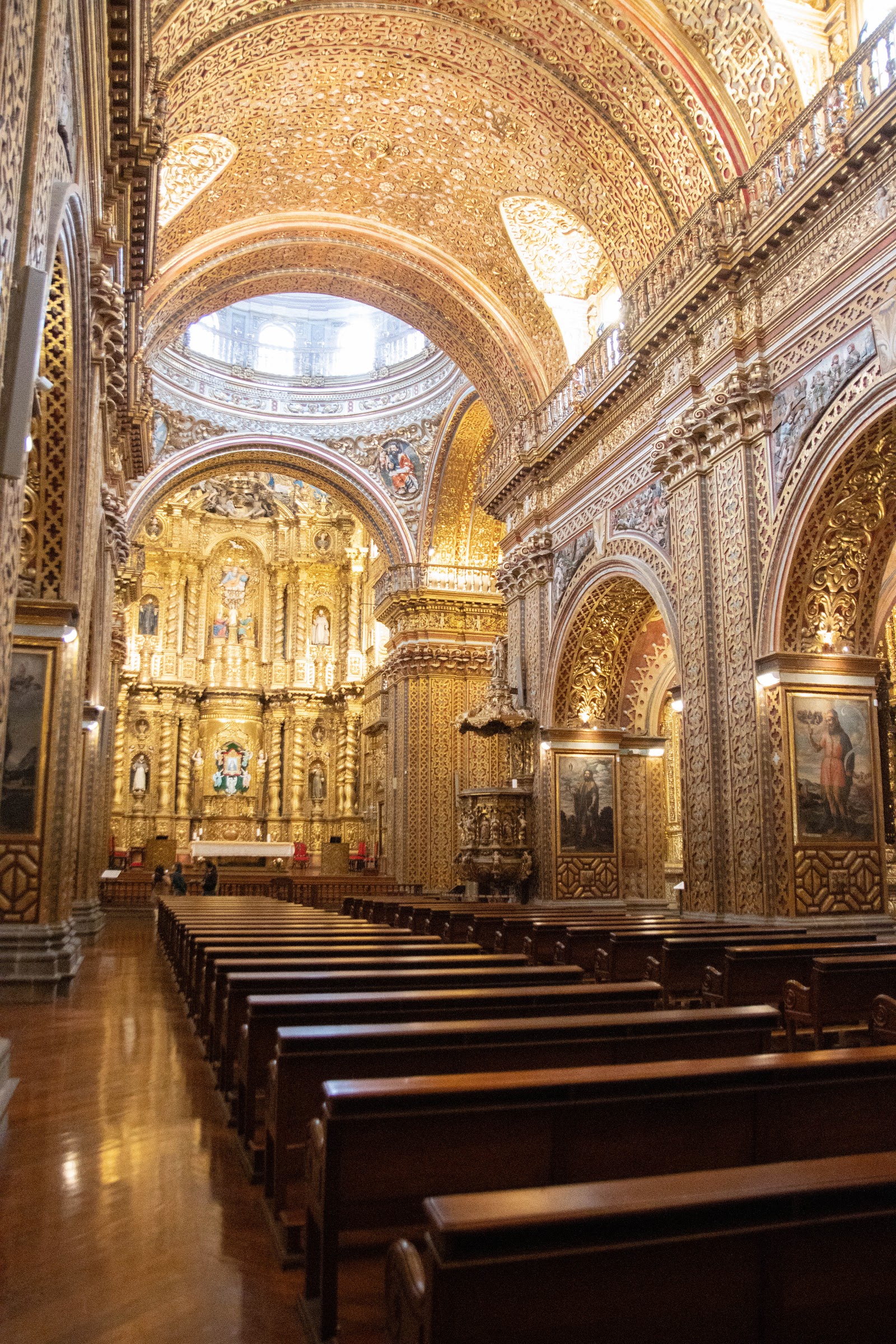
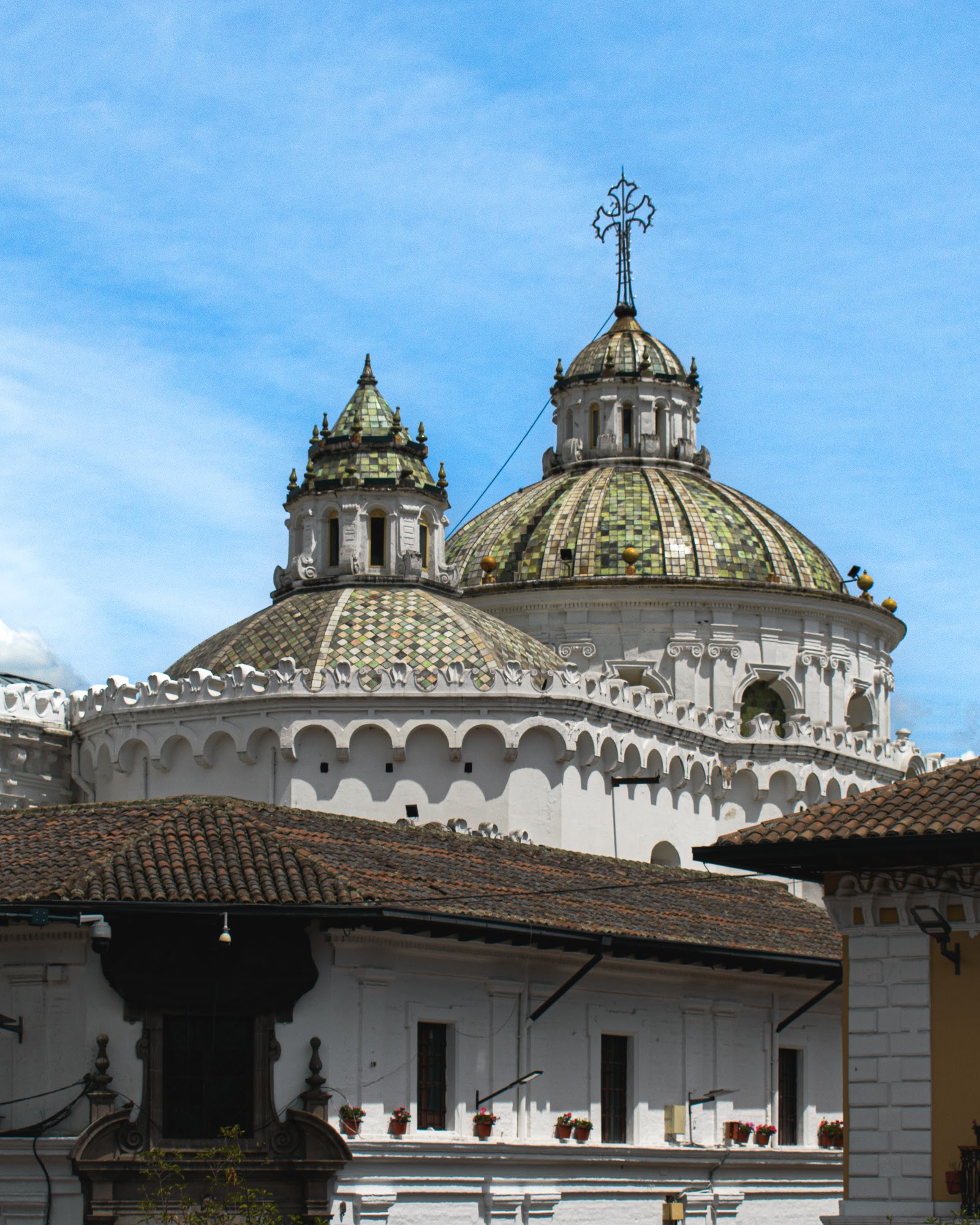
Inside, the nave is sheathed in gold leaf from floor to vaulted ceiling, two green-and-gold domes overhead, 44 paintings and 56 sculptures by Quito School artists on the walls and altars. The scale of the labour is what registers first: this took 160 years to build, and it shows in the accumulated weight of the detail.
💛 What travellers fall for
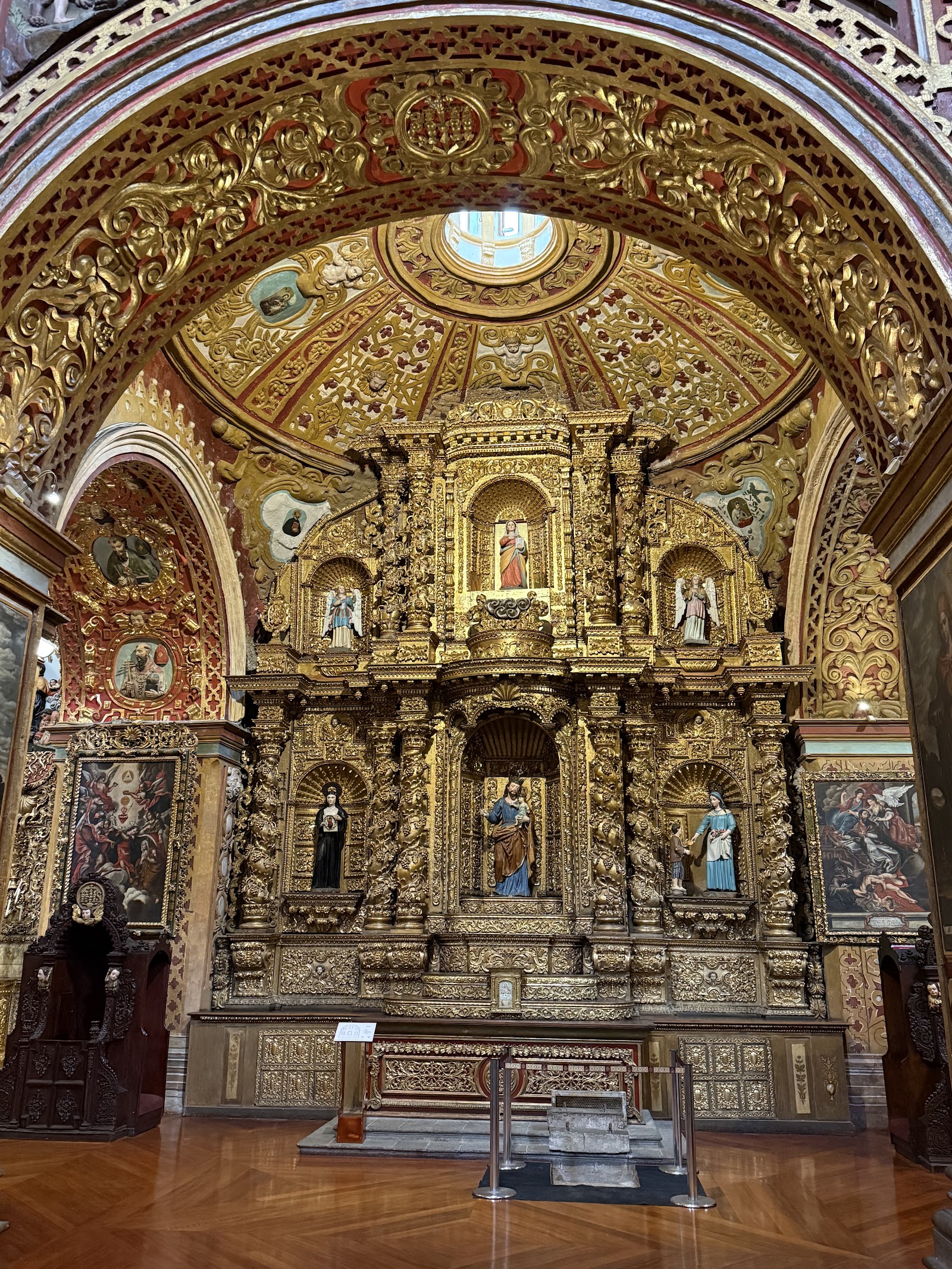
People who've been more than once tend to slow down at the pulpit — 250 carved cherubim faces crowd its surface alongside the four evangelists and Jesuit saints Ignatius and Francis Xavier. The guided tour (Spanish or English, included in the $5 ticket) earns its hour; without it, Nicolás de Goríbar's 16 prophet paintings on the pillars and Bernardo de Legarda's gilded retablo go largely unexplained.
The story behind Iglesia de la Compañía de Jesús
The Jesuits arrived in Quito in 1586, but construction of the church didn't begin until 1605, when Italian Jesuit Nicolás Durán Mastrilli laid the first stone. He worked from plans sent from Rome alongside Basque architect Martín de Azpitarte, under the direction of Jesuit Gil de Madrigal. Marco Guerra, an architect from Naples, arrived in 1636 to continue the work. The facade alone took decades: Leonardo Deubler began it in 1722, construction was suspended, and Italian Venancio Gandolfi finally finished it in 1765.
The Jesuits were expelled from Spanish territories in 1767, two years after completion. They returned in 1850 and restored the church. A 1987 earthquake caused serious structural damage, and a fire set accidentally by workers nearly destroyed the altar of St. Francis Xavier. Beneath the main altar lie the remains of Mariana de Jesús, canonised in 1950; former president Gabriel García Moreno is also buried here.
Good to know
One block southwest of Plaza Grande; the San Francisco metro station is a five-minute walk. Entry is $5, free the first Sunday of each month. No photography inside. Budget a full hour for the guided tour. Dome access costs extra. Closed to sightseers during services.
Where is Iglesia de la Compañía de Jesús?
More tickets & tours for Iglesia de la Compañía de Jesús
Book directly at the provider
What travellers say about Iglesia de la Compañía de Jesús
La Compañía de Jesús — Holy Vanity in Gold If the purpose of a house of worship is humility before the divine, someone forgot to share that memo with the architects of La Compañía de Jesús. This is arguably the most opulent church in the Americas and it does not apologize for it. Almost every surface is covered in gold leaf. Walls, ceilings, altars, columns. The baroque ornamentation is so dense, so relentless, so unapologetically excessive that your eyes genuinely do not know where to rest. It is breathtaking and audacious in equal measure.Built by the Jesuits over 160 years starting in 1605, La Compañía represents the full ambition of colonial Catholicism, the deliberate deployment of overwhelming beauty as theology. The message was clear: nothing on earth compares to the glory of God, and we will spend a century and a half proving it. Whether you read it as divine inspiration or institutional vanity depends entirely on the lens you bring. Perhaps it is both simultaneously. What is undeniable is the craftsmanship. Indigenous artisans poured extraordinary skill into every carved detail. This place is one of the best examples demonstrating the seamless combination of vanity and religion. Please note that you are prohibited from taking pictures of the interior.
A place with lots of history, from even the In as old times, then from the colonial era and nowadays... Wonderful landscape, easy to get here by METRO (subway) as long as you stay in the perimeter, it's a safe place, with many coffee shops. Close to museums, some other astonishing churches, and to the main square (Plaza Grande). Definitely it's a must to visit this area when you visit Quito
This is a beautiful, historic church that offers some of the best views of Quito. I recommend a guided tour. It has rich history and spectacular Baroque architecture.
Absolutely incredible church that is a must see while in Quito. Even if youre not religious, this church and its architecture is one of a kind in both fillet work in the Baroque style and the amout of gold they used in the 1500s. It is truly a treasure!
Absolutely a must visit if you're in Quito. It really is one of the most beautiful interior churches you'll ever visit. And the amount of gold leaf on every surface is blinding - it's like Midas himself lived here for 100 years. In addition, during the weekend there are street vendors outside selling variety of handicrafts. It's very lively.
More of Ecuador
Discover where to stay, what to do and the best deals for your trip.
Explore Ecuador →More attractions in Ecuador
All of Ecuador →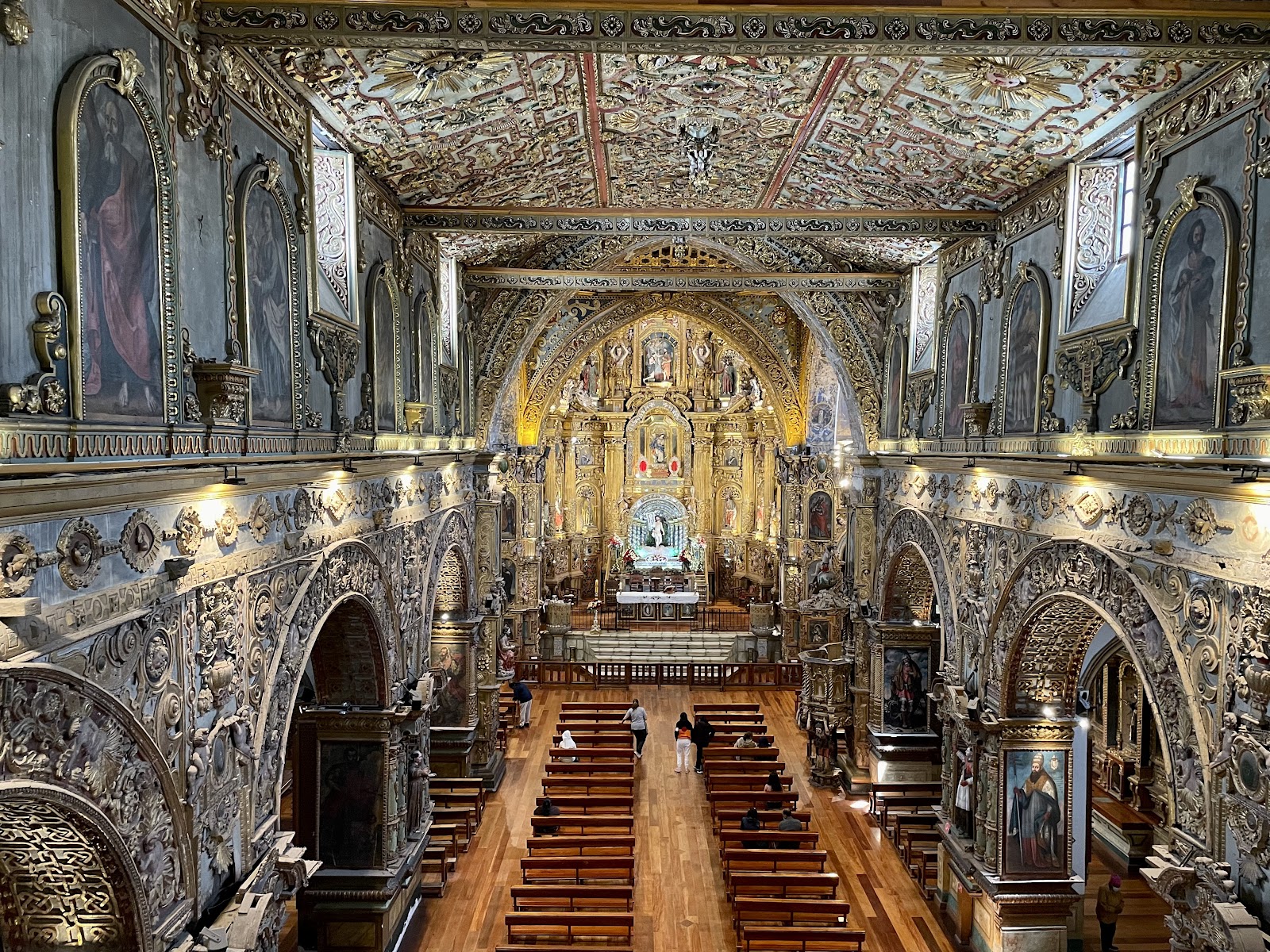
Background adapted from Wikipedia (CC BY-SA) · map data © OpenStreetMap contributors · ratings & place photos via Google · other photos with per-image credit. Ticket links may earn us a commission at no extra cost to you.