
Fontenay-le-Comte
The town motto is carved into a Renaissance fountain in the main square: Fons Fontanacum Felicium Ingeniorum Scaturigo — 'Fontenay, source of beautiful minds.' It's not an idle boast. François Rabelais studied Greek and law here. The mathematician François Viète worked here. The poet Nicolas Rapin built a château here. For a market town on the Vendée plain, Fontenay-le-Comte carries an unusual intellectual weight.
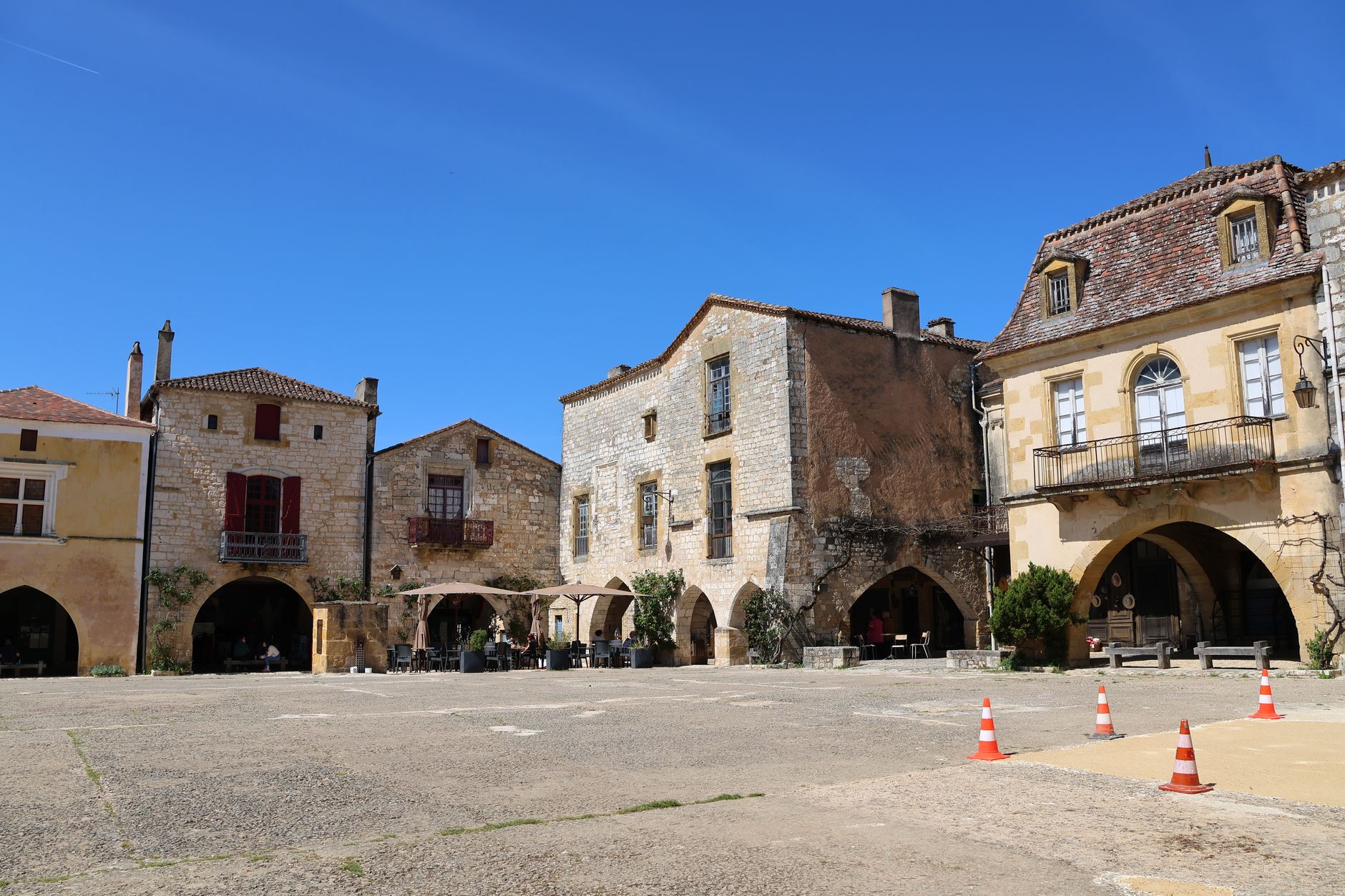
Walk the arcades of Place Belliard, duck down Rue des Loges past the oldest timber-framed house in town, and you get a sense of a place that was once genuinely important — capital of the Vendée, fought over by Catholics and Huguenots eight times in twenty-five years — and has since settled into something quieter and more liveable.
💛 What travellers fall for
People who come back tend to time it for a morning at Château de Terre-Neuve before the tour groups arrive — the Renaissance fireplaces and the garden repay a slow look. They also mention the museum inside the old Notre-Dame presbytery, where the Gallo-Roman collection is better than you'd expect for a town this size.
Experiences you don't want to miss



Deals in Fontenay-le-Comte
Book directly at the provider

How Fontenay-le-Comte came to be
Fontenay appears in the Chronique de Nantes as early as 841, though settlement goes back to Gaulish times. Its 'le Comte' suffix arrived when Louis IX took the town from the Lusignan family and gave it to his brother Alphonse, Count of Poitou. Ceded to the Plantagenets under the Treaty of Brétigny in 1360, it was recaptured by Bertrand du Guesclin in 1372.
The sixteenth century brought the Wars of Religion and eight sieges in twenty-five years. Louis XIII passed through in 1621 and had the castle dismantled. By 1790, the National Assembly named Fontenay-le-Comte the capital of the new Vendée department — a status it would later lose to La Roche-sur-Yon, leaving behind a handsome stock of late-18th-century architecture and a town still measuring itself against a grander past.
Who and what shaped it
People who shaped it
Landmark buildings
See Fontenay-le-Comte in motion
Plan your visit
On the map
When to go
Summers are warm and dry, making May through September the most comfortable window for walking the old streets and visiting Terre-Neuve. Winters are mild by French standards but grey, with enough rain that the Vendée plain loses its charm on overcast days.
Right now
Background & history adapted from Wikipedia (CC BY-SA) · specs from Wikidata (CC0) · weather from Open-Meteo · map data © OpenStreetMap contributors · photos from Wikimedia Commons / Unsplash with per-image credit. No third-party reviews or social posts reproduced.