
Chiesa di Santa Maria Assunta
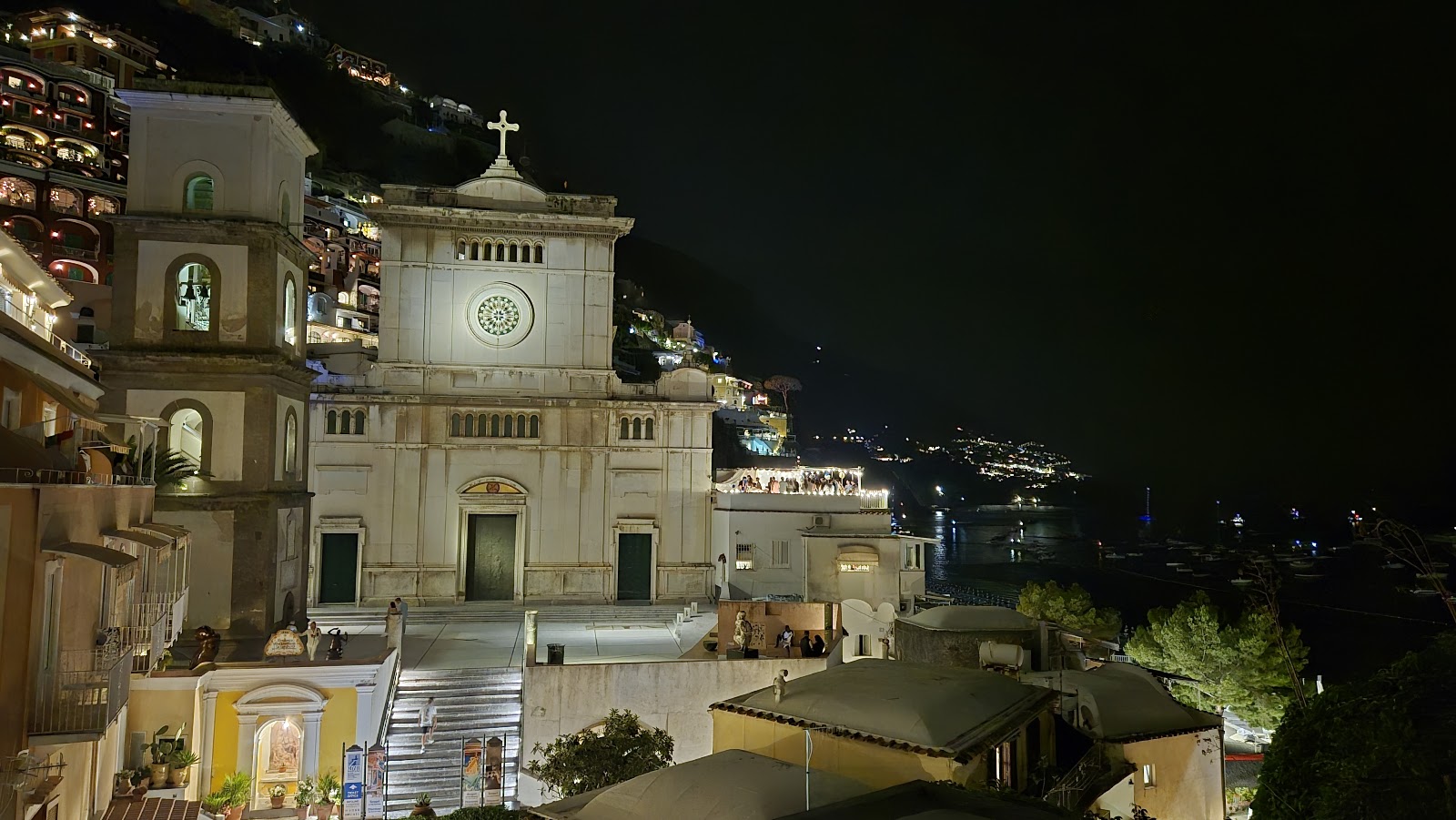
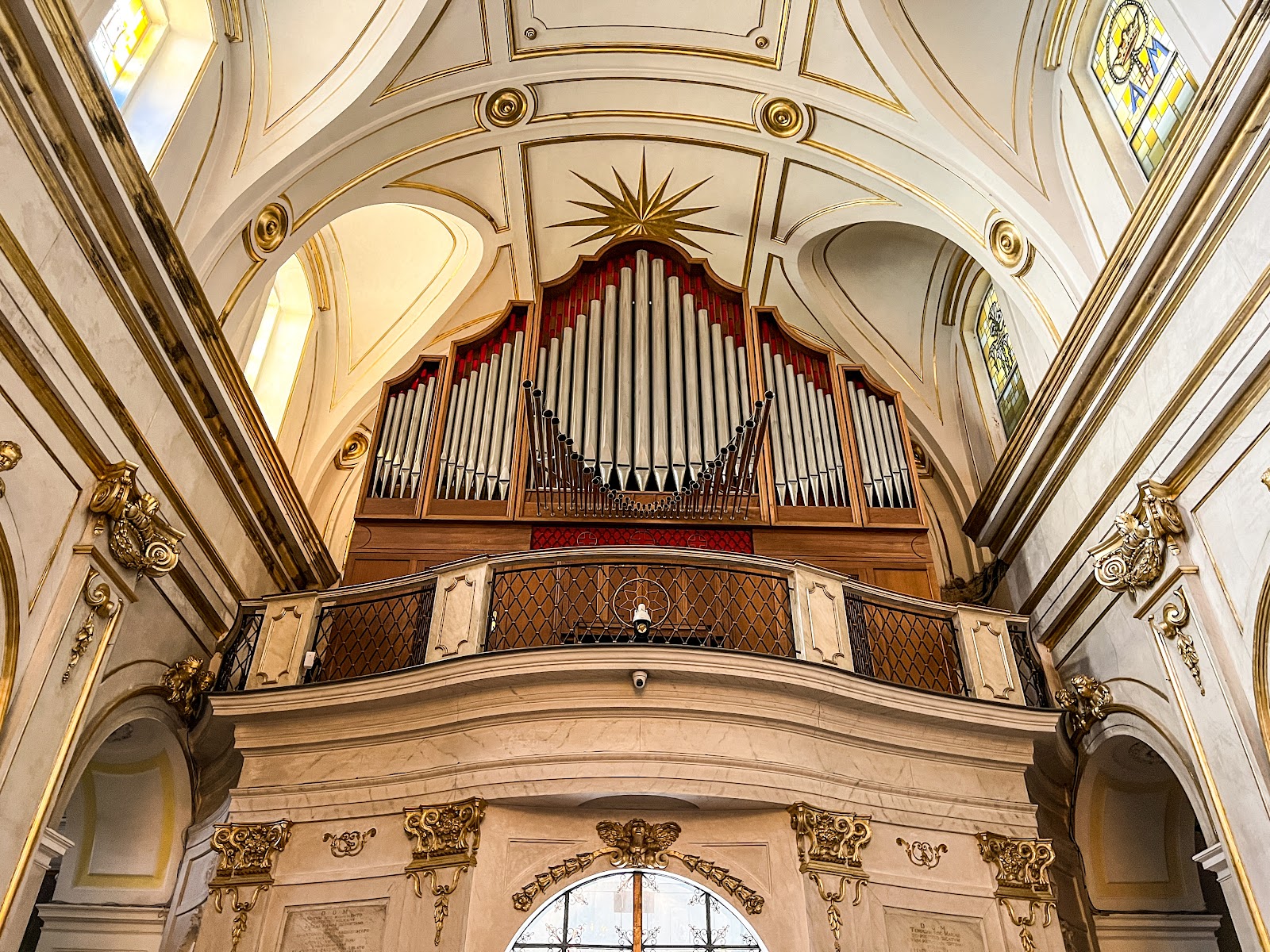
The dome gives it away before anything else — a skin of majolica tiles in yellow, green and blue that catches the light differently depending on the hour, and has been catching eyes from the water for centuries. Chiesa di Santa Maria Assunta sits in Piazza Flavio Gioia, a short climb from the beach at Marina Grande, and its white-and-gold interior, restored in the 1780s to a Neoclassical Latin cross plan, holds something older at its heart: a 12th-century Byzantine icon of the Virgin, housed in a small temple above the high altar and considered one of the most significant of its kind in southern Italy.
The bell tower, rebuilt in 1707, keeps a medieval plaque dedicated to Flavio Gioia — the figure traditionally credited with inventing the compass — and just above its door, a bas-relief of a fish, a fox and a dragon-like creature survives from the original abbey. Beneath the oratory, excavations have uncovered a Roman villa dating to the end of the first century B.C., though the site remains closed while work continues.
💛 What travellers fall for
People who come back tend to time a visit around the Assumption on 15 August, when the icon is carried through town in procession and the evening ends with fireworks over the water. On quieter days, arrive just after 9:30am — the nave is cool, the light is gentle, and you'll likely have the Byzantine icon nearly to yourself before the weddings begin.
The story behind Chiesa di Santa Maria Assunta
The abbey's origins reach back to the second half of the 10th century. It appears in writing for the first time in the late 11th century, when a duke authorised its abbot to sail freely. A document dated 14 June 1159 formally confirms the church's dedication to the Virgin Mary. For roughly four centuries the abbey held considerable prestige, until the mid-1400s, when the last Benedictine abbot — Antonio Acciappaccia of Sorrento — and his monks departed, possibly in fear of raids from Cilento pirates.
The church fell into neglect despite repeated pressure from the archbishops of Amalfi. A rebuilding at the start of the 17th century failed to arrest the decline. In 1777, local clergy finally wrested control from the last commendatory abbot and began a thorough restoration. The work took five years; on 10 August 1783, Archbishop Antonio Puoti consecrated the rebuilt church, and five days later crowned the Byzantine icon with a golden crown. Among the abbots who held the title over the centuries were Federico Borromeo, a relative of the cardinal immortalised by Manzoni, and Vincenzo Maria Orsini, who went on to become Pope Benedict XIII.
Good to know
Open daily 9:30am–noon and 4–8pm, free to enter. The church hosts masses and weddings regularly, especially on weekends — plan for a possible wait or return visit. Wear shoes with grip; the approach involves uneven steps. Wheelchair ramps are at the entrance, but the path up is steep.
Where is Chiesa di Santa Maria Assunta?
More tickets & tours for Chiesa di Santa Maria Assunta
Book directly at the provider
What travellers say about Chiesa di Santa Maria Assunta
La Chiesa di Santa Maria Assunta is a very calm and peaceful place. The architecture is wonderful and the artwork throughout the church is beautiful. It is very easy to find if you arrive in Positano by ferry.
It is a space where one can reflect while admiring the architectural elegance. It is a pleasant pause for those interested in art and spirituality.
The heart of Positano, its cherished central gem. Very calm and peaceful inside.
A must stop on your visit to Positano. The Church is very visible from the ferry as you pull in. It's highly decorated and ornate.
Chiesa di Santa Maria Assunta in Positano is a truly enchanting destination that made my visit to this coastal town even more memorable. Situated in the heart of Positano, this church is a captivating blend of historical charm and spiritual significance. The intricate facade and well-preserved interior showcase a remarkable display of artistic craftsmanship, providing visitors with a glimpse into the rich cultural heritage of the region.
More of Positano
Discover where to stay, what to do and the best deals for your trip.
Explore Positano →More attractions in Positano
All of Positano →
Background adapted from Wikipedia (CC BY-SA) · map data © OpenStreetMap contributors · ratings & place photos via Google · other photos with per-image credit. Ticket links may earn us a commission at no extra cost to you.