
Castello Sforzesco
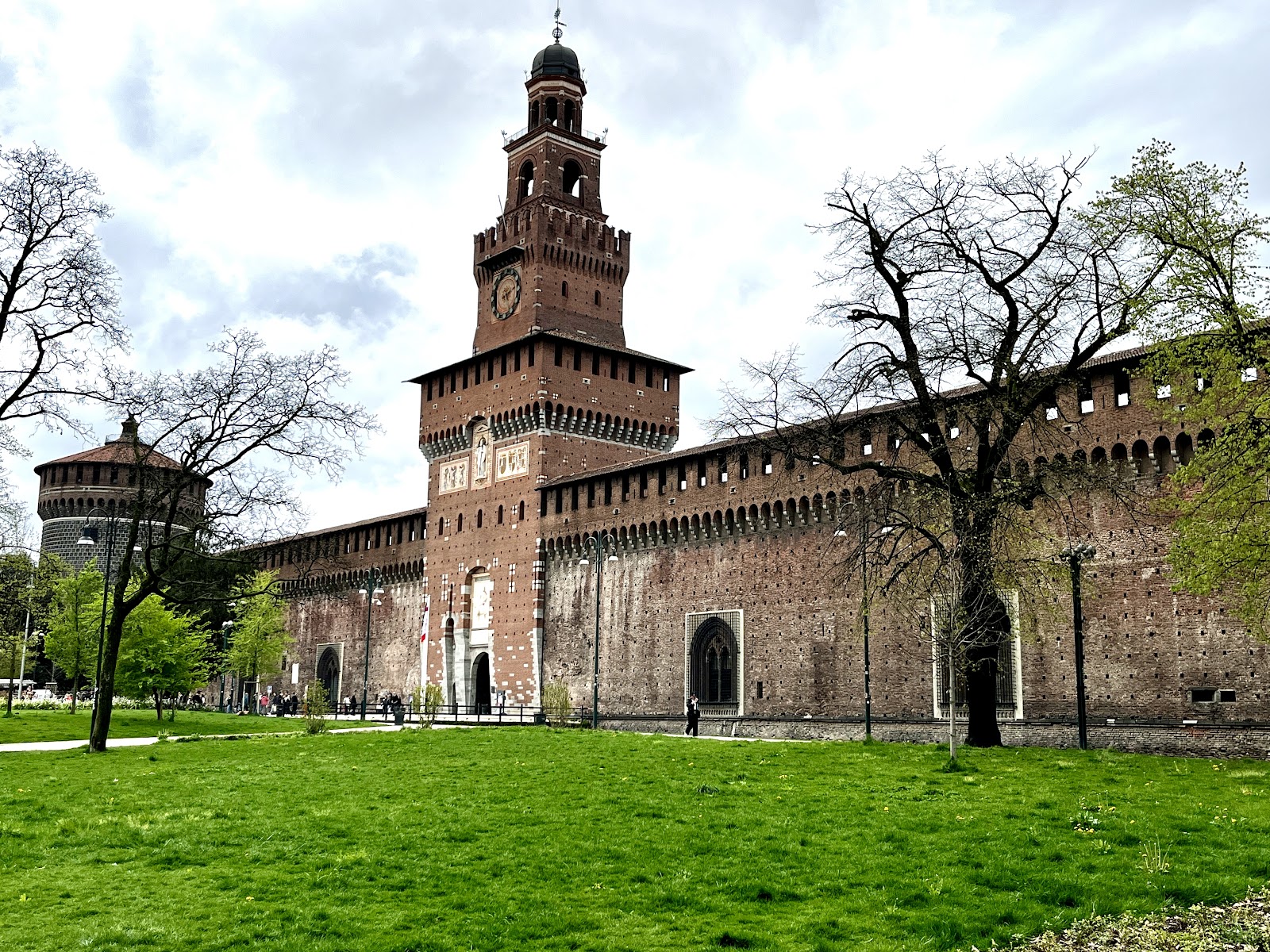
A dense colony of wild capers grows straight out of the castle walls — seeds dropped by birds, taking root in the mortar of a fifteenth-century fortress. That detail tells you something about Castello Sforzesco: it has been standing long enough for nature to move in.
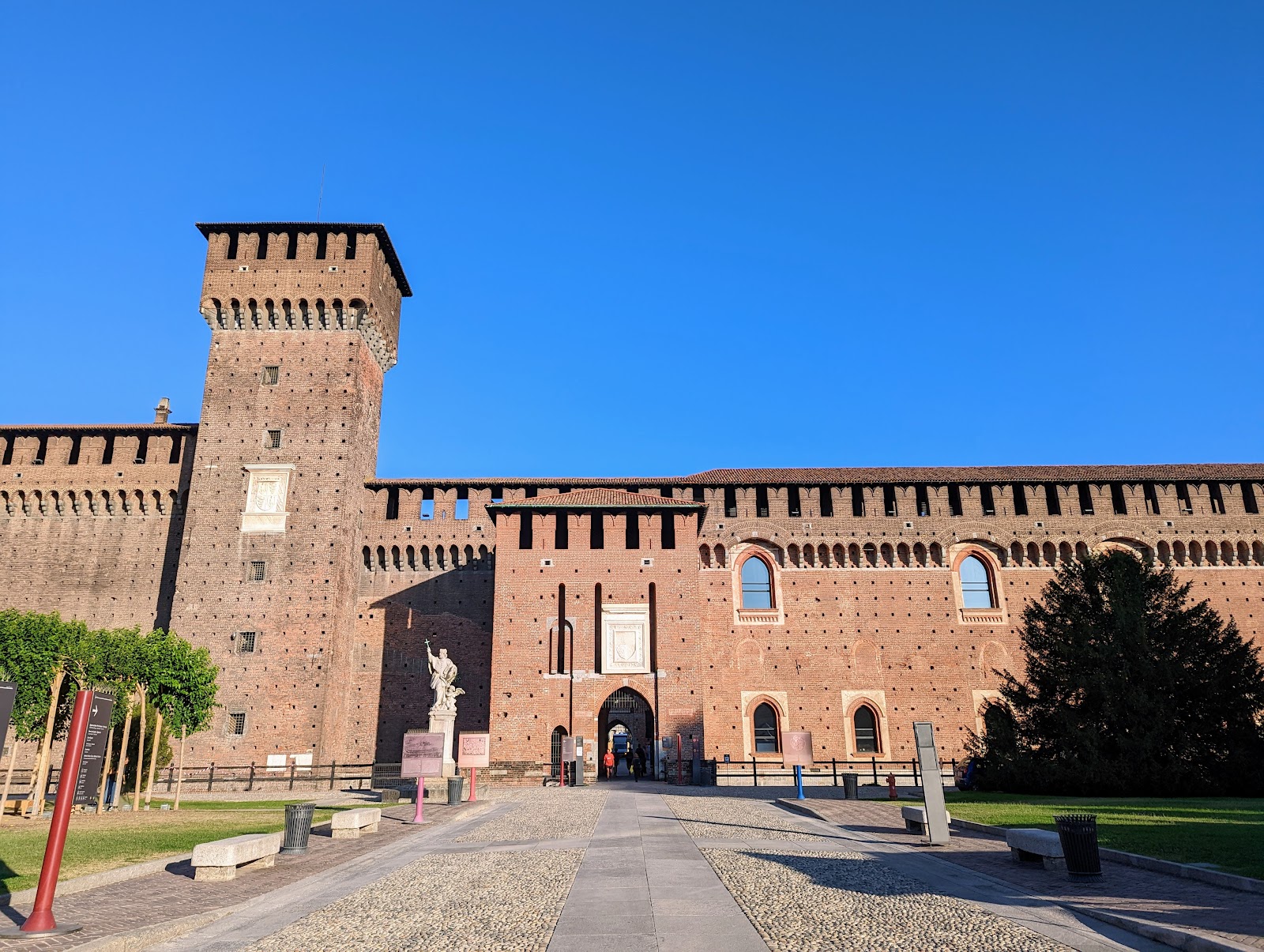
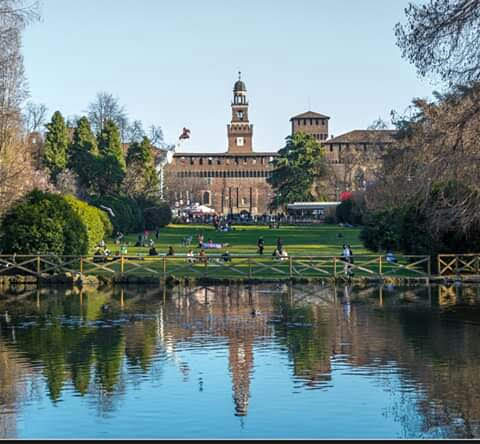
The castle anchors the far end of Via Dante, the pedestrian street that runs from Piazza del Duomo, and its sheer brick mass announces itself well before you arrive. Inside the walls, the scale shifts — three courtyard spaces open up in sequence, and the museums spread across them hold everything from Egyptian artefacts to Michelangelo's final, unfinished Pietà Rondanini.
💛 What travellers fall for
People who come back tend to skip the main museums on a second visit and go straight to the Corte Ducale for the quieter rooms, or cut through to Parco Sempione behind the castle. The free admission on the first Sunday of each month draws crowds; the free Tuesday afternoons after 2pm are calmer.
The story behind Castello Sforzesco
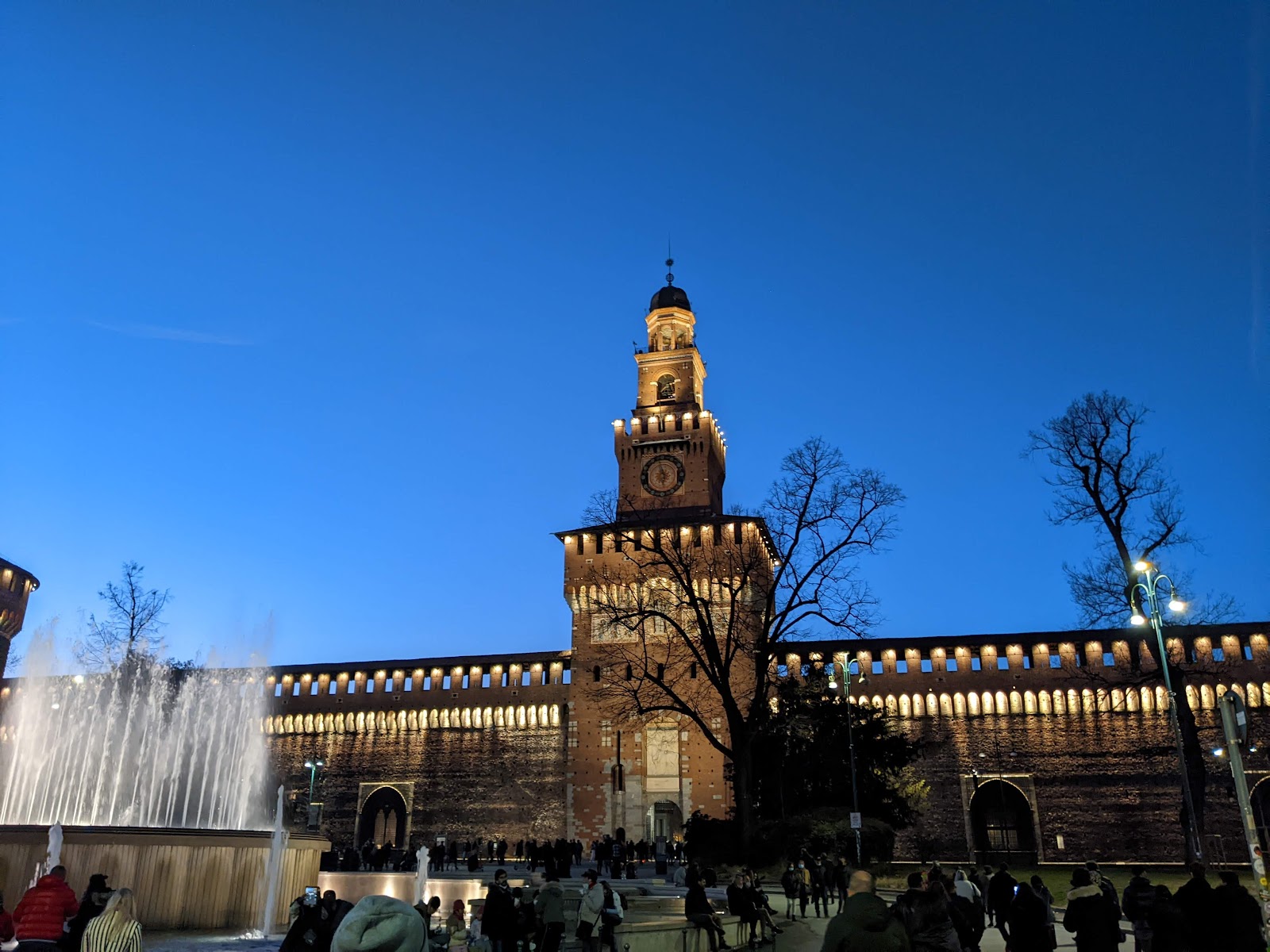
The site's first castle, ordered by Galeazzo II Visconti in 1358, was known as the Castello di Porta Giova. It lasted less than a century: the Ambrosian Republic tore it down in 1447. Three years later, the condottiero Francesco Sforza ordered it rebuilt, and in 1452 hired the sculptor-architect Filarete — Antonio Averulino — to design the central entrance tower, its brickwork inset with marble. The round corner towers were built the same year by Bartolomeo Gadio.
Ludovico Sforza took control in 1494 and called in Leonardo da Vinci and Bramante to decorate the interior. Leonardo painted the ceiling of the Sala delle Asse. The Torre del Filarete was destroyed in 1521 when the room below it was used as a gunpowder store; Napoleon ordered further demolitions in 1800. The castle standing today is substantially the work of architect Luca Beltrami, who rebuilt it between 1891 and 1905, reconstructing the Filarete tower and restoring the Sforza-era profile — a project interrupted again by Allied bombing in 1943.
Good to know
Metro M1 to Cairoli puts you at the front gate in three minutes. Museums run Tuesday–Sunday, 10am–5:30pm; closed Mondays and public holidays. Budget two hours minimum for the museums alone. Check the current status of the Sala delle Asse before you go — it has been closed for restoration.
Where is Castello Sforzesco?
More tickets & tours for Castello Sforzesco
Book directly at the provider
What travellers say about Castello Sforzesco
A wonderful place of interest near the heart of Milan. Filled with a variety of museums. Make sure to check when the exhibits are open, some close early. We visited during a heatwave but found the interior and underground exhibits to be plenty comfortable. The ancient Egypt exhibit was odd. We did not expect to see something like that in a medieval castle. But, the one ticket we bought covered all common areas, which was very nice!
Visiting Sforzesco Castle was one of the highlights of our time in Milan. Getting there was incredibly easy thanks to the tram network—several tram lines stop just a short walk from the castle, making it very convenient even if you’re not familiar with the city. The castle itself is impressive, with its grand structure and beautiful courtyards that give you a real sense of Milan’s history. What made the visit even better is the expansive green space right behind it—Parco Sempione. It’s the perfect place to relax after exploring the castle, especially if you’re traveling with family or kids. Plenty of space to walk, unwind, and enjoy the scenery. Overall, a must-visit spot that combines history, accessibility, and a great outdoor experience all in one place.
Stunning historical landmark in the heart of the city of Milan. This castle is definitely worth a visit. There are many things to see including art exhibits, historically relevant exhibits as well as a gift store. It is highly recommended by tickets in advance but this landmark can be visited for free.
Walking around the château and its grounds is pleasant, and the setting is certainly beautiful. However, in my opinion, it’s not a must-see attraction. If you visit, you’ll likely enjoy it, but if you don’t, I don’t think you’re missing anything particularly special. It’s a nice place for a stroll, but it didn’t leave a lasting impression on me.
I don’t think it’s necessary to go inside the castle. Walking around the outside and exploring the garden was already a very enjoyable experience. The garden is truly beautiful, and if you’re visiting Milan, it’s definitely worth stopping by.
More of Milan
Discover where to stay, what to do and the best deals for your trip.
Explore Milan →More attractions in Milan
All of Milan →

Background adapted from Wikipedia (CC BY-SA) · map data © OpenStreetMap contributors · ratings & place photos via Google · other photos with per-image credit. Ticket links may earn us a commission at no extra cost to you.