
Castel Sant'Angelo
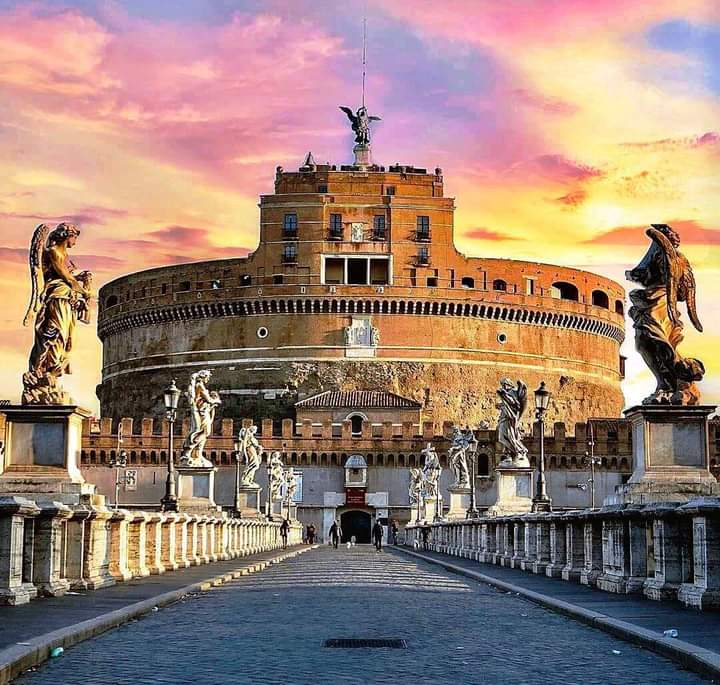
Start at the bronze angel on the roof and work your way down. That figure — cast by Flemish sculptor Peter Anton von Verschaffelt in 1753 — stands above a building that began as a Roman emperor's tomb, became a papal fortress, held Giordano Bruno before his execution, and sheltered Pope Clement VII during the Sack of Rome. Few structures in the city have been so thoroughly repurposed by history.
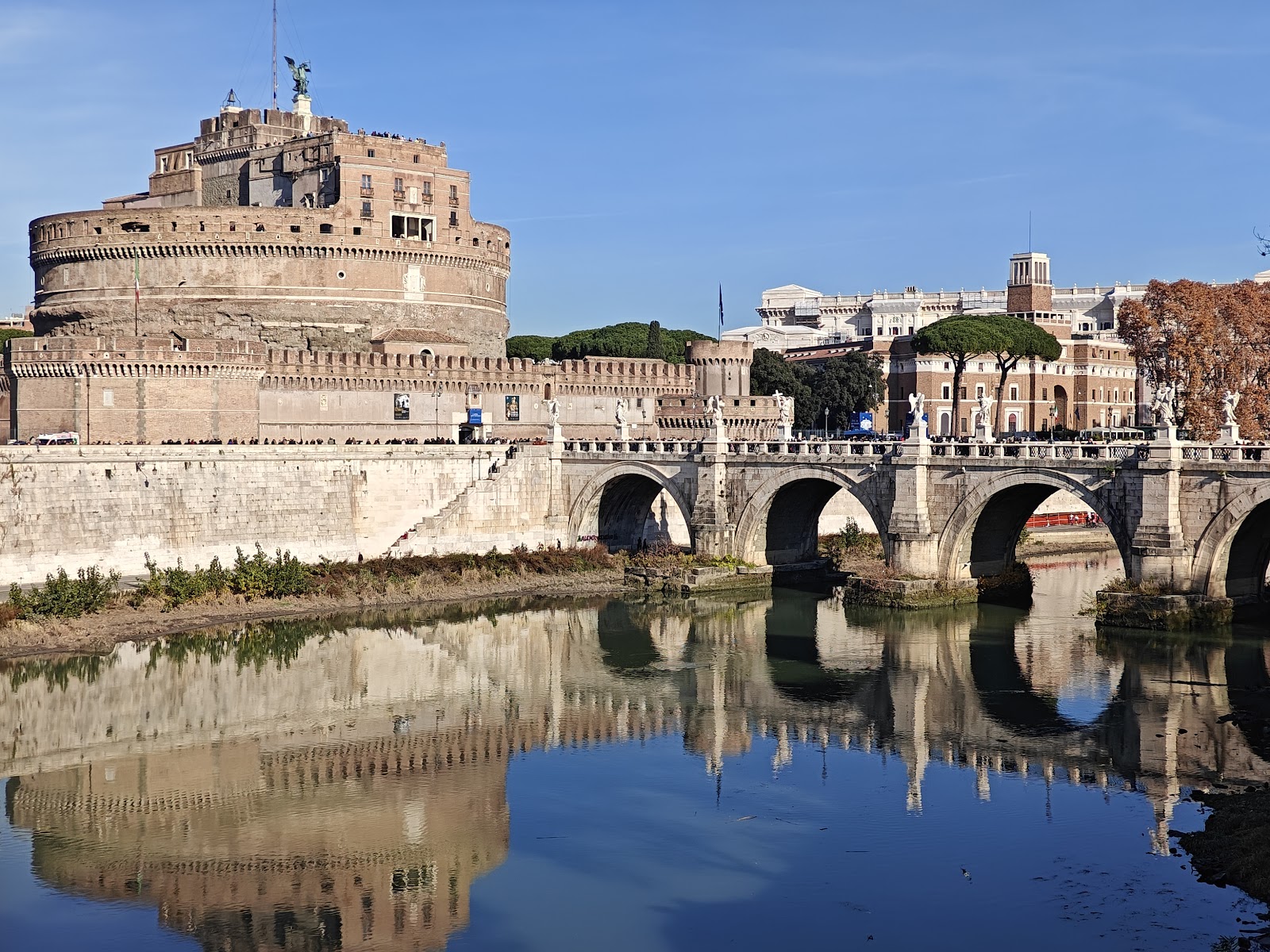
The cylindrical drum rising from Parco Adriano is 65 metres across and was finished in 139 AD to receive the ashes of Hadrian and his family. From the Tiber bank below, it still reads as something between monument and fortress — which, for most of its life, it was both.
💛 What travellers fall for
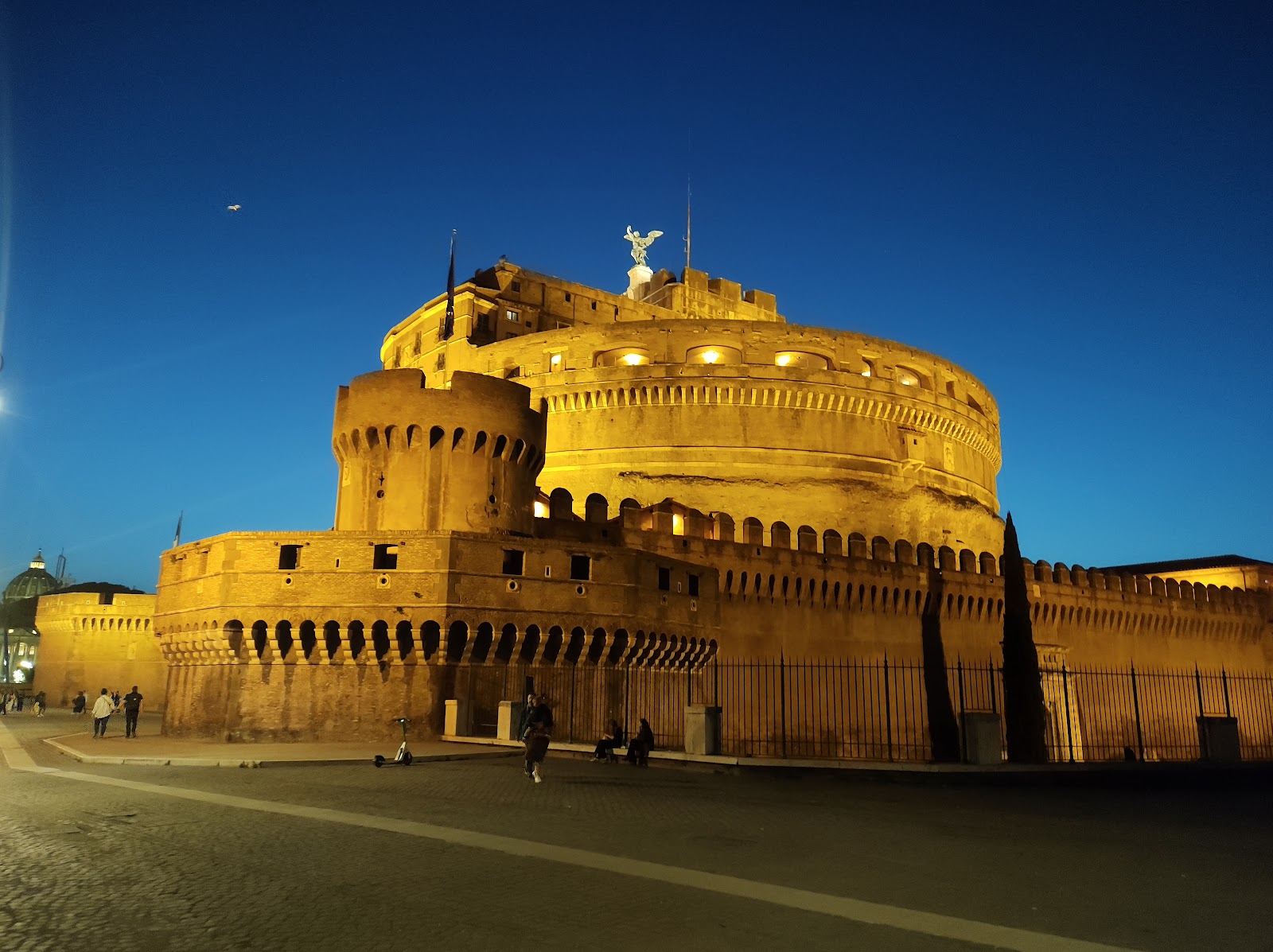
People who return tend to linger in the Papal Apartments, where one lavishly decorated bedroom is attributed to Raphael, and to seek out Raffaello da Montelupo's earlier marble Saint Michael in the open courtyard — quieter and stranger than the bronze version crowning the top. The terrace at closing time, with the Tiber going gold below, is worth timing your visit around.
The story behind Castel Sant'Angelo
Hadrian commissioned architect Demeterianus to design the mausoleum around 123 AD; it was completed by Emperor Antoninus Pius in 139 AD, a year after Hadrian's death. His ashes were interred here alongside those of his wife Sabina and adopted son Lucius Aelius. The last recorded imperial deposition was Caracalla in 217 AD.
The building's second life began in 403 AD when it was absorbed into Rome's Aurelian Walls as a defensive bulwark. In 590 AD, Pope Gregory I saw a vision of the Archangel Michael sheathing his sword above it during a plague, and the name stuck. Ownership passed through the Orsini family before reverting to the Church in 1367. Military architects Niccolò Lamberti and, later, Francesco Laparelli progressively hardened its defences, with Laparelli completing a pentagonal reconfiguration between 1561 and 1565. The castle was decommissioned in 1901 and is now the Museo Nazionale di Castel Sant'Angelo.
Good to know
Entrance is on the Tiber bank at one end of Ponte Sant'Angelo. Open daily 09:00–19:30 (last entry 18:30), closed 1 January and 25 December. Adults pay €15; EU citizens 18–25 pay €2; under-18s enter free. On the first Sunday of the month, admission is free for everyone.
Where is Castel Sant'Angelo?
More tickets & tours for Castel Sant'Angelo
Book directly at the provider
What travellers say about Castel Sant'Angelo
It's not much, but nice to get up top to look out at the views. Nice lil café inside as you walk around with lil tables & chairs dotted here & there. The castle is in a lovely spot by the river with the Bridge of Angels infront & was just up the road from the Airbnb we stayed in. Rome is awesome 👌🏻
Castel Sant'Angelo is a very interesting place to visit, especially if you enjoy history. Originally built as the mausoleum of Emperor Hadrian, it later served as a fortress, a papal residence, and even a prison. Walking through the different rooms and terraces gives you a good understanding of its long history. The views from the top over St. Peter's Basilica, the Tiber River, and the city are beautiful and definitely worth the climb. Overall, it is a worthwhile visit and a nice addition to any trip to Rome.
The Castel Sant'Angelo, located on the banks of the Tiber River in Rome, is a monumental fortress with a history as layered as the city itself. Historical Evolution: Mausoleum: Originally commissioned by the Emperor Hadrian in the 2nd century AD as a grand mausoleum for himself and his family. Fortress & Prison: During the Middle Ages, it was converted into a military fortress by the Popes. Its strategic location and thick walls made it a refuge for Popes during times of danger, most notably during the Sack of Rome in 1527. It also served as a dark and notorious prison for centuries. Museum: Today, it operates as the Museo Nazionale di Castel Sant'Angelo, showcasing collections of weaponry, paintings, and Renaissance artifacts, while also offering insight into the lavish papal apartments. Key Highlights: The Bridge (Ponte Sant'Angelo): The bridge leading to the castle is adorned with stunning angel statues designed by Bernini, making it one of the most picturesque spots in Rome, especially at sunset. The Terrace: The upper terrace provides one of the most spectacular panoramic views of Rome, including the Tiber River, St. Peter's Basilica, and the historic center. Passetto di Borgo: A secret, elevated fortified corridor still exists that connects the castle directly to Vatican City, allowing Popes to escape safely during attacks. Visitor Information: Tickets: It is highly recommended to purchase tickets online in advance to bypass long ticket office queues. Access: The entrance is located at Lungotevere Castello. Tips: It is best visited in the late afternoon to experience the interior while the sun is still up, and then remain on the terrace to watch the city lights come on as evening begins.
After visiting Vatican City, I saw this stunning castle on our way back and decided to take a look. The views from the top overlooking Rome were absolutely amazing! The atmosphere and architecture made the whole experience feel really special. A beautiful spot to explore if you’re nearby🏰
This castle is a beauty! It’s not expensive to enter we had maybe 5 minutes wait in line and walked through the entire castle. Theres some cool stuff in there to read and explore but not as much as other castles I’ve visited. It was rather simple. However there is a small coffee shop at the top with an amazing view of Rome and towards the Vatican that is worth the entry. I would recommend it if even just for the fotos near sunset.
More of Rome
Discover where to stay, what to do and the best deals for your trip.
Explore Rome →More attractions in Rome
All of Rome →
Background adapted from Wikipedia (CC BY-SA) · map data © OpenStreetMap contributors · ratings & place photos via Google · other photos with per-image credit. Ticket links may earn us a commission at no extra cost to you.