
Basilica di Sant'Antonino
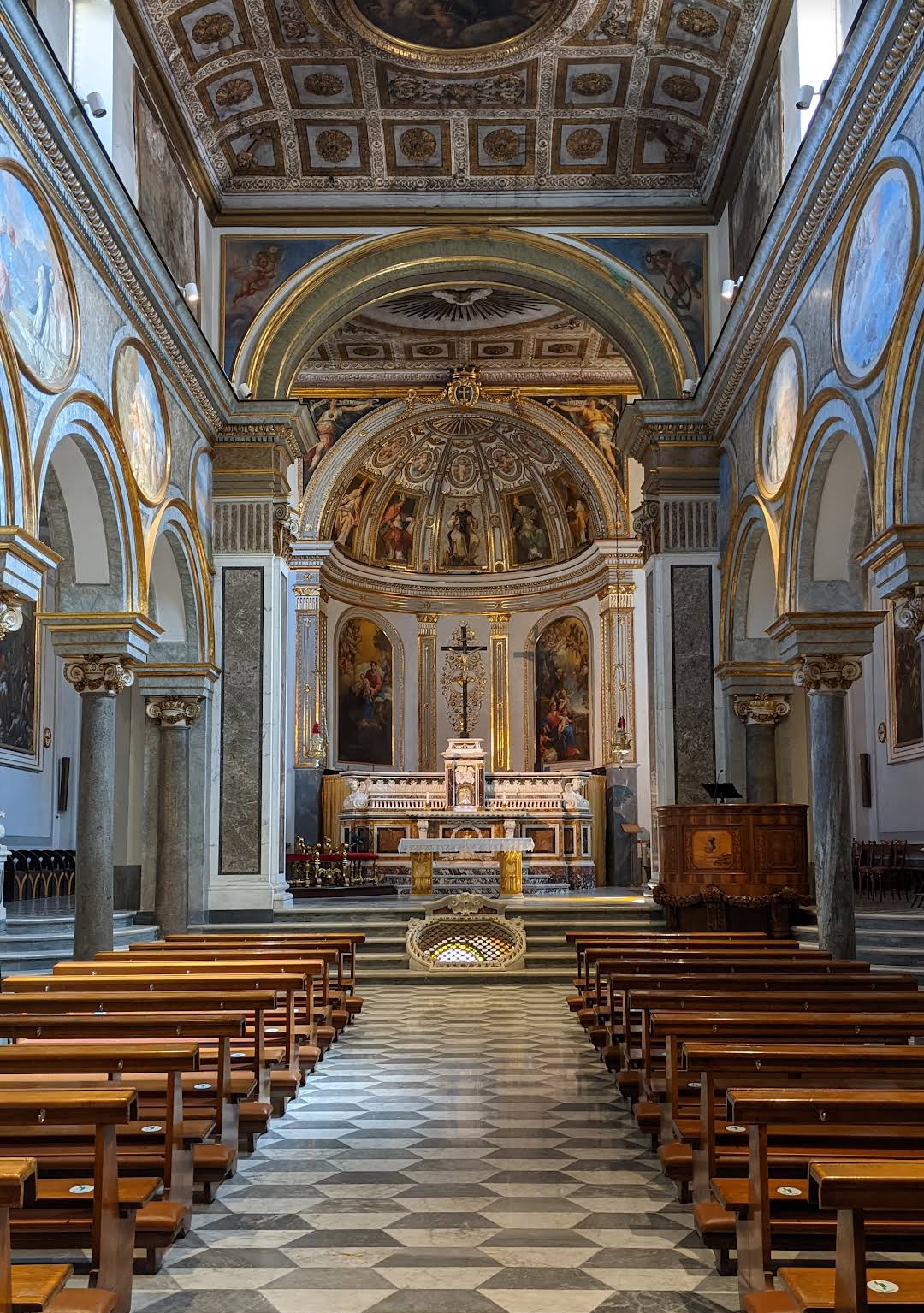
Just off Piazza Tasso, the grey tuff façade of Sant'Antonino's basilica stands quietly among Sorrento's more photogenic distractions. Step inside and the first things you notice are the twelve marble columns — each one a different stone, salvaged from Greek and Roman buildings that once stood in this same town — holding up a nave that has been repaired, sacked, and repaired again across fourteen centuries.
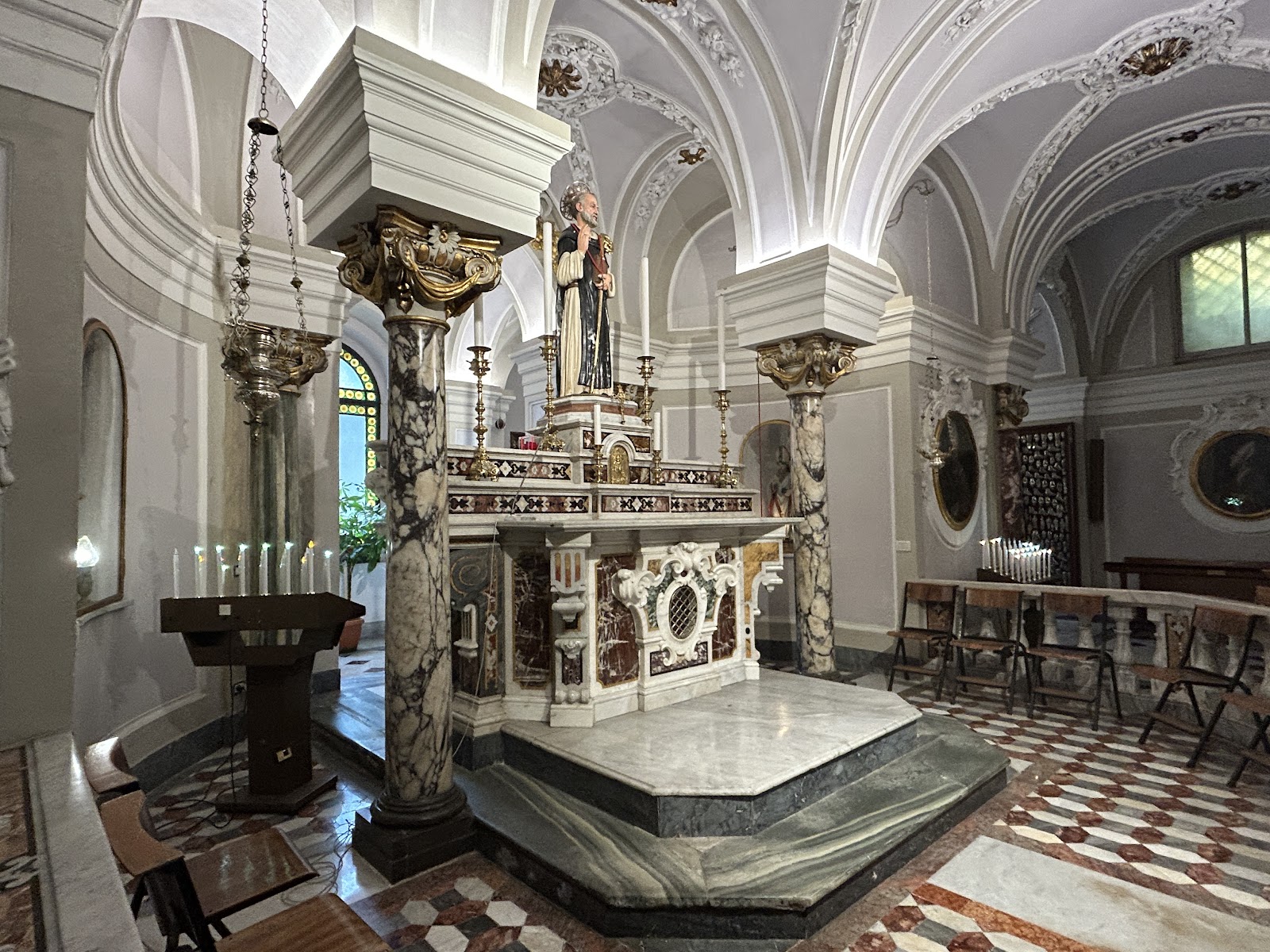
At the main entrance, two whale bones hang as votive offerings, said to mark the miracle of a child pulled from a shark. The crypt below the apse — the succorpo — holds the remains of Sant'Antonino himself, surrounded by accumulated offerings from sailors and townspeople who have been asking him for things since the seventh century.
💛 What travellers fall for
People who come back tend to go straight down to the crypt rather than lingering in the nave. The Carlo Amalfi canvases down there reward a slow look, and the 1753 marble balustrades on the stairway are easy to walk past without registering how fine they are. February 14 — the saint's feast day — brings processions that fill the piazza outside.
The story behind Basilica di Sant'Antonino
A small oratory stood on this site by the ninth century, built over the tomb of Sant'Antonino, a Benedictine monk who died on February 14, 635 AD and became Sorrento's patron. From the eleventh century onward the structure grew into a three-nave church, its columns stripped from older buildings around town. In 1380 a confraternity gathered in the crypt below; by 1558 Saracen raiders had sacked the building entirely.
Restoration followed, and then more restoration, the interior eventually settling into baroque form through the eighteenth century. Frescoes by Pietro Anton Squilles, painted in 1691, were plastered over in 1778. Giambattista Lama's three nave ceiling canvases date from 1734; the silver statue of the saint from 1564 survived it all. Pope Pius XI elevated the church to a Pontifical Basilica in December 1924.
Good to know
Free to enter; modest dress (covered shoulders and knees) is required. Opening hours can vary, so arriving early morning or mid-afternoon is the safer bet. Allow 45–60 minutes. The Circumvesuviana station is a 10-minute walk; Piazza Tasso is two minutes on foot.
Where is Basilica di Sant'Antonino?
More tickets & tours for Basilica di Sant'Antonino
Book directly at the provider
What travellers say about Basilica di Sant'Antonino
Quiet church with old paintings. St Antonio is a patron of sailors, fishermen and travelers. There are nice sea and sailoring themes inside. Don't forget to go downstairs near altar to pay visit to st Antonio himself. Must see if you consider traveller yourself. Free entry.
Worth a visit at least to see all of the silver body part images in the crypt from people grateful for the intercession of the saint to help their recovery, ears, legs, stomachs, digrstive system etc....very odd
Beautiful church dedicated to San Antonino Abate, protector of the town of Sorrento. Don't miss the crypt, made in beautiful coloured marbles.
You can easyly find it, even though it is not looking like a church at all. This is a hundreds of years old church with a Romanesque facade and a large nave, marble columns and frescoes. I recommend to visit it.
A serene place to stop and reflect. Peaceful calm in the midst of the Sorrento hustle and bustle. Beautiful ceiling fresco.
More of Sorrento
Discover where to stay, what to do and the best deals for your trip.
Explore Sorrento →More attractions in Sorrento
All of Sorrento →


Background adapted from Wikipedia (CC BY-SA) · map data © OpenStreetMap contributors · ratings & place photos via Google · other photos with per-image credit. Ticket links may earn us a commission at no extra cost to you.