
Arromanches-les-Bains
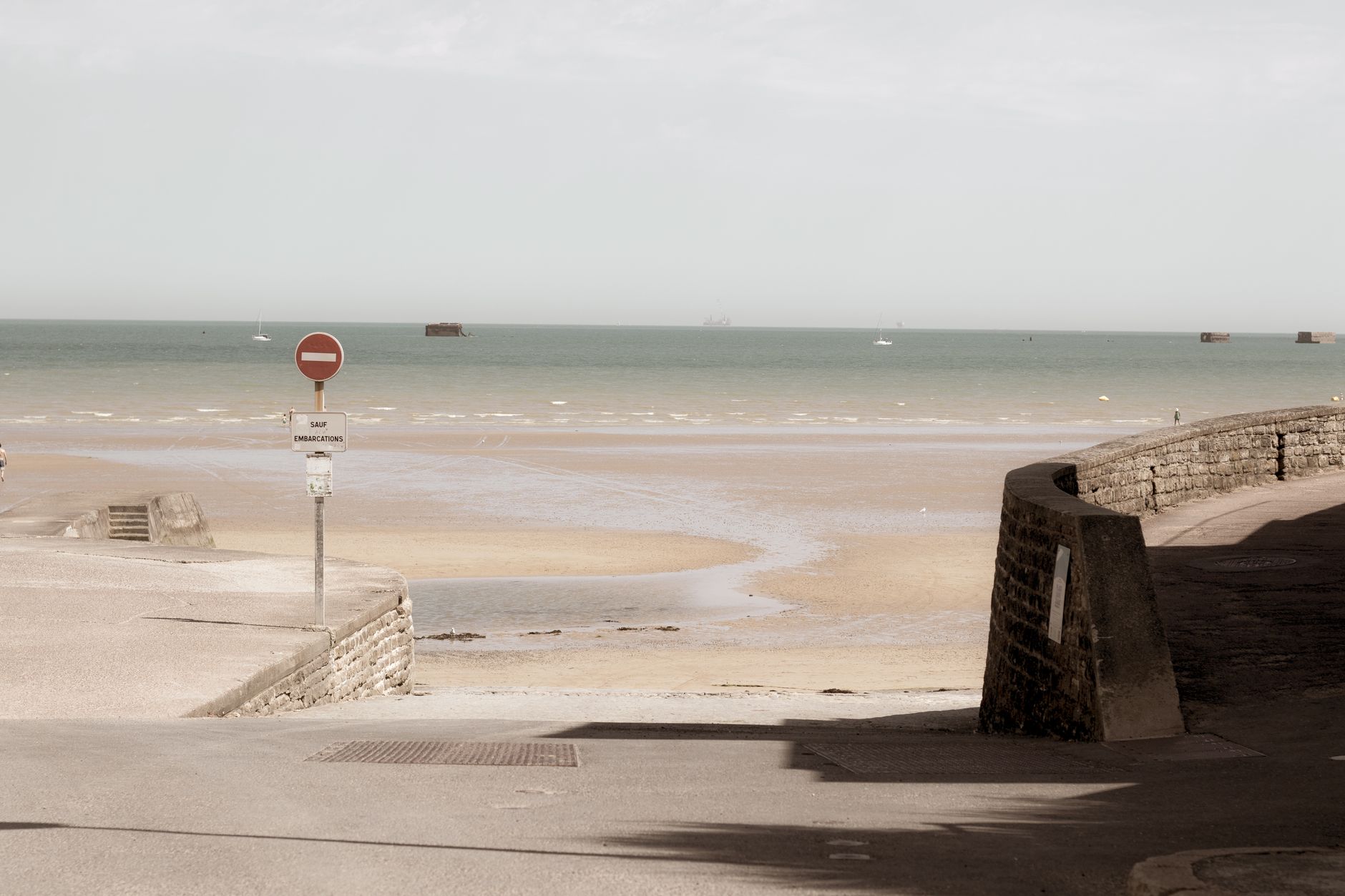
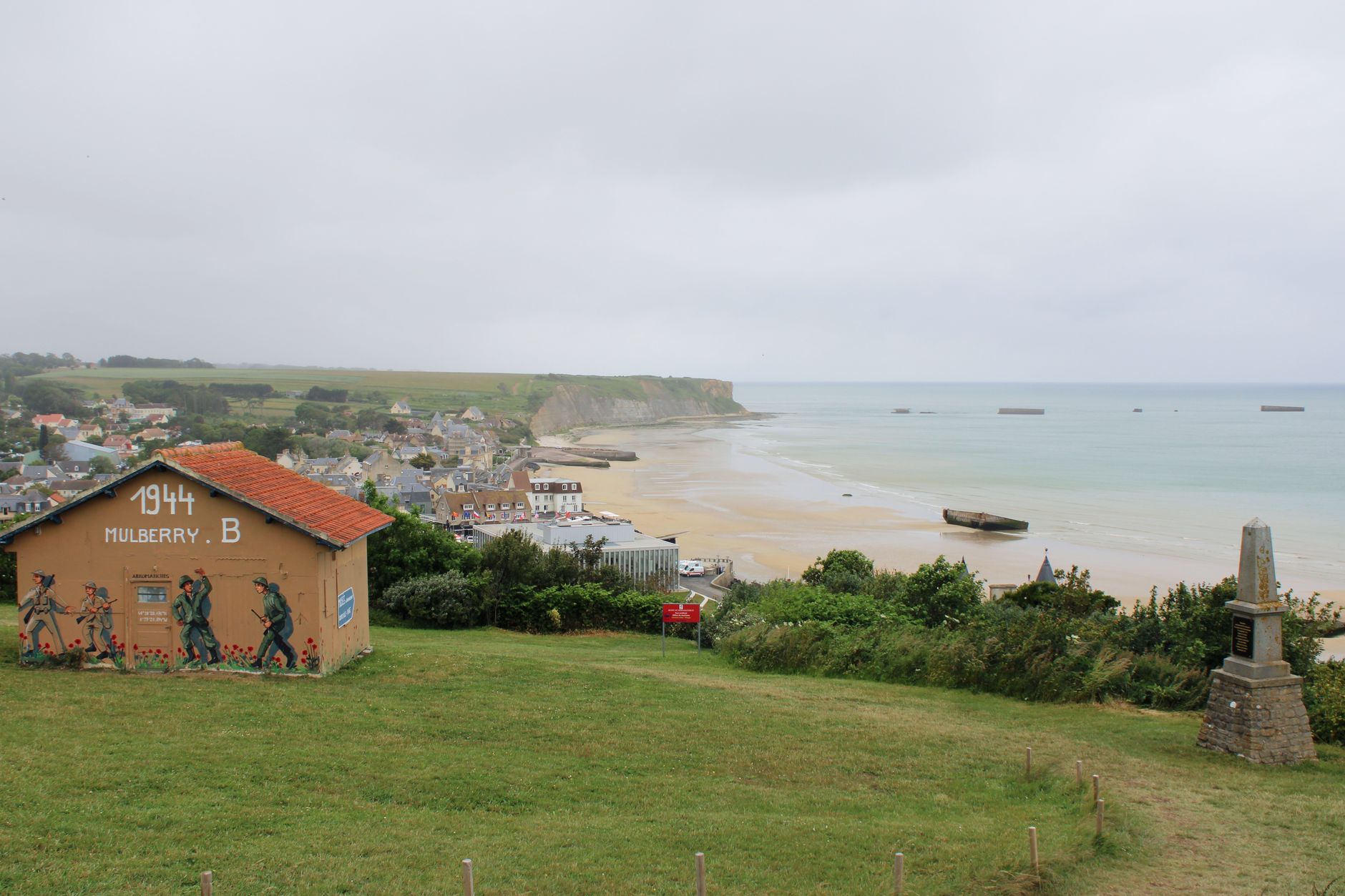
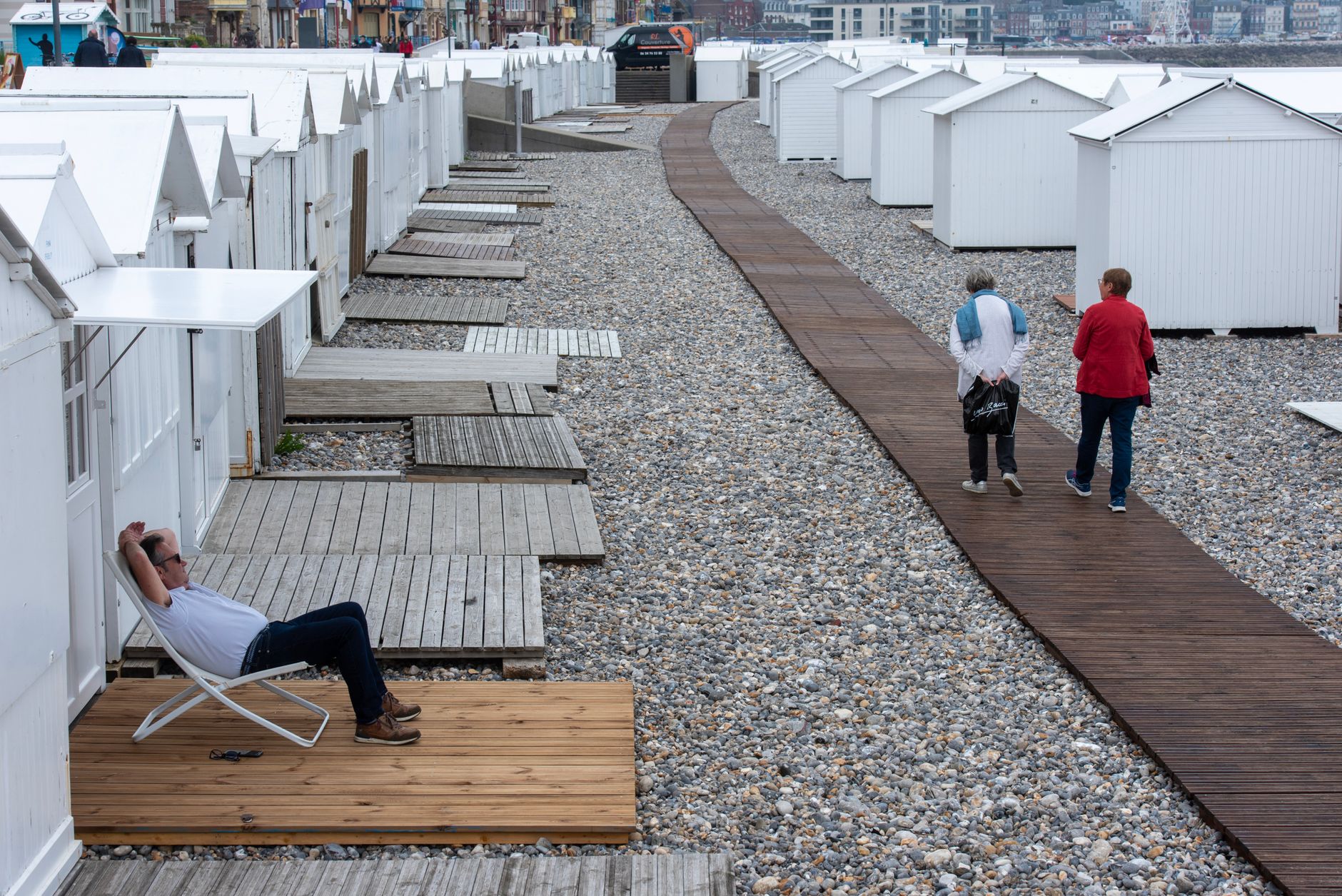
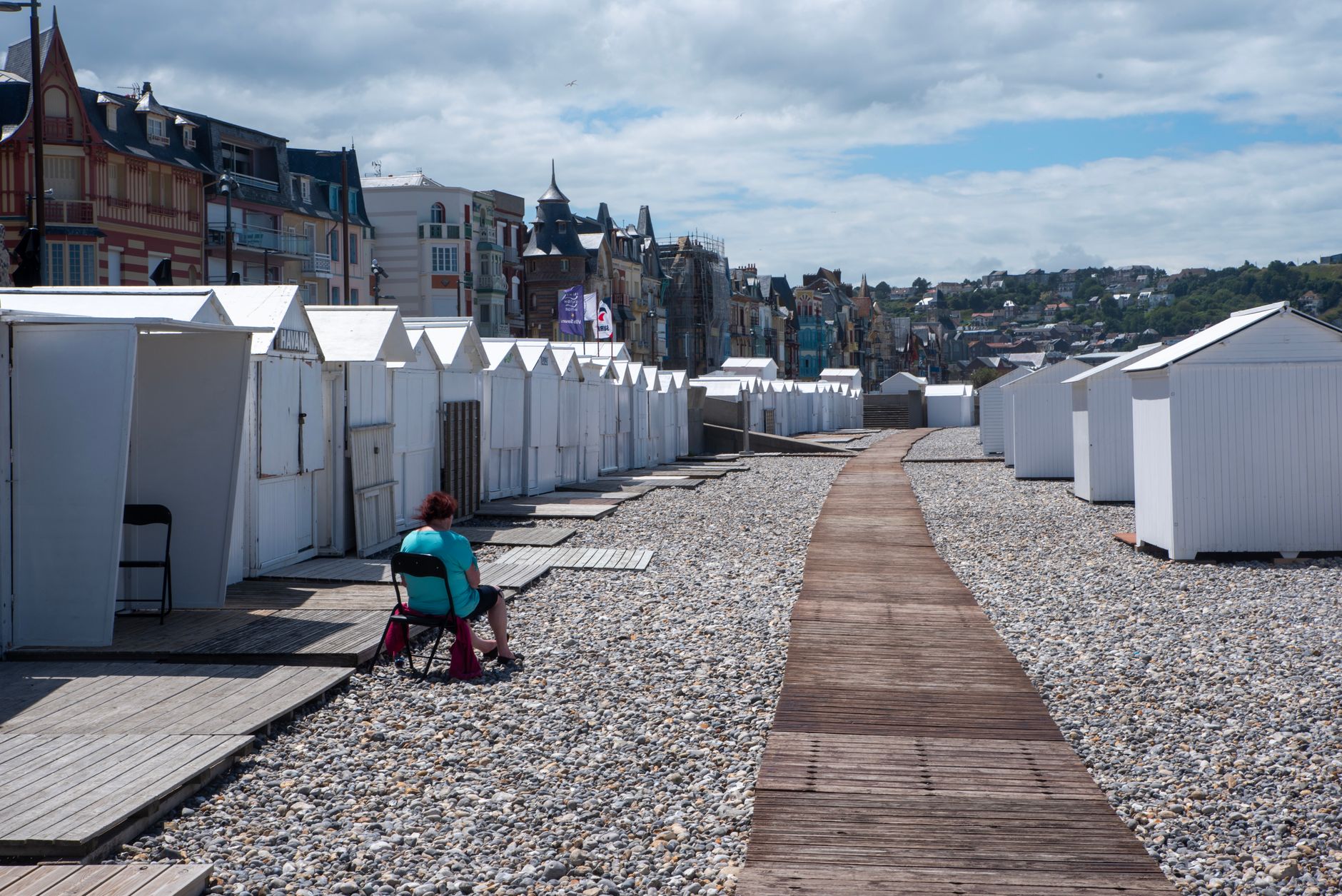
Stand on the seafront at Arromanches and you are looking at one of the more extraordinary feats of improvised engineering in modern history. Concrete caissons the size of apartment blocks still sit in the bay, half-submerged, exactly where they were sunk in June 1944 to form Port Winston — the prefabricated harbour that kept two and a half million men and four million tons of materiel moving ashore.
The town itself is small — barely four hundred people call it home — which means the scale of what happened here hits you differently than at a larger memorial site. There is no city noise to absorb it. Just the beach, the bay, and those unmistakable grey shapes in the water.
💛 What travellers fall for
People who come back tend to do the same thing: walk the promenade at low tide first, when you can get close to the concrete blocks on the sand, then climb the ten-minute path up to the headland for the full arc of the bay. From up there, the geometry of what was built in a matter of days becomes legible in a way it simply isn't from sea level.
Experiences you don't want to miss


Deals in Arromanches-les-Bains
Book directly at the providerHow Arromanches-les-Bains came to be
Arromanches spent most of its existence as a quiet fishing village, with Iron Age roots and a modest second act as a bathing resort once 19th-century sea-cure culture reached the Normandy coast. German forces arrived in June 1940, and the Atlantic Wall was built along the bay that would later work against the occupiers.
On 6 June 1944, the Normandy landings changed the village permanently. The first phoenix caisson was sunk on 8 June; by 15 June, 115 had been positioned in a five-mile arc from Tracy-sur-Mer to Asnelles. The harbour was commissioned on 14 June and operated until November, handling nine thousand tons of materiel per day. Architect and mayor François Carpentier — son of the inventor Jules Carpentier — designed the Musée du Débarquement, inaugurated in 1954, which still anchors the seafront today.
Who and what shaped it
People who shaped it
Landmark buildings
See Arromanches-les-Bains in motion
Plan your visit
On the map
When to go
Arromanches sits on a temperate maritime coast: mild but unpredictable, with sea breezes year-round and the real possibility of rain in any season. Spring and early autumn tend to offer the clearest light for photographing the harbour ruins; July and August are warmer but busier.
Right now
Background & history adapted from Wikipedia (CC BY-SA) · specs from Wikidata (CC0) · weather from Open-Meteo · map data © OpenStreetMap contributors · photos from Wikimedia Commons / Unsplash with per-image credit. No third-party reviews or social posts reproduced.