
Arabba
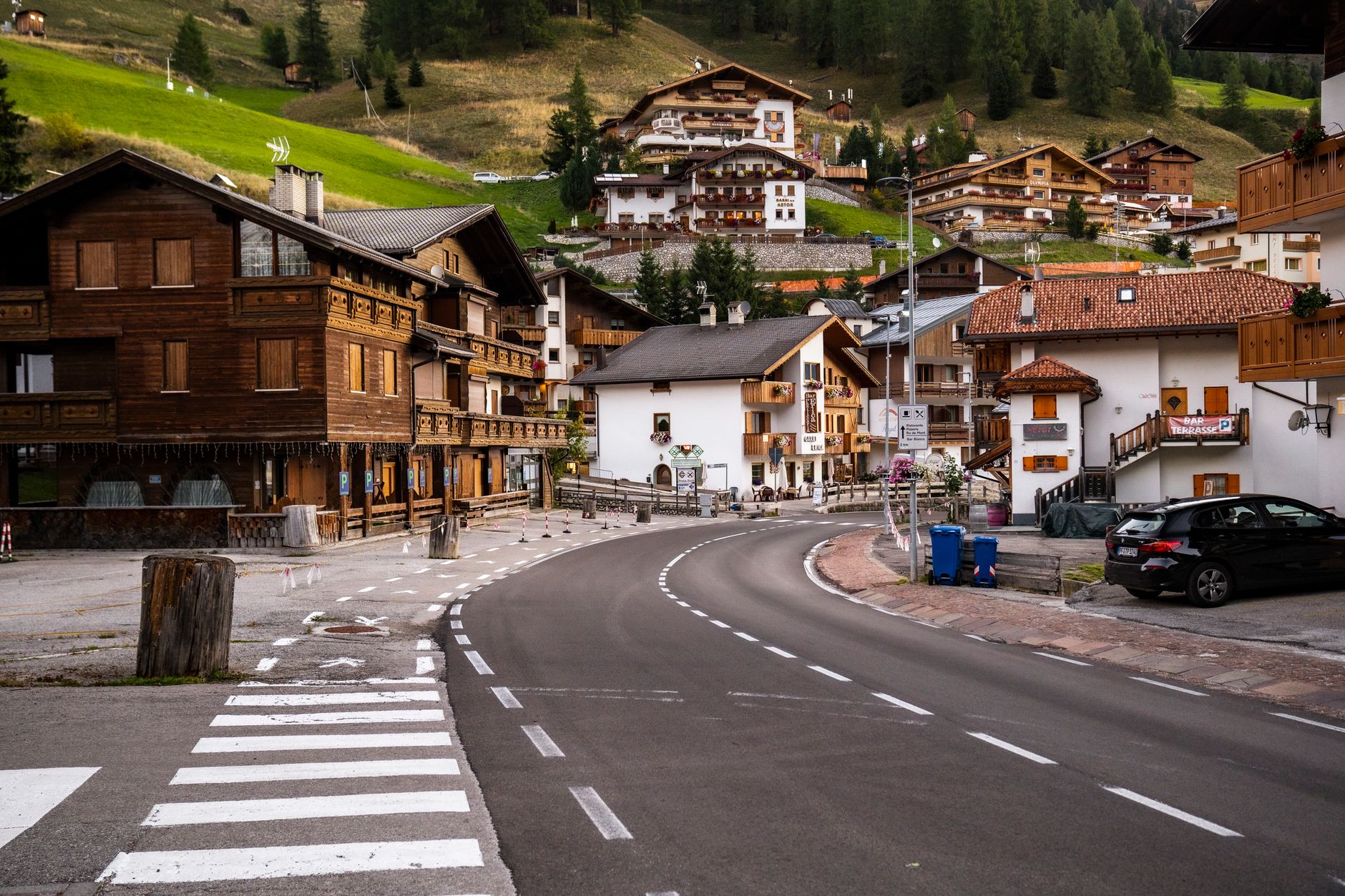
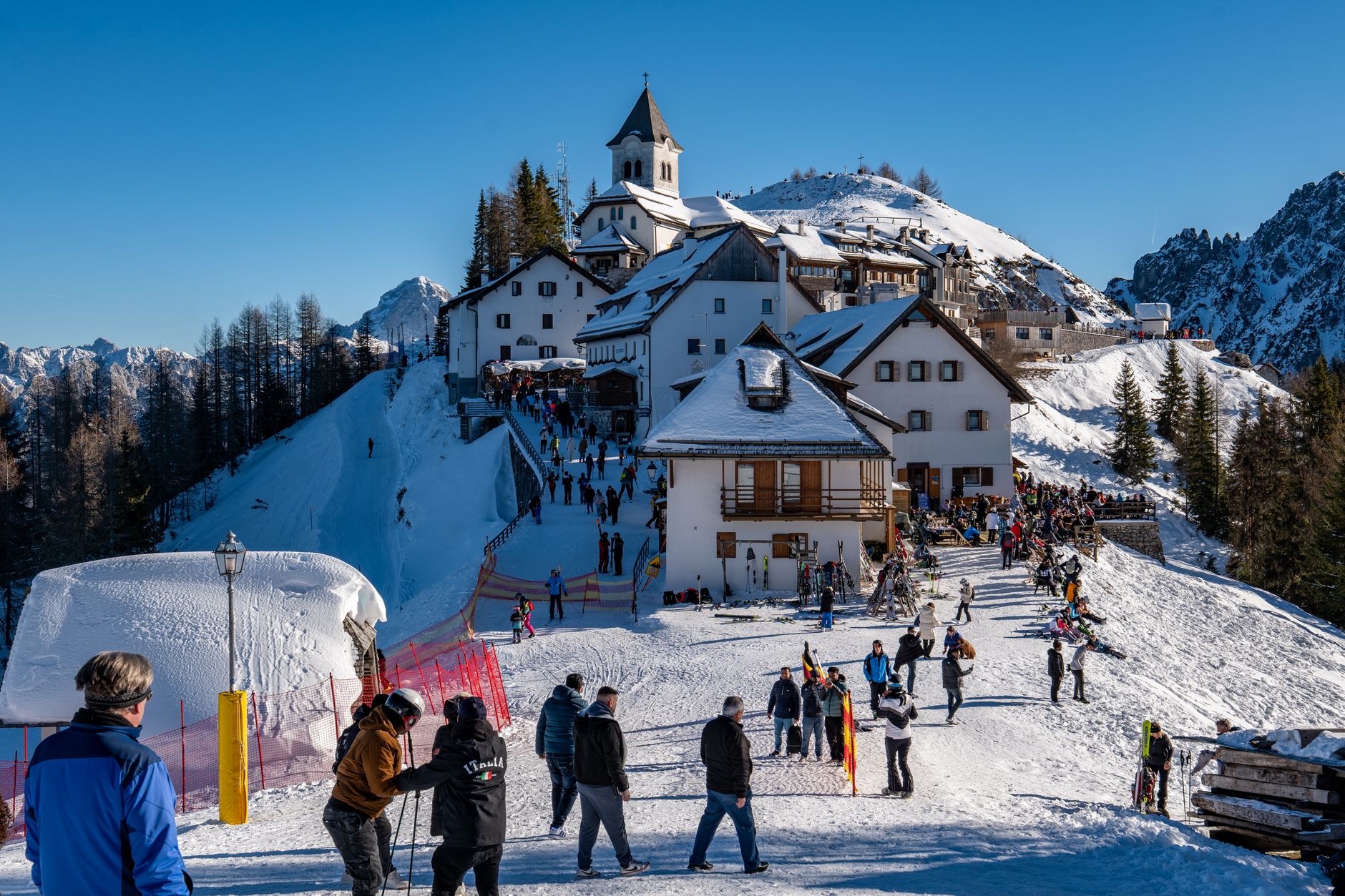
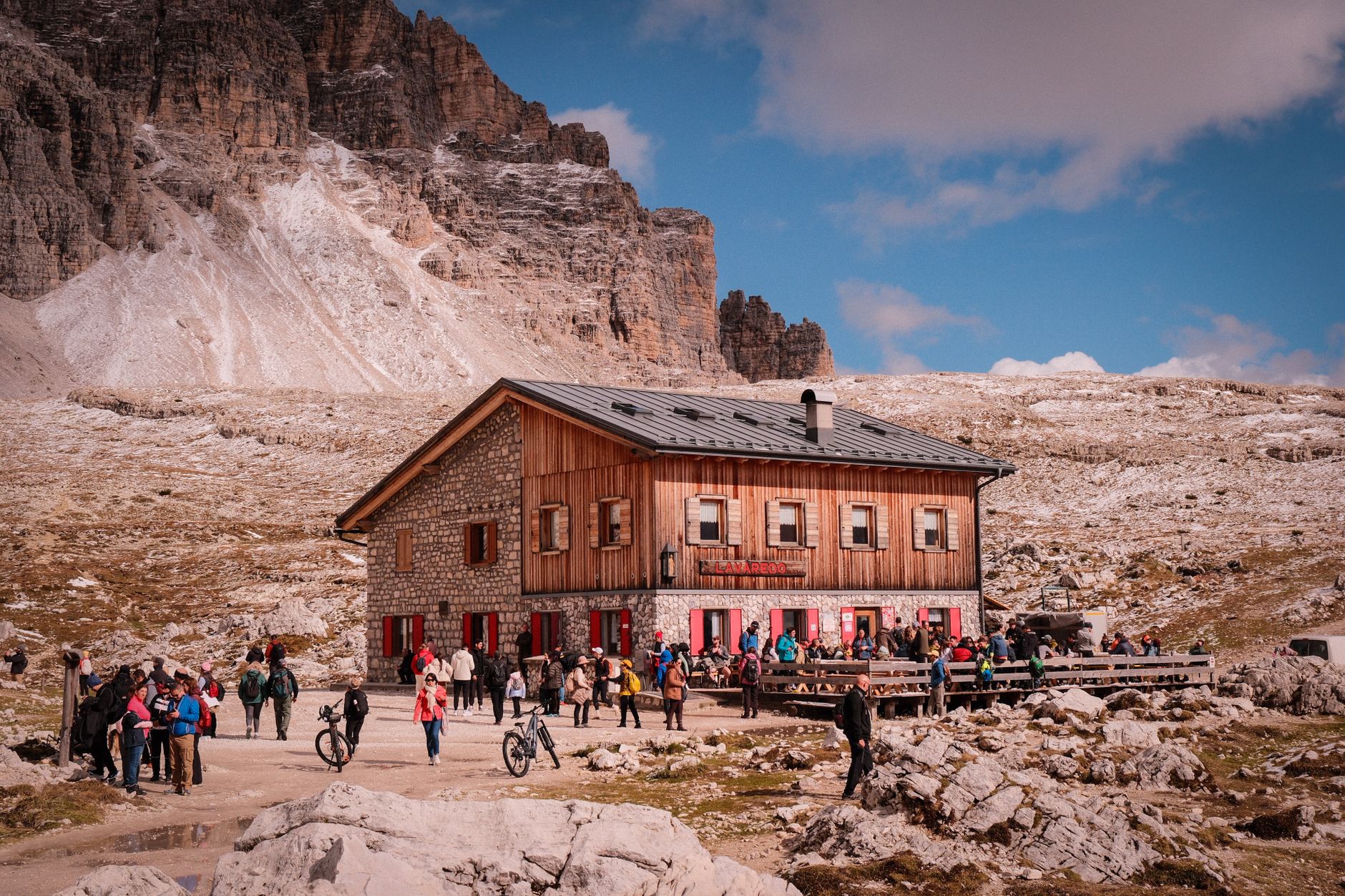
At 1,600 metres, Arabba is a village of 275 people sitting between two high passes — Pordoi and Campolongo — where the road either climbs or descends in every direction. The wooden houses with flower-laden balconies are built in the Ladin style, and the language you hear in the street is Ladin too, not Italian, not German. The name itself may derive from a dialect word for avalanche or landslide, which tells you something about the conditions that shaped this place.
In winter, Arabba is the eastern anchor of the Sellaronda, a 500-kilometre loop of connected slopes threading through the Badia, Gardena and Fassa valleys. Sixty kilometres of pisted terrain fan out from 28 lifts, weighted toward intermediate runs. In summer, the passes open and the same landscape that skiers read as vertical becomes something quieter, crossed on foot.
💛 What travellers fall for
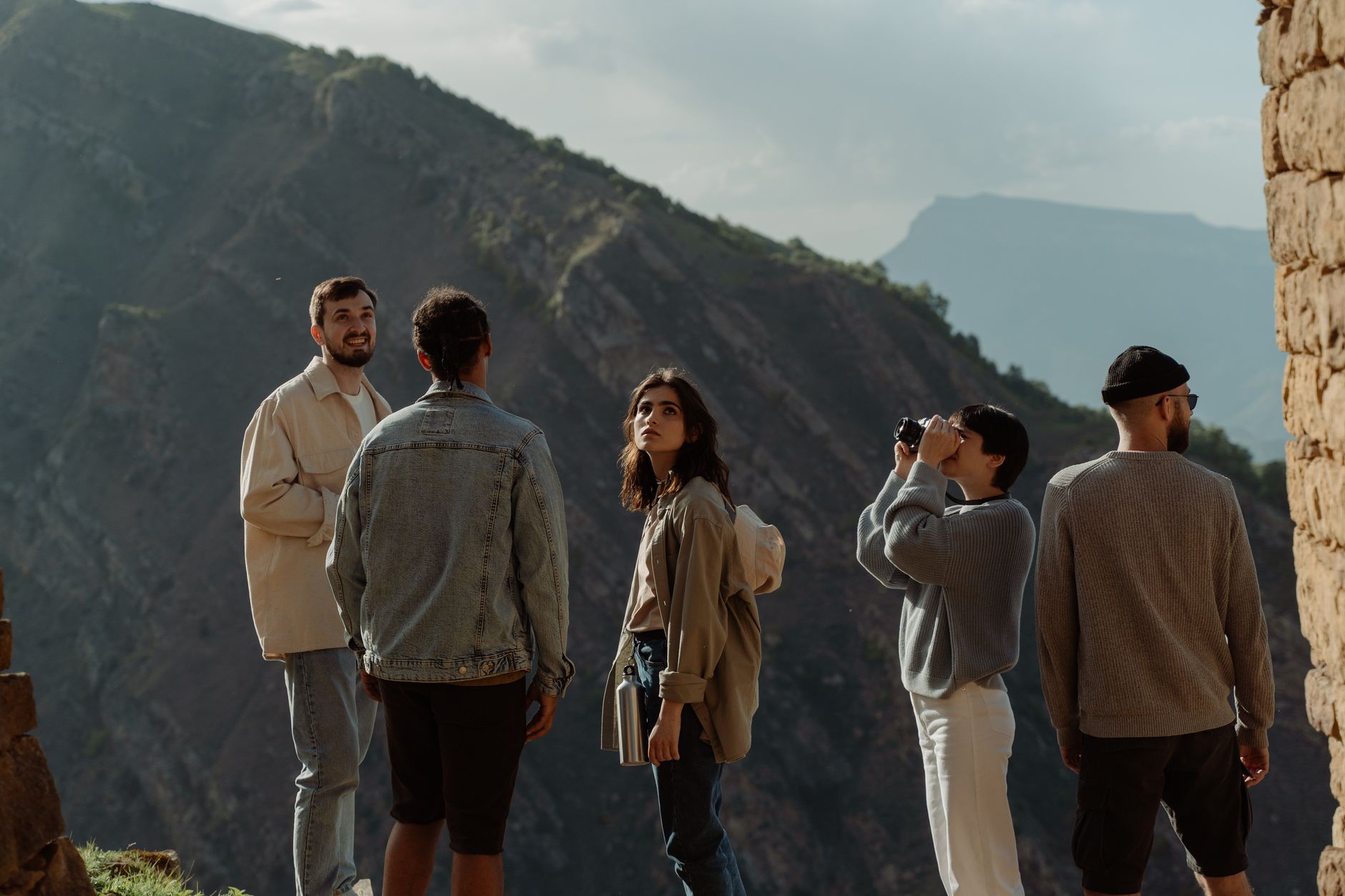
People who come back tend to time their arrival for early December or late March, when the lifts run but the village is half-empty. The Sacrary at Pian di Salesei — 4,700 unknown soldiers beneath one roof — is worth the detour on a non-ski afternoon. And Andraz Castle, a short drive into the Fodom Valley, earns more attention than most visitors give it.
Experiences you don't want to miss


Deals in Arabba
Book directly at the provider
How Arabba came to be
For most of its existence, the land around Arabba was summer pasture — avalanche risk and deep winter snow made permanent settlement impractical. The local church of Saints Peter and Paul went up only in the late 1600s, and the village as a fixed community is younger still. Andraz Castle, a kilometre or so away in the Fodom Valley, is a different order of old: a military fortress built around the year 1000 to guard the southern edge of Tyrol. From 1416, the Prince Bishop of Brixen controlled the iron-mining operations it oversaw. Niccolò Cusano — theologian, mathematician, philosopher — lived there before his death in 1464.
The First World War tore through this valley. When Italy entered the war in 1915, Arabba sat on the front line. On the night of 17 April 1916, Italian sappers detonated five tons of dynamite beneath enemy positions on Col di Lana. The bell tower of Saints Peter and Paul survived intact. The Sacrary at Pian di Salesei, built in 1938, holds the remains of nearly 5,400 soldiers, the majority unidentified. A further 454 from the Second World War lie at the ossuary on Passo Pordoi, completed in 1956.
Who and what shaped it
People who shaped it
Landmark buildings
See Arabba in motion
Plan your visit
On the map
When to go
Winter days hover just below freezing, with January nights dropping to around -10°C and roughly two weeks of snowfall that month. Summer is mild at altitude — July peaks near 20°C — though May through August brings the bulk of the year's substantial rainfall, with June particularly wet.
Right now
Background & history adapted from Wikipedia (CC BY-SA) · specs from Wikidata (CC0) · weather from Open-Meteo · map data © OpenStreetMap contributors · photos from Wikimedia Commons / Unsplash with per-image credit. No third-party reviews or social posts reproduced.