Arena di Verona
One of the world's best-preserved Roman amphitheatres, the Arena di Verona has been packing in crowds for nearly 2,000 years — tonight's audience just happens to be here for Aida rather than gladiators. Its pink-and-white limestone tiers seat 15,000 people under an open Veneto sky, and even an empty daytime visit sends a shiver down the spine.

Daylight hours: walking the ancient tiers
Step inside on a weekday morning and you'll often have the cavea almost to yourself. Climb to the uppermost rows for a sweeping panorama over Verona's terracotta rooftops and the distant Lessini hills — a view that hasn't changed dramatically since the 1st century AD.
The elliptical floor where the stage is erected each summer is vast enough to swallow a city block. Look closely at the stonework and you'll spot repairs spanning Roman, medieval and Renaissance hands, each era leaving its own textural signature in the masonry.

Opera season: summer nights in the Arena
Every July and August the Arena becomes Europe's most atmospheric opera house. The Fondazione Arena di Verona mounts full-scale productions of Verdi, Puccini and Bizet with casts of hundreds, live horses and sets that dwarf most permanent opera houses.
Tradition demands you buy a small wax candle at the gate. When the lights go down, 15,000 flames are lit simultaneously — a ritual that turns the amphitheatre into a flickering, golden bowl and reduces first-timers to speechlessness.
Book tickets at least two months ahead for opening night in late June; the cheapest unnumbered stone-tier seats (the gradinata) are perfectly fine and authentically Roman in their discomfort — bring a cushion and a light jacket.
Getting the most from your visit
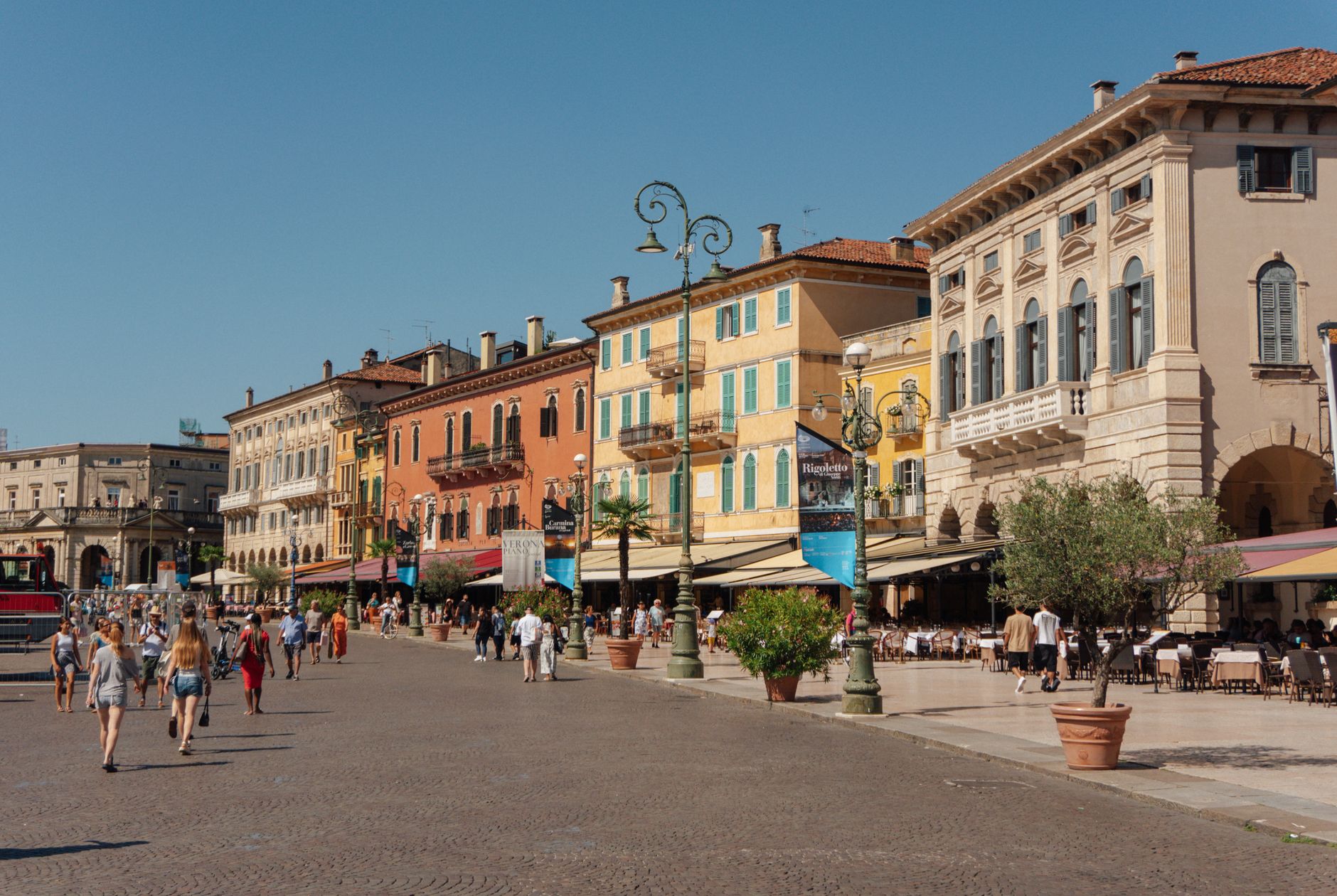
The Arena sits on Piazza Bra, Verona's grandest square, edged by the long café-lined promenade called the Liston. Arrive early and grab a table at one of the historic caffès for a Campari spritz before curtain-up — this is a deeply local ritual.
Combine your visit with the small but excellent Museo Lapidario Maffeiano next door, which houses one of Italy's oldest public collections of ancient inscriptions and sculpture, founded in 1714.
More of Verona
Discover where to stay, what to do and the best deals for your trip.
Explore Verona →