
Roman Aqueduct of Segovia
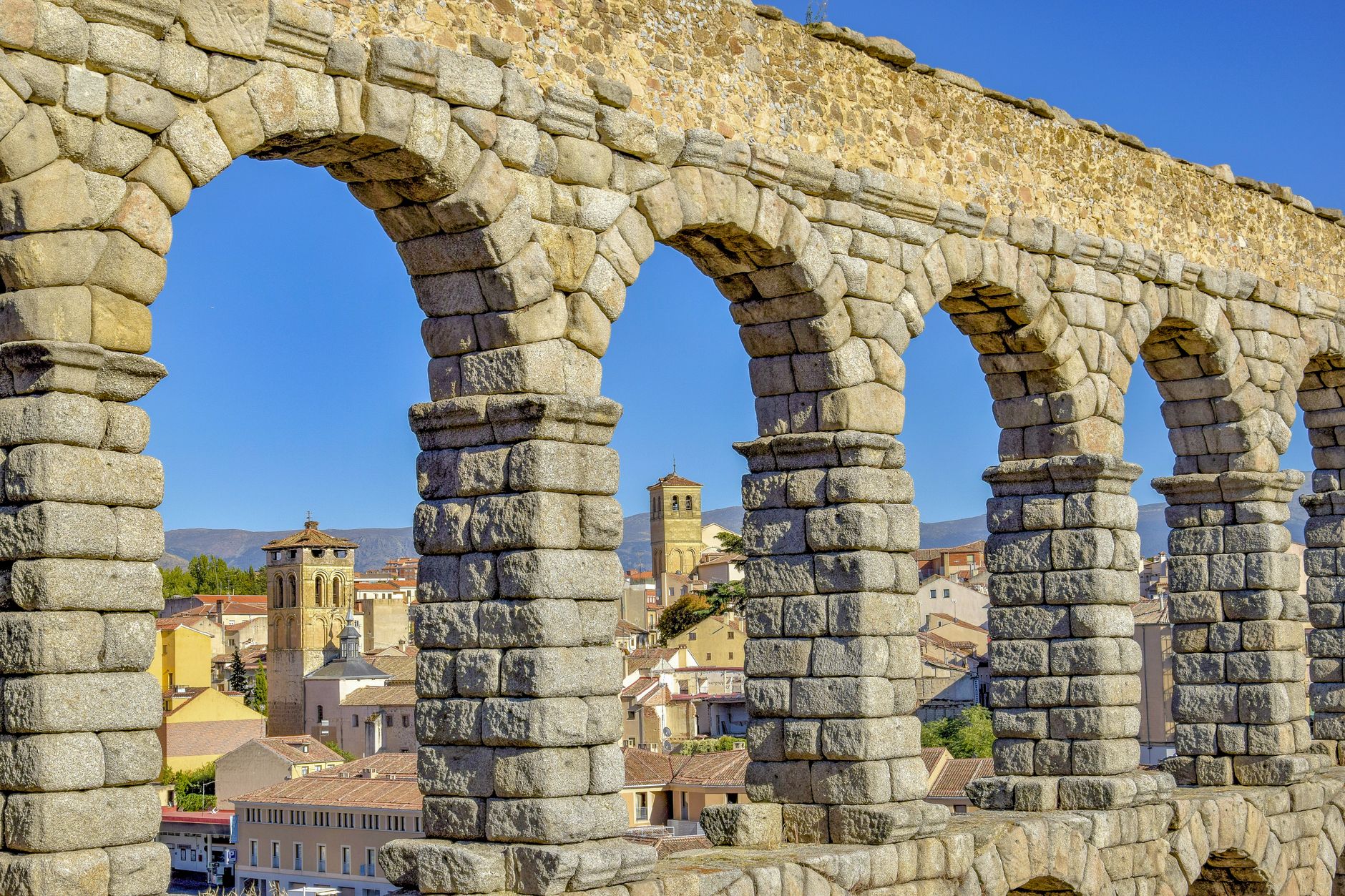
Standing without a drop of mortar for nearly two thousand years, Segovia's aqueduct marches 728 metres across the old city on 167 granite arches — and it still carried water until the 19th century. Arriving at Plaza del Azoguejo and looking up at those double-tiered arches against a blue Castilian sky is one of the most jaw-dropping moments in all of Spain.

Engineering wonder you can walk beside
The aqueduct was built under the Emperor Trajan or Domitian around 50–100 AD, ferrying snowmelt from the Río Frío in the Sierra de Guadarrama some 17 km away. Its tallest point, at Plaza del Azoguejo, reaches 28.5 metres — roughly nine storeys — and every stone was laid dry, held in place purely by precision and gravity.
A staircase beside the plaza lets you climb to a walkway level with the upper tier, where you can peer along the spine of the arches and watch the city spread out below. Come at dusk when the granite turns amber and the tourist crowds thin out.

The neighbourhood around the base
Plaza del Azoguejo itself is a lively square ringed with cafés and souvenir shops, but step one block in any direction and you're in the working-class Barrio de San Millán, where locals eat lunch at no-frills mesones that haven't changed their menus in decades.
Look for the small niche on the aqueduct's highest arch where a statue of the Virgin of Fuencisla now sits — legend says the Devil built the whole structure in a single night and the Virgin cheated him out of his payment at dawn.
More of Segovia
Discover where to stay, what to do and the best deals for your trip.
Explore Segovia →


