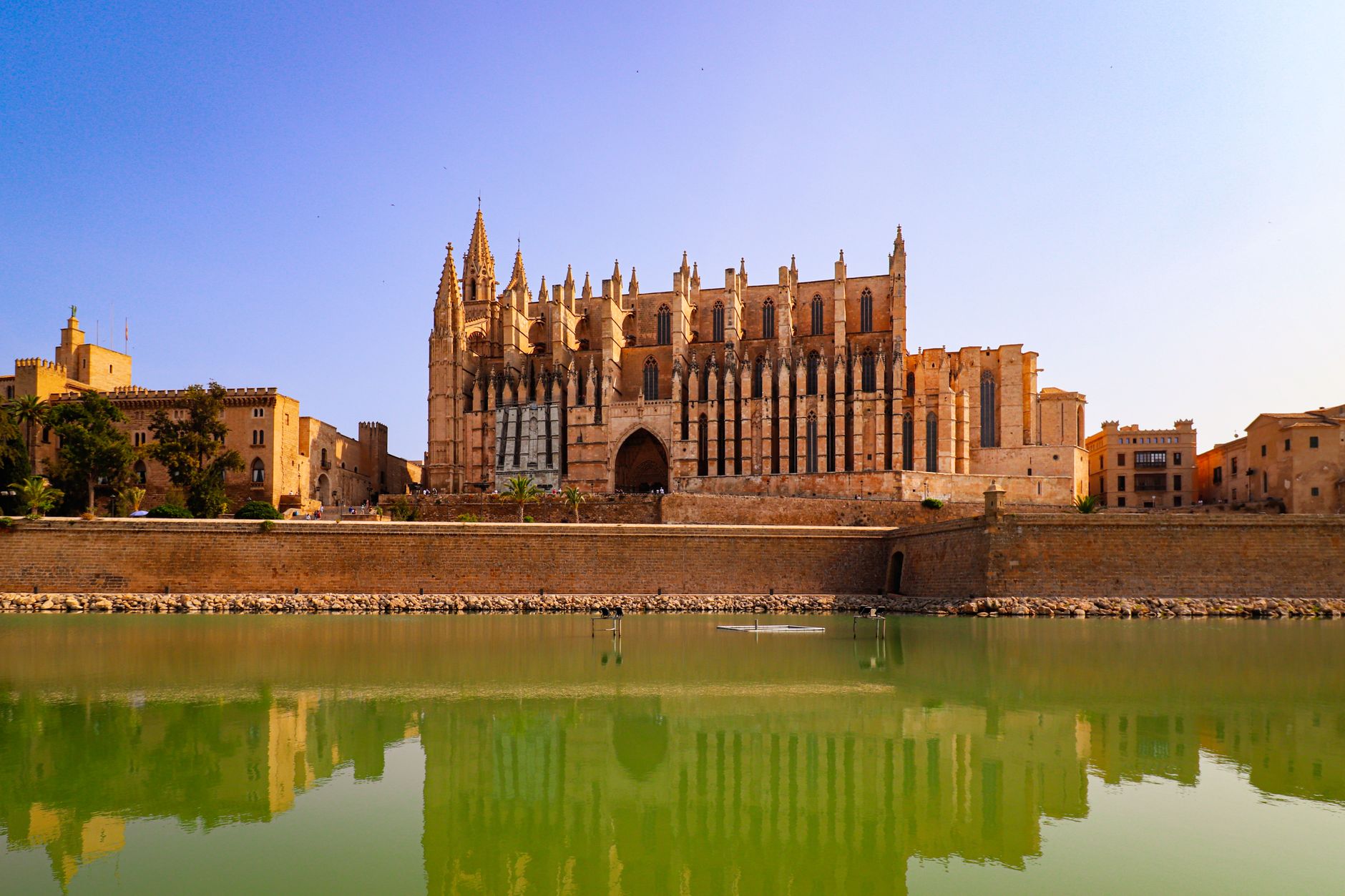
Sa Calatrava & El Call
Tucked behind the cathedral, the interlocking barrios of Sa Calatrava and El Call form the oldest continuously inhabited quarter of Palma — a labyrinth of Arab-era alleys, Renaissance mansions with soaring patios, and the remnants of the city's once-thriving Jewish community.

Layers of civilisation underfoot
El Call was Palma's Jewish quarter from the 11th century until the forced conversions and expulsions of the late 15th century. The street name Carrer de la Bosseria, the old merchants' lane, and the tiny Carrer dels Jueus (Street of the Jews) are among the few physical traces that remain. The Can Oleo mansion at Carrer de l'Almudaina 4 has a magnificent Renaissance patio that you can peer into through its street-level gate.
Sa Calatrava descends steeply to the sea wall and retains a quieter, more residential feel than the tourist-heavy streets around the Born. Arab-era irrigation channels — the qanat system — still run beneath several streets here, occasionally visible through grated openings in the pavement.
What to do and where to eat
The neighbourhood's anchor cultural institution is the Museu de Mallorca on Carrer de la Portella, housed in a 17th-century palace and holding an extraordinary collection of Talayotic bronzes, Moorish ceramics and Gothic altarpieces — all for €2.40 entry.
For food, Calatrava locals favour Bar Flexas on Carrer de Can Sanglada for a late-morning coffee and an ensaïmada fresh from the oven. In the evening, the small natural-wine bar Vino + on Carrer de Sant Joan draws a young Mallorcan crowd and pours excellent local Pla i Llevant reds.
More of Palma de Mallorca
Discover where to stay, what to do and the best deals for your trip.
Explore Palma de Mallorca →