Muelle del Tinto & Barrio Reina Victoria
Few visitors connect Huelva with Victorian England, but the Rio Tinto Mining Company left behind two extraordinary relics: a crumbling iron ore pier that stretches 1,000 metres into the estuary, and an entire garden suburb of British bungalows built for company managers that still stands, eerily intact, on the edge of the city.
The Muelle del Tinto
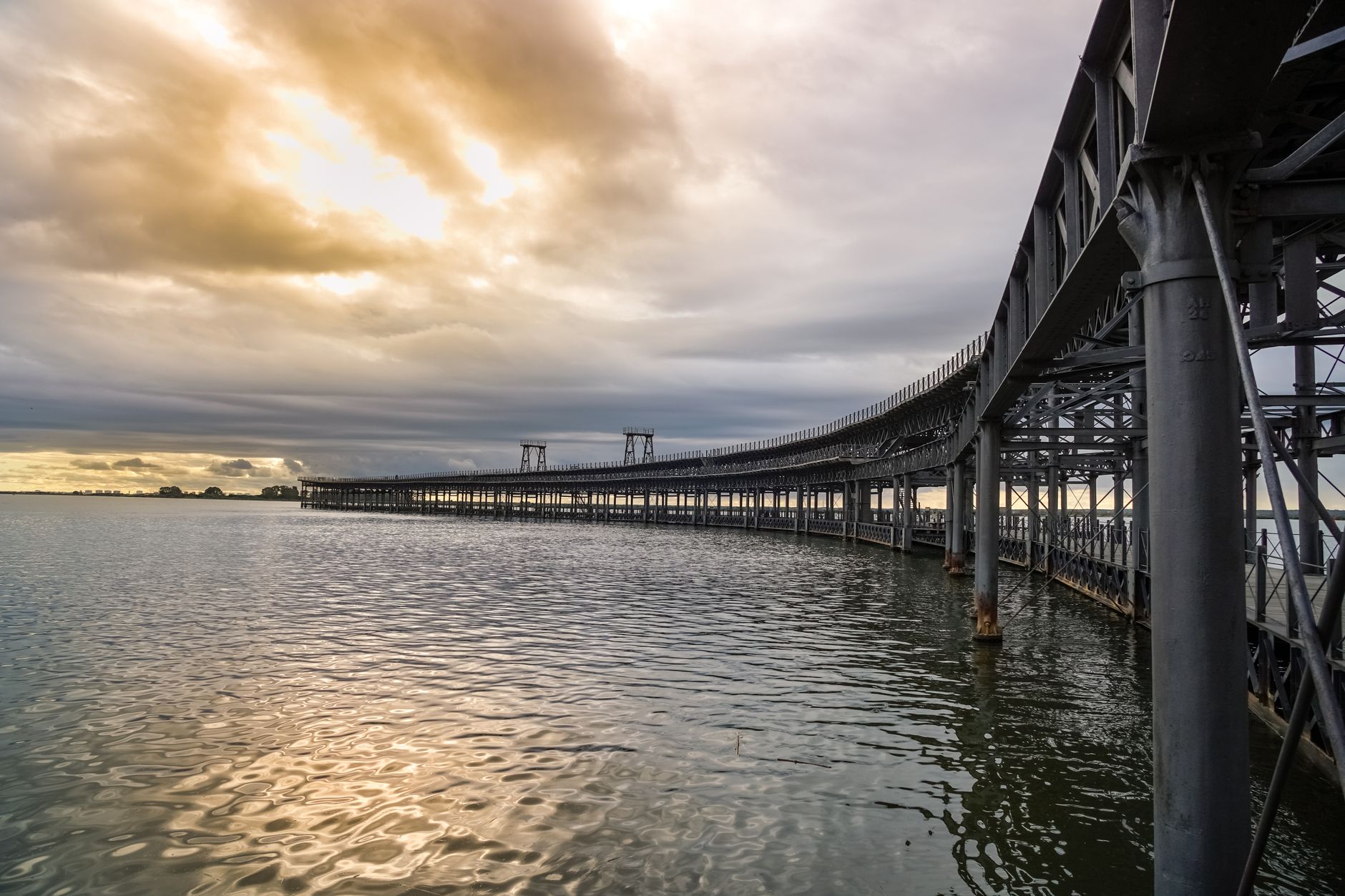
Designed by British engineer George Barclay Bruce and completed in 1874, the Muelle del Tinto (Tinto Wharf) was once the longest iron pier in the world, used to load copper ore from the Rio Tinto mines directly onto ships. Today it is a partial ruin — sections have collapsed into the water — but the surviving ironwork rising from the tidal estuary is one of the most photogenic industrial landscapes in Andalusia.
The pier is not accessible for walking (it is fenced off for safety), but the view from the Paseo de la Ría esplanade is dramatic at any light. At low tide, the exposed ironwork and the reflections in the shallow water make it particularly striking. Sunrise and sunset are the best times.
Barrio Reina Victoria
A 10-minute walk from the pier, the Barrio Reina Victoria is a complete Edwardian garden suburb — semi-detached bungalows with pitched roofs, front gardens and brick detailing that would not look out of place in Surrey, except that bougainvillea spills over every fence and the street names are in Spanish.
Built between 1917 and 1930 to house British Rio Tinto Company employees and their families, the neighbourhood is still residential and perfectly preserved. Walk Avenida de Guatemala and Calle Dinamarca to see the best examples. There is no entry fee, no visitor centre — just a quiet, surreal stroll through a colonial time capsule in the Andalusian sunshine.
More of Huelva
Discover where to stay, what to do and the best deals for your trip.
Explore Huelva →