
Wat Phra That Doi Suthep
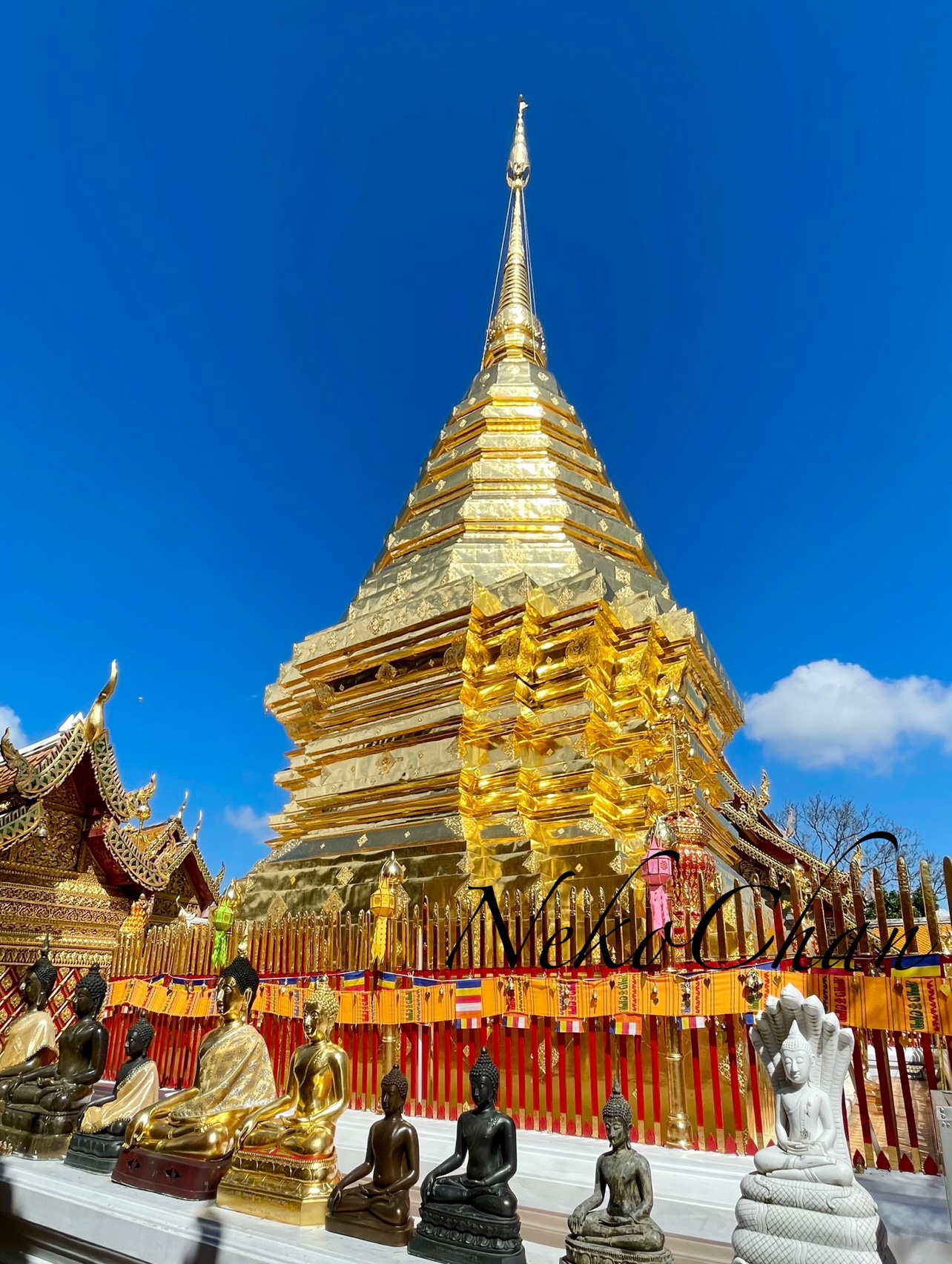
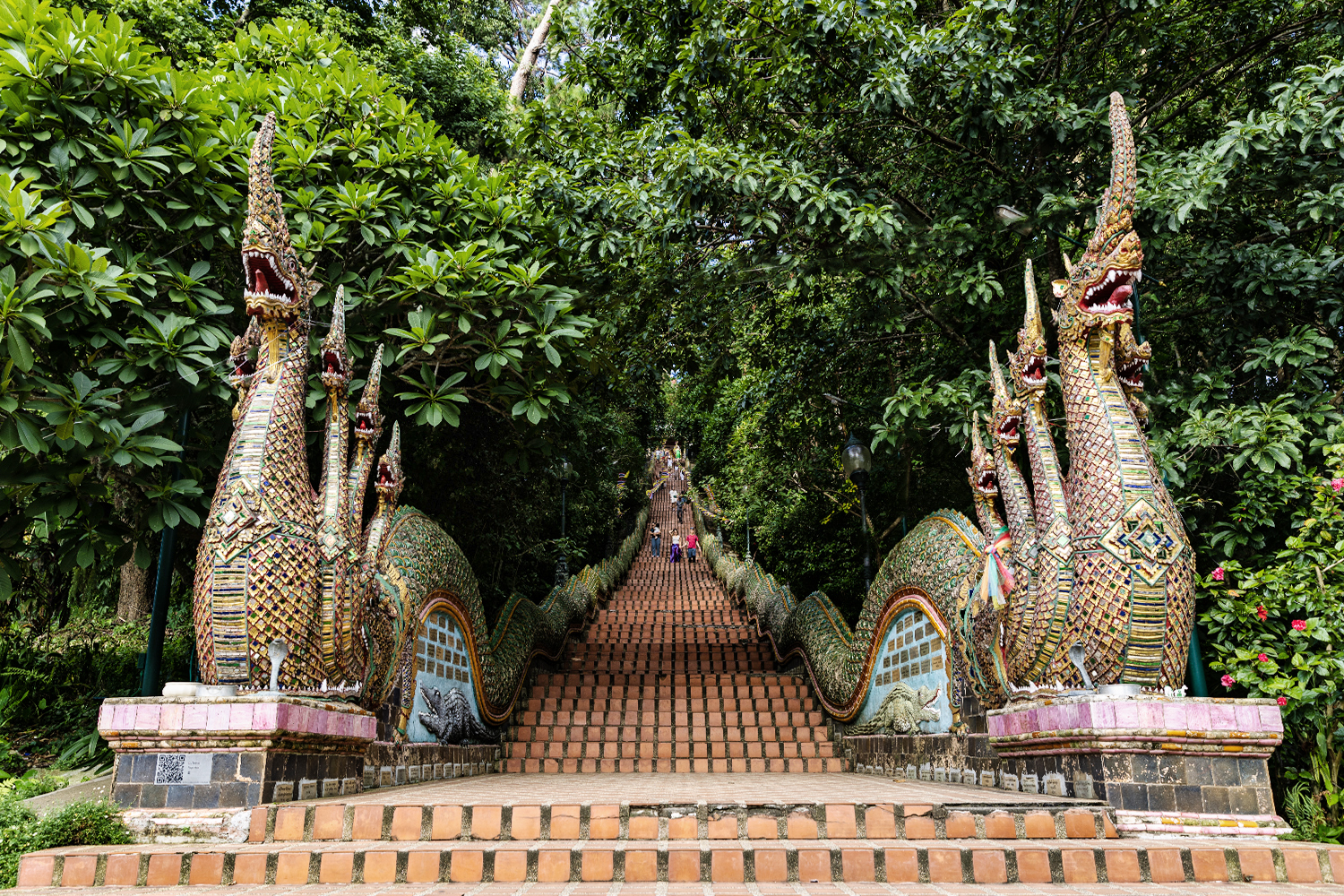
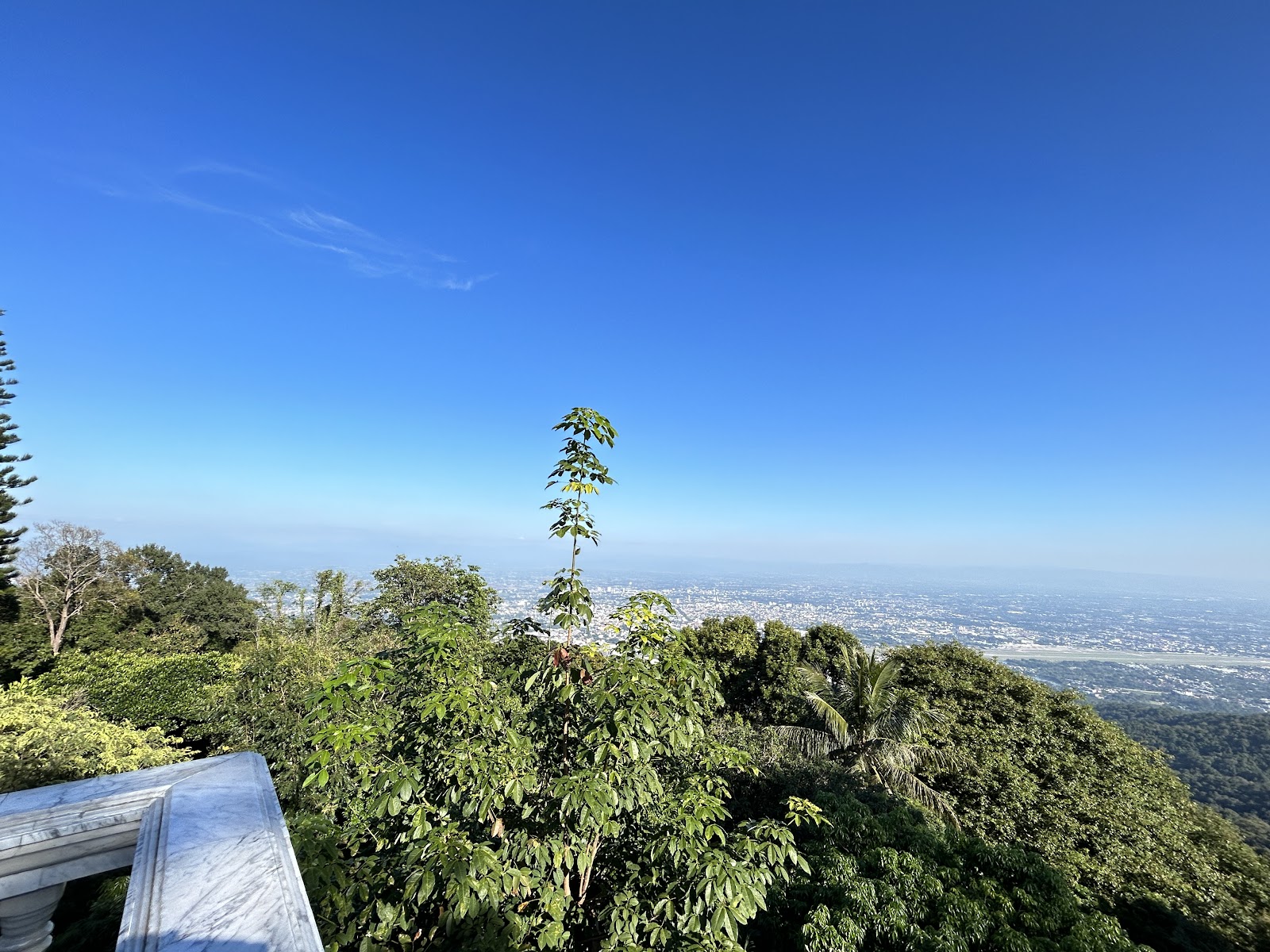
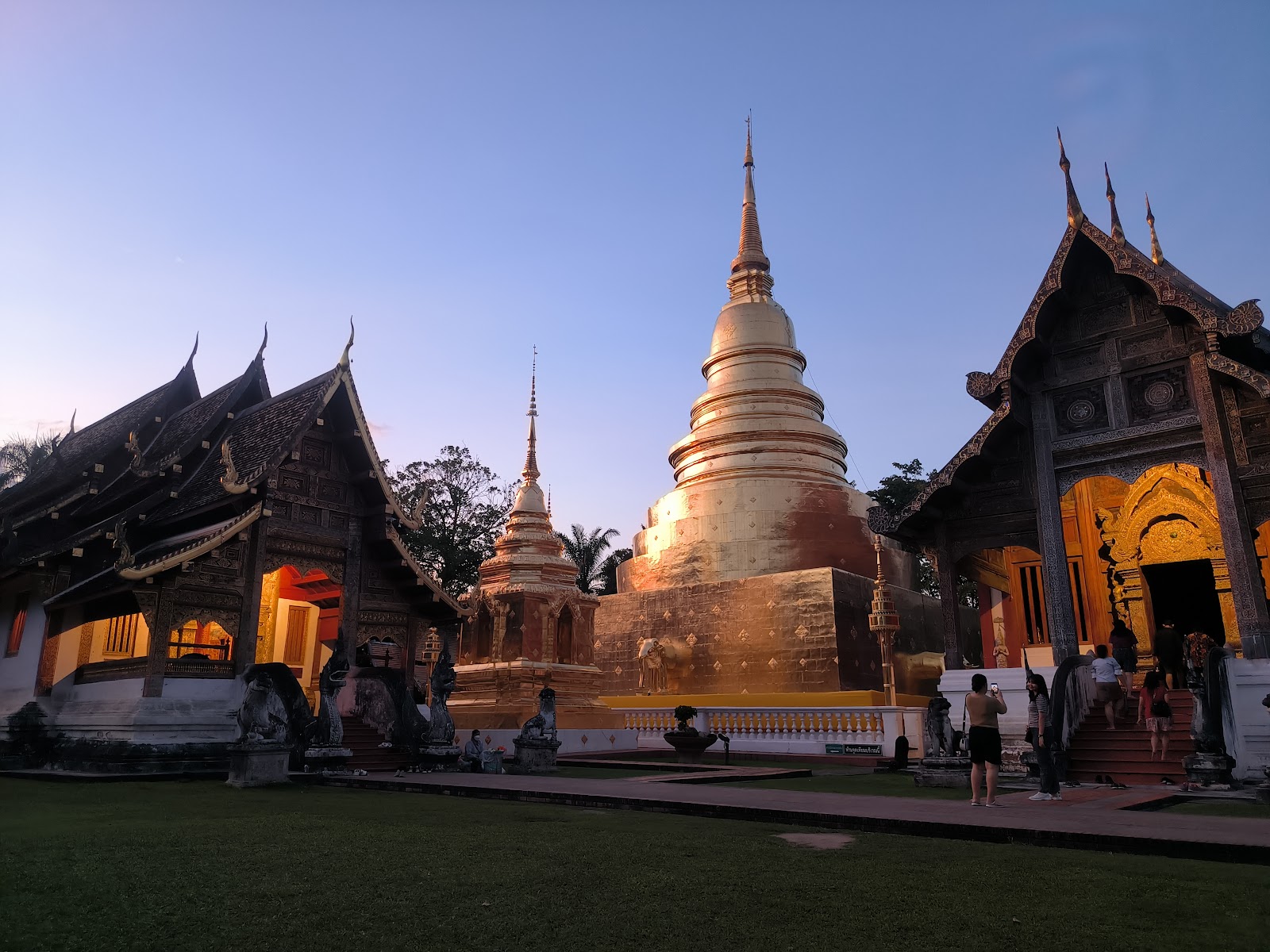
The 306-step staircase that carries you up to Wat Phra That Doi Suthep is flanked on both sides by the sinuous bodies of naga — mythical sea serpents whose scaled balustrades stretch the full length of the climb, added in 1557. By the time you reach the top, 1,073 metres above sea level, the plain of Chiang Mai has opened out below you and a 24-metre gold chedi is catching whatever light the sky is offering.
The temple sits on Doi Suthep mountain, 15 kilometres from the old city, and receives around 120,000 visitors a month. That number matters: this is a working sacred site and a busy one, and arriving with that understanding changes how you move through it.
💛 What travellers fall for
People who come back tend to arrive just after 6 AM, when the gates open and the songthaews haven't yet filled. They also mention the small bells strung around the grounds — according to local tradition, striking each one in sequence brings good fortune — less for the blessing than for the sound they make in the early quiet.
The story behind Wat Phra That Doi Suthep
In 1383, King Keu Naone of the Lanna Kingdom commissioned a monastery on this mountain to house a fragment of bone said to come from the Buddha's shoulder. The relic had been brought north from Sukhothai by a monk named Sumana, and legend holds that when it was placed on a sacred white elephant, the animal wandered the jungle until it died on this precise spot — choosing the site itself.
The central chedi was originally built to 8 metres, then expanded and eventually layered in gold to its current form. The naga staircase was added in 1557. The road connecting the temple to Chiang Mai didn't exist until 1935, when followers of the revered monk Kruba Srivichai built it by hand.
Good to know
Shared red songthaews run from Wat Phra Singh (50 baht) and depart when full. Admission is 30 baht; a short elevator saves the stair climb for 20 baht. Cover shoulders and knees. Allow roughly an hour. March and April bring agricultural smoke that can obscure the mountain views entirely.
November through February gives you the clearest skies and cool enough air that a light jacket is worth packing for the mountain elevation. During the rainy season, cloud sometimes settles below the temple, turning the valley into a white sea. March and April bring smoke from agricultural burning across the region — views suffer and the air can be harsh for anyone with respiratory sensitivities.
Where is Wat Phra That Doi Suthep?
More tickets & tours for Wat Phra That Doi Suthep
Book directly at the provider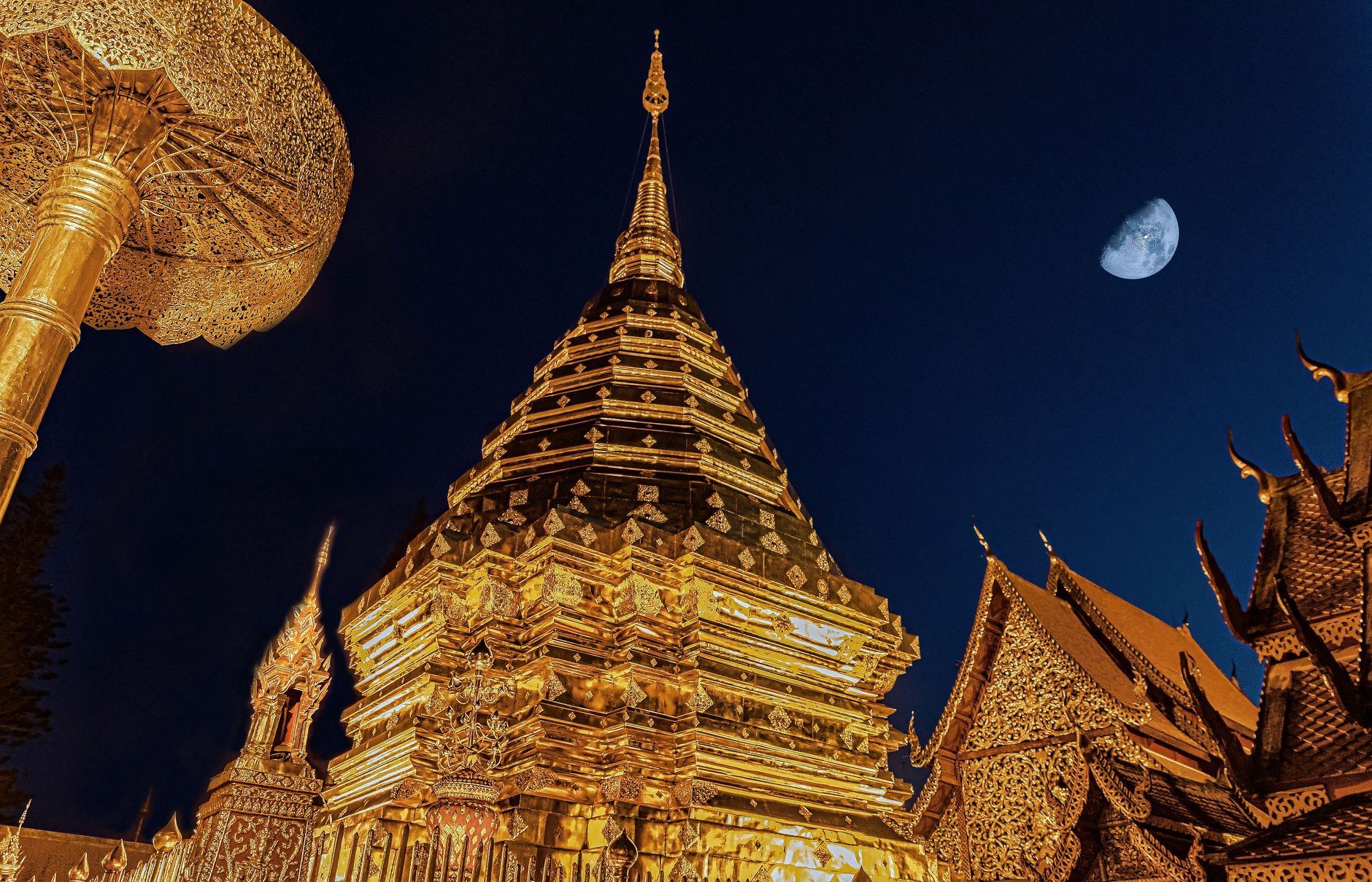
What travellers say about Wat Phra That Doi Suthep
Wat Phra That Doi Suthep is one of those places that stays with you long after you leave. The moment you arrive, the atmosphere shifts the mountain air, the golden chedi, and the quiet sense of reverence create a truly special experience. The temple is beautifully maintained, and the craftsmanship throughout the complex is remarkable. The climb up the staircase is part of the charm, but the reward at the top is worth every step. The central chedi is stunning, especially when the sunlight reflects off the gold. The views over Chiang Mai are exceptional clear, wide, and unforgettable, offering a perfect moment of calm above the city. Despite being a well‑known landmark, the temple still feels serene. There is a respectful, peaceful energy that makes it easy to slow down and take everything in. Whether you come for the history, the architecture, or simply the atmosphere, Doi Suthep delivers a meaningful and memorable visit. A must‑see when in Chiang Mai.
Wat Phra That Doi Suthep is one of the most iconic temples to visit in Chiang Mai, especially if it is your first time in the city. It is located up on Doi Suthep mountain, so it is better to plan it as a half-day trip rather than a quick stop inside the Old City. The golden chedi is truly impressive in person, especially on a sunny day when the gold, blue sky, red details and Lanna-style roofs come together beautifully. There are many good photo angles around the main chedi, the Buddha statues and the decorative umbrellas, but the temple can get quite crowded, so patience is needed if you want cleaner photos. It is also a place where you should be mindful of temple etiquette. Dress respectfully, keep your voice low, and take some time to observe the local worshippers rather than only taking pictures. Practical tips: bring sunscreen, sunglasses and water. The sunlight can be strong, and the golden surfaces reflect a lot of light. I would recommend visiting in the morning or later in the afternoon for better weather and softer light. Overall, it is not the quietest temple in Chiang Mai, but it is definitely one of the most memorable and representative ones.
The journey up to the temple is especially memorable, with the long, iconic staircase lined by beautiful naga (serpent) sculptures on both sides. Climbing the stairs feels rewarding and adds to the spiritual atmosphere of the visit. For those who prefer an easier option, there is also a cable car available, making the temple accessible to everyone. To enter the temple grounds, visitors are required to pay an entrance fee, which is reasonable and helps with the maintenance of this historic site. At the top, the golden chedi is stunning, the grounds are peaceful, and the views over Chiang Mai are absolutely breathtaking. This temple perfectly combines culture, spirituality, and natural beauty, and is truly a must-visit landmark.
Late January 2026 Locally known as Doi Suthep which is the name of the mountain ⛰️ the famous temple is frequented by a lot of worshippers and tourists. Its 300 plus stairway passes through a small market area until you reach the hilltop with its majestic views, café, and religious sites. One of the most revered sites in Chiang Mai.
Stunning temple with a panoramic view of the entire city of Chiang Mai. You feel a certain level of calm and deep sense of belonging when you visit this place. The shrine is beautiful and the location is well-seated in the lap of mountains which must be so relaxing when the tourists have left and the monks can do their peaceful chants again. The temple is half hour drive from Heritage town and the drive is pleasant. You have to climb around 300 steps to reach the top- alternatively, go-carts are also available 20 Baht per person to take you to the top. This place can’t be missed - it is recommended to visit the place early in the morning to welcome the day with chants of the monks followed by the sunrise (clarity shall depend on weather, it often appears misty)
More of Chiang Mai
Discover where to stay, what to do and the best deals for your trip.
Explore Chiang Mai →More attractions in Chiang Mai
All of Chiang Mai →
Background adapted from Wikipedia (CC BY-SA) · map data © OpenStreetMap contributors · ratings & place photos via Google · other photos with per-image credit. Ticket links may earn us a commission at no extra cost to you.