
St. Mark's Basilica
Walk through the central door and look up before you take another step. The ceiling is gold — not gilded, not painted gold, but covered in more than 4,000 square metres of mosaic tessellating across five domes, much of it laid in the 13th century. Your eyes need a moment to understand what they're seeing.
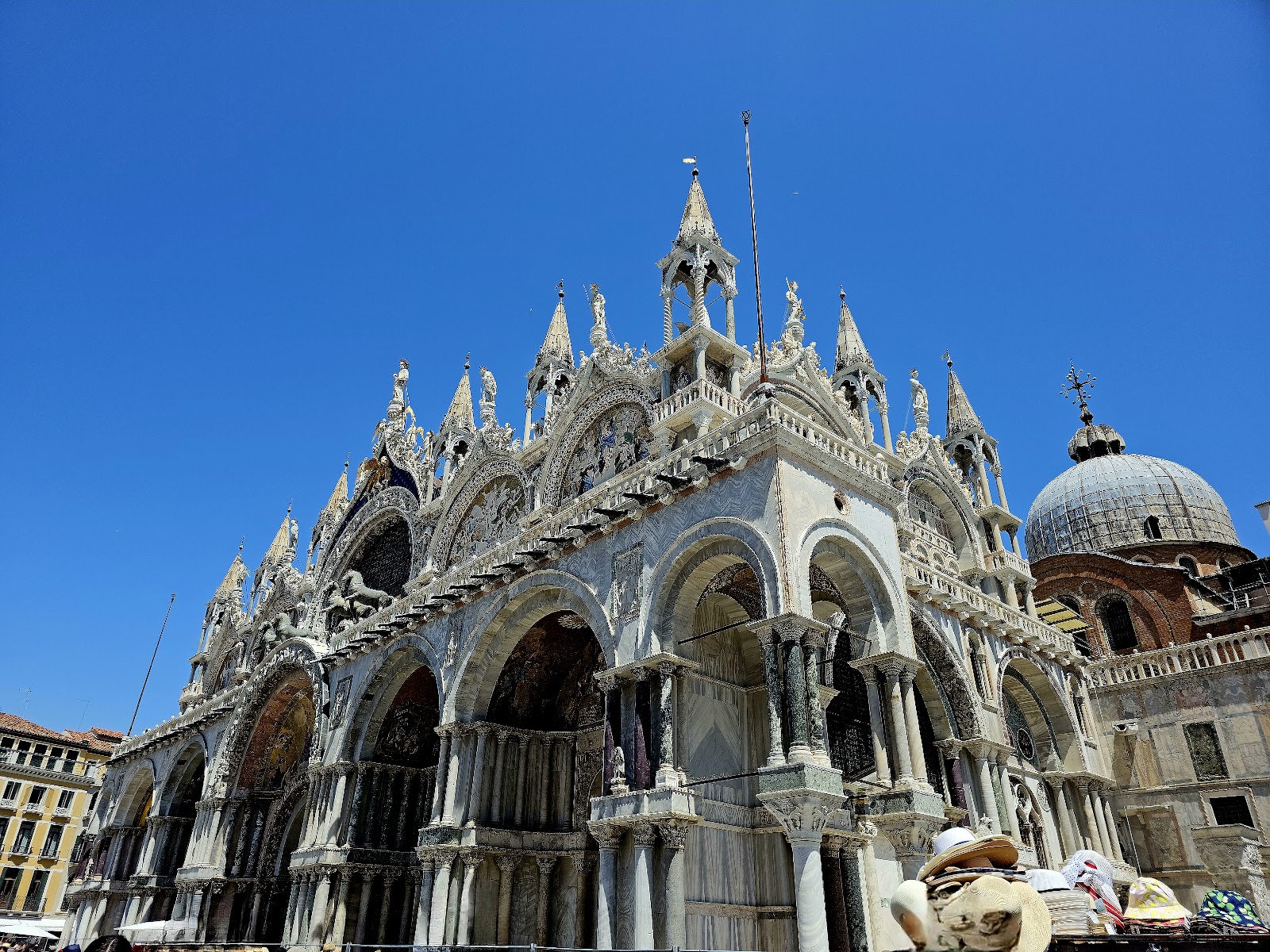
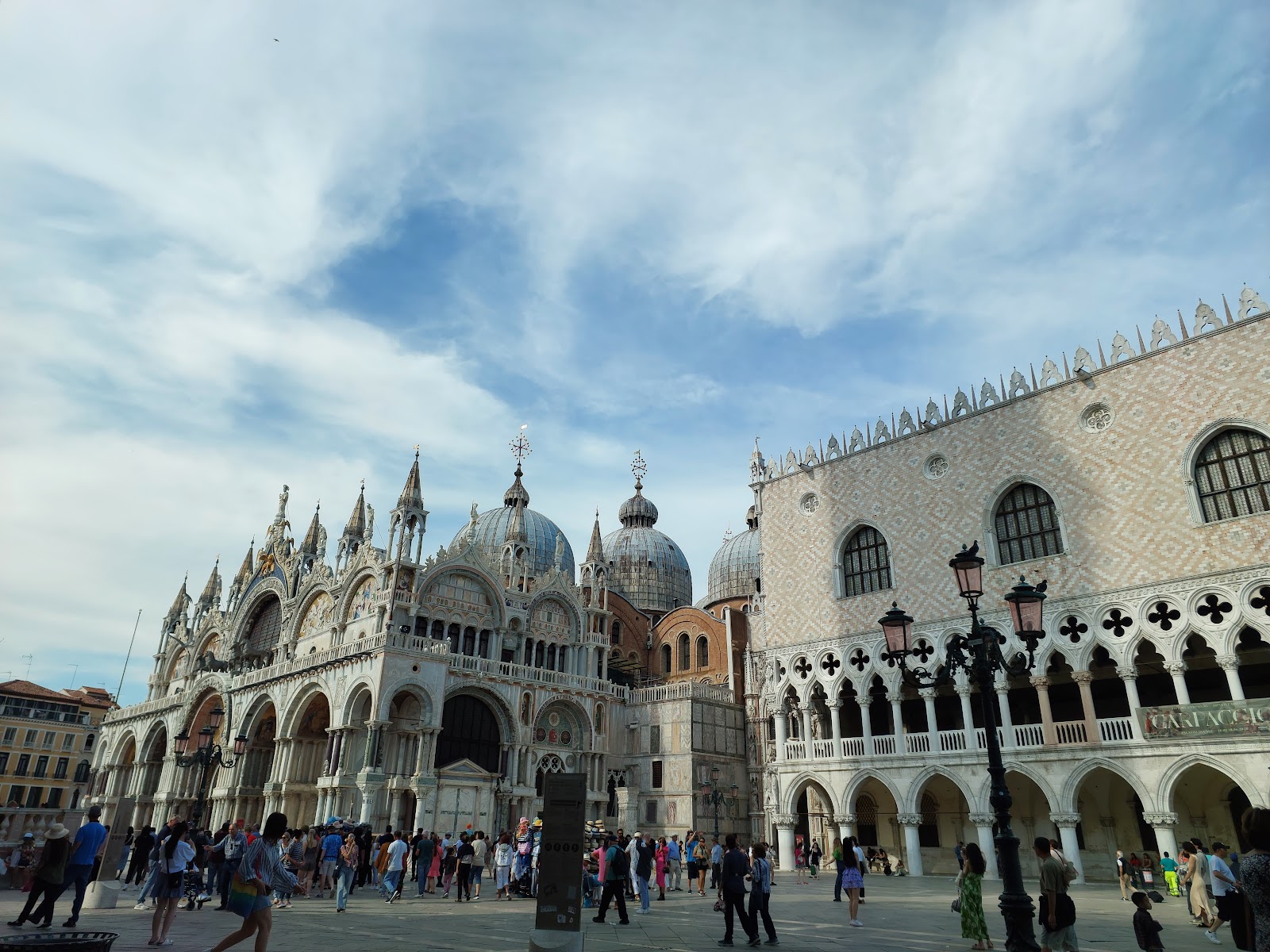
St. Mark's was Venice's state church for almost a millennium before it became the city's cathedral in 1807. That distinction matters: the Doges built it as a treasury and a statement, not merely a place of worship, which explains why it looks less like a Venetian church and more like a Byzantine emperor's dream translated into marble, enamel and stolen bronze.
💛 What travellers fall for
People who've been more than once tend to arrive at 9:30 on a weekday, when the nave is quiet enough to hear the floor — inlaid marble and glass, slightly undulating from centuries of acqua alta. They also book the Pala d'Oro separately: the 10th–12th century Byzantine altar screen rewards the extra ticket price in a way that photographs cannot prepare you for.
The story behind St. Mark's Basilica
The story begins with a theft. In 828, Venetian merchants smuggled the relics of Saint Mark out of Alexandria under layers of pork and cabbage — goods Muslim inspectors were unlikely to disturb — and delivered them to the Doge. A church was built to house them, burned in a rebellion in 976, and rebuilt. The version you enter today was commissioned in 1063 by Doge Domenico Contarini, almost certainly designed by a Greek architect, and consecrated on 8 October 1094 by Doge Vitale Falier.
What filled the interior over the following centuries was largely plunder and patronage in equal measure. The four bronze horses on the façade came from Constantinople during the Fourth Crusade in 1204. Titian designed the mosaic vault decoration of Old-Testament prophets, executed between 1524 and 1530. The Pala d'Oro — the gold cloisonné altar screen — was assembled from Byzantine panels dating to the 10th century and set into its Gothic frame in 1342–45. The building accumulated beauty the way Venice accumulated territory: opportunistically, and with extraordinary results.
Good to know
Tickets are online-only; no on-site sales. Arrive at opening (9:30 AM Monday–Saturday) to avoid the mid-morning surge. No bags or backpacks inside — drop them free at Ateneo San Basso on Piazzetta dei Leoncini. Shoulders and knees must be covered. Photography is forbidden throughout the interior.
Where is St. Mark's Basilica?
More tickets & tours for St. Mark's Basilica
Book directly at the provider
What travellers say about St. Mark's Basilica
It was a really good museum as with the artistic and complex design and details it makes the church much more beautiful. I also took the listening but I have to say it you they do not give you headphones that you can wear so you just have to hold your phone, listening device, to listen to your ear. Definitely go to the second floor and get tickets for all of the parts as it is much better to see it live and fully.
Tips for Visiting Saint Mark’s Basilica in Venice If you are planning to visit St. Mark’s Basilica, a little advance planning goes a long way to ensure you get the best experience. Book Ahead: It is highly recommended to buy your tickets online in advance to skip the massive main queue at the entrance. Go for the Full Tour: Make sure you purchase the ticket option that includes access to the upper floor and the museum. Heading up to the top balcony gives you an incredible panoramic view of Saint Mark’s Square from above. See the Horses up Close: Going upstairs also allows you to see the famous bronze Horses of Saint Mark up close inside the museum area. Inside the Basilica: The interior of the cathedral is absolutely breathtaking, featuring towering gold mosaics, marble pillars, and intricate religious relics. The Golden Mosaics: The vaulted ceilings are covered in stunning, shimmering gold leaf tile work depicting biblical scenes. The Pala d'Oro: Don't miss the high altar area, which houses magnificent, jewel-encrusted Byzantine golden altarpieces. The Main Altar: The ornate marble canopies and spiral columns surrounding the sanctuary are incredibly detailed. The Entry Arches: Even before you step inside, the exterior portals feature stunning mosaic artwork overhead, detailing the history of the basilica. Enjoy your time exploring one of Venice's most iconic landmarks!
What a beautiful church, we went on a tour and we saw the St. Mark's Basilica & Doge's Palace at the same time. This building was phenomenal on how it looked on inside. You could just feel the history and the energy in there when you walk in. We ended up purchasing her tickets through GetYourGuide, which is very convenient.
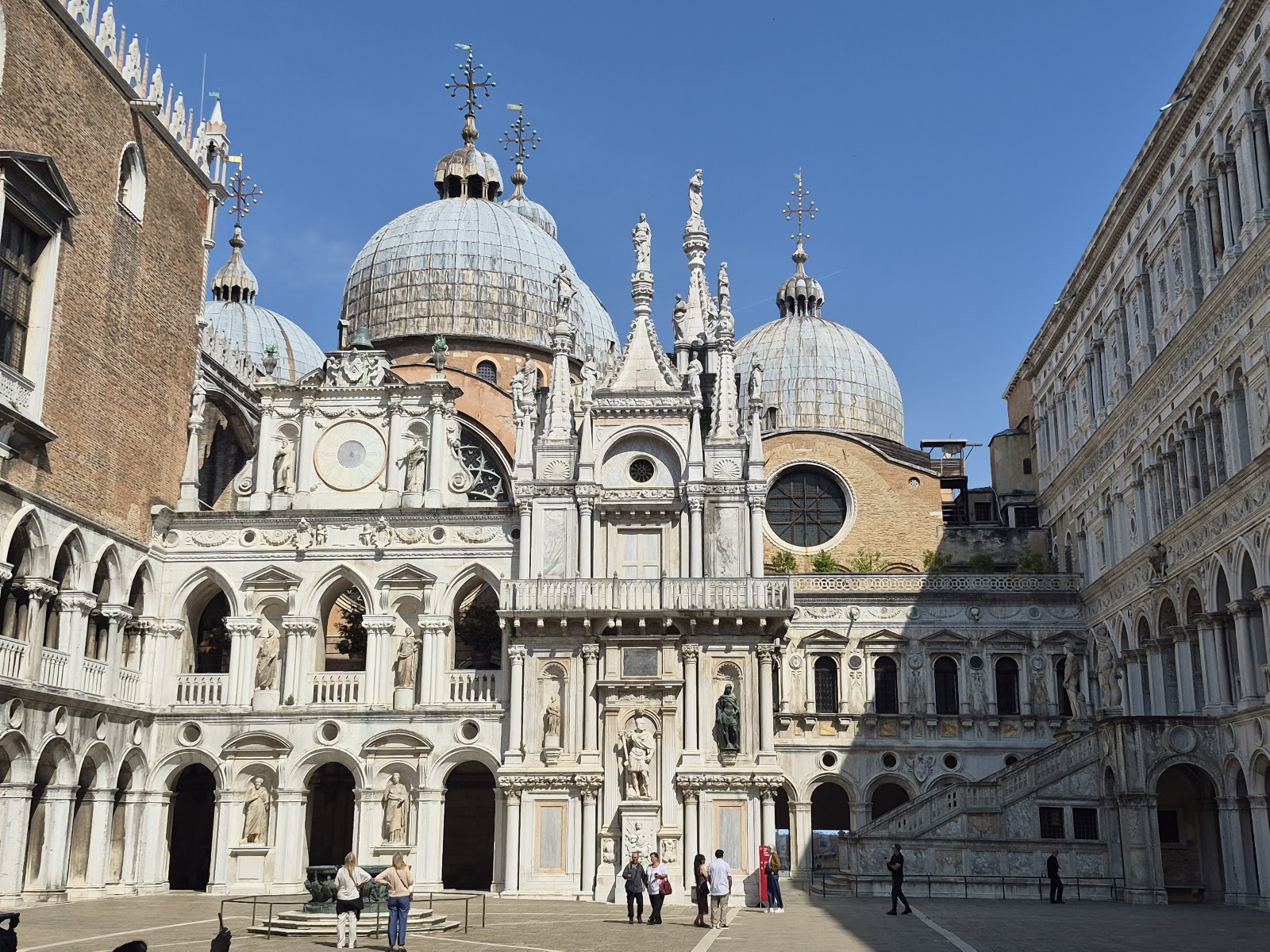
This is a beautiful Basilica next to the Doge’s palace. We got the museum tickets which allow you to go up into the top of the cathedral. I highly recommend this, you can see the mosaics a lot closer and see some of the renovations that have been done over the years. This also gives you roof access to see out into the square. There are audio guides available or you can buy a tour if you want more information.
St. Mark’s Basilica – Iconic History with Hidden Details St. Mark’s Basilica presents a layered history, founded in 832 and rebuilt from 1063 onward. Its Italo-Byzantine structure, combined with Gothic and Romanesque elements, creates a distinctive appearance. The five domes are a notable feature, uncommon among Western European churches. Inside, around 8,000 square meters of mosaics cover walls and ceilings. Gold leaf embedded in glass reflects light at different angles, creating a soft, shimmering effect throughout the day. Architectural details, including representations of the Twelve Apostles, are integrated into the structure rather than displayed as separate works.
More of Venice
Discover where to stay, what to do and the best deals for your trip.
Explore Venice →More attractions in Venice
All of Venice →
Background adapted from Wikipedia (CC BY-SA) · map data © OpenStreetMap contributors · ratings & place photos via Google · other photos with per-image credit. Ticket links may earn us a commission at no extra cost to you.