City

Florence Historic Centre
Florence Historic Centre
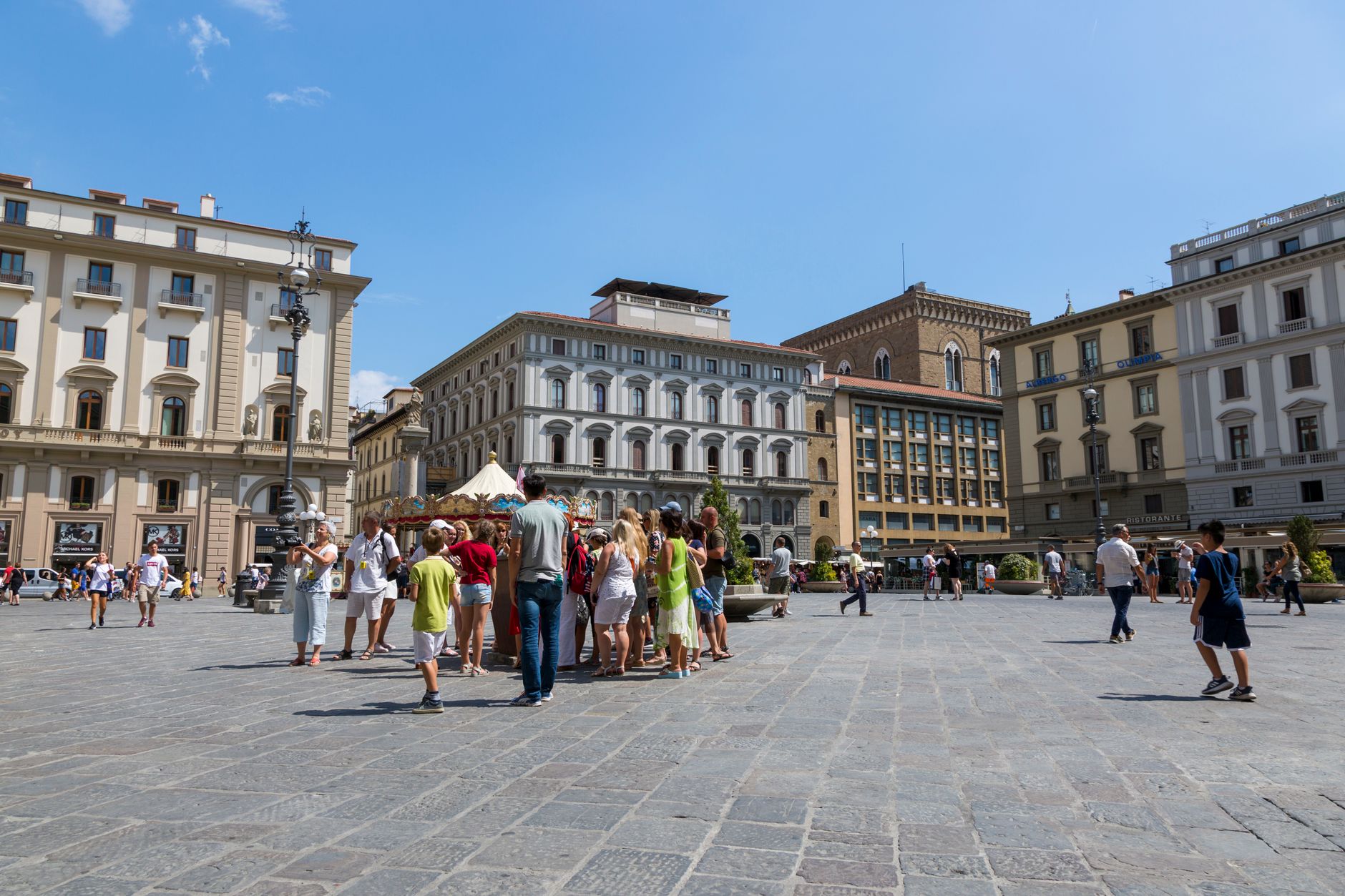
Photo by Rangoni Gianluca on Pexels
Florence Historic Centre
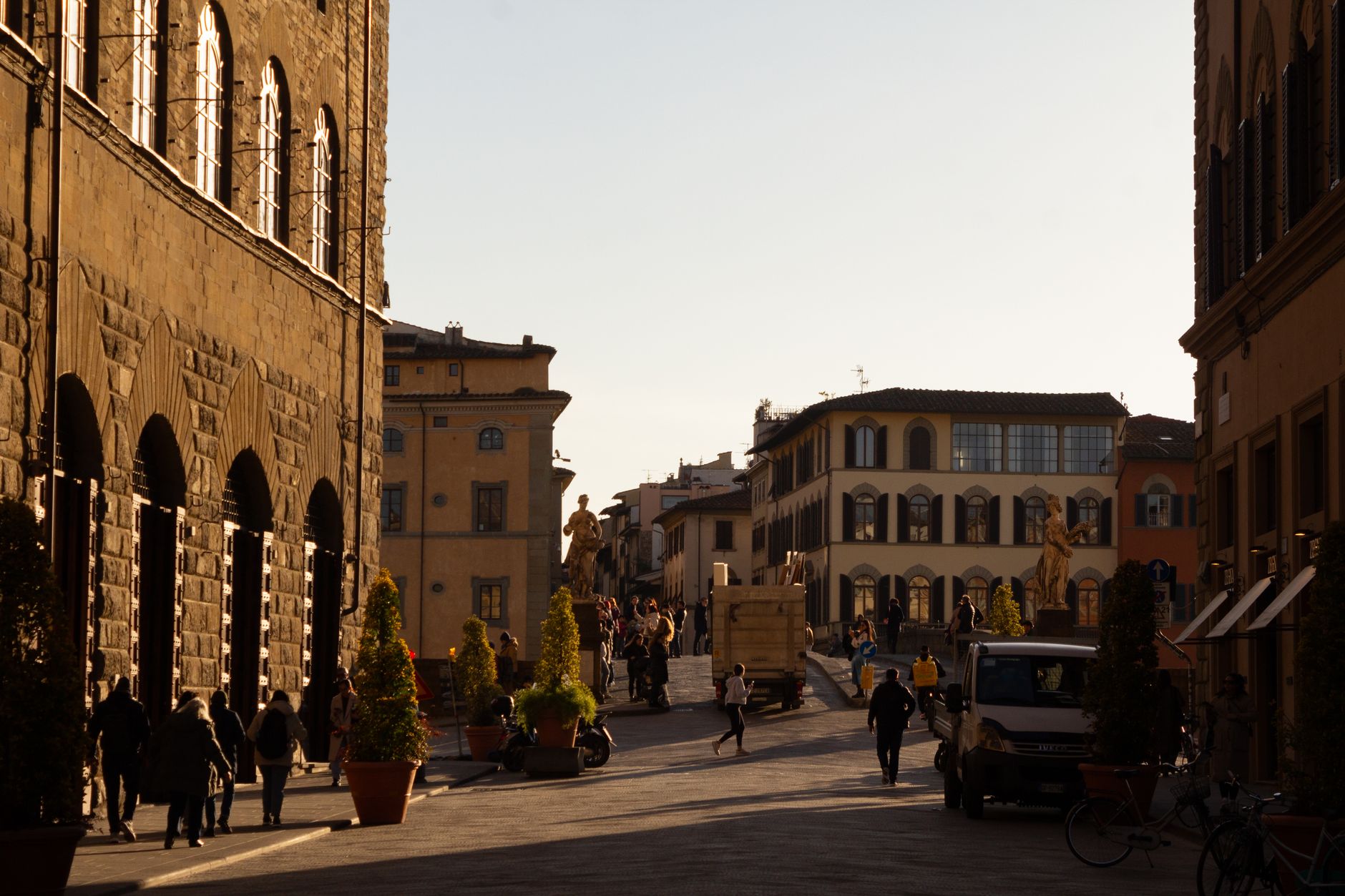
Photo by Samual lim on Pexels
Florence Historic Centre
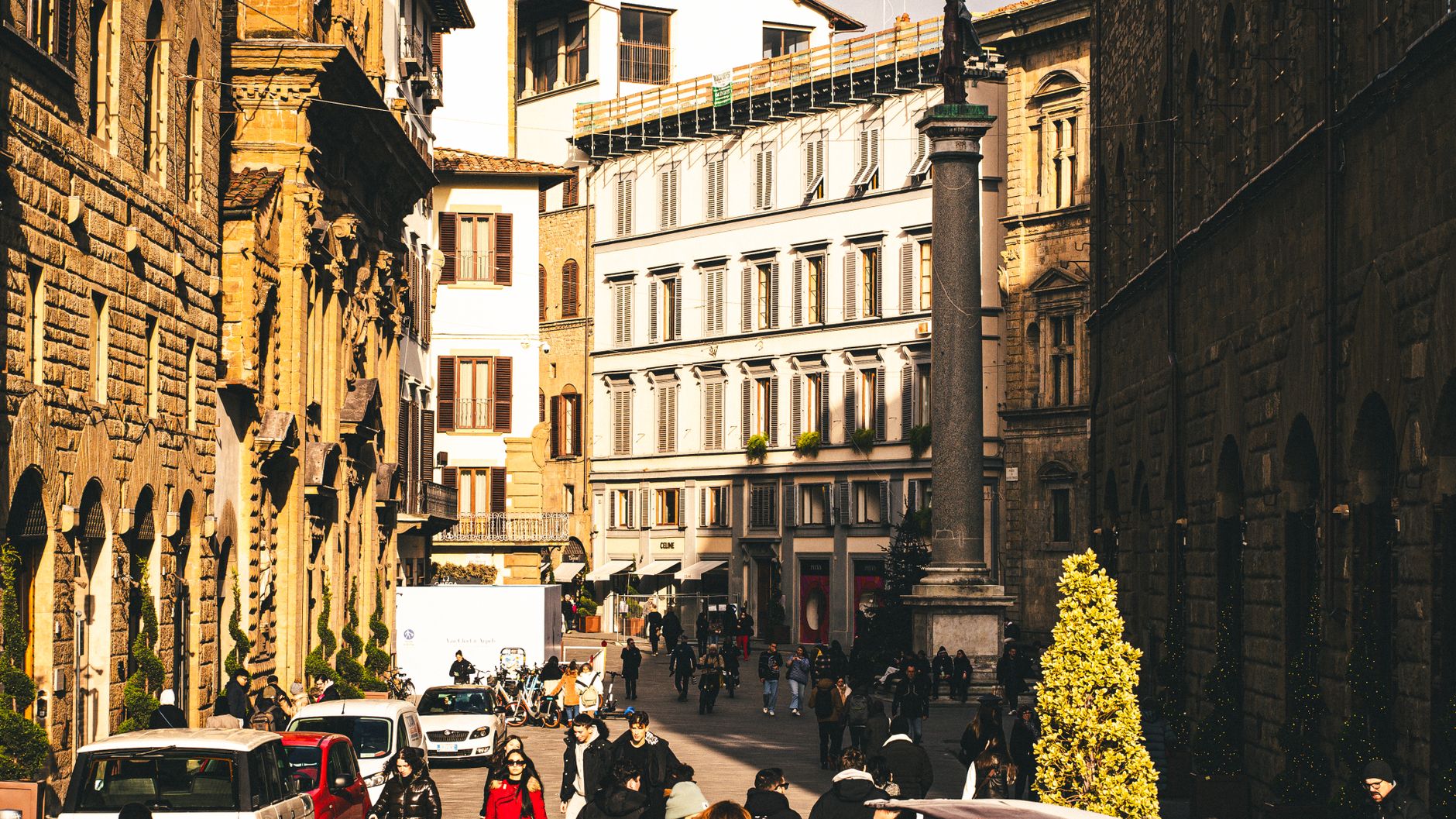
Photo by Valentin Ivantsov on Pexels
Florence Historic Centre
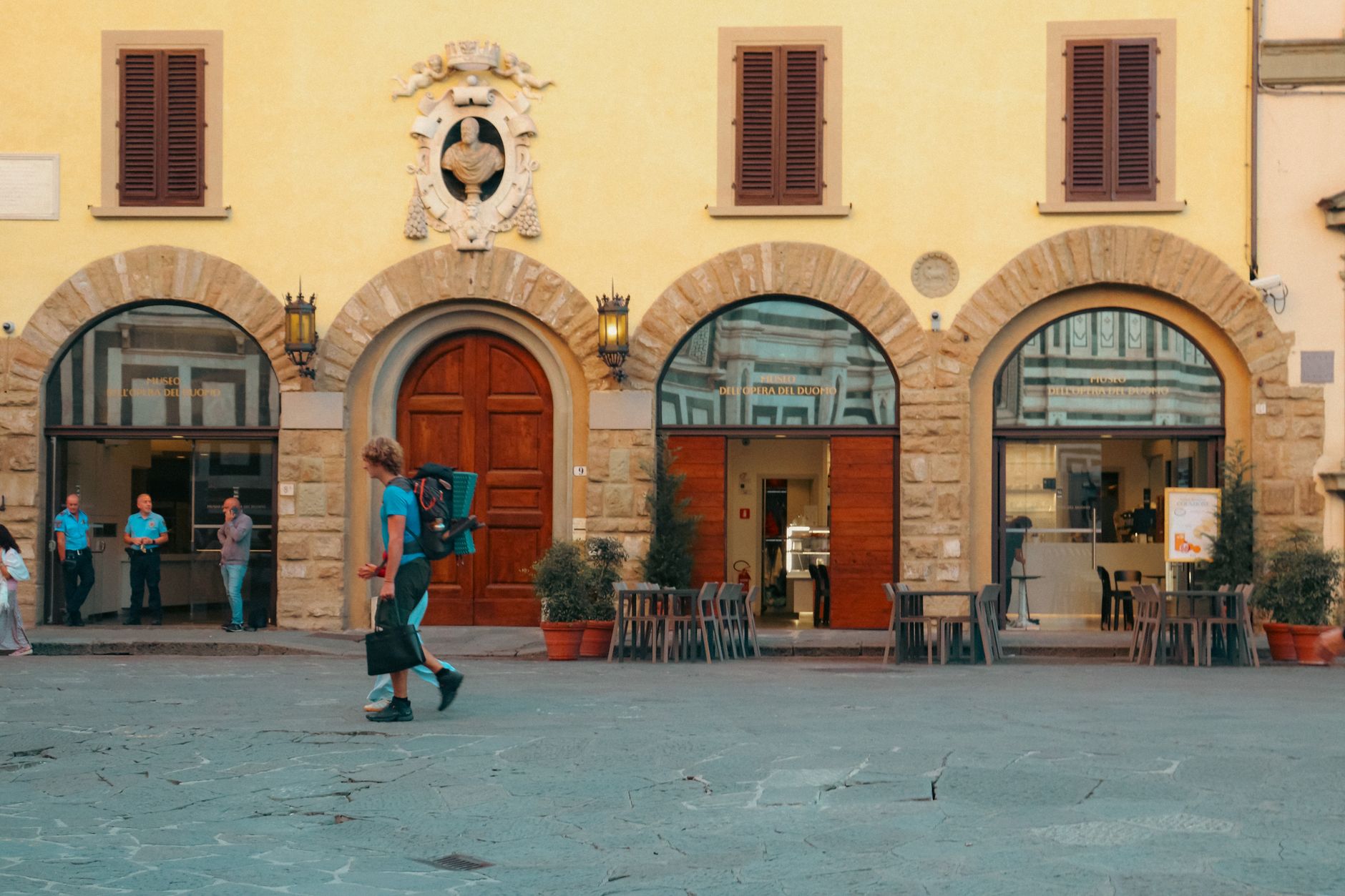
Photo by Fatih Altuntaş on Pexels
Florence Historic Centre
Photo by Mihaela Claudia Puscas on Pexels
Florence Historic Centre
Photo by Claudia Solano on Pexels
City break Culture & history Romantic getaway

The historic centre of Florence is compact enough to cross on foot in twenty-five minutes, yet it contains a concentration of Renaissance architecture that shaped how the Western world thinks about beauty. Start anywhere — a stone bridge lined with jewellers, a 13th-century square bent into an L, a dome whose 4 million bricks have been visible from the surrounding hills for nearly six centuries — and the city begins to make its argument.

The 505-hectare area bounded by the old 14th-century walls holds the Duomo, the Uffizi, the Ponte Vecchio, and the Oltrarno quarter south of the Arno, all within easy walking distance of each other. The density is the point.

💛 What travellers fall for

People who come back tend to do less, not more. Skip the queue at the Uffizi on a Tuesday morning, then spend an hour at Santa Croce without a plan — Michelangelo and Machiavelli are both buried there, almost without ceremony. The Ponte Vecchio reads differently at 7am, before the jewellers open their shutters.

Good to know
The T2 tram from Florence Peretola airport reaches the edge of the historic centre in 35 minutes for €1.70. Major museums close Mondays — plan Tuesday through Sunday. Book Uffizi and Accademia tickets online with a timed entry; lines form even for pass-holders. Entry to the Cathedral itself is free.
Tips

Experiences you don't want to miss

All tips →

Deals in Florence Historic Centre

Book directly at the provider
The story

How Florence Historic Centre came to be

Florentia began as a Roman colony in 59 BC, planted on an earlier Etruscan settlement beside the Arno. From around the year 1000 the city grew steadily outward, and by the 14th century its walls enclosed what is now the historic centre. The Cathedral of Santa Maria del Fiore was commissioned in 1296 — Arnolfo di Cambio drew the plans — but the building took 140 years to finish, with Brunelleschi finally closing it with his dome in 1436.

The Medici family's rise in the 15th century turned Florence into the laboratory of the Renaissance. Palaces went up — the Medici Riccardi between 1445 and 1460, the Pitti from 1458 — and wealthy families began building across the river, drawing the Oltrarno into the city's orbit. UNESCO recognised the result in 1982.

People & landmarks

Who and what shaped it

People who shaped it

Filippo Brunelleschi
Designed and completed the dome of the Cathedral of Florence (1420–1436), containing over 4 million bricks.
Arnolfo di Cambio
Architect and sculptor who designed the Florence Cathedral (Santa Maria del Fiore) at the end of the 13th century.
Giotto
Designed the Campanile bell tower in 1334, standing 85 metres high with 414 steps.
Giorgio Vasari
Designed the Uffizi Gallery building (1560–1580), which became a public museum in 1765.
Leon Battista Alberti
Designed the façade of Santa Maria Novella church, completed in the late 15th century.
Leonardo da Vinci
Moved to Florence from Vinci between ages 12 and 16; key figure in the city's Renaissance period.
Michelangelo Buonarroti
Renaissance artist and intellectual tied to Florence's history; buried in the Basilica of Santa Croce.
Dante Alighieri
Intellectual and poet tied to Florence's history from the 13th century onwards.
Lorenzo de' Medici
Member of the Medici family whose rise in the 15th century turned Florence into the laboratory of the Renaissance.
Niccolò Machiavelli
Intellectual and writer tied to Florence's Renaissance period; buried in the Basilica of Santa Croce.

Landmark buildings

Cathedral of Florence (Santa Maria del Fiore)
Construction began 1296, completed 1436; Brunelleschi's dome contains over 4 million bricks. Free entry.
Giotto's Campanile
Bell tower designed in 1334, 85 metres high with 414 steps to the top.
Uffizi Gallery
Designed by Giorgio Vasari (1560–1580); became a public museum in 1765. Timed tickets required.
Palazzo Medici (Medici Riccardi)
Designed by Michelozzo di Bartolomeo for Cosimo il Vecchio; built 1445–1460.
Palazzo Pitti
Originally belonging to wealthy banker Luca Pitti, dating to 1458.
Piazza della Signoria
L-shaped square from the 13th century; considered the most important square in Florence.
Basilica of Santa Croce
Franciscan church founded in the 14th century; contains tombs of Michelangelo, Galileo Galilei, and Machiavelli.
Santa Maria Novella
Church with façade designed by Leon Battista Alberti, completed in the late 15th century.
Ponte Vecchio
84 metres long, 32 metres wide; only Florence bridge not destroyed by German forces in WWII. Now lined with jewellers and art dealers.
Watch

See Florence Historic Centre in motion

Practical

Plan your visit

On the map

When to go

Spring (April–May) and autumn (September–October) offer mild temperatures and softer light — the best seasons for spending long hours outside. July and August are hot and crowded; if you visit then, the stone streets and shaded churches become welcome relief.

Right now

☀️
35°C
Clear
Fri
37°
25°
Sat
31°
22°
Sun
32°
20°
Mon
31°
21°
Weather data: Open-Meteo

Background & history adapted from Wikipedia (CC BY-SA) · specs from Wikidata (CC0) · weather from Open-Meteo · map data © OpenStreetMap contributors · photos from Wikimedia Commons / Unsplash with per-image credit. No third-party reviews or social posts reproduced.

Top