
Certosa e Museo di San Martino
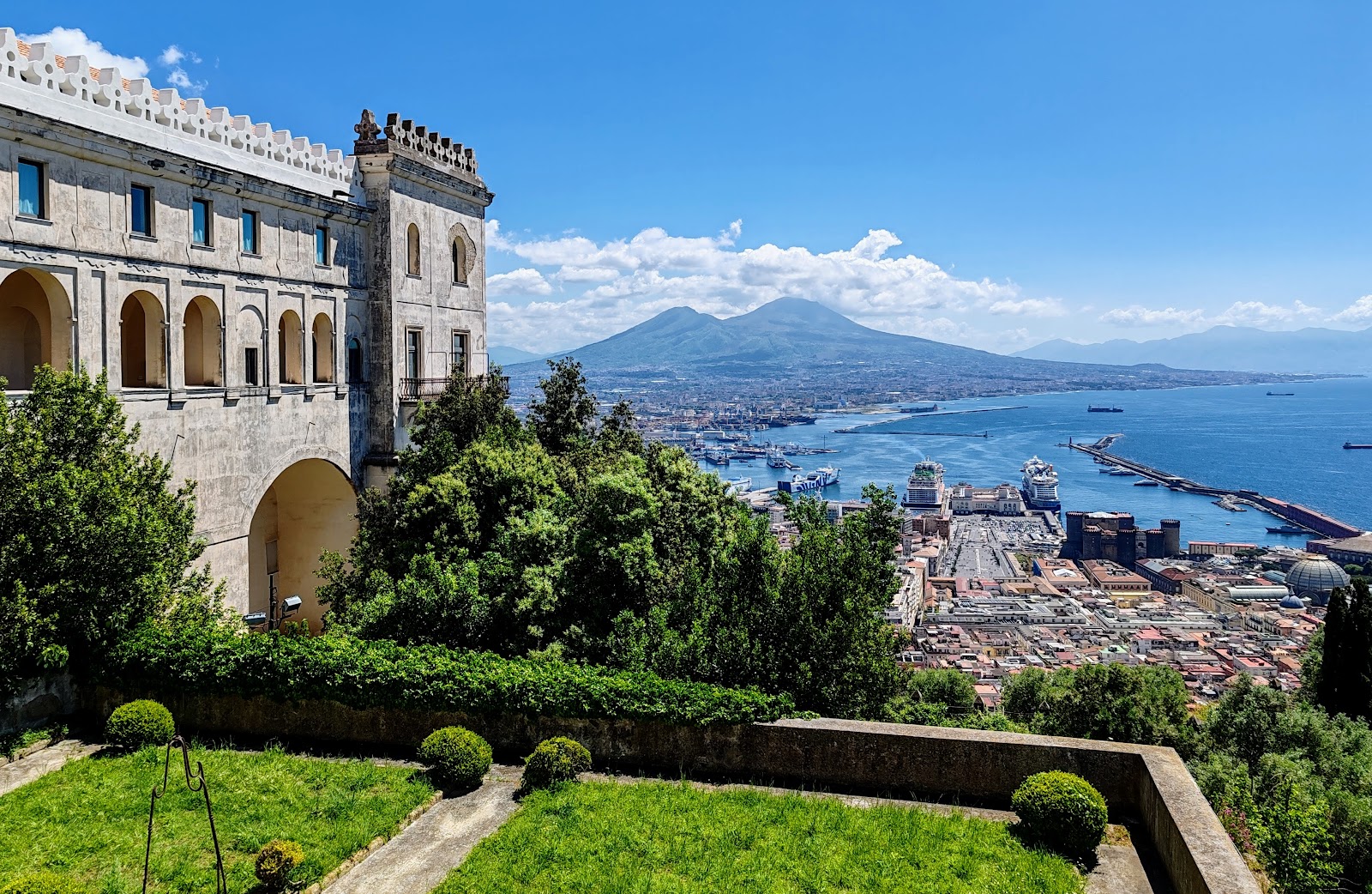
The view from Vomero hill stops you before you even reach the gate: Naples spread below, Vesuvius across the bay, the sea a flat grey or a hard blue depending on the season. The Certosa di San Martino has commanded this ridge since the fourteenth century, and the city has grown up around it without ever quite catching up to it.
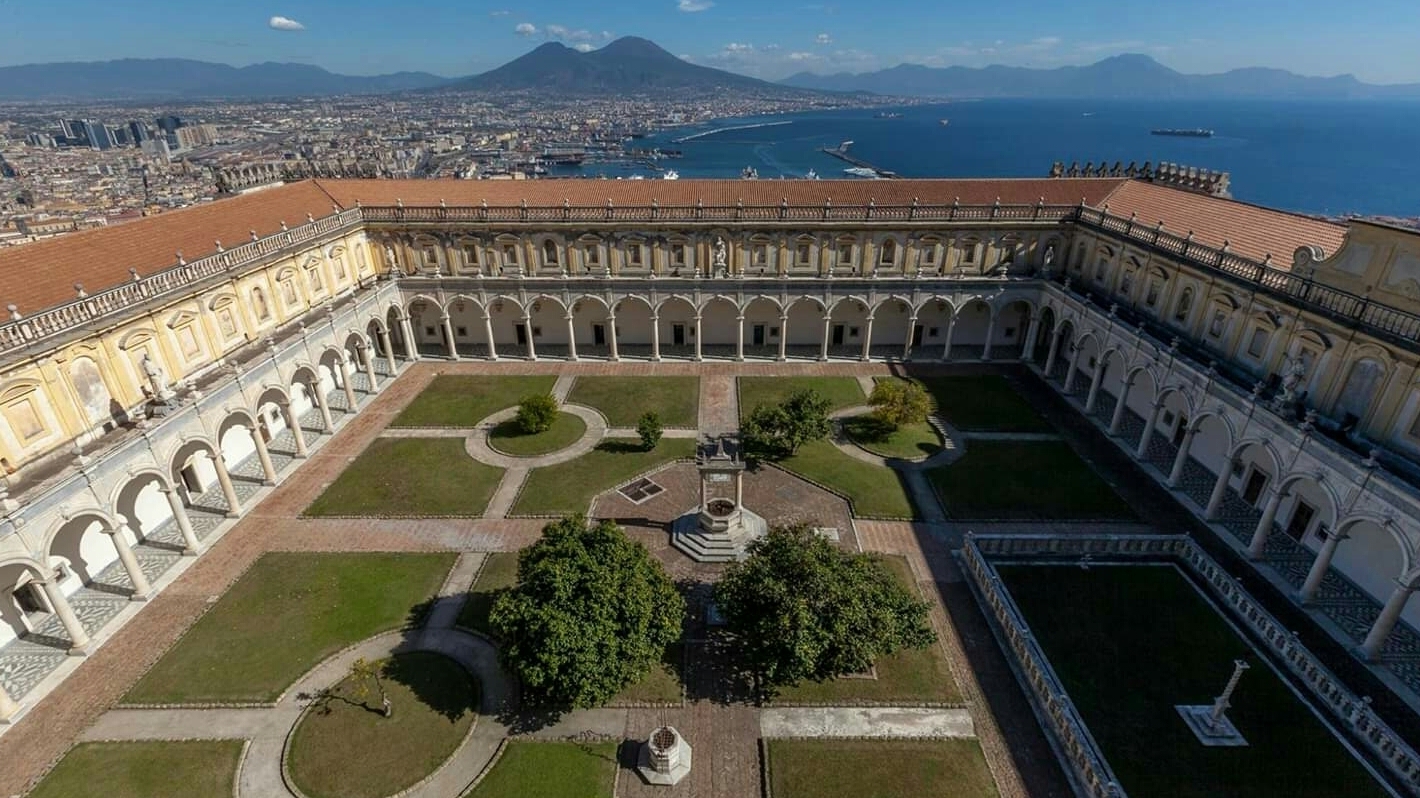
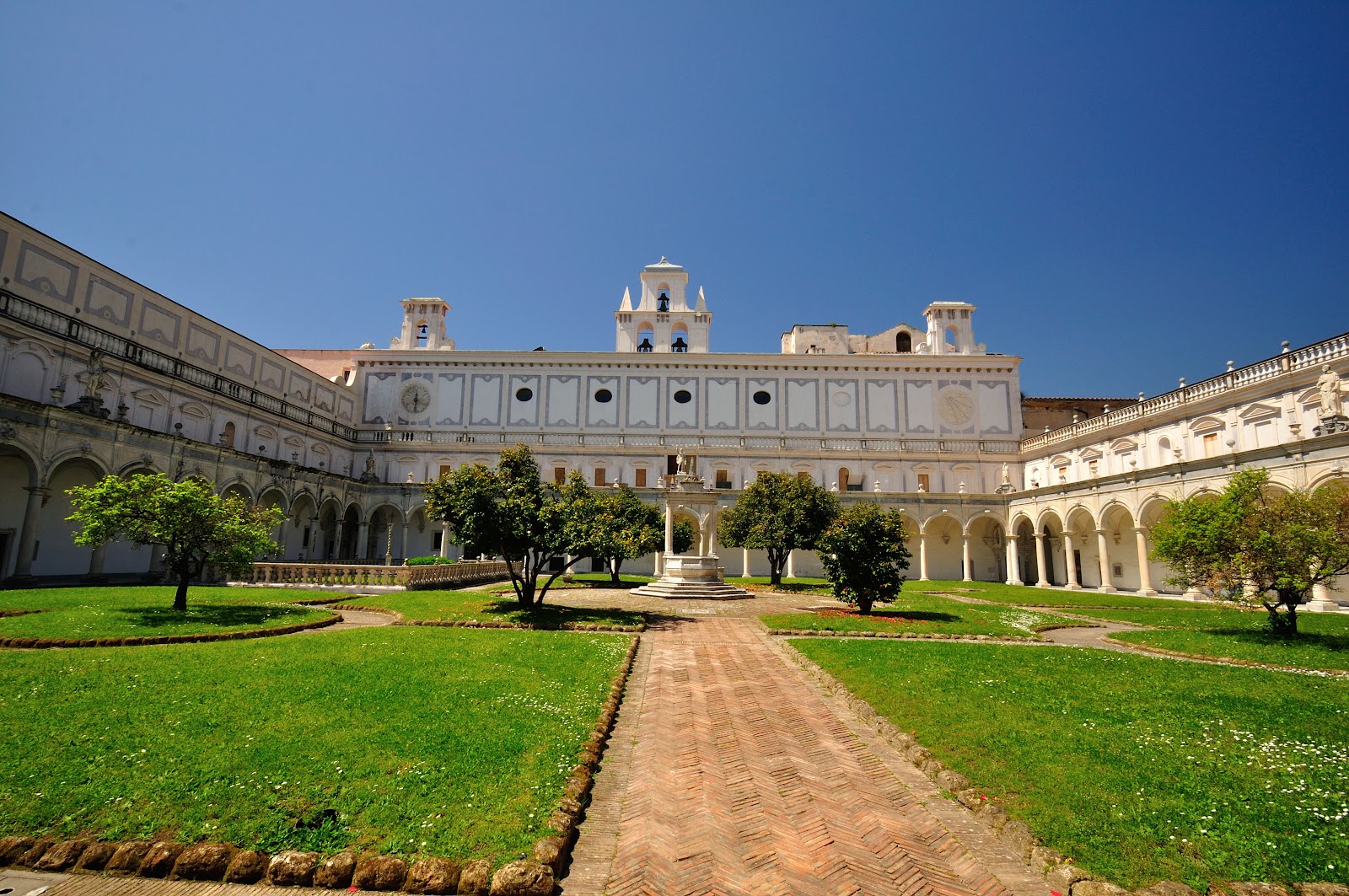
Inside, a Carthusian monastery slowly became one of the richest artistic complexes in southern Italy — Cosimo Fanzago's marble inlay in the nave, a cloister ringed by sixty-four arches and a balustrade carved with skulls and monks' heads, canvases by Ribera and Guido Reni in a church that the monks themselves rarely left.
💛 What travellers fall for
People who come back tend to spend longer in the Sezione Presepiale than they planned — the Cuciniello nativity scene, displayed in low light to protect the materials, pulls you in close. The Gothic basement, open since 2015 and worth booking separately, is the quietest room in Naples: vaulted, austere, roughly 150 marble sculptures arranged without fanfare.
The story behind Certosa e Museo di San Martino
Charles, Duke of Calabria, founded the Charterhouse in 1325, entrusting its construction to architect-sculptor Tino di Camaino. The monastery was inaugurated under Joan I of Naples in 1368, dedicated to St. Martin of Tours, and expanded through the sixteenth century under Giovanni Antonio Dosio. The transformation that defines the place today came in 1623, when Cosimo Fanzago took over and reshaped nearly everything — the church, the great cloister, the extraordinary marble work throughout.
The French occupation of 1799 forced the Carthusian monks out. A final attempt to reestablish monastic life failed in 1866, when the Italian state confiscated the property. Archaeologist Giuseppe Fiorelli converted it into a public museum, which opened in 1867 — a function it has held ever since.
Good to know
Take the Funicolare Centrale or Montesanto funicular to Vomero, then walk ten to fifteen minutes, or bus V1 drops you directly at Piazzale San Martino. Closed Wednesdays, 25 December and 1 January. Free on the first Sunday of the month. Allow at least two hours; some museum sections open on a rotating schedule.
Where is Certosa e Museo di San Martino?
More tickets & tours for Certosa e Museo di San Martino
Book directly at the provider
What travellers say about Certosa e Museo di San Martino
If you are visiting Naples, I highly recommend you visit this attraction. Not just for the history, but also for the views and the peaceful atmosphere. A truly wonderful experience! You can get there by the funicular "Funicolare di Montesanto", from the Montesanto metro station at the base to the Morghen station at the top. Inside the complex you are greeted by a beautiful inner courtyard that immediately inspires a calm and peaceful atmosphere. The inner courtyard gardens are wonderful and well maintained. Inside the building you can enjoy an excellent selection of paintings and statues from the 15th century and beyond. There are also some beautiful carriages (maybe the one from the movie Partenope?) and scenes of the Nativity. The view from the top is absolutely breathtaking. From the terraces, the views over the city and the bay are absolutely extraordinary, some of the most beautiful panoramas you can find in Naples. You can complete your visit by going down to the Pedamentina of San Martino.
The former Carthusian monastery of San Martino (1325)) overlooks Naples, capital of the Campania Region of Italy and the country's third-largest city. The monastery is famous for its sumptuous marble floor. Frescoes by 17th century Baroque painter Giovanni Lanfranco decorate the nave and choir of the chapel culminating in a dramatic Crucifixion (1638). The Presepe Cuciniello in the museum portion of the monastery is a masterwork of the 18th century Neapolitan nativity scene tradition. A whirl of angels descends toward a decaying temple where the Holy family is receiving the Three Magi. The nativity crib contains over 160 human figures. Shepherds, musicians, and the Three Kings or Magi are realistically depicted in Oriental dress.
One of the best Museum in the city of Naples. For the quality and the quantity of the pieces of art this museum contains should be already being in the top list of every trip in Naples. In addition you get also an amazing view of the city and an outside area in the back really nice and peaceful. It’s a pity there is no a cafe there! The church and its surrounding chambers is simply astonishing, with no single spot left for an additional decoration. The collection is impressive i think they should better present them with few but key notes (at least the most important piece of art). In addiction all of this the ticket is really cheap! 6€ for a full one and 2€ with under 25. Fortunately (or unfortunately) the place is not busy at all so you can really enjoy it!
Fascinating museum, but a bit short on explanations and many rooms were closed or unavailable. The collection of nativity scenes was amazing (a Neapolitan speciality). Well worth a visit.
At 6€ an entry and no waiting lines, this was for me paradise! Unfortunately it was raining so much the day we went but we still managed to enjoy it, specially the view from Napoli and the Vesuvius. The place is really beautiful and there are many small places and corners that would make this the ideal place for a sunny afternoon. The Chapel is insanely beautiful! Best way to arrive here is by taking the Fonicolare Montesanto and exit at the top, stop Morghen. It's a short walk from here.
More of Naples
Discover where to stay, what to do and the best deals for your trip.
Explore Naples →More attractions in Naples
All of Naples →

Background adapted from Wikipedia (CC BY-SA) · map data © OpenStreetMap contributors · ratings & place photos via Google · other photos with per-image credit. Ticket links may earn us a commission at no extra cost to you.