
Alpirsbach
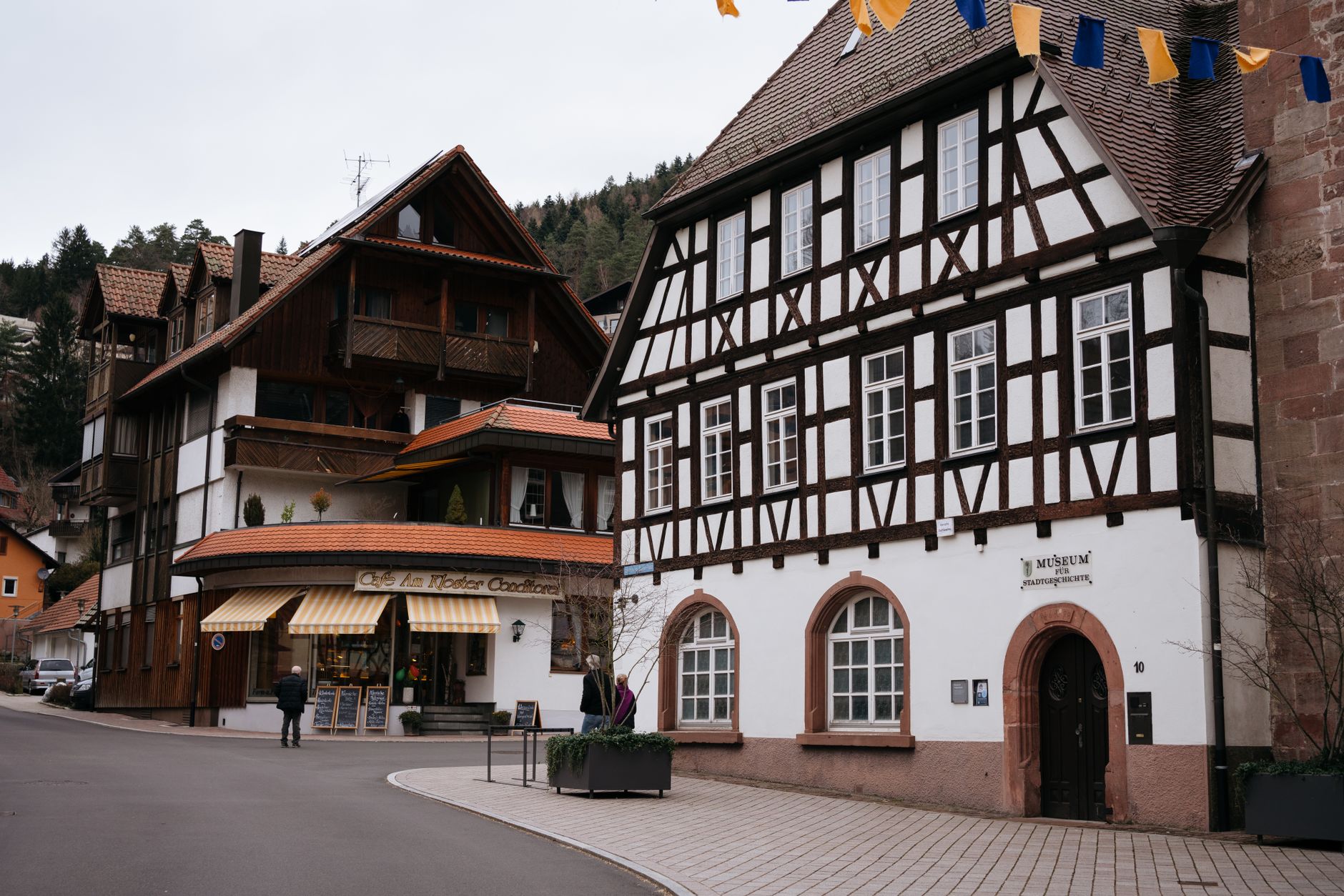
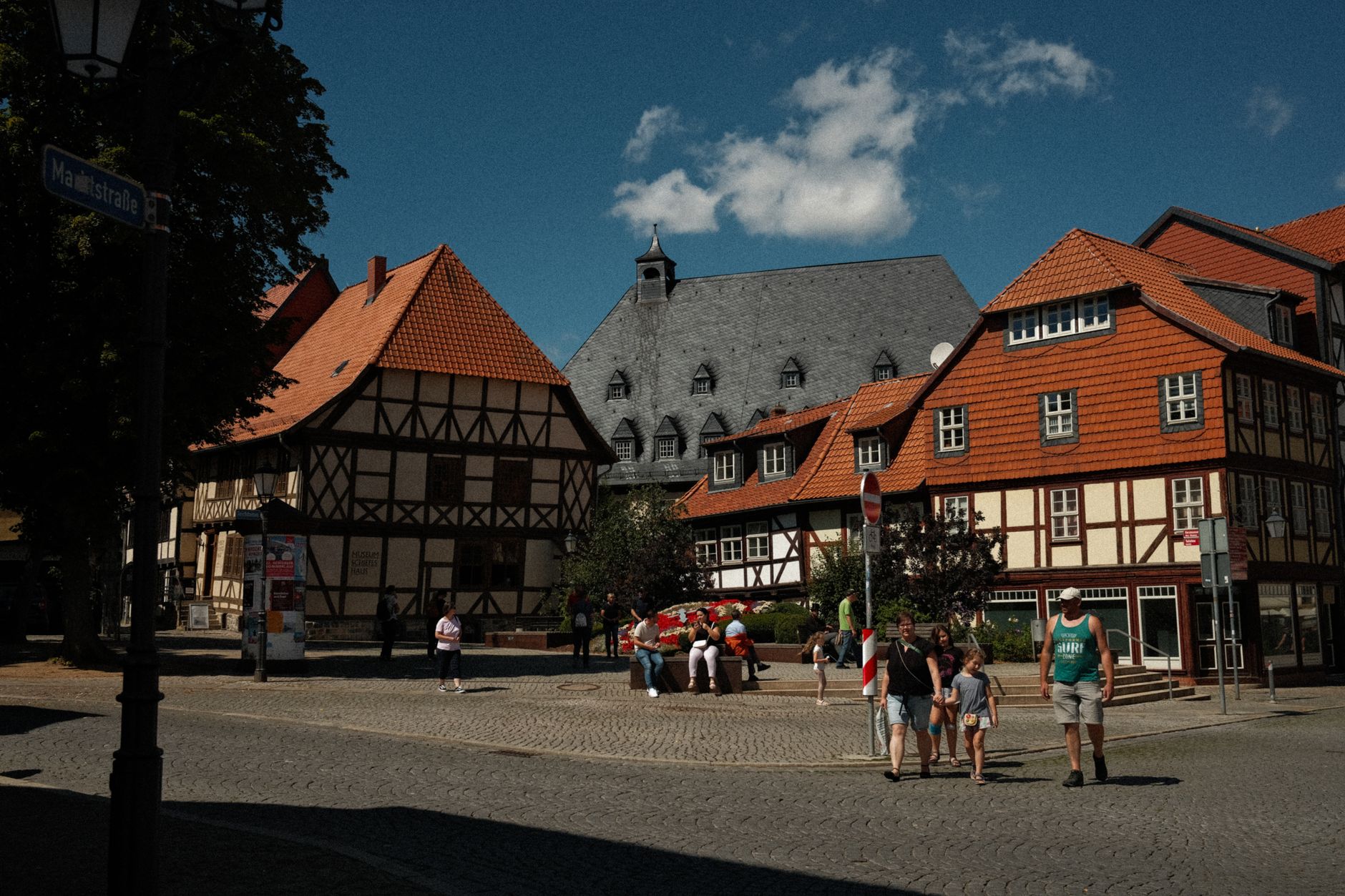
The thing that stops people in Alpirsbach is the church. Not because they planned to linger, but because a Romanesque columned basilica consecrated in 1099 has a way of rearranging your afternoon. The nave is spare and long, built to a cross-shaped plan, and the light inside moves slowly. The monastery that grew around it — founded in 1095 by three local noblemen who donated fifty square kilometres of Black Forest land to the Benedictines — still stands in the centre of town, close enough to the train station to reach on foot in five minutes.
Alpirsbach is compact and unhurried. Beyond the monastery, the old brewery building sits in the town centre, and a glassblowing workshop opened in 1984 carries on a regional craft that was already old when the monks were here.
💛 What travellers fall for
People who come back tend to time it for the cloister concerts, which run on summer evenings from June to August — candlelit, capacity limited, acoustics that reward the trouble of booking early. The monastery museum is worth the detour specifically for the 16th-century schoolboys' graffiti scratched into the wall.
Experiences you don't want to miss


Deals in Alpirsbach
Book directly at the provider

How Alpirsbach came to be
On 16 January 1095, the Bishop of Constance consecrated what would become Alpirsbach Abbey, after three noblemen — Adalbert of Zollern, Alwik of Sulz, and Ruotmann von Neckarhausen — gave their land to the Benedictine order. Pope Paschal II confirmed the foundation in 1101, and Emperor Henry V extended imperial protection in Strasbourg in 1123. The extant church was dedicated in 1099; most of the monastery complex rose between 1125 and 1133, with Gothic additions following between 1480 and 1494.
The late medieval period brought decline, then renewal under Abbot Hieronymus Hulzing (1479–1495), who joined the reforming Bursfeld Congregation and was later called the monastery's second founder. In 1535 the duke dissolved the community; a short-lived school followed under Duke Christoph from 1556 to 1595. Alpirsbach waited until 1869 for town privileges and 1886 for a railway line.
Who and what shaped it
People who shaped it
Landmark buildings
See Alpirsbach in motion
Plan your visit
On the map
When to go
Alpirsbach sits in the Black Forest, where winters are cold and summers mild — the valley setting means the warmest and driest window runs roughly from late May through September, which also aligns with the monastery concert season. Autumn brings colour to the surrounding forest, and the monastery itself is worth visiting in any season.
Right now
Background & history adapted from Wikipedia (CC BY-SA) · specs from Wikidata (CC0) · weather from Open-Meteo · map data © OpenStreetMap contributors · photos from Wikimedia Commons / Unsplash with per-image credit. No third-party reviews or social posts reproduced.