
Alberobello
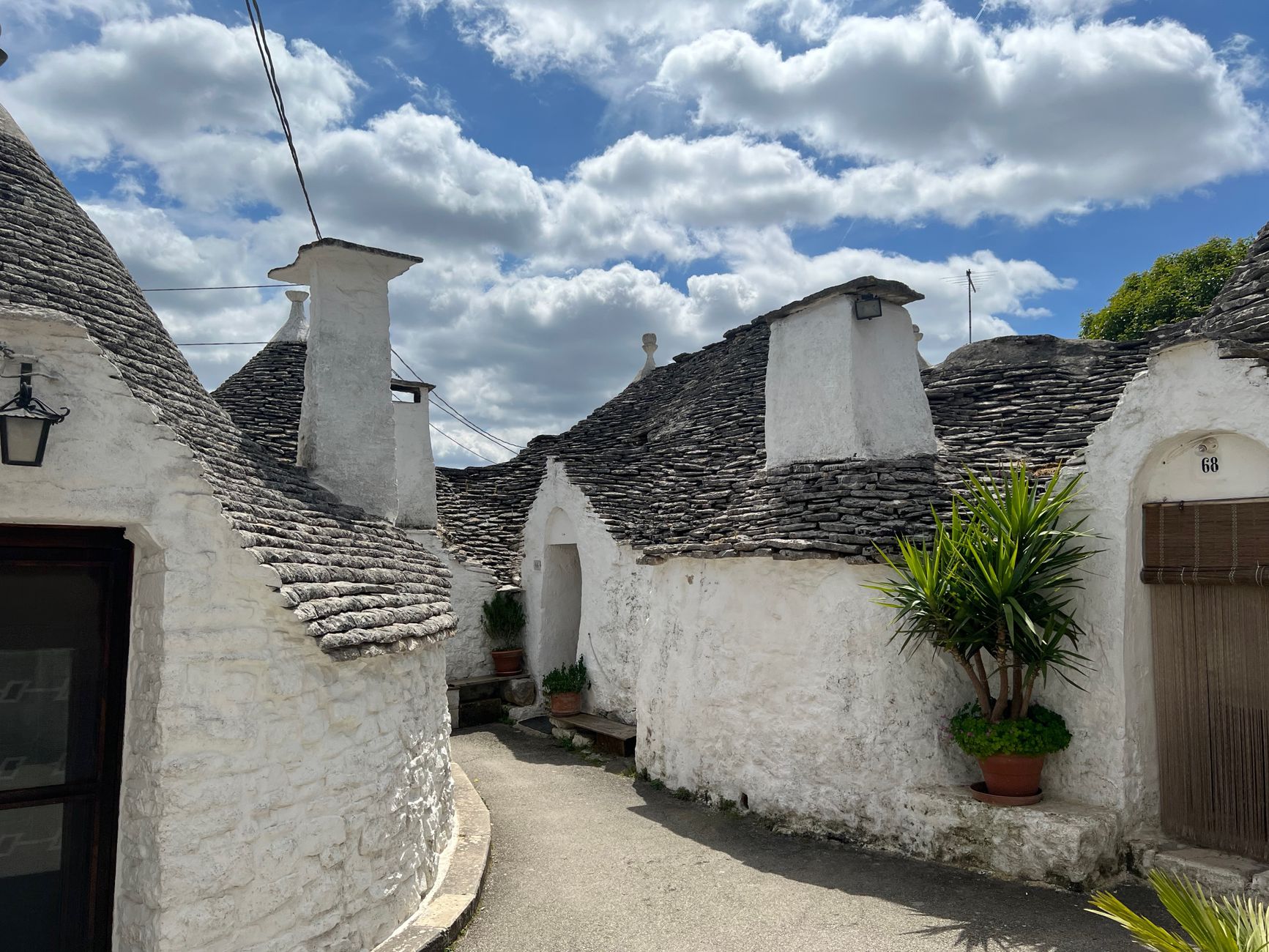
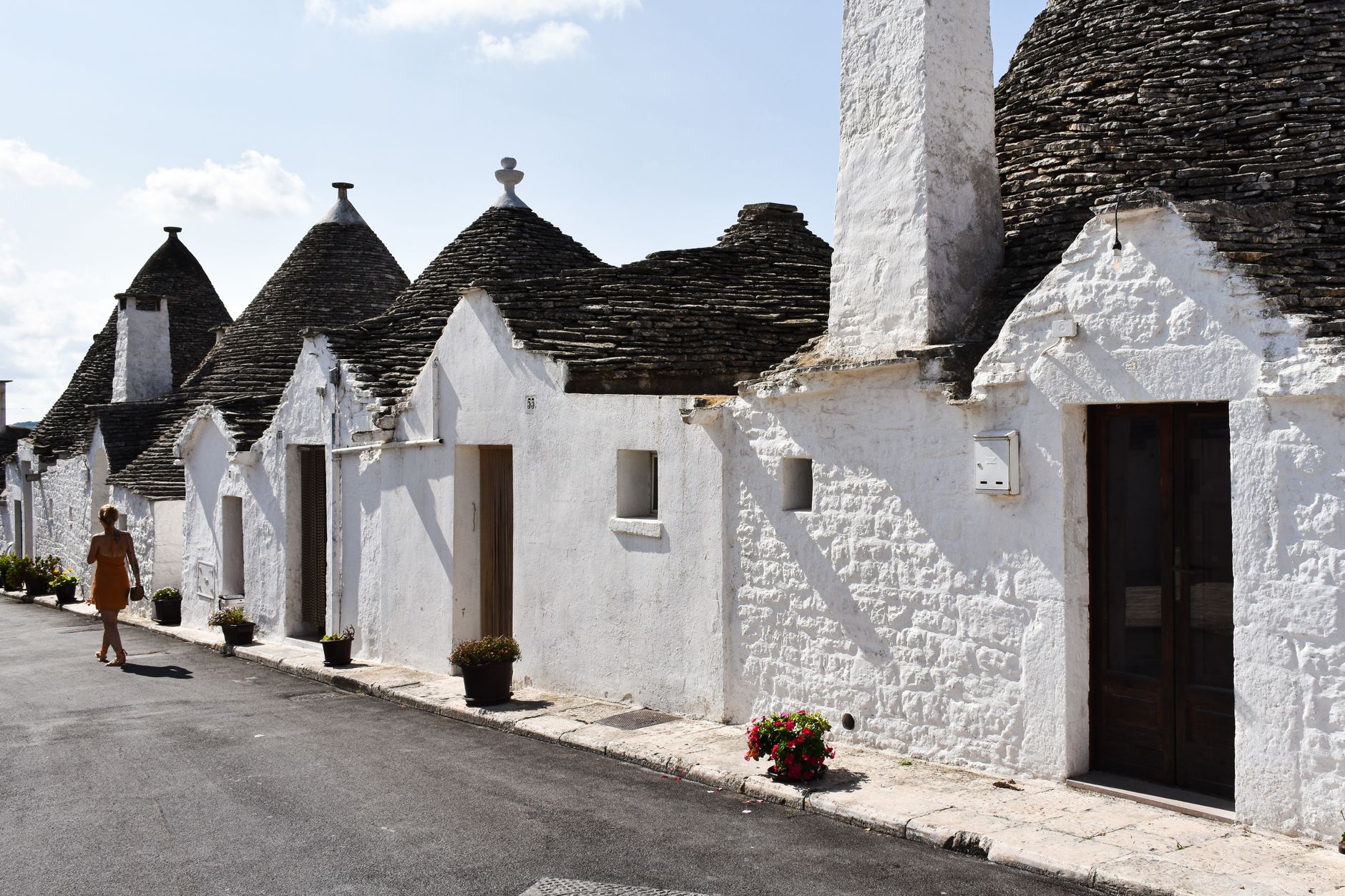
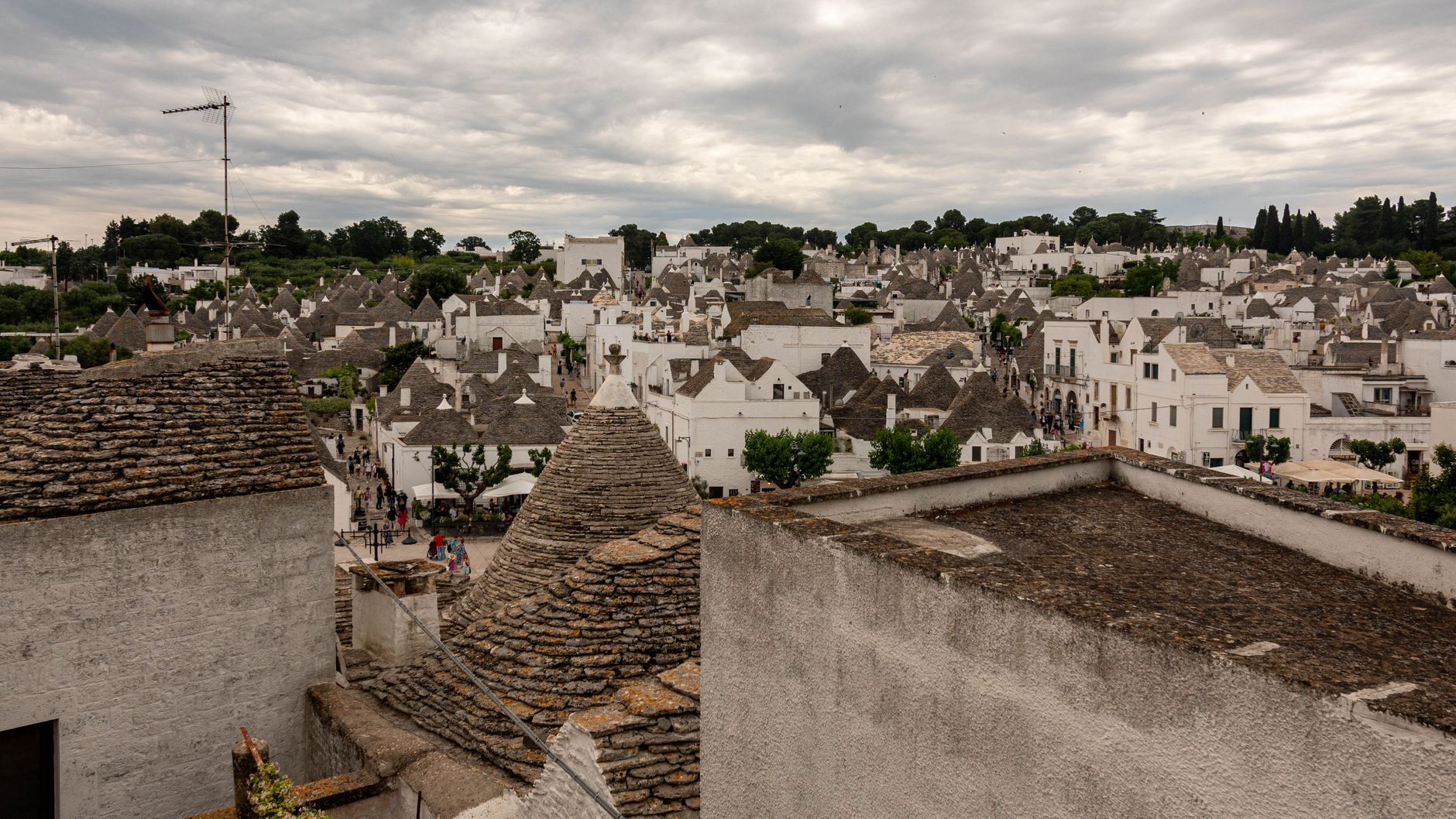
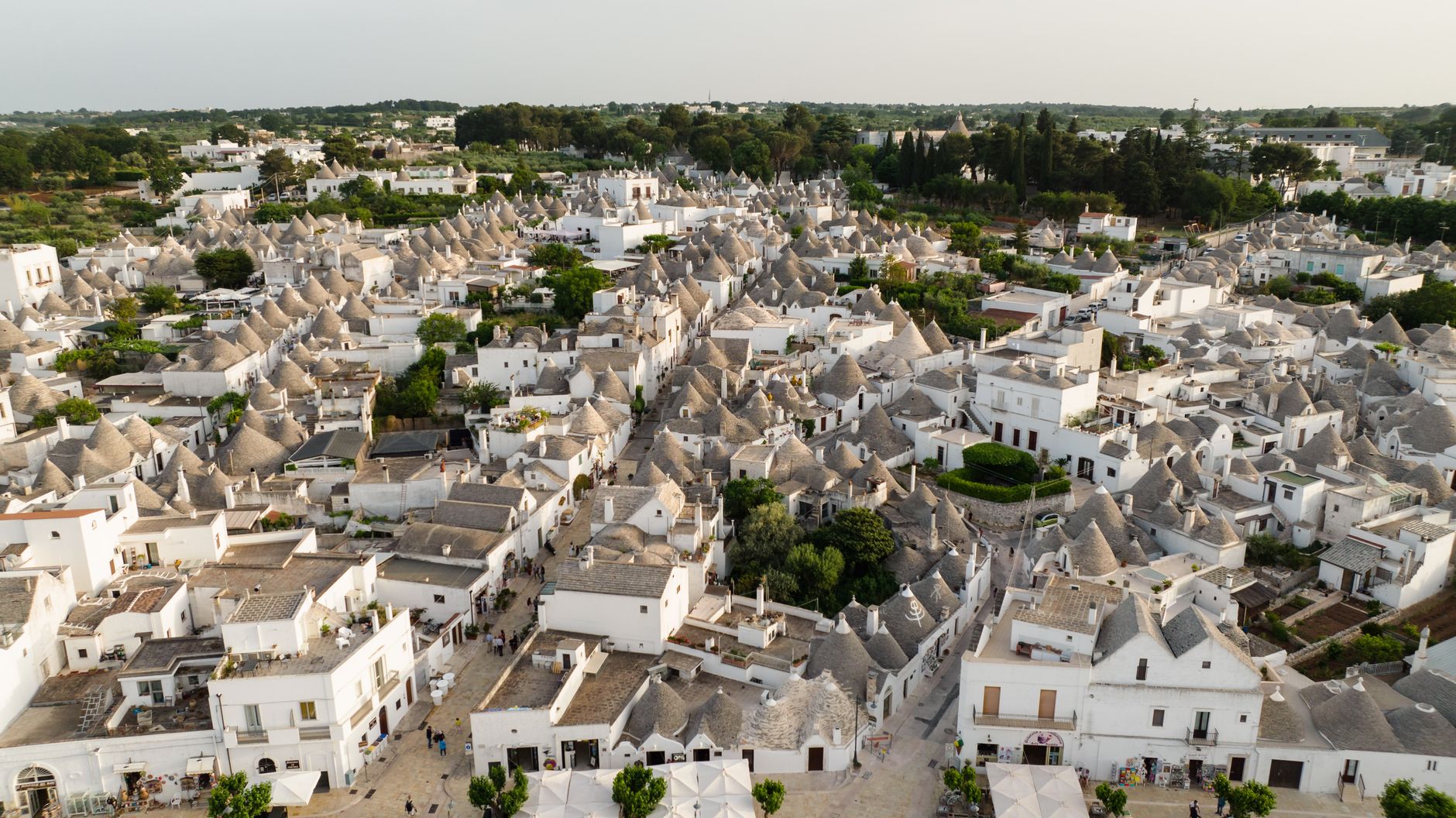
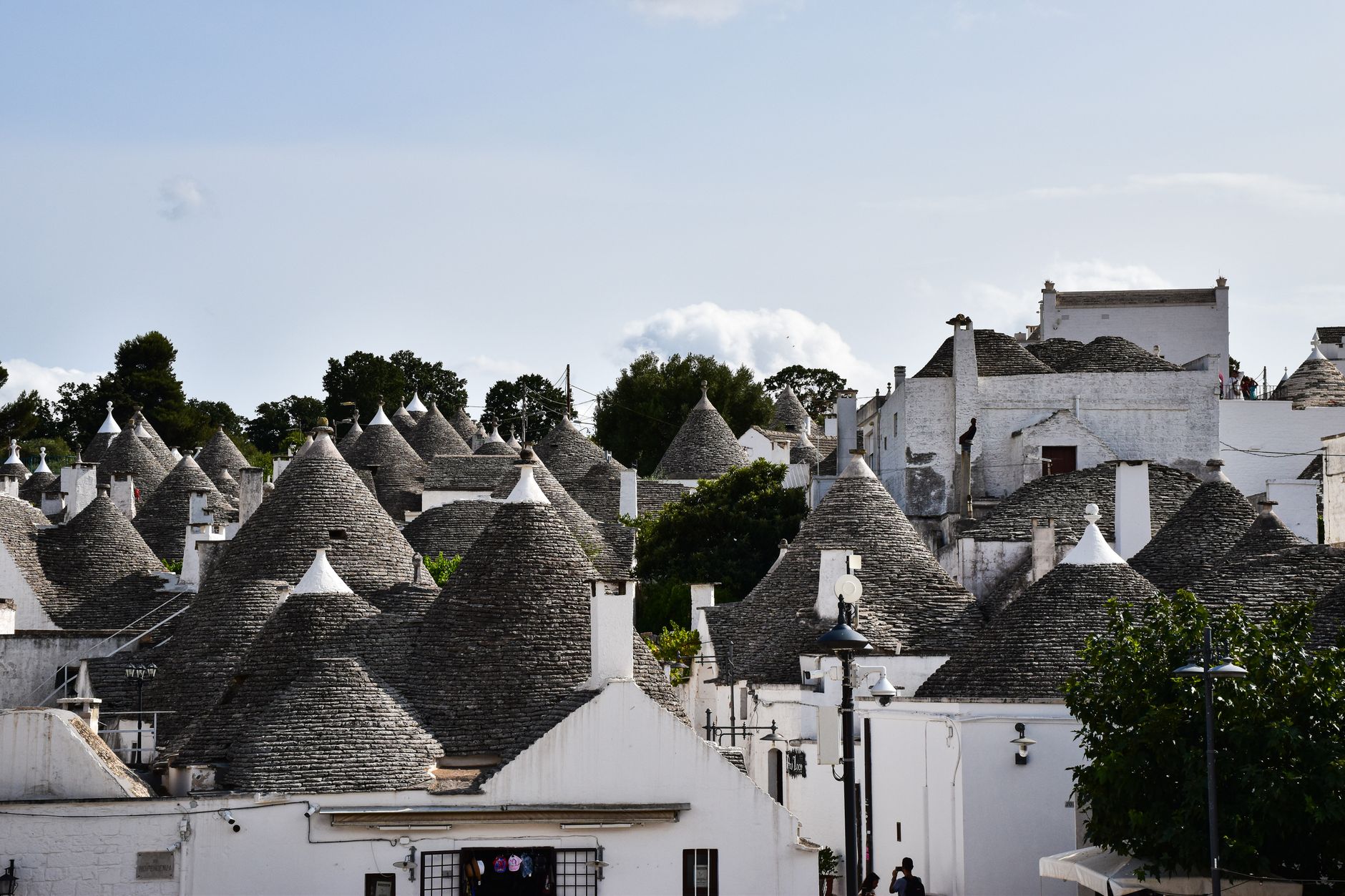
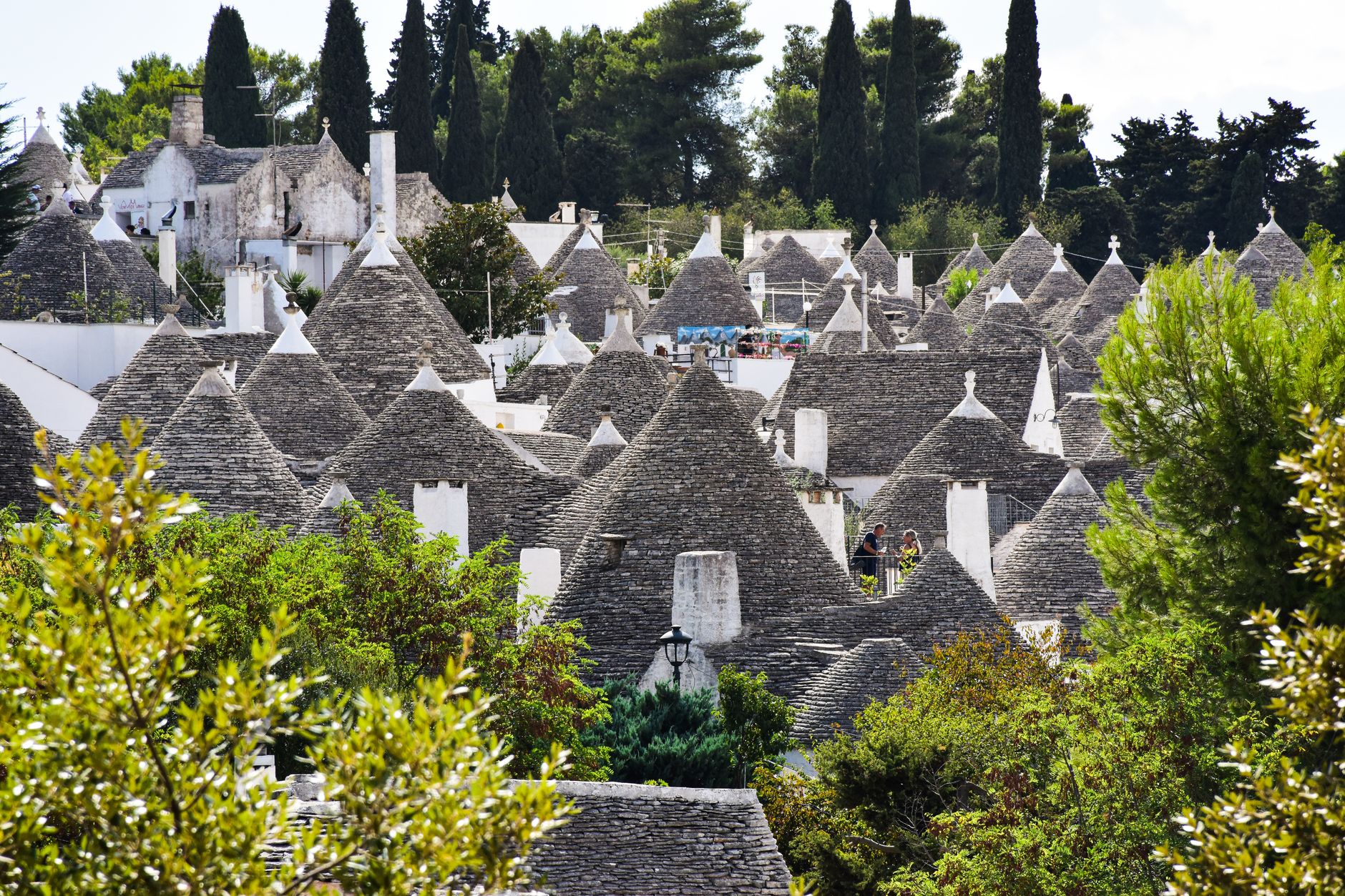
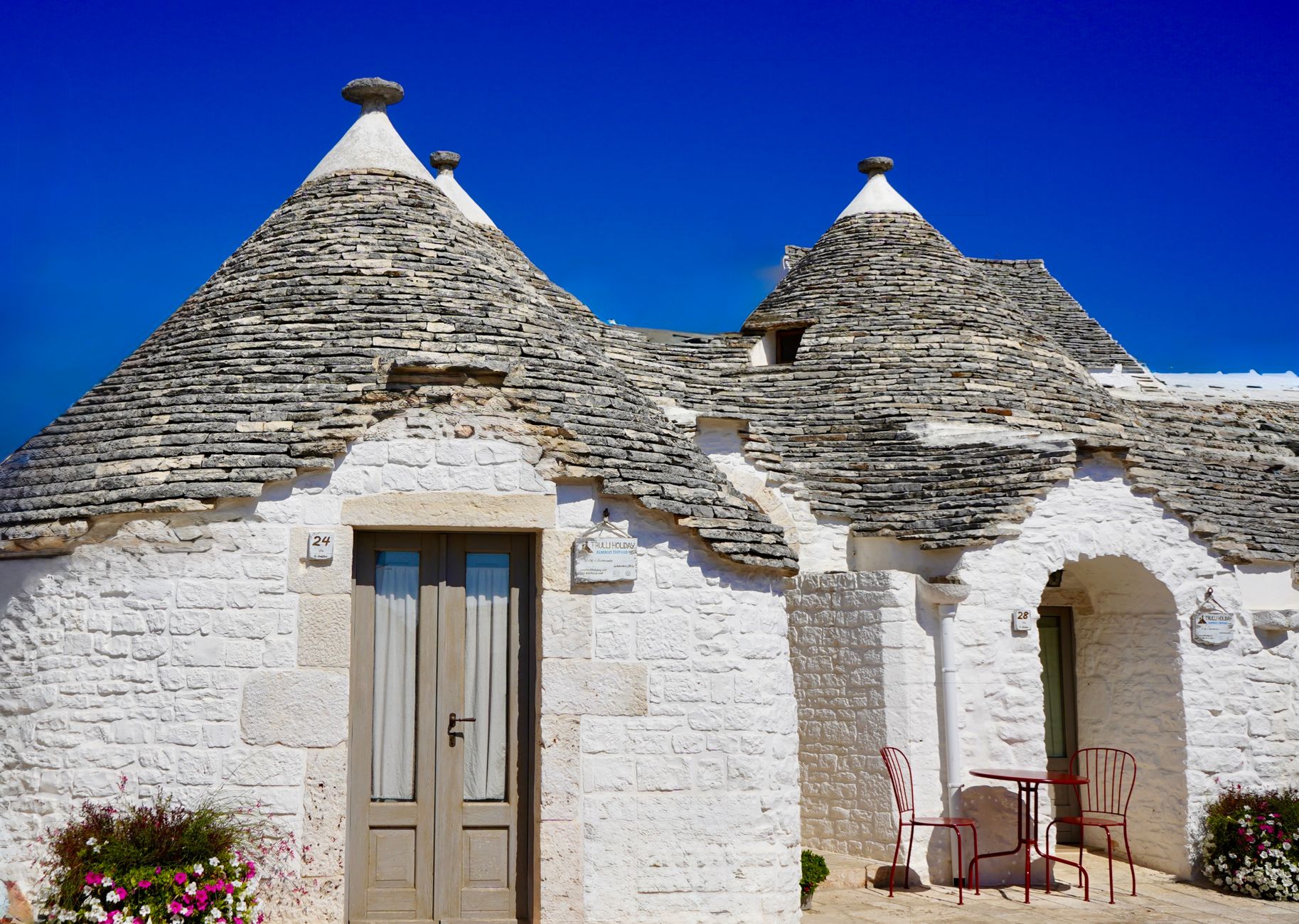
Alberobello is a town built on a tax dodge. The trulli — those round limestone houses with conical grey roofs — were deliberately constructed without mortar on the orders of the Counts of Conversano, so they could be knocked down quickly if a royal inspector came looking for a new village to tax. Walk through Rione Monti, where 1,030 of them climb the hillside, and that origin story starts to feel less like trivia and more like the whole point.
The town is small enough to cover in a morning, which is both its charm and its challenge. Arrive early, before the tour groups, and the whitewashed lanes are genuinely quiet. Linger at the Terrazza del Belvedere above the monastery on Santa Lucia for the long view over the roofline.
💛 What travellers fall for
People who return tend to mention Casa Pezzolla on a weekend, when the fifteen interconnected cones become a living museum — actors, lacemaking demonstrations, folk music filling rooms that otherwise just hold display cases. It changes the place from a monument into something with a pulse.
Experiences you don't want to miss


Deals in Alberobello
Book directly at the provider


How Alberobello came to be
The Counts of Conversano, specifically Andrea Matteo III Acquaviva d'Aragona, first brought around forty peasant families from Noci to settle and farm the land in the early sixteenth century. The dry-stone construction rule came from a cold calculation: under the Kingdom of Naples, founding a new village triggered a tax. Trulli built without mortar could be argued — or quickly made — to look temporary.
The arrangement held for nearly three centuries. In 1797, Ferdinand IV of Bourbon, King of Naples, dissolved the feudal claim entirely and elevated the settlement to a royal city. The first building raised with mortar after that liberation was Casa d'Amore, still standing. Francesco Giuseppe Lippolis became the first elected mayor on 22 June that same year.
Who and what shaped it
People who shaped it
Landmark buildings
See Alberobello in motion
Plan your visit
On the map
When to go
Spring (April to June) and early autumn (September to October) offer warm days without the full heat of a Puglian summer, when July and August temperatures regularly climb past 35°C and the town draws its heaviest visitor numbers. Winter is mild but quiet, with some local businesses keeping reduced hours.
Right now
Background & history adapted from Wikipedia (CC BY-SA) · specs from Wikidata (CC0) · weather from Open-Meteo · map data © OpenStreetMap contributors · photos from Wikimedia Commons / Unsplash with per-image credit. No third-party reviews or social posts reproduced.